
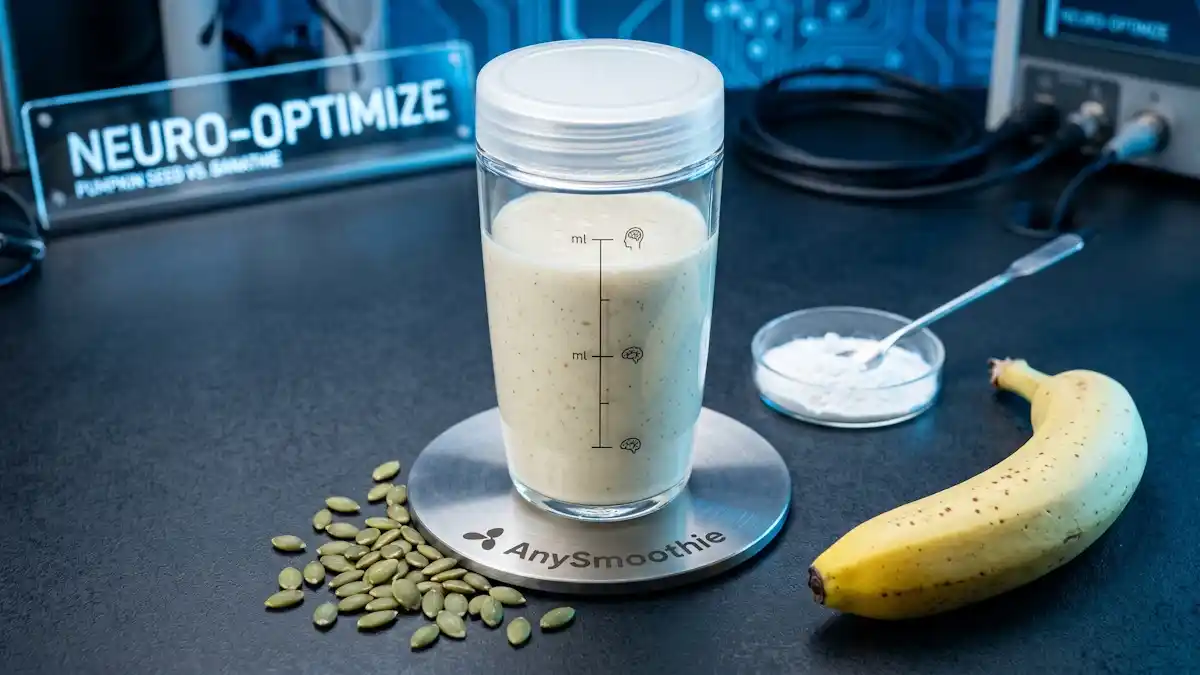
Tyrosine is an amino acid your body uses to make dopamine, norepinephrine, and epinephrine. Those catecholamines help the nervous system respond to daily demands, so food choices can matter more than people realize.
Smoothies make it easy to pair tyrosine-rich protein with carbs and key micronutrients in one fast meal. This is about supporting normal pathways with real food, not making medical claims. When the ingredients fit together, a smoothie can work like a simple tool instead of a sugar hit.
What tyrosine does inside the body and why food timing matters
Tyrosine is a building block, not a stimulant. Your body moves it through a chain of enzyme steps, first into L-DOPA, then dopamine, then norepinephrine, and finally epinephrine. For a plain-language look at that pathway, the NCBI catecholamine physiology review is a solid reference.
The process depends on more than tyrosine alone. Enzymes need the right cofactors, and the body also needs enough energy to use the raw material well. That is why a smoothie with protein plus carbs often makes more sense than tyrosine on an empty tank.
How tyrosine turns into dopamine, norepinephrine, and epinephrine
The pathway is simple at a high level. Tyrosine gets converted step by step, and each step relies on enzymes that do the actual work.
Iron, vitamin C, B vitamins, and overall nutrient status can help keep that system moving. In plain terms, the body wants the right parts in the right place before it builds catecholamines.
Why a smoothie can be a smart delivery method
A smoothie lets you combine protein, fruit, and supportive nutrients without much effort. That helps on busy mornings, after training, or during a short snack break.
It also helps with digestion comfort. Some people do better with blended food than with a heavy meal first thing in the day. The result is a flexible way to use tyrosine smoothies for catecholamine precursor support without making breakfast complicated.
The best ingredients to build a tyrosine-supportive smoothie
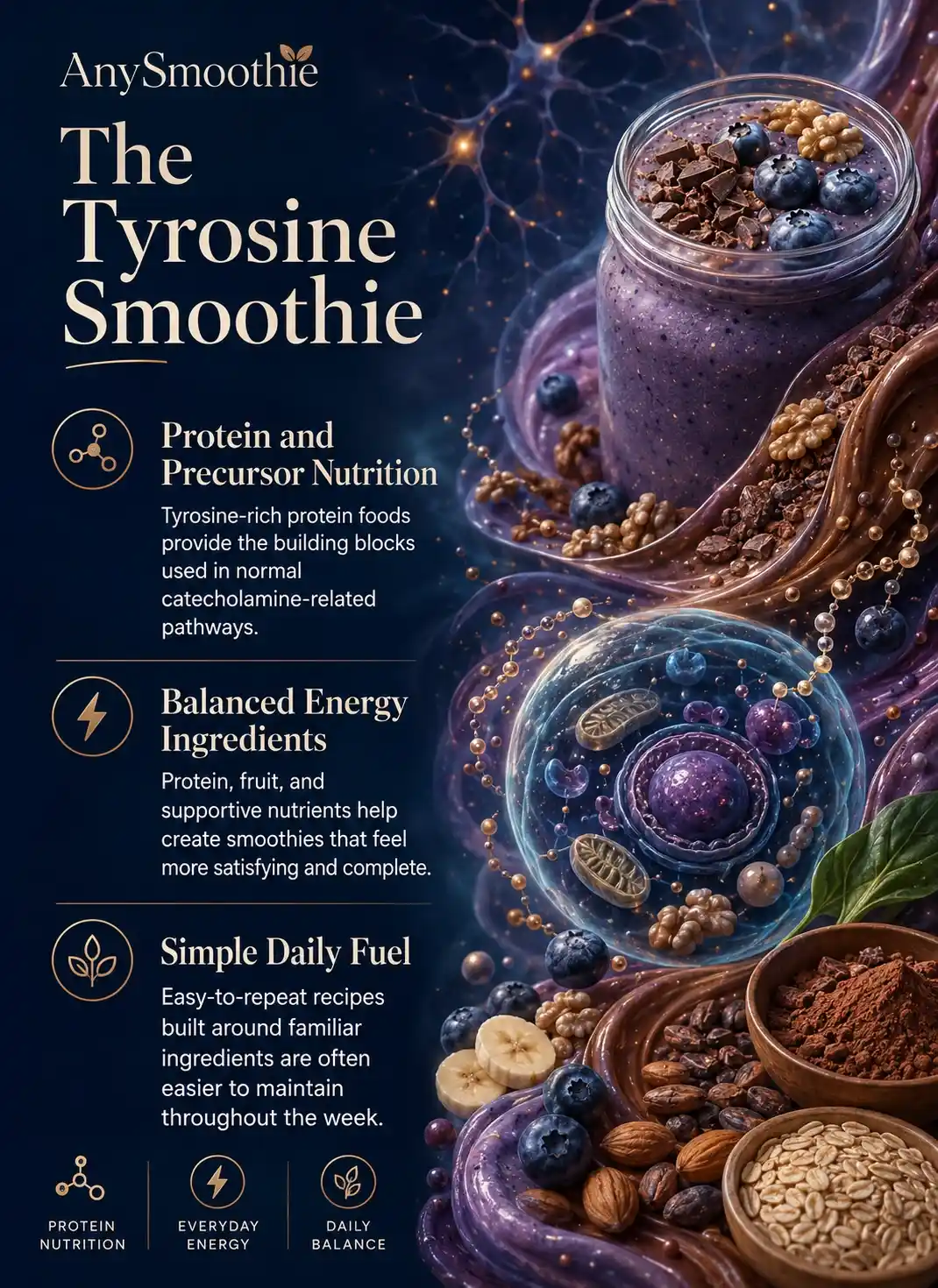
The strongest base is a protein source that tastes good and gives you enough amino acids. Whey, Greek yogurt, kefir, soy milk, tofu, and blended protein powders all fit well. A good overview of tyrosine and its role in catecholamine production is outlined in this tyrosine reference.
Fruit matters too. It adds carbs, which help the smoothie feel like a real meal instead of a thin shake. Berries, banana, pineapple, and citrus each bring a different flavor profile, and they make the blend easier to drink.
Supportive add-ins keep the recipe nutrient-dense. Spinach or kale brings folate. Seeds and nuts add magnesium. Citrus or berries add vitamin C. Oats improve texture and make the smoothie more filling. Cacao can add flavor, though a little goes a long way.
Tyrosine-rich bases that fit well in smoothies
Whey is one of the easiest options because it blends smoothly and pairs well with fruit. Greek yogurt and kefir add protein plus a creamy texture. Soy milk and silken tofu work well for dairy-free blends.
Collagen can fit too, but it works better next to another protein source. The goal is simple: give the body enough protein, enough tyrosine, and a flavor you will actually drink again.
Supportive add-ins that help the recipe work better
Keep the extra ingredients focused. One fruit, one green, and one fat source is often enough.
That might mean banana with spinach and chia seeds. Or it might mean berries with oats and pumpkin seeds. Small choices like these keep the smoothie balanced without turning it into a crowded recipe.
The best smoothie is the one you can repeat three or four times a week.
3 Tyrosine smoothies for catecholamine precursor support
How to make the smoothie work for energy, focus, and recovery
Timing changes the feel of the drink. A morning smoothie can be lighter and brighter. A post-workout version can be thicker and more filling. An afternoon blend usually works best when it supports steady energy, not a sugar spike.
For a quick comparison, use the ingredient balance below as a starting point.
| Goal | Protein base | Carb choice | Best time | Texture |
|---|---|---|---|---|
| Morning focus | Whey or soy milk | Banana or berries | Early day | Light and smooth |
| Recovery snack | Greek yogurt or kefir | Oats and fruit | After activity | Thick and filling |
| Dairy-free option | Tofu or pea protein | Pineapple and citrus | Any time | Bright and creamy |
The table keeps the structure simple. More protein gives the body more tyrosine. More carbs make the smoothie feel like fuel. Less fruit keeps it lighter, while oats and yogurt make it closer to a meal.
Choose the right carb to protein balance for your goal
If you want a snack, keep the fruit modest and the protein steady. If you want a meal, add oats, nut butter, or extra yogurt.
That balance matters because carbs make the smoothie more satisfying, while protein supplies the tyrosine backbone. The right mix depends on your day, not a fixed rule.
When to drink it and who may want to be cautious
Morning and post-workout are the easiest times for most people. Still, anyone with food allergies, protein limits, or specific health conditions should adjust the recipe and get personal guidance when needed.
Ingredient choice matters more than hype. A simple smoothie with clean protein and steady carbs usually beats a complicated mix with too many extras. For more on the conversion pathway itself, the norepinephrine and epinephrine summary is useful background.
Conclusion
Tyrosine smoothies work best when they stay simple. A solid protein base, a useful carb source, and a few supportive nutrients can help you feed the catecholamine pathway with real food.
Keep the recipe easy to repeat, then adjust it for your schedule and appetite. That is usually the most practical way to use tyrosine smoothies for catecholamine precursor support without overcomplicating breakfast.
🛡️ Safety Notes & Dietary Interactions
- Protein Quality Matters: Tyrosine comes from dietary protein rather than isolated ingredients alone. Consistent intake of protein-rich foods may help support normal catecholamine precursor availability throughout the day.
- Balanced Fuel Delivery: Pairing protein with moderate carbohydrates can create a steadier energy profile than consuming either nutrient alone. This combination also helps smoothies feel more satisfying and complete.
- Micronutrient Support: Vitamin C, iron, magnesium, folate, and B vitamins participate in numerous metabolic pathways related to normal neurotransmitter synthesis and cellular energy production.
- Simple Formulas Work Best: Overloading smoothies with multiple powders and supplements can complicate digestion and flavor. A repeatable blend built around protein, fruit, and a few supportive ingredients is often easier to maintain.
FAQ
What is tyrosine and why is it connected to catecholamines?
Tyrosine is an amino acid that serves as a precursor in the production of dopamine, norepinephrine, and epinephrine. The body converts tyrosine through several enzyme-driven steps before these compounds are formed. The article emphasizes that tyrosine acts as a building block within normal physiological pathways rather than functioning as a stimulant on its own.
Why are protein-rich ingredients the foundation of these smoothies?
Protein-containing foods provide the amino acids needed for numerous biological processes, including tyrosine availability. Ingredients such as whey protein, Greek yogurt, kefir, soy milk, tofu, and protein powders are highlighted because they deliver a meaningful protein contribution while blending easily into practical smoothie recipes that fit everyday routines.
Why are carbohydrates included alongside tyrosine-rich proteins?
The article explains that smoothies work best when protein and carbohydrates are combined. Fruit, oats, and other carbohydrate sources help provide energy while making the smoothie feel more like a complete meal. This combination often creates a more satisfying nutritional profile than relying on protein alone, especially during busy mornings or after physical activity.
Which nutrients help support catecholamine-related pathways?
Tyrosine is only one part of a larger nutritional picture. The article discusses vitamin C, iron, magnesium, folate, and B vitamins because they participate in physiological processes associated with neurotransmitter synthesis and energy metabolism. This is why fruits, leafy greens, seeds, nuts, and protein-rich foods are often combined in the same smoothie.
When is the best time to drink a tyrosine smoothie?
Morning and post-workout periods are highlighted as common choices because they naturally fit into routines that prioritize protein and energy replenishment. However, the article notes that consistency matters more than perfect timing. The most effective smoothie routine is usually the one that comfortably fits an individual’s schedule, appetite, and long-term habits.

Medical Disclaimer: AnySmoothie content is for educational purposes only and is not a substitute for professional medical advice. Consult a healthcare provider for personalized guidance. See our full Disclaimer & Terms of Use. AI Transparency: AnySmoothie may use AI to support content development. All content undergoes human editorial review for accuracy, clarity, and editorial quality. See our full AI Transparency.