

The brain clears more waste during sleep than while you are awake, which is why people pay attention to glymphatic system clearance smoothies. When sleep slips, brain fog, slow recovery, and that dull morning feeling often show up too.
A smoothie can’t replace rest, but it can support hydration, antioxidant intake, blood sugar balance, and a steadier nighttime routine. For a plain-language overview of the system, the Cleveland Clinic’s glymphatic system guide is a useful starting point.
The rest of this article stays practical. You will see how to build smoothies that fit sleep, not fight it.
How the glymphatic system works, and what it needs to do its job
The glymphatic system is a fluid network in the brain. A PMC beginner’s guide to the glymphatic system explains that this flow becomes more active during sleep, when cerebrospinal fluid moves through tissue spaces and helps carry away waste. That is why people often wake up clearer after a solid night.
The system depends on normal sleep timing, decent hydration, and a lower inflammatory load. Poor sleep, dehydration, and heavy late-night meals can make the whole process feel sluggish. That does not mean food controls the system, but it does mean your nightly habits matter.
Why sleep matters most for brain cleanup
Deep sleep is the main window for this process. Regular sleep timing gives your brain a predictable rhythm, and that matters more than any drink.
A smoothie can fit the evening routine, but it can’t replace dark rooms, steady bedtimes, and enough hours in bed. If you want better mornings, start with sleep consistency first, then build around it.
The role of hydration, antioxidants, and blood sugar balance
Fluids help the body keep transport systems moving at a normal pace. Antioxidant-rich foods help handle everyday oxidative stress, and steadier blood sugar can make overnight recovery feel smoother.
That is one reason a smoothie with fruit alone often falls short. A better version includes water-rich produce, some fiber, and a little fat or protein. That mix keeps the drink from turning into a sugar spike.
Smoothies support the routine, but sleep still drives the cleanup.
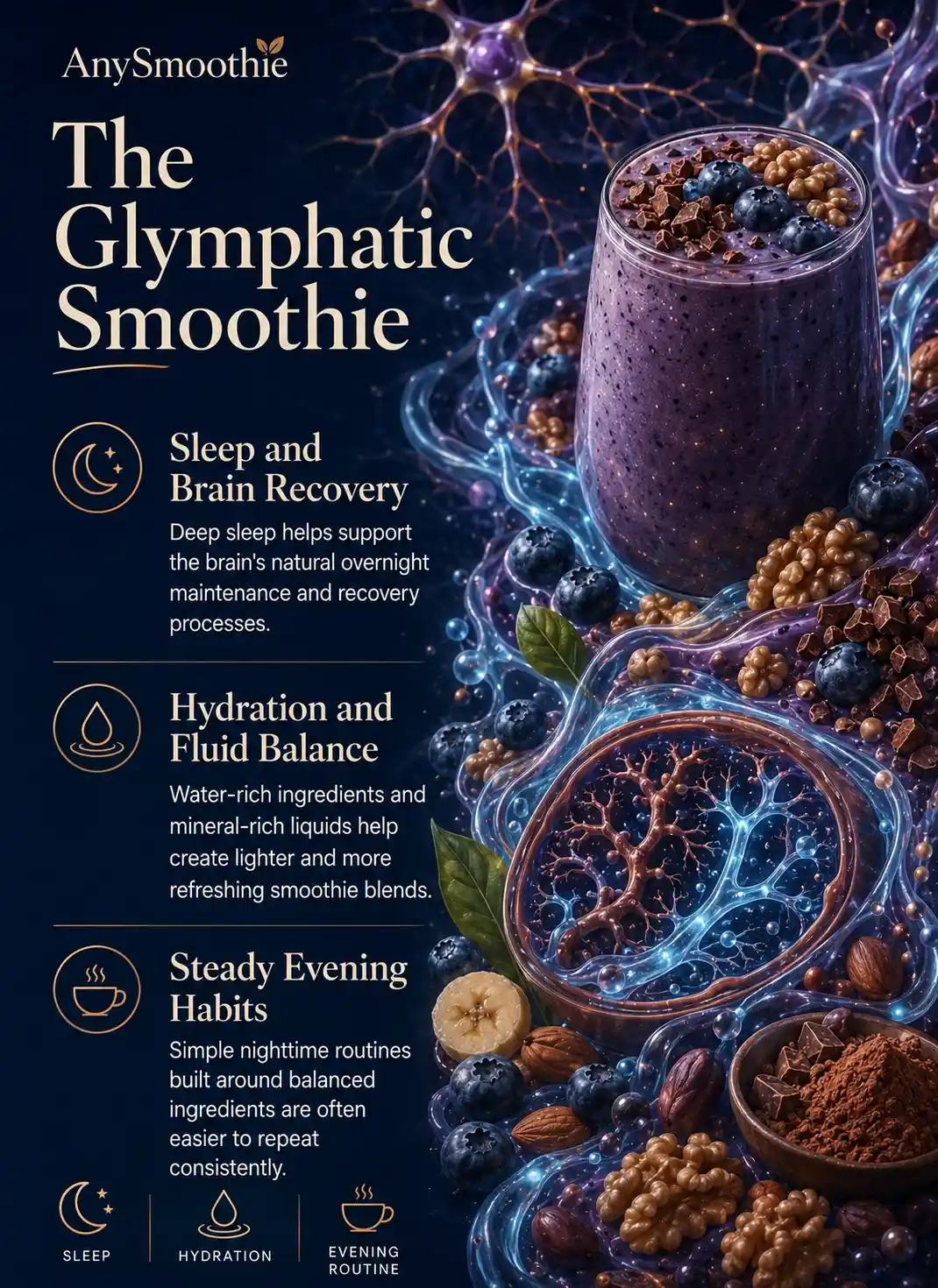
What makes a smoothie supportive for glymphatic health
Ingredient choice matters because the best blend is light, balanced, and easy to digest. A ScienceDirect review of the glymphatic system describes the brain’s fluid spaces as part of a directional flow system, so a smoothie that feels calm is a better fit than one that feels like dessert.
| Ingredient group | Function and key benefit | Examples | Best time to use | Taste profile |
|---|---|---|---|---|
| Water-rich produce | Supports hydration and light digestion | cucumber, spinach, melon | evening or afternoon | fresh, mild |
| Berries and cherries | Adds polyphenols and color | blueberries, tart cherries | afternoon or evening | sweet-tart |
| Seeds and nuts | Adds fiber and staying power | chia, flax, walnuts | evening | creamy, nutty |
| Mineral-rich liquids | Replaces plain water with flavor | coconut water, filtered water, unsweetened almond milk | any time | clean, light |
The pattern is simple. Use produce for hydration, add color for plant compounds, and include a little fat or seed for staying power.
Ingredients that help with hydration and fluid balance
Water-rich fruit and vegetables are the easiest place to start. Cucumber, spinach, romaine, melon, and a splash of coconut water help the blend feel lighter.
Chia and flax also hold water, which gives the smoothie a thicker texture without piling on sugar. That combination works well when you want a drink that refreshes without feeling heavy.
Ingredients that bring antioxidants and healthy fats
Berries, tart cherries, avocado, walnuts, and a small spoon of cacao can make the blend more useful for recovery. Berries and cherries bring color and polyphenols. Avocado and nuts add fat, which slows the drink down and makes it more filling.
If you train in the evening, that balance matters even more. It helps the smoothie feel like part of recovery, not a second dinner.
What to limit if you want a nighttime-friendly smoothie
Added sugar is the first thing to trim. Large servings can also sit heavy, especially close to bed. Coffee, matcha, and extra cacao can keep the drink too stimulating for late use.
A nighttime smoothie should leave you satisfied, not wired or stuffed.
3 Glymphatic system clearance smoothie recipes
These three blends keep the ingredients simple. Each one supports hydration, texture, and a calmer evening routine.
Berry Cucumber Recovery Smoothie
Ingredients
- 1 cup mixed berries
- 1/2 cucumber
- 1 handful spinach
- Juice of 1/2 lemon
- 1 tablespoon chia seeds
- 3/4 cup coconut water or filtered water
Blend until smooth. This mix stays light and brings hydration plus polyphenols without a heavy finish.
Estimated Nutrition per Serving
Estimated with unsweetened coconut water.
- Calories: ~210 kcal
- Protein: ~6 g
- Carbohydrates: ~39 g
- Fat: ~6 g
- Fiber: ~14 g
- Sugars: ~20 g
Tart Cherry Avocado Evening Smoothie
Ingredients
- 1 cup tart cherries
- 1/2 avocado
- 1/2 cup plain yogurt or unsweetened dairy-free yogurt
- 1 tablespoon almond butter or walnuts
- Pinch of cinnamon
- Water, as needed
Blend until smooth, adding a splash of water if needed. The fat and fiber help it feel steady and less sharp on blood sugar.
Estimated Nutrition per Serving
Estimated with plain low-fat yogurt and almond butter.
- Calories: ~440 kcal
- Protein: ~13 g
- Carbohydrates: ~47 g
- Fat: ~25 g
- Fiber: ~13 g
- Sugars: ~27 g
I’d start with only a small splash of water here. Tart cherries and yogurt already contribute moisture, while the avocado needs surprisingly little extra liquid to become creamy.
Green Mineral Smoothie for a Nightly Reset
Ingredients
- 1 cup spinach or romaine
- 1 kiwi or 1 small green apple
- 1/2 cucumber
- 1 tablespoon hemp seeds
- 1 cup mineral water, coconut water, or unsweetened almond milk
- A few mint leaves, optional
Blend until smooth.
This one tastes fresh and stays light enough for a pre-bed routine. The flavor stays clean, and the texture doesn’t feel heavy.
Estimated Nutrition per Serving
Estimated with spinach, kiwi, hemp seeds, and unsweetened almond milk.
- Calories: ~190 kcal
- Protein: ~8 g
- Carbohydrates: ~23 g
- Fat: ~9 g
- Fiber: ~7 g
- Sugars: ~11 g
Mint changes character quickly when heavily blended. Adding it during the final few seconds keeps the flavor fresher and prevents it from overpowering the mild cucumber and kiwi.
How to make your smoothie routine work in real life
The best routine is the one you can repeat. Keep evening smoothies small, finish them a few hours before bed when you can, and pair them with other sleep-friendly habits like dim light and a consistent wind-down.
The best time to drink a glymphatic-friendly smoothie
A morning smoothie can be bigger and more active. An afternoon smoothie can cover recovery or training. For evenings, keep the portion lighter and the ingredients simple so digestion stays easy.
If bedtime is near, skip the giant blender cup. A smaller smoothie is easier on sleep.
Easy swaps for different diets and taste preferences
- For dairy-free, use coconut yogurt, almond milk, or oat milk.
- For lower sugar, use cucumber, spinach, and more berries than banana.
- For nut-free, swap nut butter for hemp seeds or pumpkin seeds.
- For higher protein, add Greek yogurt, soy yogurt, or a plain protein powder that fits your diet.
These swaps keep the structure the same while fitting different tastes and goals.
Conclusion
The strongest support for glymphatic system clearance is still good sleep. Hydration, antioxidants, and steady blood sugar can support the routine around it, and that is where glymphatic system clearance smoothies fit best.
Keep the formula simple. Choose a light base, add color and fiber, then leave enough time before bed for digestion to settle.
Try one recipe for a few nights in a row and notice how your evening feels. Small habits are easier to trust when they stay consistent.
🛡️ Safety Notes & Dietary Interactions
- Sleep Remains the Primary Driver: Glymphatic activity is most closely linked to sleep quality and consistency. Smoothies may support hydration and nutritional balance, but they cannot replace sufficient restorative sleep.
- Evening Blood Sugar Balance: Pairing fruit with fiber, protein, or healthy fats may help create a steadier overnight energy profile than fruit-only smoothies consumed close to bedtime.
- Hydration Without Overloading: Water-rich ingredients such as cucumber, melon, spinach, and coconut water support fluid intake while keeping the smoothie light enough for evening use.
- Late-Night Stimulation Awareness: Coffee, matcha, large amounts of cacao, and heavily sweetened ingredients may work against a calming nighttime routine. Simpler evening blends often fit sleep-supportive habits more comfortably.
FAQ
What is the glymphatic system and why is it connected to sleep?
The glymphatic system is a fluid transport network within the brain that becomes more active during sleep. According to the article, cerebrospinal fluid moves through brain tissue during deeper sleep periods and participates in normal waste-clearance processes. This connection explains why sleep quality is often associated with mental clarity, recovery, and how refreshed someone feels the following morning.
Why are hydration-focused ingredients used in glymphatic-support smoothies?
Hydration plays a central role in many physiological transport systems throughout the body. The article highlights ingredients such as cucumber, spinach, melon, coconut water, and mineral-rich liquids because they provide fluids while keeping the smoothie light and easy to digest. This approach supports an evening routine without creating an overly heavy meal before bed.
Why do berries and tart cherries appear so often in these recipes?
Berries and tart cherries provide color, fiber, and polyphenol-rich plant compounds while contributing relatively moderate sweetness. They also pair well with yogurt, chia seeds, walnuts, and avocado. The article uses them because they help create balanced smoothies that support recovery-focused nutrition patterns without turning the drink into a high-sugar dessert.
What ingredients are best avoided in a nighttime smoothie?
The article recommends limiting ingredients that may feel overly stimulating or difficult to digest close to bedtime. Examples include large amounts of added sugar, coffee, matcha, excessive cacao, and oversized portions. A lighter smoothie built around hydration, fiber, and moderate amounts of protein or healthy fats generally fits a calmer evening routine more effectively.
What is the biggest takeaway from the article?
The central message is that sleep quality matters more than any individual ingredient. Glymphatic system clearance depends primarily on consistent, restorative sleep rather than specific foods. Smoothies can support the surrounding routine by contributing hydration, antioxidants, fiber, and balanced nutrition, but they work best when paired with healthy sleep habits and a consistent bedtime schedule.

Medical Disclaimer: AnySmoothie content is for educational purposes only and is not a substitute for professional medical advice. Consult a healthcare provider for personalized guidance. See our full Disclaimer & Terms of Use. AI Transparency: AnySmoothie may use AI to support content development. All content undergoes human editorial review for accuracy, clarity, and editorial quality. See our full AI Transparency.