
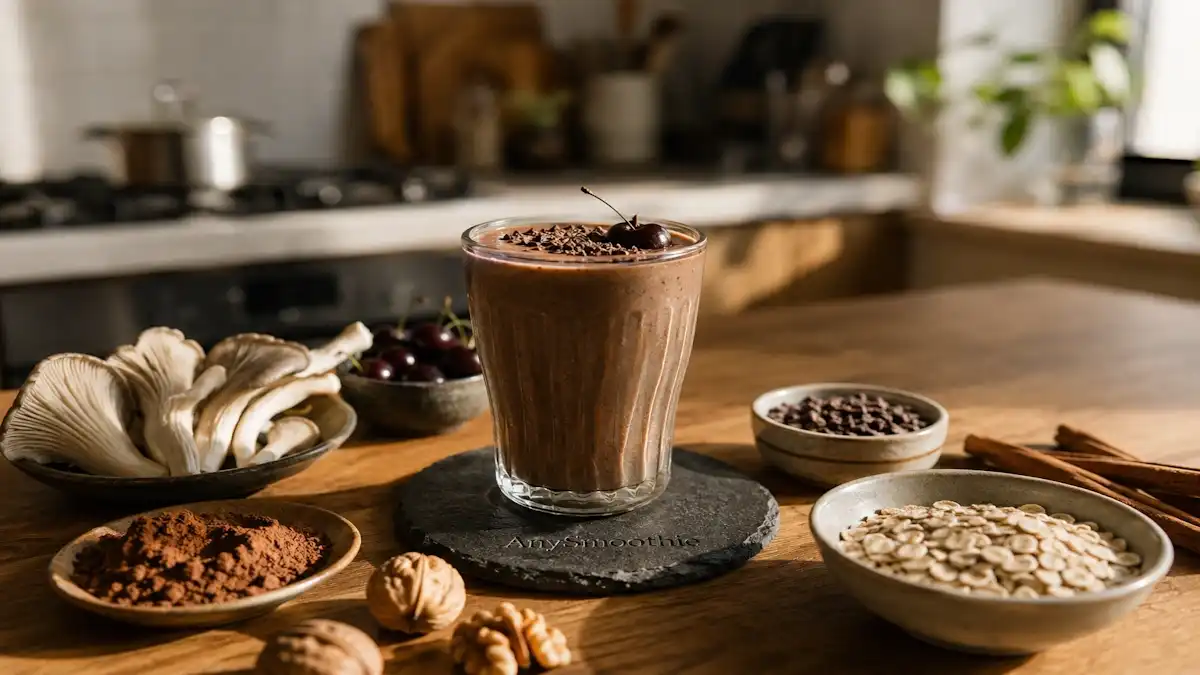
Ergothioneine is a diet-derived antioxidant compound found in certain foods, especially mushrooms. It gets attention because it supports the body’s own defense systems without turning breakfast into a project.
A smoothie is a practical way to pair ergothioneine with fruit, fiber, and healthy fats. That mix can support normal cellular protection systems while keeping the flavor simple and easy to repeat.
What ergothioneine does inside the body
Ergothioneine is not a trendy add-on. It is a sulfur-containing compound the body takes up from food and keeps in tissues that face daily stress. For a clear background, the ScienceDirect overview of ergothioneine explains why it gets described as an unusual antioxidant.
Inside the body, it helps support the antioxidant network that handles everyday oxidative stress. That matters because cells deal with wear and tear all day long, especially in energy-hungry places like the brain, heart, and muscles. Ergothioneine has also been found in mitochondria, the parts of cells that help make energy, so it draws interest in tissues that work hard from morning to night.
| Ingredient / source | Key supporting compounds | Flavor profile | Best use | Prep tip |
|---|---|---|---|---|
| Maitake powder | Beta-glucans, ergothioneine | Earthy, mild | Berry or cacao smoothies | Start with 1/2 teaspoon |
| Shiitake powder | Umami compounds, ergothioneine | Savory, deep | Mocha or vanilla blends | Pair with banana or cocoa |
| Oyster mushroom powder | Polysaccharides, ergothioneine | Light, neutral | Daily smoothie base | Blend with oats or yogurt |
| Lion’s mane extract | Hericenones, erinacines, ergothioneine | Soft, earthy | Creamy breakfast smoothies | Use a small serving first |
| Mixed mushroom blend | Broad mushroom compounds | Balanced, blended | Beginners | Check the label for species |
The pattern is simple, more variety gives you more ways to work the ingredient into real food.
Why mushrooms are the top food source to know about
Maitake, oyster, shiitake, and lion’s mane are useful because they fit into smoothies better than most people expect. Powdered forms are the easiest route, and some culinary extracts mix in with almost no texture change.
Ergothioneine content can vary by species and growing conditions, so whole-food variety matters. A ScienceDirect review on recent developments notes that diet can build meaningful tissue levels, which is why the source and form deserve attention.
How ergothioneine fits with vitamin C, polyphenols, and fiber
A smoothie works best when ergothioneine joins other supportive compounds. Berries bring vitamin C and polyphenols. Citrus adds brightness and a sharper flavor. Cacao adds depth, while greens, seeds, and oats bring fiber and steady texture.
That mix does not create magic. It supports normal physiological systems in a way that feels realistic and useful. Ergothioneine can sit beside those nutrients like a calm teammate, not a solo act.
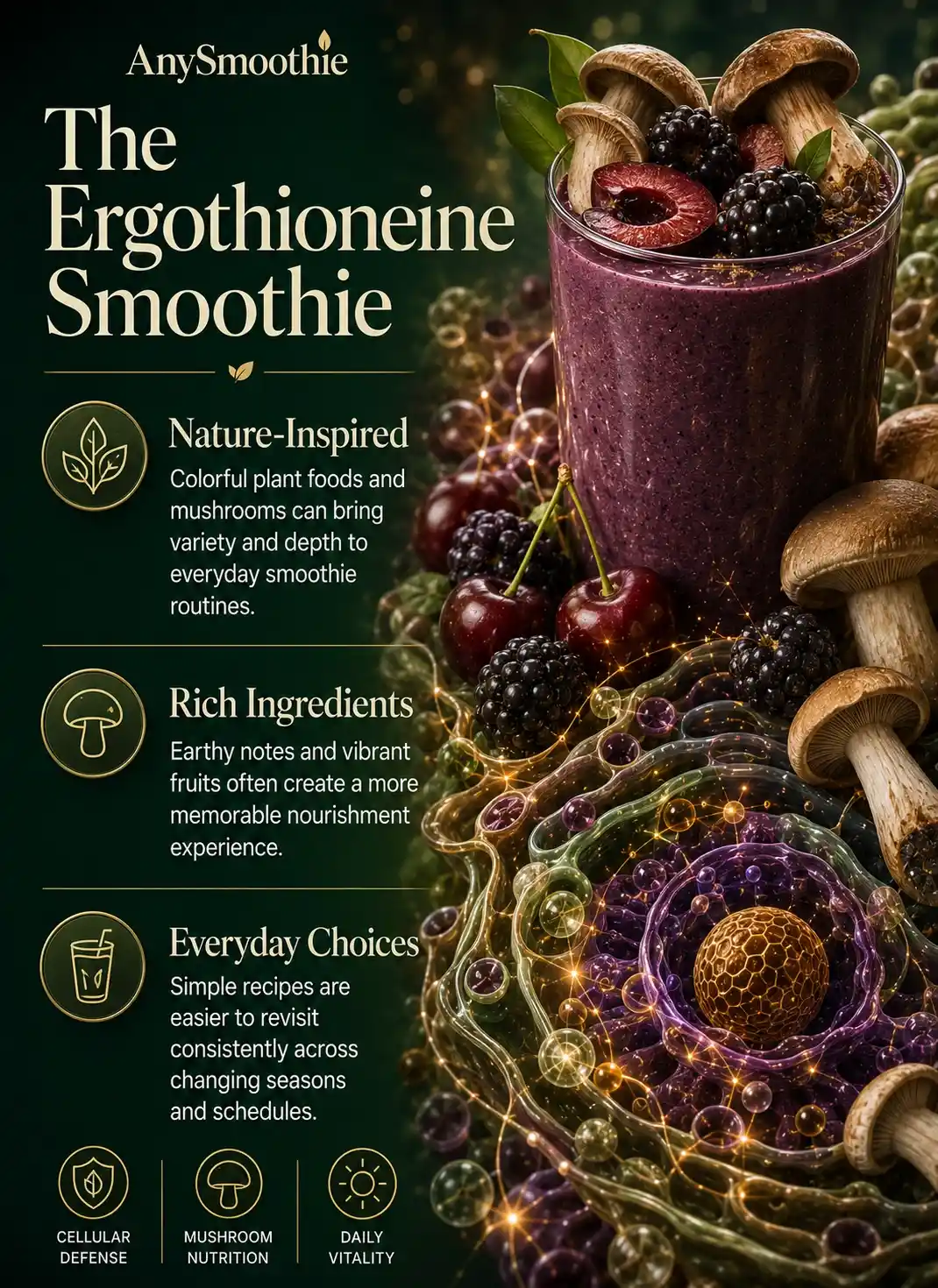
How to build ergothioneine smoothies for cellular defense
A strong smoothie formula is easy to remember: ergothioneine source, liquid base, fruit for taste, fiber for body, and a fat or protein add-in for balance. That structure keeps the drink filling enough to work as breakfast or a snack.
Texture matters more than people think. If the smoothie feels gritty or too thin, you will not keep making it. A little banana, yogurt, avocado, or chia can smooth out the mouthfeel and help digestion feel easier too.
Start with an ergothioneine source that blends well
Mushroom powders are the simplest option. Culinary mushroom extracts also work, and a very small amount of chilled cooked mushrooms can blend into savory-leaning smoothies.
Neutral or earthy profiles pair well with cocoa, cinnamon, vanilla, berries, or banana. Start low, taste, and adjust. A smoothie that tastes good is the one you’ll keep using.
Choose add-ins that support antioxidant balance and gut-friendly fiber
Blueberries, blackberries, spinach, avocado, chia, flax, kefir, Greek yogurt, and unsweetened plant milk all fit the plan. They bring fiber, fat, protein, or acidity, and each one helps the final blend feel more complete.
Fiber and healthy fats also help slow the sugar rise from fruit. That makes the smoothie more filling and easier to use as a steady part of the day.
3 Ergothioneine smoothie recipes for cellular defense
Berry mushroom smoothie for a bright, antioxidant-heavy start
Ingredients
- 1 cup mixed berries
- 3/4 cup kefir or plain Greek yogurt
- 1 teaspoon mushroom powder
- 1 tablespoon chia seeds
- 1/2 cup unsweetened almond milk
Blend until smooth. The berry flavor stays front and center, while the mushroom powder fades into the background. This is a good first step if you want ergothioneine without a strong earthy taste.
Estimated Nutrition per Serving
Estimated with plain low-fat kefir, chia seeds, and unsweetened almond milk. Mushroom powder calories vary by product.
- Calories: ~300 kcal
- Protein: ~14 g
- Carbohydrates: ~43 g
- Fat: ~9 g
- Fiber: ~13 g
- Sugars: ~24 g
Cocoa mocha smoothie for morning focus
Ingredients
- 1 banana
- 1 teaspoon mushroom powder
- 1 tablespoon cacao powder
- 1 tablespoon nut butter
- 1 cup milk of choice
- 1/2 cup cold coffee or 1 shot espresso, optional
Blend until creamy. Cocoa and banana soften the mushroom note, and nut butter adds staying power. This one works well when you want breakfast that feels rich but not heavy.
Estimated Nutrition per Serving
Estimated with unsweetened soy milk, almond butter, and without optional coffee. Mushroom powder calories vary by product.
- Calories: ~340 kcal
- Protein: ~14 g
- Carbohydrates: ~46 g
- Fat: ~14 g
- Fiber: ~8 g
- Sugars: ~20 g
I’d mix the mushroom powder and cacao into the milk before adding the banana. It helps disperse both powders evenly and avoids the dry pockets that can hide around the blender walls.
Creamy green smoothie for daily cellular support
Ingredients
- 1 cup spinach or kale
- 1/2 avocado
- 1 pear or 1 cup pineapple
- 1 teaspoon mushroom powder
- Juice of 1/2 lemon
- 1 tablespoon hemp or pumpkin seeds
- 1 cup unsweetened plant milk
Blend until silky. The greens bring density, the avocado rounds out the texture, and lemon keeps the flavor bright. This is a balanced choice when you want more color, more fiber, and a smoother finish.
Estimated Nutrition per Serving
Estimated with spinach, pear, hemp seeds, and unsweetened almond milk. Mushroom powder calories vary by product.
- Calories: ~415 kcal
- Protein: ~11 g
- Carbohydrates: ~49 g
- Fat: ~23 g
- Fiber: ~17 g
- Sugars: ~22 g
If you use kale instead of spinach, blend it with the plant milk first for 20–30 seconds. That extra first pass makes a noticeable difference once the avocado thickens the smoothie.
What to look for when buying mushroom ingredients
Look for clear sourcing, third-party testing, and a short ingredient list. Avoid products loaded with sweeteners, flavor systems, or fillers that get in the way of taste and routine.
Read labels for species, dose, and fillers
Check whether the product names the mushroom species. You should also see whether it uses fruiting bodies, mycelium, or a blend. Fruiting body products often have cleaner labeling, while mycelium products can vary more in content and starch load.
Serving size matters too. A product that looks strong on the front label may not deliver much per scoop if the serving is tiny.
Use consistency and taste as your filter
Start with a small amount and see how it mixes into your day. If it tastes good and fits your schedule, you will use it more often.
The best mushroom ingredient is the one you can actually enjoy, blend, and repeat.
Conclusion
Ergothioneine smoothies give you a simple way to combine a unique food compound with berries, greens, seeds, and other supportive ingredients. That combination fits real life better than complicated routines.
Focus on whole foods, good-quality mushroom ingredients, and a flavor you can keep coming back to. Consistency matters more than intensity, especially when the goal is steady support for cellular defense.
🛡️ Safety Notes & Dietary Interactions
- Mushroom Sensitivity Awareness: Ergothioneine smoothie recipes often use mushroom powders or extracts. Individuals with mushroom allergies, sensitivities, or digestive discomfort related to fungi should avoid these ingredients or consult a healthcare professional before regular use.
- Supplement Quality Matters: Mushroom powders and extracts vary widely in sourcing, species identification, and purity. Choose products with transparent labeling, third-party testing, and clear ingredient lists to reduce the chance of unwanted fillers or contaminants.
- Medication and Health Considerations: People taking prescription medications, managing autoimmune conditions, or following specialized medical nutrition plans should discuss mushroom-based supplements with a qualified healthcare provider before frequent use.
- Start With Small Amounts: Mushroom powders can have a strong flavor and may affect digestion differently from person to person. Begin with a small serving and gradually increase only if the ingredient fits comfortably within your routine.
FAQ
What is ergothioneine and why is it called a cellular defense compound?
Ergothioneine is a naturally occurring sulfur-containing antioxidant found primarily in mushrooms. Researchers study it because the body actively transports and stores it in tissues exposed to higher levels of metabolic activity and oxidative stress. Its role is associated with supporting normal cellular defense systems rather than acting as a stimulant or quick-performance ingredient.
Which foods contain the most ergothioneine?
Mushrooms are considered the richest dietary source. Oyster mushrooms, shiitake, maitake, king oyster mushrooms, and lion’s mane are frequently mentioned in research discussions. Smaller amounts may be present in other foods, but mushrooms remain the most practical source for smoothie recipes focused on ergothioneine intake.
Can mushroom powder be added directly to smoothies?
Yes. Mushroom powders are commonly blended directly into smoothies because they mix easily and provide a convenient source of ergothioneine-containing ingredients. Many people start with small amounts and combine them with berries, banana, cocoa, yogurt, or nut butter to soften the earthy flavor and improve overall taste.
What is the best time to drink an ergothioneine smoothie?
There is no universally required timing. Many people prefer ergothioneine smoothies at breakfast, after exercise, or as an afternoon snack because these times fit naturally into existing eating habits. Consistency and overall dietary quality are generally more important than a specific hour of the day.
How can I make an ergothioneine smoothie taste better?
Berries, banana, cacao, cinnamon, vanilla, citrus, and creamy ingredients such as yogurt or avocado can help balance earthy mushroom flavors. Starting with a small amount of mushroom powder and gradually adjusting the recipe usually creates a smoother, more enjoyable flavor profile that is easier to maintain long term.

Medical Disclaimer: AnySmoothie content is for educational purposes only and is not a substitute for professional medical advice. Consult a healthcare provider for personalized guidance. See our full Disclaimer & Terms of Use. AI Transparency: AnySmoothie may use AI to support content development. All content undergoes human editorial review for accuracy, clarity, and editorial quality. See our full AI Transparency.