
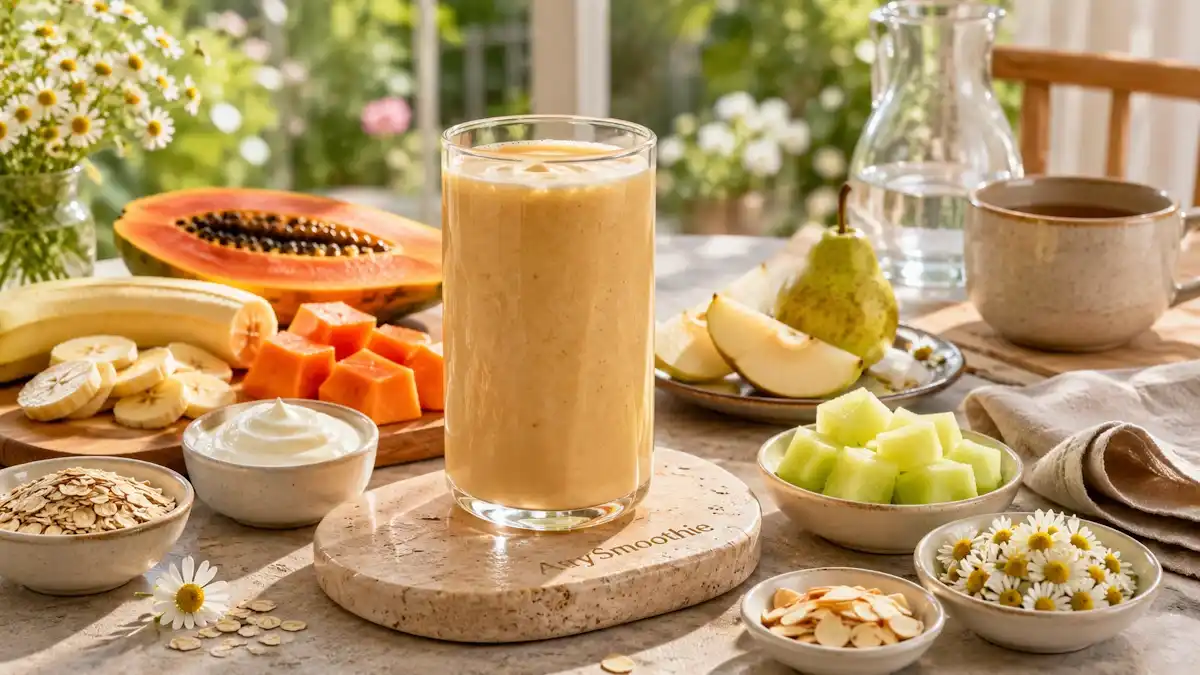
A smoothie can feel like an easy meal, until your stomach says otherwise. With gastritis or acid sensitivity, bright fruit, heavy dairy, and too many add-ins can turn a simple drink into a rough one.
The good news is that smoothies for gastritis and acid sensitivity do not need fancy ingredients. A calmer blend usually comes down to low-acid fruit, a light base, and a texture that does not fight digestion. The goal is comfort, not a sugar rush or a giant fiber bomb. Start there, and the blender gets a lot easier to trust.
What makes smoothies for gastritis and acid sensitivity easier on the stomach?
A stomach-friendly smoothie keeps irritation low and texture simple. That usually means less acid, less fat, and fewer extras that slow things down. When the stomach lining is already sensitive, sharp flavors and very thick drinks can feel rough fast.
A good blend also respects volume. A smaller smoothie can be easier to handle than a huge cup, especially if you sip it slowly. Room-temperature ingredients often feel calmer too, because ice-cold drinks can be a shock. For more on gastritis, see the NIDDK guide to gastritis.
If a smoothie needs a long ingredient list to taste good, it may be too much for an irritated stomach.
Choose low-acid fruits that are less likely to sting
Bananas, melons, pears, and peeled apples are common starting points because they taste mild and blend smooth. Very ripe fruit often feels gentler, too, since the flavor softens and the texture gets creamier.
Citrus, pineapple, and tart berries can be harder for some people to tolerate. They bring more bite, which can be a problem when acid sensitivity is already high. A sweet fruit does not always mean a safe fruit, but mild fruit is often a safer bet.
Use soothing bases that stay light and easy to digest
Water is the simplest base. Oat milk, almond milk, and lactose-free milk can also work if they sit well with you. These options keep the smoothie light and avoid the sharp edge that some juices bring.
Heavy dairy, chocolate milk, and bottled juice can make a blend harder to digest. They can also push the flavor in a direction that feels too sweet or too rich. If dairy works for you, a creamy Greek yogurt smoothie recipe shows how to keep the texture smooth without piling on extras.
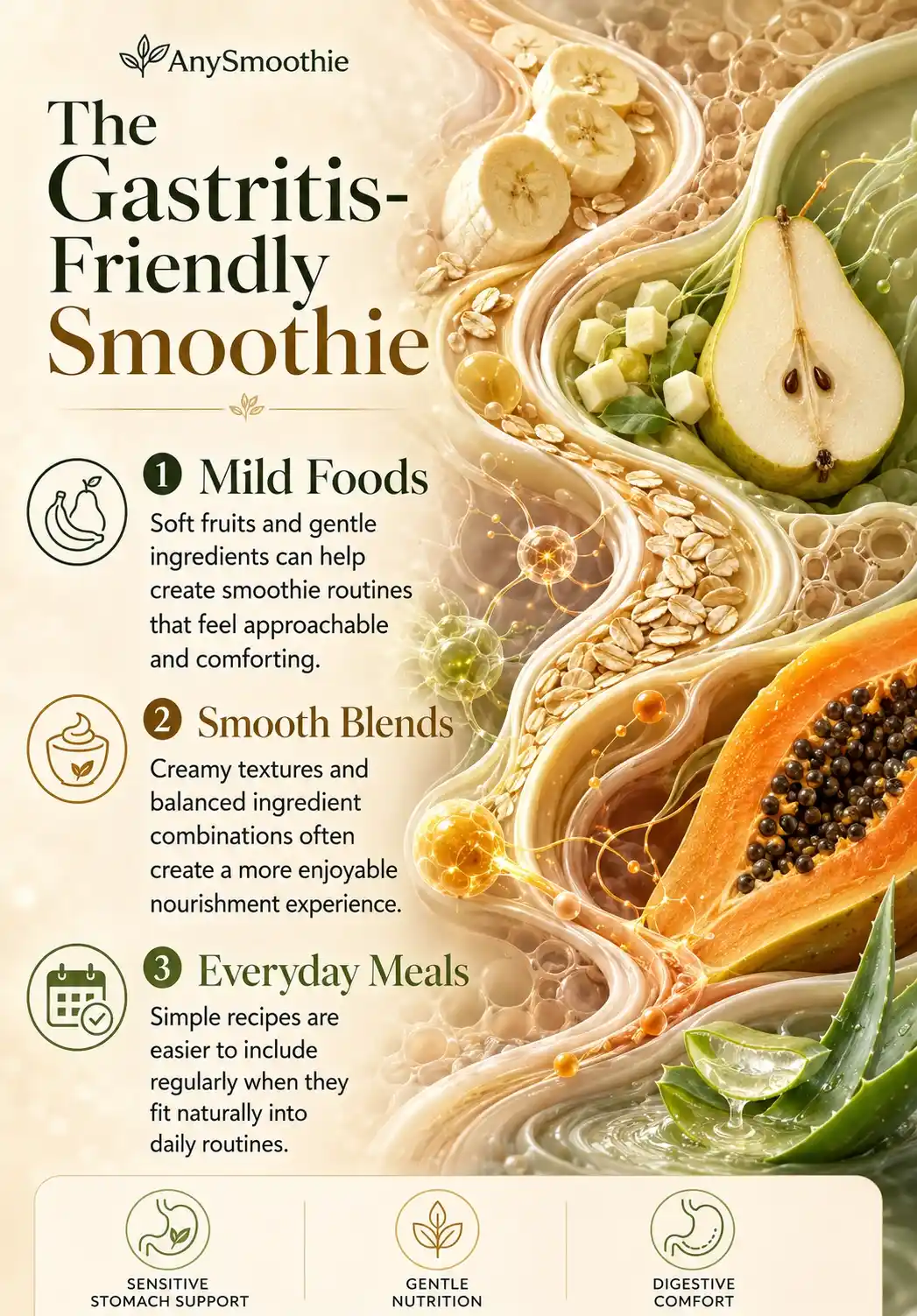
3 Smoothies for gastritis and acid sensitivity
The best blends here stay short and plain. Each one uses a mild fruit profile, a simple liquid, and a texture that does not feel harsh.
| Smoothie name | Key ingredients | Why it may feel gentler | Best time to drink | Possible swaps |
|---|---|---|---|---|
| Banana oat | Banana, oats, oat milk or water | Soft texture, low acid, steady feel | Breakfast or midmorning | Use almond milk or skip chia |
| Pear and melon | Pear, cantaloupe or honeydew, water | Light, juicy, and not creamy | When appetite feels low | Swap melon types or use almond milk |
| Papaya cucumber | Papaya, cucumber, water or oat milk | Mild flavor, smooth texture, extra hydration | After a bland meal or on warm days | Use peeled zucchini instead of cucumber |
Ingredients to avoid when your stomach is already irritated
Common troublemakers include citrus, pineapple, raw ginger in large amounts, coffee, cocoa, and mint for some people. Very cold drinks can also feel rough, especially first thing in the morning. Sugar-heavy add-ins may taste good, but they can make the blend feel too intense.
Trigger foods are personal, so pay attention to your own reaction. For a broader food list, Healthline’s gastritis diet guide is a practical place to compare notes. What bothers one person may sit fine with another.
Watch the sweeteners, boosters, and extras
Honey, agave, protein powders, nut butters, and supplements can all change how a smoothie feels. Some people handle them well. Others find that one extra spoonful makes the drink feel heavy.
Start small instead of stacking add-ins. A smoothie does not need every booster at once. The simpler the mix, the easier it is to spot what works.
How to test new ingredients without upsetting your stomach
- Change one ingredient at a time.
- Start with a half serving.
- Sip slowly and notice how you feel over the next few hours.
A short food note helps too. Write down what you used, how much you drank, and what happened after. That gives you a clearer pattern than guessing.
How to make your smoothie gentler from the first sip to the last
Blend until the texture is fully smooth, with no rough chunks. Smaller servings often feel easier than large ones, especially when symptoms are active. Room-temperature ingredients can also feel more settled than icy ones.
Timing matters as well. A smoothie may sit better with a bland snack than on an empty stomach. Keep the formula simple, keep the portion modest, and let your own response guide the next batch.
Conclusion
The calmest smoothies for gastritis and acid sensitivity are usually the simplest ones. Low-acid fruit, a light liquid base, and a smooth texture do most of the work.
Start with one gentle recipe, then adjust slowly based on how your stomach responds. Consistency matters more than fancy add-ins, especially when the goal is a drink that feels easy from the first sip to the last.
🛡️ Safety Notes & Dietary Interactions
- Sensitive Stomach Considerations
If gastritis symptoms are active, start with smaller smoothie portions and simple ingredients. Even gentle foods may feel uncomfortable during flare-ups, so individual tolerance should guide ingredient selection and serving size. - Dairy and Ingredient Tolerance
Some people tolerate yogurt, kefir, or lactose-free dairy well, while others do not. Introduce dairy ingredients carefully and monitor comfort before making them a regular part of smoothies. - Supplement and Add-In Awareness
Protein powders, herbal supplements, and concentrated superfood blends may change how a smoothie feels. Keep recipes simple initially so you can identify which ingredients are helping or causing discomfort. - Medical Conditions and Ongoing Symptoms
Persistent stomach pain, unexplained weight loss, nausea, or ongoing digestive symptoms deserve professional evaluation. Smoothies may support nutrition habits, but they should not replace individualized medical guidance when needed.
FAQ
What fruits are usually best for gastritis and acid sensitivity?
Low-acid fruits such as bananas, pears, melons, papaya, and peeled ripe apples are often good starting points. They typically provide a softer flavor profile and smoother texture than citrus fruits or pineapple. Individual tolerance still matters, so introduce new fruits gradually and pay attention to how your stomach responds after each smoothie.
Can I use yogurt in smoothies if I have gastritis?
Some people with gastritis tolerate plain yogurt, Greek yogurt, or lactose-free yogurt quite well, while others prefer dairy-free alternatives. The key is choosing unsweetened options and testing small amounts first. If yogurt causes discomfort, switching to oat milk, almond milk, or water may create a gentler smoothie experience.
Should smoothies be cold or room temperature for sensitive stomachs?
Many people find that room-temperature or lightly chilled smoothies feel easier on the stomach than very cold drinks. Extremely cold ingredients can sometimes feel harsh when the stomach lining is already sensitive. Experiment with temperature and notice whether slightly warmer blends improve your overall comfort and digestion.
Are oats a good ingredient for gastritis-friendly smoothies?
Oats are often included because they add texture, fiber, and a more satisfying feel without creating excessive acidity. Small amounts usually work better than large servings. They can help turn a smoothie into a light meal while maintaining a smooth consistency that many people with sensitive stomachs find comfortable.
How can I tell if a smoothie ingredient is bothering my stomach?
The easiest method is changing only one ingredient at a time and keeping the rest of the recipe consistent. Start with smaller servings and note how you feel over several hours. Tracking ingredients, portion sizes, and symptoms can help identify patterns and make future smoothie choices much easier.

Medical Disclaimer: AnySmoothie content is for educational purposes only and is not a substitute for professional medical advice. Consult a healthcare provider for personalized guidance. See our full Disclaimer & Terms of Use. AI Transparency: AnySmoothie may use AI to support content development. All content undergoes human editorial review for accuracy, clarity, and editorial quality. See our full AI Transparency.