
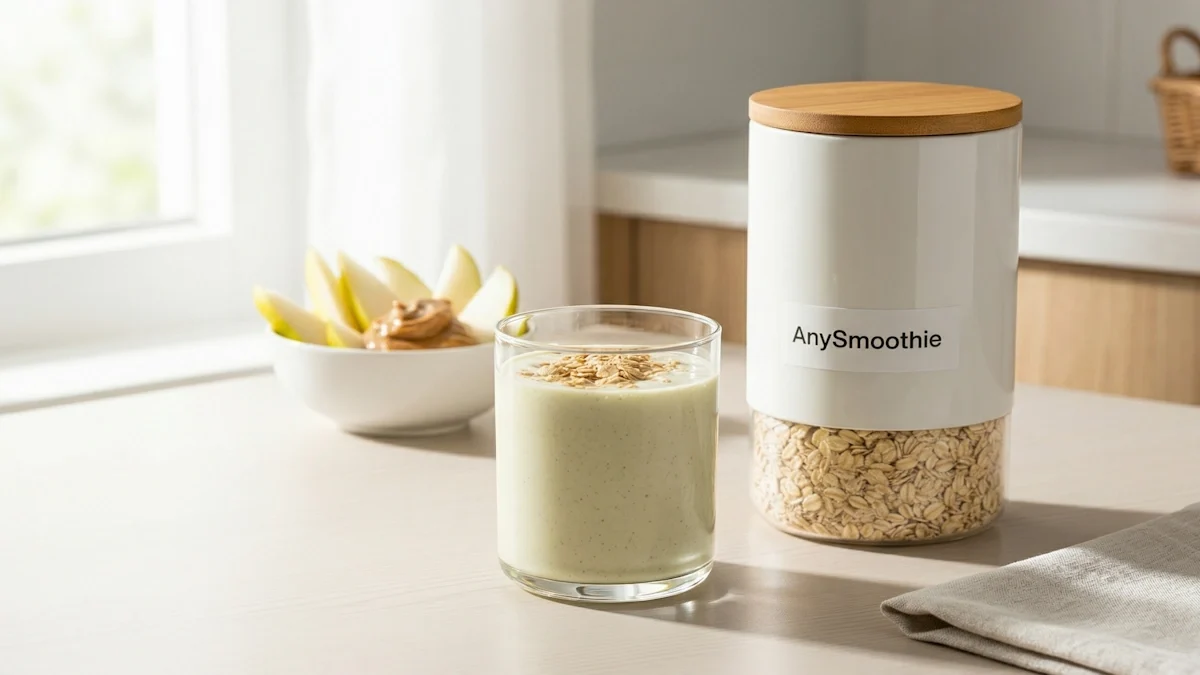
Mucosal protection means helping the stomach and esophagus keep their natural barrier intact. If reflux, irritation, or a sensitive stomach makes food choices feel narrow, a low acid smoothie for mucosal protection can be a practical, food-first option.
The goal is simple, use ingredients that are gentle, easy to sip, and less likely to push acidity or pressure in the wrong direction. You can support comfort without turning the glass into a science project.
Gastric pH and the Mucosal Barrier: The First Line of Defense
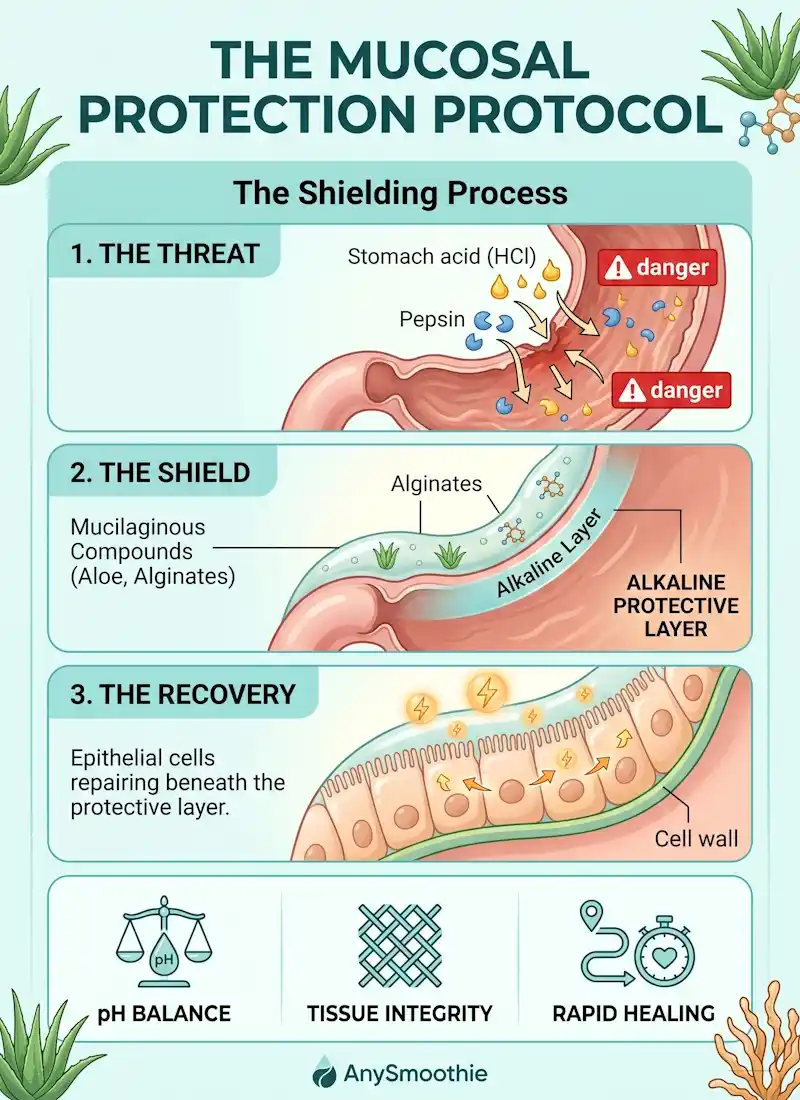
Stomach acid is normal. It helps break down food and keeps microbes in check. The problem starts when acid and pressure get too close to tissue that needs protection.
That’s where the mucosal barrier comes in. It uses mucus, bicarbonate, and a healthy lining to keep the stomach surface safer than the contents inside it.
Bicarbonate Secretion: Maintaining the Alkaline Gradient
Bicarbonate helps create a thin buffer at the tissue surface. That buffer keeps the lining closer to neutral, even while digestion is happening below it. In plain terms, the body makes a protective zone without shutting digestion down.
What the Mucosal Layer Does in Plain Language
The mucosal layer is a slippery coating. It reduces friction, softens contact with acid, and helps tissues tolerate normal digestive work. The goal is to support that barrier, not force the body into some fake alkaline state.
Why Some Smoothie Ingredients Can Irritate Instead of Soothe
Some blends look healthy but still cause trouble. Citrus, pineapple, excess cacao, mint, and very high fat add-ins can raise discomfort in sensitive people. Even a good food can feel rough if it is too acidic, too sweet, or too thick.
The best blend is usually the one your stomach can empty without protest.
Cytoprotective Substrates: From Aloe Polysaccharides to Zinc-Carnosine
Aloe vera juice, zinc-L-carnosine, and sodium alginate each support the barrier in a different way. Aloe brings polysaccharides, zinc-carnosine supports tissue repair, and alginate works by forming a physical barrier against reflux.
One aloe study on gastric mucosa points to mucus support, and a zinc-carnosine gastric health overview summarizes why that compound gets attention for lining support.
| Protector | Physiological mechanism | Target area | Best smoothie pairing | Synergistic nutrient |
|---|---|---|---|---|
| Aloe vera juice | Polysaccharides may support mucus layer signaling | Stomach | Melon, banana, oat milk | Zinc |
| Zinc-L-carnosine | Supports epithelial repair and antioxidant defenses | Stomach, duodenum | Banana, plain yogurt, oats | Protein |
| Sodium alginate | Creates a physical barrier or raft on gastric contents | Esophagus, stomach | Pear, oat milk | Calcium |
For reflux-prone drinks, sodium alginate is the standout because it is built for barrier geometry, not just flavor. Cleveland Clinic explains that raft-like effect well in its alginates overview.
Epithelial Remodeling: Supporting the Tight Junctions of the Esophagus
The esophagus depends on tight seals between cells. Protein, zinc, and steady energy help the body keep those seals in better shape. That is nutrient partitioning in simple terms, the body gets repair material without a sugar spike that steals focus from recovery.
3 ‘Alkaline-Flow’ Low Acid Support Smoothie Recipes
These blends stay low acid, smooth, and easy to adjust. Keep them cool, not icy, and use simple ingredients first.
The “Mucilage-Prime” Melon, Aloe Vera, and Oat Milk Blend
Ingredients
- 1 cup honeydew melon, cubed
- ½ cup food-grade inner-leaf aloe vera juice intended for oral consumption
- ¾ cup unsweetened oat milk
- ⅓ cup cooked rolled oats, chilled
- ½ cup ice, optional
Pour the oat milk and aloe vera juice into the blender first. Add the honeydew, cooked oats, and ice if using. Blend until completely smooth and softly creamy.
Honeydew contributes fluid, potassium, and natural sweetness, while cooked oats add soluble fiber and body. For aloe, use only a food-grade inner-leaf product intended for oral consumption and avoid whole-leaf or latex-containing products, which can contain aloin and other anthraquinones with strong laxative effects. The combination can create a mild texture but should not be expected to coat or repair the digestive tract.
Estimated Nutrition per Serving
- Calories: ~205 kcal
- Protein: ~5 g
- Carbohydrates: ~42 g
- Fat: ~3 g
- Fiber: ~4 g
- Sugars: ~18 g
Banana, Cucumber, and Yogurt Smoothie
Ingredients
- 1 medium ripe banana
- ½ medium cucumber, chopped
- ¾ cup plain yogurt
- ¼ cup unsweetened oat milk
- ½ cup ice, optional
Pour the oat milk and yogurt into the blender first. Add the banana, cucumber, and ice if using. Blend until cool, creamy, and completely smooth.
Banana provides carbohydrates, potassium, and fiber, while cucumber contributes fluid and a light texture. Plain yogurt adds protein, calcium, and creaminess. Choosing a mild yogurt can soften the overall flavor, although digestive tolerance and sensitivity to fermented dairy vary individually.
Estimated Nutrition per Serving
- Calories: ~280 kcal
- Protein: ~11 g
- Carbohydrates: ~46 g
- Fat: ~7 g
- Fiber: ~4 g
- Sugars: ~30 g
If I were making this specifically for a lighter texture, I’d blend the cucumber with the oat milk first, then add the yogurt and banana. It keeps the cucumber finely incorporated without needing extra liquid.
Pear, Chia, and Oat Smoothie
Ingredients
- 1 medium ripe pear, cored and chopped
- ¾ cup unsweetened oat milk
- 1 tablespoon chia seeds
- ¼ cup rolled oats
- ¼ cup cold water, as needed
Pour the oat milk and water into the blender first. Add the pear, chia seeds, and rolled oats. Blend until completely smooth. Let it sit for a few minutes so the chia and oats can hydrate before drinking.
Pear, chia, and oats provide a substantial amount of dietary fiber, while hydrated chia forms a gel-like mucilage that naturally thickens the smoothie. Because chia continues absorbing liquid as it sits, add more water if needed to maintain an easy-to-sip texture. Increase fiber gradually if your usual intake is low.
Estimated Nutrition per Serving
- Calories: ~340 kcal
- Protein: ~8 g
- Carbohydrates: ~62 g
- Fat: ~9 g
- Fiber: ~14 g
- Sugars: ~24 g
Biohacking Digestive Comfort: Reducing Acid Reflux Triggers
A smoothie can backfire when the volume is too large or the mix is too rich. Even clean ingredients can create pressure if the cup is oversized. Smaller, slower servings usually work better for sensitive digestion.
Mitochondrial Priming: Energy Flow for Rapid Cellular Turnover
A steady blend with modest sugar, a little protein, and soft fiber helps the body spend less effort on cleanup. That supports metabolic efficiency and keeps energy available for normal tissue turnover. Big sugar swings do the opposite.
Avoid the ingredients that commonly raise acidity or pressure
Skip citrus, pineapple, peppermint, strong coffee, hot spices, too much cocoa, carbonation, and large amounts of nut butter. Very cold blends can also feel harsh. A reflux-focused ingredient list lines up with this approach, keep it simple and calm.
The best time to drink it and how much to start with
Start small, about 8 to 12 ounces. Try it between meals or as a light breakfast, then watch how your body responds. A smaller serving is easier to handle than a giant smoothie, even when the ingredients are good.
What Makes a Barrier-Friendly Smoothie Different From a Standard Health Smoothie
Most health smoothies chase volume, sweetness, or fiber density. A barrier-friendly smoothie does the opposite. It keeps acid low, texture smooth, and fat modest so the stomach does not have to work harder than needed.
That matters for reflux-prone digestion. Aloe vera juice can support a softer lining environment, sodium alginate can create a physical barrier, and zinc-L-carnosine can support tissue maintenance. The alginate overview from Cleveland Clinic is useful here, because it shows why alginates are in a class of their own for reflux comfort.
Conclusion
A low acid smoothie can be a smart, food-first way to support mucosal comfort. The pattern is simple, choose gentle liquids, low acid fruit, soft fiber, and a texture that goes down easily.
Keep trigger foods out, start with a small portion, and pay attention to timing. Small changes like these can make daily comfort much easier to manage, one calm blend at a time.
🛡️ Safety Notes & Contraindications: Low acid smoothies
Aloe Vera Laxative Effect: ensure you use only the inner leaf gel (aloe vera juice); products containing whole-leaf extract or aloin can have a potent laxative effect and cause intestinal cramping.
Sodium Alginate and Sodium Load: sodium alginate contains significant amounts of sodium; individuals with hypertension or heart failure on salt-restricted diets should monitor their overall daily sodium intake.
Alkaline-Acid Paradox: completely neutralizing stomach acid with supplements can lead to hypochlorhydria, which impairs protein digestion and mineral absorption; the goal is protection, not complete acid suppression.
Aspiration Risk: if you suffer from severe nocturnal reflux, avoid consuming any smoothie within 3 hours of going to sleep to prevent potential aspiration of the “raft” or stomach contents.
Zinc-L-Carnosine Dosage: do not exceed recommended doses, as excessive zinc can interfere with copper absorption and lead to anemia or neurological issues.
FAQ
How do “Aloe Polysaccharides” support the stomach’s natural mucus layer?
Aloe vera juice contains acemannan and other complex polysaccharides that interact with the gastric mucosa. Biochemically, these compounds help modulate the signaling pathways responsible for mucus production and secretion. Supporting this physiological system through low-acid smoothies optimizes the natural pathways of “barrier reinforcement,” ensuring the biochemical mechanics of the protective zone remain resilient against normal digestive acid.
Why is “Zinc-L-Carnosine” considered a premium substrate for epithelial repair?
Zinc-L-Carnosine is a chelated compound that adheres to gastric erosions more effectively than standard zinc. Biochemically, it supports the physiological systems involved in protein synthesis and antioxidant defense at the site of tissue stress. Supporting this pathway through blended meals optimizes the natural pathways of “epithelial remodeling,” ensuring the biochemical mechanics of cellular turnover are supported without the irritation of more acidic nutrient forms.
What is the “Raft-Effect” of Sodium Alginate in reflux-prone smoothies?
Sodium alginate is a polysaccharide derived from brown seaweed that reacts with gastric acid to form a neutral, physical gel. Biochemically, this “raft” floats on top of the stomach contents, acting as a structural barrier to prevent acid and enzymes from moving into the esophagus. Supporting this physiological system through specific smoothie formulations facilitates the biochemical mechanics of “mechanical protection,” providing comfort that lasts beyond the initial sip.
How does “Bicarbonate Secretion” maintain the alkaline gradient at the tissue surface?
The body maintains a thin, bicarbonate-rich layer at the surface of the gastric lining to neutralize acid before it reaches the cells. Biochemically, a low-acid, moderate-protein smoothie supports the energy-dependent process of bicarbonate secretion by providing steady substrates. Supporting this physiological system optimizes the natural pathways of “pH buffering,” ensuring the biochemical mechanics of the mucosal lining stay closer to neutral even during active digestion.
Why is “Low-Volume and Soft-Texture” critical for reducing esophageal pressure?
Large volumes or highly viscous smoothies can increase gastric distension and lower esophageal sphincter (LES) pressure, potentially triggering reflux. Biochemically, keeping portions between 8-12 ounces and the texture smooth reduces the mechanical load on the stomach. Supporting this physiological system through “barrier-friendly” blending optimizes the natural pathways of gastric emptying, ensuring the biochemical mechanics of digestion proceed without inducing structural stress.

Medical Disclaimer: AnySmoothie content is for educational purposes only and is not a substitute for professional medical advice. Consult a healthcare provider for personalized guidance. See our full Disclaimer & Terms of Use. AI Transparency: AnySmoothie may use AI to support content development. All content undergoes human editorial review for accuracy, clarity, and editorial quality. See our full AI Transparency.