
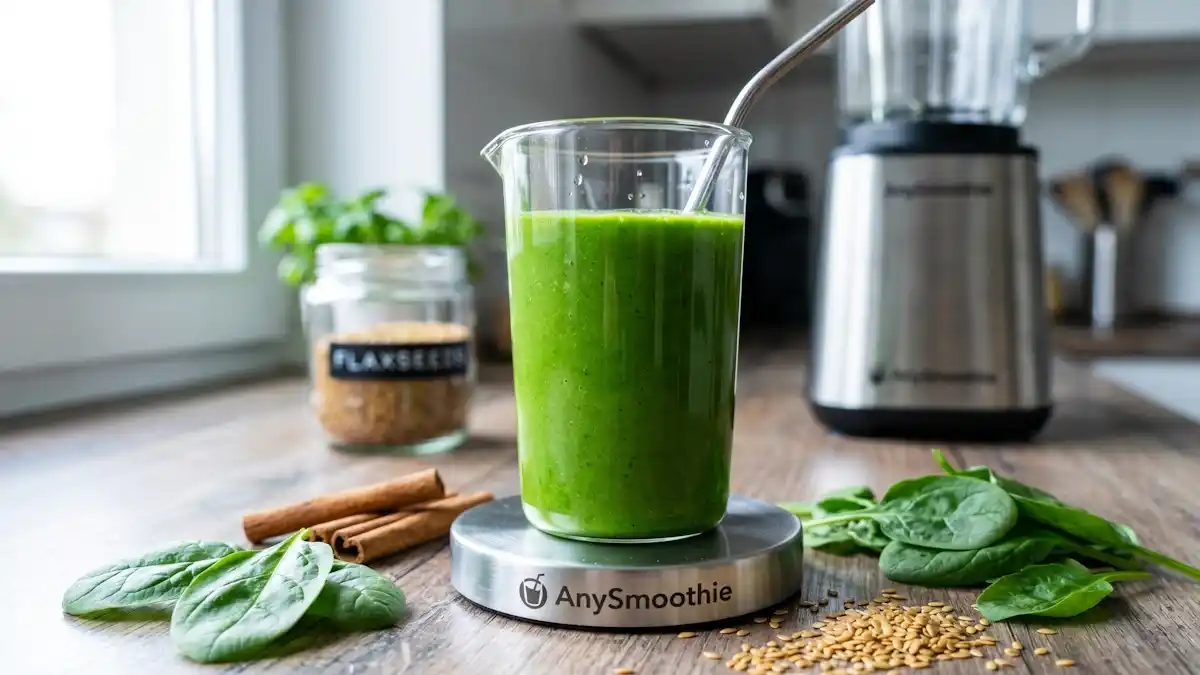
Many people want the same thing from breakfast or a snack, steadier energy, fewer sugar swings, and better metabolic flow. A smoothie can help, but only if it has more than fruit and ice. An alpha lipoic acid smoothie works best when ALA sits inside a mix of fiber, fat, and protein, so the body gets a slower, cleaner nutrient load.
ALA is tied to normal energy metabolism and antioxidant activity. It also fits well in a smoothie because it pairs with ingredients that support stable digestion. That mix gives your body a simple job, move nutrients in, use them well, and avoid the quick spike that leaves you hungry again. The details matter, and they start with how ALA works inside the cell.
The Universal Antioxidant: ALA’s Dual Solubility and Glucose Logic
ALA is small, active, and unusual. It dissolves in both water and fat, so it moves through more than one type of body environment. That matters because cells are built the same way. Some work happens in watery spaces, while other steps depend on lipid-rich membranes. A review on lipoic acid metabolism and mitochondrial redox regulation shows why this compound sits close to energy production, not just antioxidant cleanup.
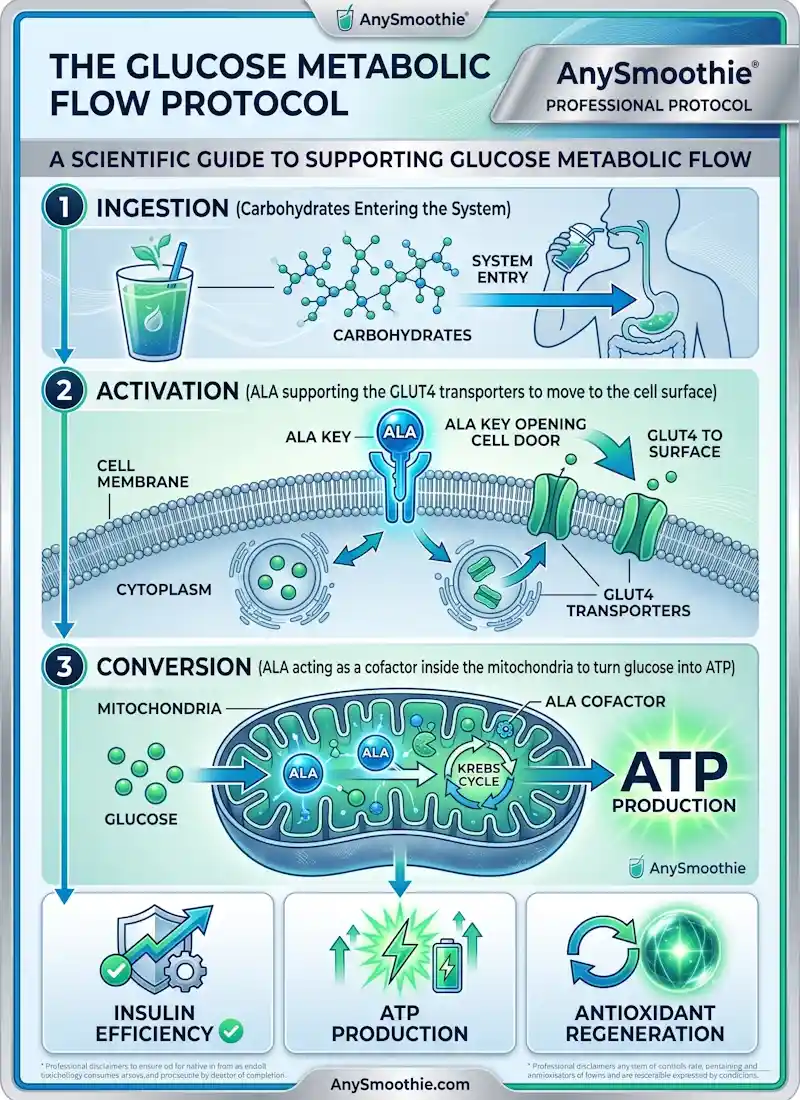
Inside mitochondria, ALA helps enzyme complexes handle fuel, especially when glucose moves through pyruvate pathways. It doesn’t force glucose use on its own. Instead, it supports the machinery that helps cells process fuel with less waste. That is why ALA fits a nutrient partitioning mindset better than a quick-fix mindset.
Beyond Scavenging: ALA as a Mitochondrial Enzyme Cofactor
A small detail makes a big difference here. ALA is a cofactor for enzymes that help move fuel through normal energy steps. In plain language, it helps the cell turn what you eat into usable energy with less friction.
| Glucose modulator | Physiological mechanism | Primary cellular site | Best smoothie pairing | Synergistic bio-enhancer |
|---|---|---|---|---|
| Alpha lipoic acid | Enzyme cofactor, redox support, dual-solubility | Mitochondria and cell membranes | Spinach, flax, yogurt, avocado | Vitamin C or E-rich fruit |
| Berberine | AMPK signaling and glucose-handling support | Gut and liver | Berry-chia or protein smoothies | Fiber and protein |
| Chromium picolinate | Supports insulin receptor signaling | Cell membrane and insulin-sensitive tissues | Plain yogurt, cinnamon, berries | Protein with balanced carbs |
ALA is the odd one out because of dual solubility. That gives it a wider fit in a smoothie that mixes watery greens with fats. It also helps explain why ALA feels more flexible than a single-track supplement.
The Redox Switch: Regenerating Glutathione and Vitamin C/E
ALA also matters for redox balance, the push-pull between oxidation and reduction. That sounds technical, but the idea is simple. Cells use these reactions to keep energy work steady and limit excess stress from normal metabolism.
ALA also supports the antioxidant network that includes glutathione, vitamin C, and vitamin E. A recent ALA and glucose metabolism review discusses links with insulin signaling and GLUT4 movement. The takeaway is practical, ALA helps the systems that keep energy output more even.
ALA works best as part of a meal pattern that keeps digestion calm.
What to Put in an Alpha Lipoic Acid Smoothie for Better Glucose Balance
A smoothie built for glucose balance needs structure. Protein slows the rush of sugar. Fiber adds thickness and keeps digestion steady. Healthy fat improves satiety and makes the blend feel like food, not juice. If you want an alpha lipoic acid smoothie for glucose metabolic flow, those ingredients do most of the day-to-day work.
Use this as a simple base:
- Protein keeps the smoothie more filling and slows the pace of digestion.
- Fiber from chia, flax, or greens helps with texture and steadier release.
- Healthy fat from avocado or nut butter smooths the finish and adds staying power.
- Low-glycemic produce like berries or spinach keeps sweetness in check.
The best base ingredients for steady energy without a sugar crash
Start with greens, berries, chia or flax, unsweetened yogurt or protein, and a small amount of fat like avocado or nut butter. Spinach and other greens keep sugar low and add minerals. Berries bring color and flavor without the hit you get from sweeter fruit. Chia and flax slow the blend and improve texture. That structure is close to a glucose-reset smoothie blueprint, which layers protein, fiber, and fat before sweetness.
A practical biohacker move here is simple, build the base first, then think about supplements. If the smoothie already supports slower digestion, ALA has a better setting to fit into.
How to use cinnamon, chromium, and R-ALA without overcomplicating the blend
Cinnamon adds flavor and works well with berries or cacao. Chromium picolinate belongs in the blend only in modest, label-based amounts. Some readers also prefer R-ALA because it is the form most often discussed in supplement use. Keep the blend simple, then add the supplement only if the label or a qualified professional says it fits your routine.
3 Glucose-Flow ALA Support Smoothie Recipes
These three ideas keep sugar low and texture solid. They are not dessert smoothies. They are meal-support blends built for a calmer energy curve.
Conclusion
An alpha lipoic acid smoothie works best when ALA is part of a whole-food blend, not the main event. Its dual solubility gives it a wide fit, and its mitochondrial role makes it a smart addition to a smoothie built for steadier glucose flow.
When you pair ALA with fiber, fat, protein, and low-glycemic ingredients, you support normal metabolic efficiency instead of chasing a quick fix. That is the real value here, consistency, cleaner fuel use, and a breakfast or snack that works with your biology.
🛡️ Safety Notes & Contraindications: Alpha lipoic acid smoothies
Hypoglycemia risk: ALA significantly enhances insulin sensitivity; if combined with insulin or oral hypoglycemic agents (e.g., Metformin), it may lead to a dangerous drop in blood sugar levels.
Thiamine (B1) depletion: high doses of ALA can lower thiamine levels, which is particularly dangerous for chronic alcohol consumers; ensure adequate Vitamin B1 intake if using ALA daily.
Thyroid medication interference: ALA may lower levels of T4 (thyroxine) or interfere with the conversion of T4 to T3; individuals on thyroid replacement therapy should monitor their hormones closely.
Chemotherapy interaction: due to its potent antioxidant activity, ALA may interfere with the mechanism of certain oxidative chemotherapy drugs; consult an oncologist before use.
Dermatological reactions: some individuals may experience skin rashes or hives (urticaria) even at moderate doses; discontinue use immediately if any skin irritation occurs.
FAQ
How does Alpha Lipoic Acid (ALA) function as a “Universal Antioxidant”?
Alpha Lipoic Acid is unique because of its dual solubility, meaning it can function in both the watery (cytosolic) and fatty (membrane) compartments of the cell. Biochemically, this allows ALA to support the physiological systems of redox balance across the entire cellular structure. Supporting this “universal” reach through targeted smoothies optimizes the natural pathways of antioxidant regeneration, ensuring that the biochemical mechanics of defense are active wherever oxidative stress occurs.
What is the role of ALA as a mitochondrial enzyme cofactor in energy production?
Inside the mitochondria, ALA is an essential cofactor for the pyruvate dehydrogenase complex, which facilitates the conversion of fuel into energy. Biochemically, it helps move glucose-derived substrates into the Krebs cycle. Supporting this physiological system through ALA-rich routines optimizes the natural pathways of fuel handling. This ensures that the biochemical mechanics of energy production remain efficient, supporting steady ATP synthesis with minimal metabolic friction.
How does ALA support the “Translocation of GLUT4” for glucose balance?
GLUT4 is the primary protein responsible for transporting glucose from the bloodstream into muscle and fat cells. Biochemically, ALA has been studied for its ability to support the signaling pathways that move GLUT4 to the cell membrane. Supporting this physiological system optimizes the natural pathways of glucose uptake. This “glucose logic” ensures that the biochemical mechanics of nutrient partitioning are supported, facilitating a calmer energy curve and reducing systemic metabolic drag.
Why is “Redox Recycling” essential for maintaining the antioxidant network?
Antioxidants like Vitamin C, Vitamin E, and glutathione become “spent” after neutralizing free radicals. Biochemically, ALA can donate electrons to regenerate these molecules back into their active forms. Supporting this physiological system through nutrient-dense smoothies optimizes the natural pathways of the antioxidant network. This recycling effect ensures that the biochemical mechanics of cellular protection are sustained, facilitating long-term mitochondrial priming and resilience.
How do fiber and fat synergize with ALA to support a steady energy curve?
While ALA supports the intracellular handling of glucose, fiber and healthy fats manage its entry into the bloodstream. Biochemically, fiber slows gastric emptying, and fats improve satiety. Supporting these physiological systems together optimizes the natural pathways of metabolic flow. This synergy ensures that the biochemical mechanics of digestion and fuel utilization work in tandem, preventing rapid sugar spikes and supporting a more stable, efficient metabolic environment.

Medical Disclaimer: AnySmoothie content is for educational purposes only and is not a substitute for professional medical advice. Consult a healthcare provider for personalized guidance. See our full Disclaimer & Terms of Use. AI Transparency: AnySmoothie may use AI to support content development. All content undergoes human editorial review for accuracy, clarity, and editorial quality. See our full AI Transparency.