
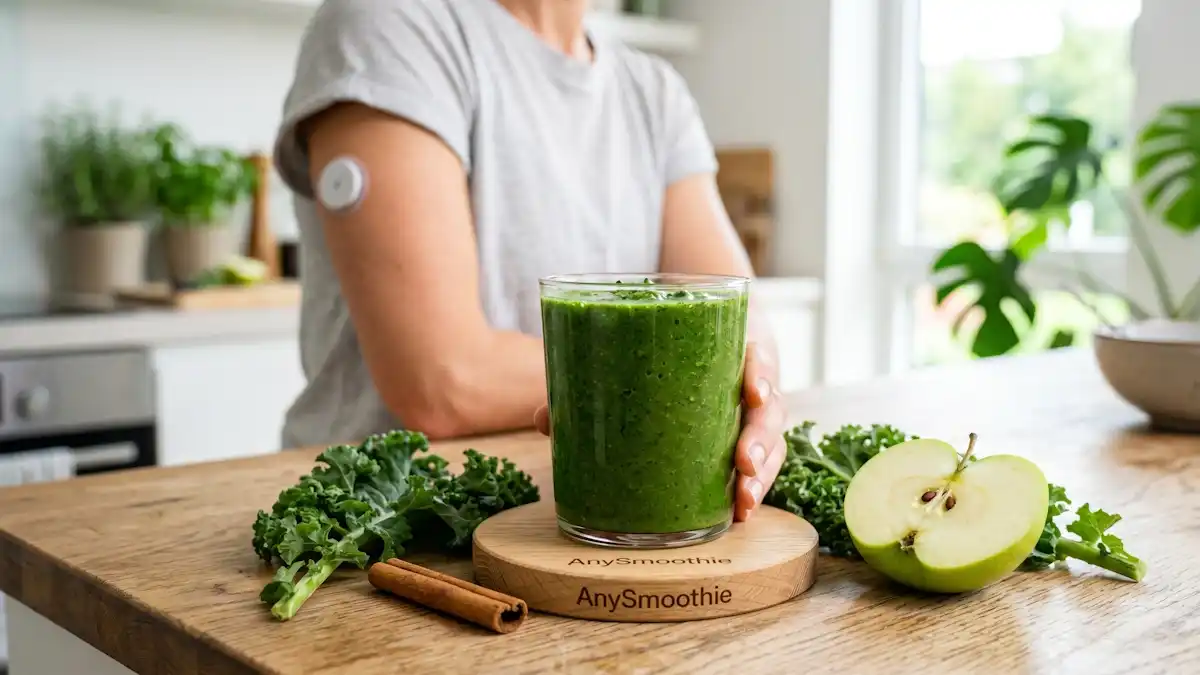
That afternoon crash often starts at breakfast. A sweet coffee, juice, or fruit-heavy smoothie can send blood sugar up fast, then leave you foggy, hungry, and looking for more carbs by 3 p.m.
A smart green smoothie can do the opposite. When it’s built with leafy greens, protein, seeds, and a modest amount of fruit, it can support glucose homeostasis by slowing digestion, improving fullness, and softening postprandial spikes.
Still, not every smoothie helps. Some are desserts in a blender. The difference comes down to fiber, structure, and what else goes in the cup.
The Fiber Buffer: Why Blending Greens Beats Juicing for Blood Sugar
Blending keeps the plant intact. Juicing strips away much of the fiber, which means sugar can move through your gut much faster. That matters because the soluble fiber matrix in greens, seeds, and fruit pulp slows gastric emptying and sugar absorption.
This is where the real green smoothie benefits show up. You keep more of the stuff that helps flatten the glucose curve, instead of drinking concentrated sugar with the brakes removed.
A fruit-only smoothie can still hit hard if it’s large, low in protein, and packed with banana, mango, dates, or juice. Green juice often looks healthy, but without fiber, it tends to act more like a fast carb drink.
This quick comparison makes the difference clear:
| Criteria | Fruit-Only Smoothie | Green Juice (No Fiber) | Balanced AnySmoothie Green Smoothie |
|---|---|---|---|
| Impact on Blood Glucose (Spike Level) | Moderate to high | High | Low to moderate, “Metabolic Peace” |
| Fiber Content | Low to moderate | Very low | High |
| Satiety Duration | Short to medium | Short | Long-lasting |
| Insulin Response | Sharper rise | Fastest rise | Smoother, lower demand |
The balanced green smoothie is the only option here that supports steadier energy for hours, not minutes.
Glycemic Variability: How Flattening the Curve Extends Longevity
Glycemic variability means the size of your blood sugar swings. Big jumps and drops can leave you tired, snacky, and mentally dull. Over time, fewer spikes may support better insulin optimization and steadier appetite control.
Recent 2025 and 2026 reporting points in the same direction. Smoothies that include seeds, intact fiber, and protein appear to reduce swings better than juice or sweet blends.
The Nutrients in Leafy Greens That Matter More Than Most People Think
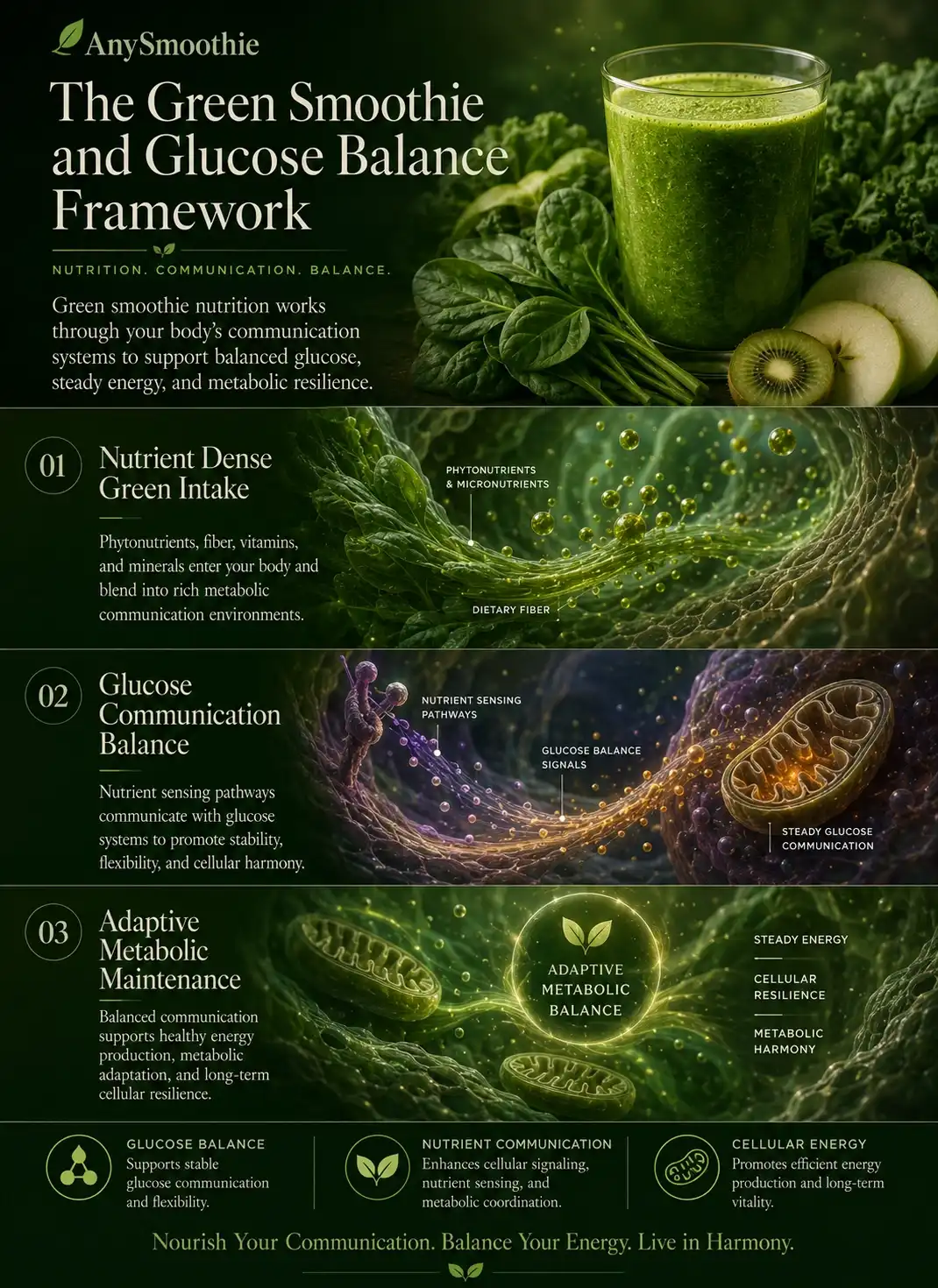
Fiber gets most of the attention, but dark greens do more than bulk up a smoothie. Spinach, kale, arugula, and chard are low in sugar and rich in minerals and plant compounds that fit a blood sugar-friendly pattern.
They aren’t magic. A kale smoothie with juice, honey, and frozen pineapple can still spike you. But greens are a smart base because they add volume, micronutrients, and almost no sugar.
Magnesium and Chromium: The Mineral Engines of Insulin Sensitivity
Magnesium helps insulin do its job. When intake is low, glucose handling often gets worse. Leafy greens are one of the easiest ways to add more magnesium without adding many carbs.
Chromium gets less attention, but it’s linked to how the body handles glucose. Evidence on supplements is mixed, and direct 2026 smoothie trials are limited. Still, chromium-rich foods fit well into a pattern built for insulin sensitivity.
So the win is simple. Start with greens, not fruit. Then build around them.
Polyphenol Synergy: Dark Leafy Greens as Natural Alpha-Glucosidase Inhibitors
Polyphenols are plant compounds that may slow how fast some carbs break down in the gut. In plain English, they can act a bit like gentle alpha-glucosidase inhibitors. That means glucose may enter the bloodstream at a slower pace.
A European Journal of Clinical Nutrition review argued that smoothies deserve a more careful look in glycemic research, because blending does not always worsen response and may compare well when fiber-rich ingredients are used well. That doesn’t give every smoothie a pass. It does support smarter formulas.
How to Build a Green Smoothie That Helps Stop Glucose Spikes
The easiest rule is balance. Fill about half the blender with greens, add a serious protein source, then include fiber or fat boosters. Keep fruit modest, usually a small handful of berries, half a green apple, or a bit of green banana.
Aim for about 20 to 30 grams of protein and 10 or more grams of fiber when you can. That combo tends to slow digestion and improve fullness.
If your smoothie tastes like dessert, your glucose may treat it like dessert.
3 Parts Every Glucose-Steady Smoothie Should Include
Use this simple build:
- Greens like spinach, kale, or mixed greens form the low-sugar base.
- Protein like Greek yogurt, unsweetened soy milk, cottage cheese, or protein powder helps blunt the spike.
- Fiber and fat boosters like chia, flax, hemp, avocado, or nut butter slow the meal down.
Keep an eye on common mistakes. Fruit juice, sweetened yogurt, honey, agave, and oversized servings can wipe out the benefit. These tips to avoid a blood sugar spike line up with what works in practice.
Biohacking the Spike: The Vinegar Shot and Fats Addition
Some people pair a meal with a small vinegar drink, usually diluted in water, because acids may reduce post-meal glucose rise. If you try it, keep it gentle and avoid it if it bothers your stomach or teeth.
Adding fats is often more useful. Avocado, chia, flax, hemp, or nut butter can slow the meal and improve satiety without much sugar. The acetic acid in vinegar may temporarily interfere with starch-digesting enzymes, further slowing the conversion of complex carbs into sugar.
Sequencing Matters: Why a Green Smoothie Is the Perfect “Meal Starter”
Meal order can change your glucose response. Starting with fiber, protein, and greens may help your body handle the rest of the meal with a steadier rise.
That means a balanced green smoothie can work well before breakfast or lunch, not beside pancakes or a pastry. Some people do better drinking half first, then eating the rest of the meal.
3 Glucose-Steady Green Smoothie Recipes
These are simple ideas, not medical prescriptions. Keep portions sensible and adjust based on hunger, activity, and your own glucose data if you track it.
Conclusion
A green smoothie only helps blood sugar when the recipe earns it. The label on the bottle means less than the fiber, protein, fat, and portion size inside.
Blending beats juicing because it keeps the plant structure that slows digestion. Leafy greens add magnesium, chromium, and polyphenols, while protein and seeds help blunt postprandial spikes and extend fullness.
Start with one balanced recipe and watch what changes. Pay attention to your energy, your hunger a few hours later, and, if you monitor it, your own glucose response. That feedback matters more than any trend.
🛡️ Safety Notes & Dietary Interactions
- Fiber Matrix Integrity and Glucose Absorption Control: Blending whole greens, seeds, and intact fruit preserves the soluble fiber network that helps slow gastric emptying and soften postprandial glucose elevation. Juicing removes much of that structure, which is one reason green smoothies built around intact plant material generally create steadier metabolic pacing than low-fiber juice blends.
- Magnesium Density and Insulin Sensitivity Support: Leafy greens contribute magnesium, potassium, and trace minerals that participate in insulin signaling and glucose-handling pathways. Smoothies centered around spinach, kale, chard, or arugula create a lower-sugar nutrient foundation that supports steadier energy dynamics without depending on aggressive carbohydrate restriction strategies.
- Polyphenol-Mediated Carbohydrate Breakdown Modulation: Dark greens, cinnamon, berries, flax, and seeds contribute polyphenols associated with slower carbohydrate digestion and broader oxidative balance signaling. Combined with protein and healthy fats, these ingredients may help create a more gradual glucose entry curve compared to fruit-heavy smoothies that digest rapidly and leave energy feeling unstable later in the day.
- Meal Sequencing and Satiety Communication Dynamics: Starting meals with fiber-rich green smoothies may help soften the glucose response to the foods that follow by creating earlier satiety and slower digestive pacing. This “meal starter” structure tends to work best when the smoothie stays moderate in portion size and avoids sweeteners, juice concentrates, or oversized fruit loads.
FAQ
Why does blending greens work better for blood sugar balance than juicing?
Blending keeps the fiber-rich structure of the plant intact, while juicing removes much of the pulp and slows less of the glucose absorption process. Fiber acts like a metabolic buffer by delaying gastric emptying and reducing how quickly sugars enter circulation. That slower digestion pattern often creates steadier energy and longer satiety than low-fiber juice-based drinks.
Why do fruit-heavy smoothies often lead to afternoon crashes?
Large amounts of banana, mango, juice, honey, or sweetened yogurt can raise blood sugar quickly without enough fiber, protein, or fat to slow digestion. The resulting glucose spike is often followed by a sharper energy drop later in the morning or afternoon. Balanced green smoothies help reduce that effect by creating steadier nutrient delivery and more stable satiety signaling.
How do greens support insulin sensitivity and glucose handling?
Leafy greens contribute magnesium, chromium, polyphenols, and fiber while adding very little sugar to the smoothie. Magnesium in particular is closely tied to insulin signaling and glucose metabolism pathways. Greens also increase volume and satiety without significantly increasing carbohydrate load, which is why they fit so well into blood sugar-conscious nutrition strategies.
Why are seeds and healthy fats important in glucose-steady smoothies?
Ingredients like chia, flax, hemp, avocado, and nut butter slow digestion and improve the overall structure of the meal. Their fiber and fat content help reduce rapid glucose entry into the bloodstream while extending fullness. In practical terms, this often means fewer cravings, steadier energy, and less desire to snack between meals.
What is the simplest way to build a balanced green smoothie?
A reliable formula starts with leafy greens as the base, followed by a meaningful protein source and a fiber or fat booster like chia, flax, avocado, or hemp. Fruit should stay moderate rather than dominating the blend. If the smoothie tastes more like dessert than a meal, it usually needs more fiber, protein, or greens to support steadier glucose handling.

Medical Disclaimer: AnySmoothie content is for educational purposes only and is not a substitute for professional medical advice. Consult a healthcare provider for personalized guidance. See our full Disclaimer & Terms of Use. AI Transparency: AnySmoothie may use AI to support content development. All content undergoes human editorial review for accuracy, clarity, and editorial quality. See our full AI Transparency.