
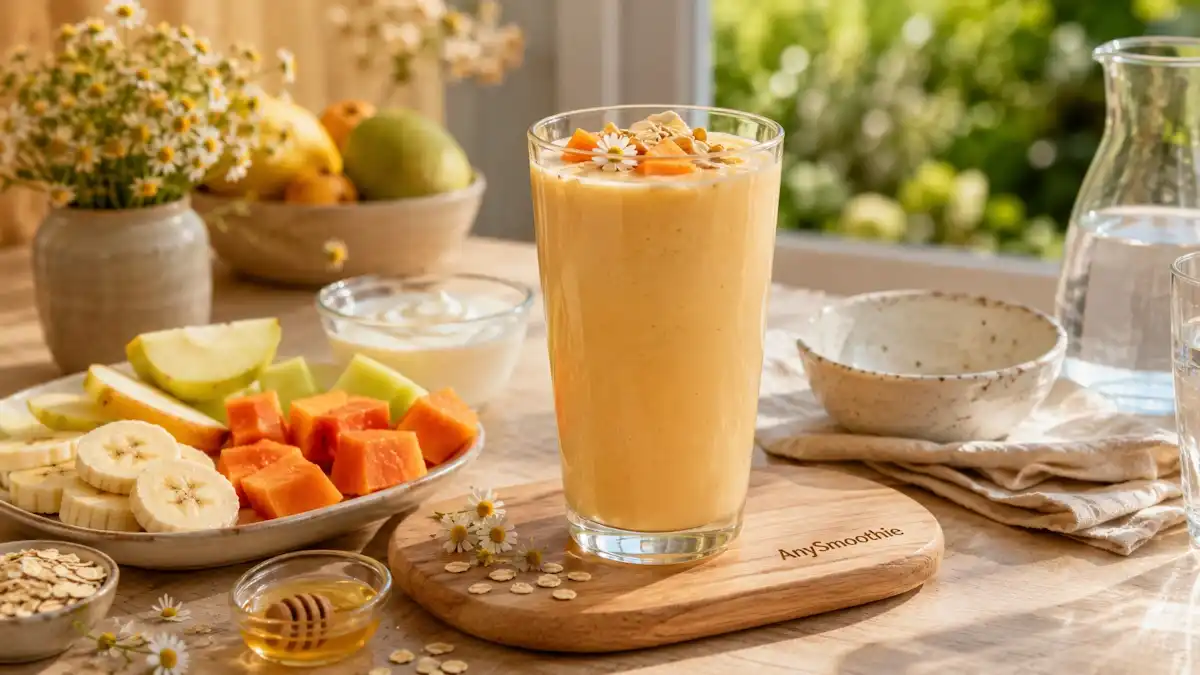
Some smoothies feel light for the first few sips, then turn sharp or heavy. That usually happens when the fruit is too acidic, the blend is too sweet, or the texture is too thick.
The fix is simple. Choose low-acid fruit, keep the add-ins gentle, and build a smoother texture that sits easier. These non-acidic fruit smoothies for sensitive stomachs can taste clean without hitting hard.
Below, you’ll see how to choose ingredients, what to limit, and three easy recipes you can keep on repeat.
Why some fruit smoothies feel too harsh for sensitive stomachs
A smoothie can bother you for a few simple reasons. Citrus, pineapple, and some berries are bright and fresh, but they can feel sharp if your stomach is touchy. Large fruit-only blends can also pack a lot of natural sugar at once, which may feel dense.
Texture matters too. A drink loaded with ice, seeds, or too much rough fiber can feel less smooth than it looks. Dairy or sweet add-ins can make it feel heavier as well.
The goal is not to avoid fruit. It is to choose combinations that feel softer, calmer, and easier to sip. That is why balance matters as much as flavor. Many people searching for non-acidic fruit smoothies are simply looking for fruits that feel gentler than citrus-heavy blends.
Acidic fruits that can feel rough on digestion
Oranges, lemons, limes, pineapple, and tart berries are common smoothie fruits, but they are not equally comfortable for everyone. If acidity bothers you, these can feel too bright.
Ripeness changes the picture. A ripe peach tastes rounder than a firm one. A ripe banana also blends in with less edge.
For a broader look at fruit acidity, this low-acid fruit guide is a useful reference.
Why balance matters more than sweetness alone
A smoothie made from fruit alone can taste good, then feel like a sugar rush. Adding a little fat, protein, or creamy fiber slows the pace of the drink.
That does not mean making it heavy. It means giving the blender something that rounds out the fruit.
Ripe fruit, enough liquid, and one creamy add-in usually beat a long list of extras.
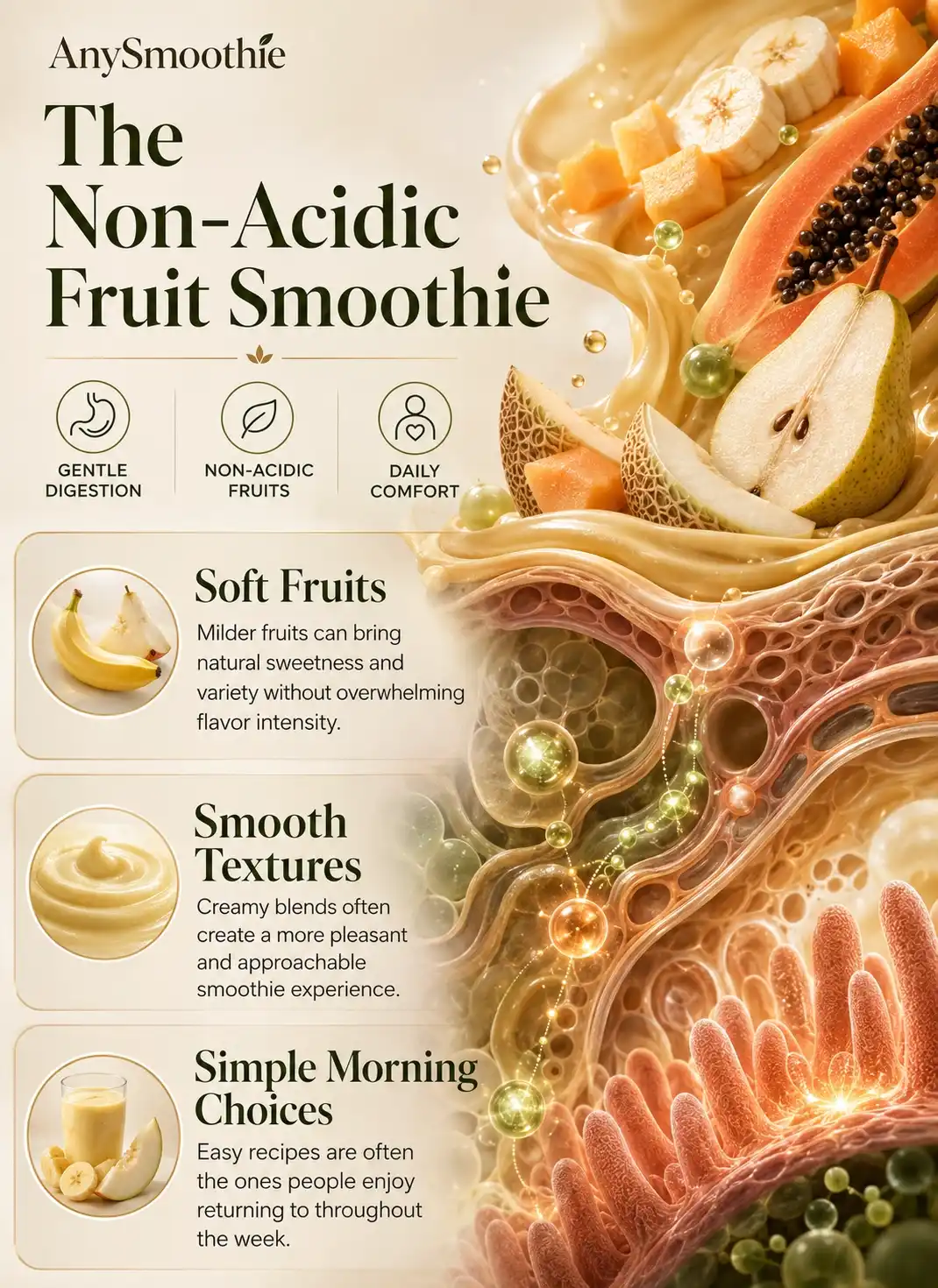
Best ingredients for non-acidic fruit smoothies for sensitive stomachs
The best starting point is a fruit that tastes soft, then a liquid that keeps the blend easy. If you want more structure, smoothie recipes for better gut health uses the same balanced approach.
Here is a quick side-by-side look at the most useful fruit choices.
| Fruit | Flavor | Texture | Acidity | Stomach-friendliness |
|---|---|---|---|---|
| Banana | Mild, sweet | Creamy | Low | Very gentle |
| Pear | Soft, lightly sweet | Juicy, smooth | Low | Gentle when ripe |
| Melon | Fresh, light | Watery, smooth | Very low | Often easy to sip |
| Mango | Sweet, rich | Thick, silky | Low to moderate | Best when fully ripe |
| Papaya | Mild, musky | Soft, creamy | Low | Often feels mellow |
Ripe fruit is the sweet spot. It blends faster and usually tastes less sharp. If you want a simple comparison for reflux-friendly choices, Medical News Today on smoothies for GERD gives a helpful overview.
Low-acid fruits that work well in smoothies
Bananas, pears, melons, mango, peaches, and ripe papaya all work well. They bring softness without a tart edge.
Banana and pear add body. Melon adds a lighter feel. Mango, peach, and papaya make the blend taste fuller without leaning sour.
Gentle add-ins that improve texture without adding sharpness
Oats, chia seeds in small amounts, nut butter, avocado, and unsweetened plant milk can all smooth out the texture. Yogurt or kefir can also work if you tolerate dairy well.
These add-ins help the smoothie feel more settled. They also keep the drink from tasting thin or overly sweet.
Ingredients to limit when your stomach is touchy
Citrus juice can make the flavor too bright. Unripe fruit can taste harsh. Large amounts of berries may bring more acid than you want.
Added sweeteners can push the drink into dessert territory. Very cold smoothies can also feel intense for some people, so temperature matters too.
3 Non-Acidic fruit smoothies for sensitive stomachs
Banana Pear Oat Smoothie
Ingredients
- 1 ripe banana
- 1 ripe pear, cored
- 2 tablespoons oats
- 1 to 1.5 cups unsweetened almond milk or oat milk
- Pinch of cinnamon, optional
Blend until smooth. The banana and pear keep the flavor soft, while oats add a calm, steady texture.
Estimated Nutrition per Serving
Estimated with 1 cup unsweetened almond milk and without optional cinnamon.
- Calories: ~320 kcal
- Protein: ~6 g
- Carbohydrates: ~67 g
- Fat: ~5 g
- Fiber: ~11 g
- Sugars: ~36 g
Melon Mango Cream Smoothie
Ingredients
- 1 cup melon, cubed
- 1/2 cup ripe mango
- 1 cup unsweetened coconut milk beverage or unsweetened plant milk
- 1/4 cup ice, optional
Blend until smooth.
This one feels fresh without turning tart. Melon brings water and lightness, and the mango adds enough sweetness to finish the blend.
Estimated Nutrition per Serving
Estimated with cantaloupe, unsweetened coconut milk beverage, and without optional ice.
- Calories: ~170 kcal
- Protein: ~3 g
- Carbohydrates: ~35 g
- Fat: ~4 g
- Fiber: ~4 g
- Sugars: ~27 g
Because both melon and ripe mango contribute plenty of moisture, this blend can become surprisingly thin. Using frozen mango instead of ice keeps it colder while preserving a creamier texture.
Peach Papaya Gentle Blend
Ingredients
- 1 cup ripe peaches
- 1 cup ripe papaya
- 1 cup oat milk or plain yogurt, if tolerated
- Small handful of ice, optional
Blend until smooth.
Papaya and peach give this smoothie a mellow profile. The result is soft, smooth, and easy to keep sipping.
Estimated Nutrition per Serving
Estimated with unsweetened oat milk and without optional ice.
- Calories: ~260 kcal
- Protein: ~6 g
- Carbohydrates: ~52 g
- Fat: ~4 g
- Fiber: ~7 g
- Sugars: ~34 g
I’d choose very ripe peaches here rather than firm ones. They blend more smoothly with papaya and give enough natural sweetness that the smoothie doesn’t need anything extra.
How to build a smoother smoothie that feels easy on the stomach
A simple formula works best. Start with one to two fruits, add one liquid base, then include one creamy or fiber-rich ingredient.
That structure keeps the drink balanced. It also prevents the common mistake of piling on too much fruit at once.
For people who want more body without harshness, how to make smoothies for digestive relief offers another gentle framework. The same idea applies here, keep it light and steady.
Use a simple fruit, liquid, and creaminess formula
Try this shape: fruit for flavor, liquid for flow, and one add-in for texture. That might be banana plus oat milk, or melon plus coconut milk.
If the smoothie tastes too sweet, add more liquid or a few ice cubes. If it feels too thin, add a spoon of oats or half an avocado.
Blend in a way that keeps texture light
Blend fully so there are no harsh chunks. Do not overload the blender, because crowded jars leave a coarse finish.
Use enough liquid to keep the blend moving. A thinner smoothie often feels easier to drink than a thick, heavy one.
Small tweaks that can make smoothies even easier to tolerate
Start with room-temperature fruit or slightly thawed fruit if cold drinks bother you. Less ice can make a big difference.
Portion size matters too. A smaller glass is easier to test, and you can always make more. Add new ingredients one at a time so you know what feels best.
If you want more fiber later, fiber-rich smoothies that are easy on digestion shows how to do that without overloading the blend.
Conclusion
The easiest non-acidic fruit smoothies are simple, ripe, and balanced. Low-acid fruit gives you flavor without the sharp edge, while a creamy base helps the drink feel smoother.
Start with one of the three recipes, then adjust temperature, thickness, and portion size to match your comfort. A good smoothie should taste bright enough to enjoy and gentle enough to finish without regret.
🛡️ Safety Notes & Dietary Interactions
- Adjust Fruit Choices To Your Tolerance: Even lower-acid fruits can feel different from person to person. If you have a particularly sensitive stomach, introduce new fruits one at a time and pay attention to how they affect your comfort.
- Watch Portion Size First: A very large smoothie can feel harder to digest than a smaller serving, even when the ingredients are gentle. Starting with a modest glass often works better than forcing a large breakfast.
- Be Careful With Hidden Acidity: Bottled juices, flavored yogurts, citrus blends, and some smoothie boosters can add more acidity than expected. Reading labels helps keep the recipe aligned with your goals.
- Consider Individual Medical Needs: If you have persistent digestive symptoms, diagnosed gastrointestinal conditions, food allergies, or dietary restrictions, speak with a qualified healthcare professional before making significant changes to your diet.
FAQ
What fruits are considered low-acid for smoothies?
Bananas, pears, melons, ripe peaches, ripe mangoes, and papaya are among the most commonly used lower-acid fruits. They tend to provide a softer flavor profile and a smoother texture compared with citrus fruits or tart berries.
Are bananas good for sensitive stomach smoothies?
Bananas are often one of the easiest fruits to use in gentle smoothies. They add natural sweetness, create a creamy texture, and pair well with many other low-acid ingredients without making the drink overly sharp.
Can I use berries in a smoothie if I have a sensitive stomach?
Many people can tolerate small amounts of berries, especially when paired with banana, oats, yogurt, or plant milk. However, some berries are naturally more acidic, so starting with modest portions can help you gauge your personal tolerance.
What milk works best in a low-acid smoothie?
Unsweetened oat milk, almond milk, soy milk, coconut milk, and lactose-free dairy milk are common options. The best choice depends on your preferences, digestive comfort, and nutritional goals. A neutral-tasting liquid often helps keep the smoothie gentle.
How can I make a smoothie easier to digest?
Use ripe fruit, avoid excessive sweeteners, keep the ingredient list simple, and blend thoroughly for a smooth texture. Smaller portions, less ice, and moderate amounts of fiber-rich add-ins such as oats can also help create a gentler drinking experience.

Medical Disclaimer: AnySmoothie content is for educational purposes only and is not a substitute for professional medical advice. Consult a healthcare provider for personalized guidance. See our full Disclaimer & Terms of Use. AI Transparency: AnySmoothie may use AI to support content development. All content undergoes human editorial review for accuracy, clarity, and editorial quality. See our full AI Transparency.