
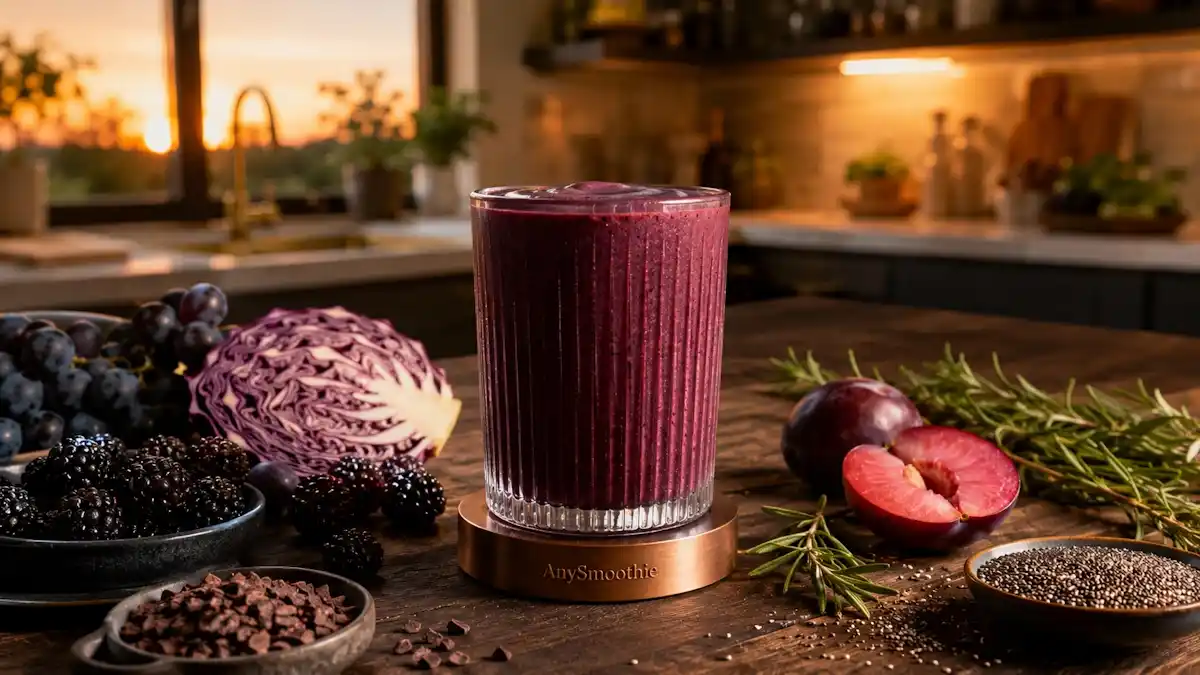
Stilbenoids are plant compounds found in foods like grapes, berries, and peanuts. People who care about healthy aging keep an eye on FOXO3 because it helps cells manage stress and repair work.
A smoothie won’t control a gene by itself, but it can bring together polyphenols, fiber, protein, and healthy fats in one easy habit. That makes stilbenoid smoothies and FOXO3 signaling a practical topic for anyone who wants a food-first routine.
The science is interesting, but the recipes matter too. The sections below cover how FOXO3 works, where stilbenoids fit, and how to build blends you can use in real life.
What FOXO3 does in the body, and why it matters for healthy aging
FOXO3 is a gene that helps direct how cells respond when conditions get rough. It affects stress response, energy use, repair pathways, and cell cleanup. That’s one reason it gets so much attention in aging research, including a review of FOXO3 and human longevity.
When cells face oxidative stress, low energy, or other strain, FOXO3 can shift gene activity toward maintenance. In plain terms, it helps cells stay organized when the environment is less than ideal.
How FOXO3 helps cells respond to stress
Oxidative stress happens when reactive molecules build up faster than the body can handle them. FOXO3 helps guide protective responses, so cells can repair damage and adjust their workload.
It also connects with pathways tied to autophagy, glucose control, and metabolic balance. Those signals matter because a stable internal environment gives cells a better shot at long-term function.
Why nutrition can influence FOXO3 activity
Food compounds do not act like drugs, and they should not be treated that way. Still, what you eat can shape the signaling environment around FOXO3 through antioxidant balance, energy sensing, and inflammation control.
A review on nutraceutical activation of FOXO3 describes this kind of upstream influence. The point is simple: meals help set the tone for cellular signaling.
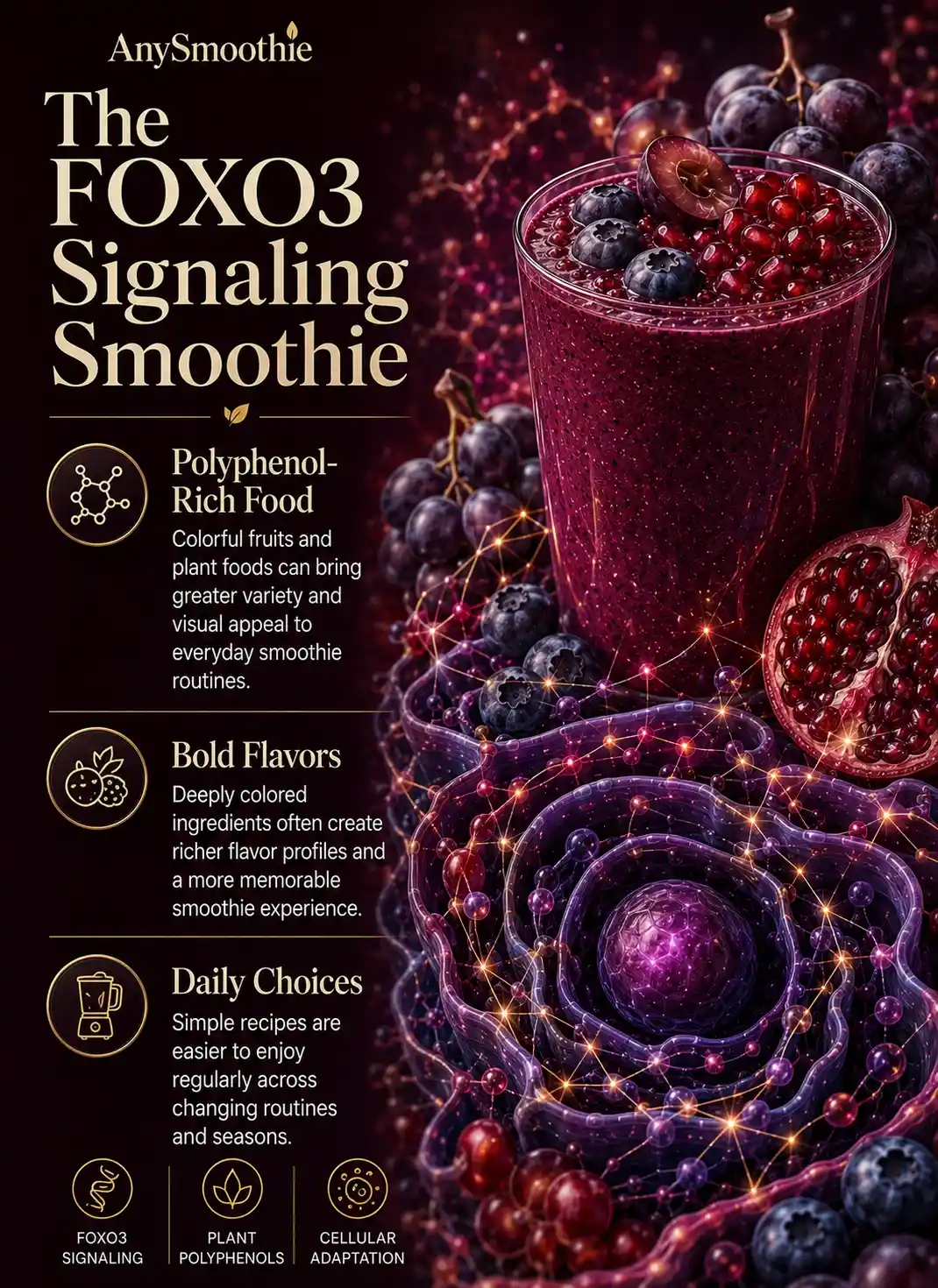
How stilbenoids fit into a smoothie-based routine
Stilbenoids are a small class of plant compounds, and resveratrol is the best-known example. Grapes are the classic source, but peanuts and Japanese knotweed also appear in the conversation about resveratrol-rich foods and supplements.
Smoothies make sense because they let you combine these plant compounds with other helpful ingredients in one glass. You also get variety, which matters more than chasing one perfect formula.
A well-built smoothie can support steadier blood sugar, a better fiber load, and a more balanced nutrient mix. That matters because FOXO3-related pathways respond to the broader pattern, not one ingredient.
Common stilbenoid sources you can blend
Red and black grapes are the easiest place to start. They bring a naturally sweet base and a familiar flavor.
Mulberries are another useful option, especially in frozen form. They have a tart edge that works well with berries and citrus.
Peanuts are worth a mention too, although they work better as nut butter in smoothies than as whole nuts. For supplement users, resveratrol products made from Japanese knotweed exist, but whole-food blends still give you more texture, fiber, and companion nutrients.
What helps a smoothie pair well with stilbenoid compounds
Fiber slows the sugar hit and supports a steadier drink. Chia, flax, oats, spinach, and frozen berries all help.
Healthy fats matter too. Nut butter, seeds, or yogurt can improve satiety and make the smoothie feel like food, not juice.
Protein helps round out the blend. Unsweetened Greek yogurt, kefir, soy milk, or pea protein all work. Keep added sugar low, because that’s where a lot of smoothies go sideways.
3 Stilbenoid smoothies for FOXO3 signaling
These three ideas keep the focus on simple ingredients and a balanced taste. Each one brings a different mix of polyphenols, fiber, and macronutrients.
Berry and grape smoothie for a polyphenol boost
Ingredients
- 1 cup red or black grapes
- 1 cup blueberries
- 3/4 cup plain yogurt or unsweetened dairy-free yogurt
- 1 tablespoon chia seeds or ground flaxseed
- 1/4 cup unsweetened almond milk
Blend until smooth.
This mix gives you a broad polyphenol profile with a clean, bright taste. Grapes bring the stilbenoid angle, while blueberries add anthocyanins and extra color. The yogurt or plant-based swap adds body, and the seeds help slow digestion.
Estimated Nutrition per Serving
Estimated with plain nonfat Greek yogurt, chia seeds, and unsweetened almond milk.
- Calories: ~410 kcal
- Protein: ~23 g
- Carbohydrates: ~72 g
- Fat: ~6 g
- Fiber: ~11 g
- Sugars: ~51 g
I’d try freezing the grapes instead of adding ice. They chill the smoothie while keeping the grape flavor concentrated rather than gradually watering down the finished blend.
Green smoothie with mulberries, citrus, and seeds
Ingredients
- 1 cup unsweetened soy milk
- 1 handful spinach or baby kale
- 1/2 cup mulberries
- Juice from 1/2 lemon or lime
- 1 tablespoon pumpkin seeds
- 1/2 cup plain Greek yogurt or 1 serving pea protein
Blend until smooth.
The citrus sharpens the flavor and keeps the greens from tasting flat. Mulberries add sweetness without much added sugar, and pumpkin seeds bring minerals plus crunch in a smooth blend. This one works well when you want a lighter, less fruity option.
Estimated Nutrition per Serving
Estimated with unsweetened soy milk, fresh mulberries, pumpkin seeds, and nonfat plain Greek yogurt.
- Calories: ~300 kcal
- Protein: ~25 g
- Carbohydrates: ~29 g
- Fat: ~11 g
- Fiber: ~6 g
- Sugars: ~17 g
Pumpkin seeds can leave small gritty flecks if everything goes into the blender at once. Blending them with the soy milk first creates a noticeably smoother base before the greens and fruit go in.
Cocoa and nut smoothie for a richer stilbenoid profile
Ingredients
- 1 cup milk of choice
- 1 tablespoon unsweetened cocoa
- 1 tablespoon peanut butter or almond butter
- 1/2 cup frozen berries
- Ice, as needed
- Cinnamon, optional
Blend until smooth.
Cocoa adds a deep flavor and pairs well with berries. The nut butter gives the smoothie more staying power, so it feels like a real snack or breakfast. If you want a little more sweetness, add cinnamon before reaching for sugar.
Estimated Nutrition per Serving
Estimated with unsweetened soy milk and 1 tablespoon peanut butter.
- Calories: ~275 kcal
- Protein: ~14 g
- Carbohydrates: ~27 g
- Fat: ~14 g
- Fiber: ~8 g
- Sugars: ~12 g
A simple comparison of the 3 smoothie options
This quick table can help you match the blend to your taste and routine.
| Smoothie name | Main stilbenoid sources | Best time to use it | Flavor profile | Ideal add-ins |
|---|---|---|---|---|
| Berry and grape smoothie | Red or black grapes, blueberries | Morning or post-workout | Sweet, bright, familiar | Chia, flax, yogurt |
| Green smoothie with mulberries | Mulberries, optional grape juice splash | Midday or light breakfast | Fresh, tart, green | Pumpkin seeds, protein powder |
| Cocoa and nut smoothie | Peanuts or almond butter, grape-family berries if added | Afternoon snack | Rich, earthy, filling | Cinnamon, oats, ice |
The best choice depends on whether you want the lightest sip, the simplest prep, or the deepest flavor.
Which smoothie is best for beginners
If you want the easiest option, start with the berry and grape smoothie. The flavor is familiar, and most stores carry the ingredients.
For a budget-friendly pick, the green smoothie often wins. Frozen mulberries may be the hardest item to find, but spinach, citrus, and seeds are usually affordable.
If you want the strongest flavor, the cocoa and nut smoothie is the one. It tastes bold and holds up well without a lot of extra sweetener.
How to rotate recipes through the week
A simple rotation keeps the habit fresh. Try the berry blend on Monday, the green version on Wednesday, and the cocoa smoothie on Friday.
That mix gives you variety in flavor and plant compounds. It also helps you avoid relying on one smoothie every day, which can get boring fast.
How to build a smarter smoothie for long-term use
Keep the base unsweetened whenever you can. Frozen fruit helps with texture, and it often tastes better than adding syrup or juice.
Small upgrades go a long way. Cinnamon, ginger, lemon juice, chia, flax, and moderate portion sizes all improve balance without making the recipe fussy.
FOXO3 responds to patterns, not perfect days.
Small changes that improve balance and taste
Choose unsweetened milk or yogurt first. Then add fruit for flavor, not the other way around.
Use frozen fruit for a thicker texture. It makes the smoothie feel richer with no extra sugar.
When to keep expectations realistic
A stilbenoid smoothie can support a healthy eating pattern, but it’s only one part of the picture. Sleep, movement, stress, and overall diet still shape how the body handles cellular repair and energy use.
Think of these blends as steady support, not a shortcut. Repeating a simple, balanced recipe matters more than chasing a perfect ingredient list.
Conclusion
Stilbenoid-rich smoothies are an easy, food-first way to support FOXO3-related cellular pathways. They work best when they stay low in added sugar, include fiber and protein, and change often enough to keep your routine varied.
That’s the real value of stilbenoid smoothies and FOXO3 signaling, they give you a practical way to pair plant compounds with a balanced mix of nutrients. Try one recipe, then adjust the fruit, seeds, or protein until it fits your taste.

Medical Disclaimer: AnySmoothie content is for educational purposes only and is not a substitute for professional medical advice. Consult a healthcare provider for personalized guidance. See our full Disclaimer & Terms of Use. AI Transparency: AnySmoothie may use AI to support content development. All content undergoes human editorial review for accuracy, clarity, and editorial quality. See our full AI Transparency.