
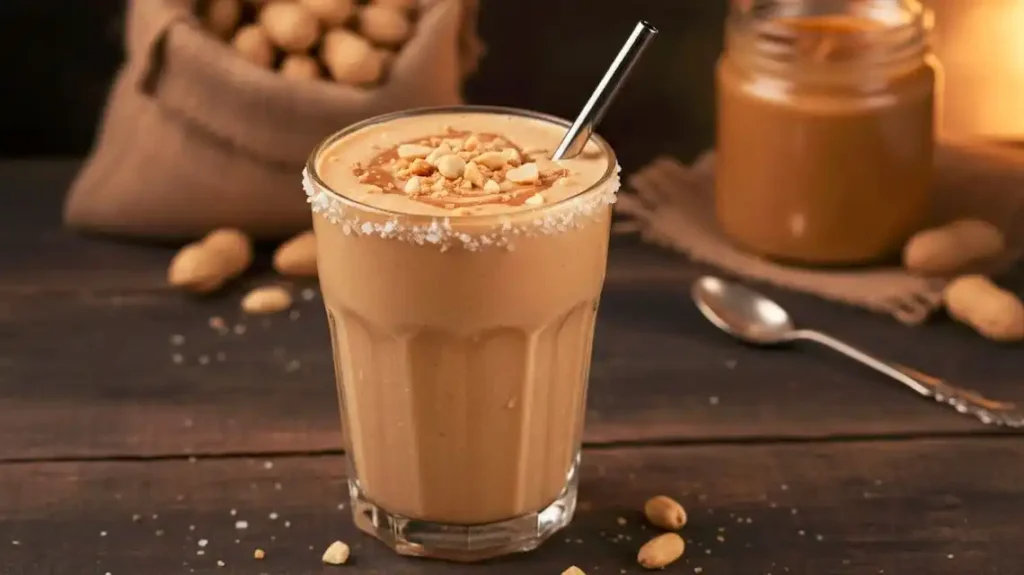
Bananas aren’t required for a rich, satisfying smoothie. A peanut butter smoothie without banana works especially well if you dislike banana flavor, want less fruit sweetness, or prefer a more neutral base.
Greek yogurt, milk, ice, and oats create the creamy body that bananas usually provide. Start with the simple version, then adjust it with chocolate, berries, or warming cinnamon.
Peanut Butter Smoothie Without Banana: The Creamy Base
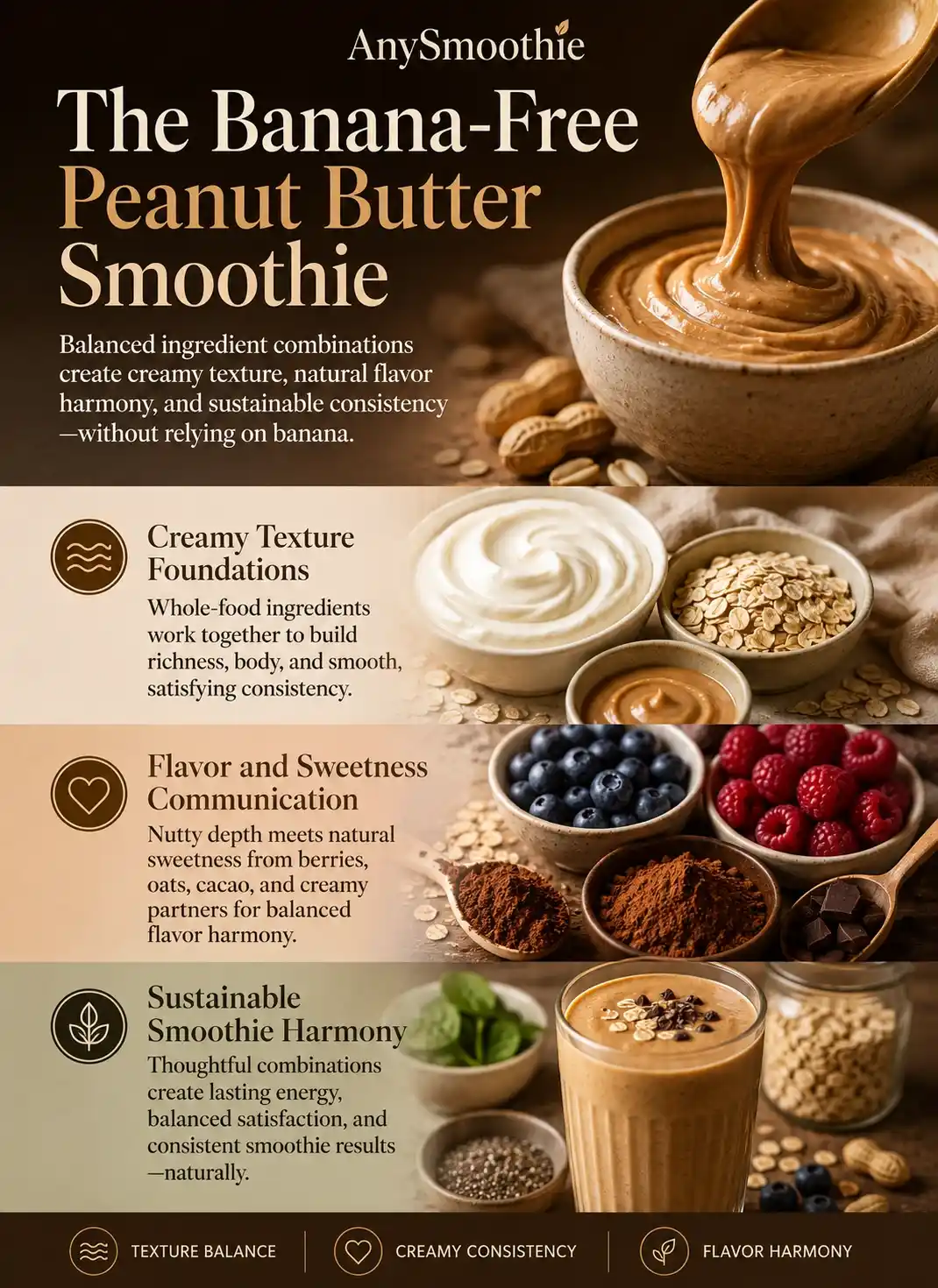
A thick banana-free smoothie needs ingredients that provide body without relying on frozen banana. Greek yogurt, rolled oats, peanut butter, and ice work together particularly well because each contributes something different to the final texture.
Peanut butter gives the smoothie its full, roasted flavor. Greek yogurt brings tang and a dense texture, while oats absorb liquid and add body. Ice provides immediate thickness without adding sweetness.
Use unsweetened milk to keep the flavor under your control. If your natural peanut butter has separated, stir it thoroughly in the jar before measuring. Oil-heavy peanut butter that has not been properly mixed can make the finished smoothie feel less uniform.
Product nutrition varies by brand and serving size, so compare individual foods with the USDA FoodData Central food search if you track nutrients closely.
How to Keep a Banana-Free Smoothie Thick
The order of ingredients can make blending easier. Pour liquid into the blender first, followed by yogurt, peanut butter, oats, and other soft ingredients. Add frozen ingredients and ice last.
Blend until completely creamy, usually 45 to 60 seconds depending on the blender. Add milk a tablespoon or two at a time if the blades stall rather than pouring in a large amount at once.
If you have a lower-powered blender, let the oats sit in the milk for about five minutes before blending. Taste before adding maple syrup or a date, since peanut butter brands and yogurt tang can change how sweet the smoothie seems.
Oats and yogurt replace some of banana’s textural role best when the smoothie is blended thoroughly and the liquid is added gradually.
For another smoothie built around yogurt as a creamy base, the greek yogurt smoothie recipe is a useful companion from a different ingredient angle.
3 Peanut Butter Smoothies Without Banana to Try
Each recipe makes one large serving. The three versions use the same banana-free texture strategy but shift the flavor toward chocolate, berries, or a more substantial oatmeal-style breakfast.
| Recipe | Key Add-Ins | Flavor | Texture | Best For |
|---|---|---|---|---|
| Chocolate Peanut Butter | Cocoa, vanilla | Deep and chocolatey | Thick and smooth | Afternoon snack |
| Berry Peanut Butter | Frozen berries | Tart and nutty | Frosty and creamy | Fruit-forward option |
| Peanut Butter Oatmeal | Extra oats, cinnamon | Mild and nutty | Hearty and dense | Breakfast |
Chocolate Peanut Butter Smoothie
Ingredients
- 1 cup unsweetened dairy or soy milk
- 1/2 cup plain Greek yogurt
- 2 tablespoons creamy peanut butter
- 1/4 cup rolled oats
- 1 tablespoon unsweetened cocoa powder
- 3/4 cup ice cubes
- 3/4 teaspoon vanilla extract
- 1 teaspoon maple syrup, optional
Steps
Pour the milk into the blender first. Add Greek yogurt, peanut butter, oats, cocoa, and vanilla, then finish with the ice.
Blend for 45 to 60 seconds or until completely smooth. Taste before adding maple syrup, since different cocoa powders and peanut butter brands can change the balance between bitter, salty, and sweet.
Cocoa’s bitter notes contrast with roasted peanut butter, while Greek yogurt and oats keep the drink thick without banana. If you want more smoothie ideas centered on naturally protein-containing foods rather than powders, see naturally high-protein smoothies.
Estimated Nutrition per Serving
Estimated with unsweetened soy milk, plain nonfat Greek yogurt, standard creamy peanut butter, and no optional maple syrup.
- Calories: ~440 kcal
- Protein: ~29 g
- Carbohydrates: ~40 g
- Fat: ~22 g
- Fiber: ~8 g
- Sugars: ~11 g
Berry Peanut Butter Smoothie
Ingredients
- 3/4 cup unsweetened dairy or soy milk
- 1/2 cup plain Greek yogurt
- 2 tablespoons creamy peanut butter
- 3/4 cup frozen strawberries or mixed berries
- 2 tablespoons rolled oats
- 1/2 teaspoon vanilla extract
- 1/2 cup ice cubes, optional
Steps
Add the milk, yogurt, peanut butter, berries, oats, and vanilla to the blender. Blend until smooth, adding the optional ice only if the smoothie needs additional thickness.
Frozen berries create a colder, fruitier smoothie than the base version. Strawberries give the most familiar peanut-butter-and-jelly direction, while raspberries or mixed berries produce a more tart flavor.
If the berries make the mixture too icy, reduce or omit the extra ice rather than adding more peanut butter. Another spoonful of yogurt or a small amount of oats can add body without overwhelming the fruit flavor.
Estimated Nutrition per Serving
Estimated with unsweetened soy milk, plain nonfat Greek yogurt, standard creamy peanut butter, and frozen strawberries.
- Calories: ~400 kcal
- Protein: ~27 g
- Carbohydrates: ~38 g
- Fat: ~20 g
- Fiber: ~8 g
- Sugars: ~16 g
Peanut Butter Oatmeal Smoothie
Ingredients
- 1 1/4 cups unsweetened dairy or soy milk
- 1/2 cup plain Greek yogurt
- 2 tablespoons creamy peanut butter
- 1/2 cup rolled oats
- 1/4 teaspoon ground cinnamon
- 1/2 teaspoon vanilla extract
- 3/4 cup ice cubes
- 1 teaspoon chia seeds or ground flaxseed, optional
Steps
Pour the milk into the blender, then add Greek yogurt, peanut butter, oats, cinnamon, vanilla, and the optional chia or flax. Add the ice last.
Blend until smooth. If the mixture becomes too dense, add milk one tablespoon at a time until it moves easily through the blender and reaches your preferred drinking consistency.
The extra oats give this version a mild grain flavor and make it more substantial than the chocolate or berry versions. Cinnamon adds warmth without requiring extra sweetness.
Estimated Nutrition per Serving
Estimated with unsweetened soy milk, plain nonfat Greek yogurt, standard creamy peanut butter, and without optional chia or flax.
- Calories: ~520 kcal
- Protein: ~34 g
- Carbohydrates: ~55 g
- Fat: ~22 g
- Fiber: ~9 g
- Sugars: ~13 g
This is the version I’d avoid making excessively thick straight from the blender. Half a cup of oats continues taking up liquid after blending, so leaving it slightly looser at first gives you a much better drinking texture five or ten minutes later.
Easy Ingredient Swaps for a Better Banana-Free Smoothie
For a dairy-free smoothie, choose unsweetened soy, oat, or almond milk and a thick plant-based yogurt. Soy-based options generally contribute more protein than many almond- or oat-based alternatives, although nutrition varies considerably by product.
If peanut allergies are a concern, replace peanut butter with sunflower seed butter. Tahini can also provide a creamy texture, although its toasted sesame flavor changes the character of the smoothie considerably.
For less added sugar, leave out maple syrup and use unsweetened milk, plain yogurt, and unsweetened cocoa.
Common texture fixes are simple:
- Add more ice, oats, or yogurt when the smoothie is too thin.
- Loosen an overly thick blend with milk, one tablespoon at a time.
- Use a date or maple syrup when additional sweetness is genuinely needed.
- Balance very salty peanut butter with yogurt, milk, or fruit.
- Blend longer if oats remain gritty, or soak them briefly before blending.
- Add a little more peanut butter if its flavor gets lost behind cocoa or berries.
If smoothie texture regularly goes wrong because of ingredient combinations, what not to mix In a smoothie for better taste offers a useful companion topic.
Choosing the Right Peanut Butter and Liquid
Natural peanut butter can work perfectly well, but stir separated oil back into the solids before measuring. A uniformly mixed peanut butter disperses more easily through the smoothie.
Dairy and soy milk both contribute protein and create a creamier result than water. Oat milk works particularly well with the oatmeal variation, while almond milk keeps the liquid base lighter.
Plant milks vary considerably in protein, sugar, fortification, and calories, so check the nutrition label when those differences matter to your diet.
Conclusion: Build Thickness Without Relying on Banana
A peanut butter smoothie without banana gets its richness from a combination of yogurt, oats, peanut butter, liquid, and ice. Instead of asking one ingredient to replace banana completely, let several ingredients contribute to the final texture.
Choose chocolate when you want a deeper flavor, berries for a fruitier blend, or extra oats for a more substantial breakfast-style smoothie. Adjust the liquid gradually, blend thoroughly, and serve it soon after blending for the best texture.
🛡️ Safety Notes & Dietary Interactions
- Peanut Allergies: Peanut butter is a major allergen and requires complete avoidance when a peanut allergy is present. Sunflower seed butter can provide similar creaminess, but always check labels for shared-equipment or cross-contact warnings when necessary.
- Dairy and Soy Options: Greek yogurt, dairy milk, soy milk, and plant-based yogurts vary considerably in protein, added sugar, and allergen content. Choose products that match individual tolerance and check labels rather than assuming dairy-free alternatives have equivalent nutrition.
- Fiber and Fullness: Oats, berries, chia, and flax can make these smoothies particularly filling and fiber-rich. Increase larger portions gradually if your usual fiber intake is low, and add sufficient liquid when extra oats or seeds substantially thicken the drink.
- Calorie-Dense Additions: Peanut butter, seed butter, oats, and optional sweeteners can quickly make a smoothie more substantial. Adjust quantities to appetite and meal context rather than repeatedly adding ingredients simply to achieve greater thickness or a stronger peanut flavor.
FAQs
What makes a peanut butter smoothie thick without banana?
Greek yogurt, rolled oats, ice, and peanut butter work together to replace much of the body normally provided by banana. Yogurt creates creaminess, while oats absorb liquid and continue thickening as they hydrate. Ice adds immediate structure. Starting with modest liquid also helps because additional milk can always be blended in if the mixture becomes too dense.
Which banana-free variation is best for breakfast?
The peanut butter oatmeal smoothie is the most breakfast-oriented variation because it increases the rolled oats to 1/2 cup while retaining peanut butter, yogurt, and milk. This creates a more substantial combination of carbohydrate, protein, fat, and fiber. Add milk gradually because the larger oat portion will continue absorbing liquid after the smoothie is blended.
Can I make this peanut butter smoothie completely dairy-free?
Yes. Replace dairy milk with unsweetened soy, oat, or almond milk and use a thick plant-based yogurt. Soy-based options generally contribute more protein than many other plant alternatives, although products vary significantly. Check both nutrition and ingredient labels, especially when protein content, added sugars, peanut cross-contact, or another food allergy matters to you.
How can I stop oats from making the smoothie gritty?
Blend the smoothie thoroughly and give rolled oats enough time to absorb liquid. With a less powerful blender, soaking the oats in the measured milk for about five minutes before blending can soften them. You can also blend the oats and liquid first, then add yogurt, peanut butter, ice, and the remaining ingredients for a smoother consistency.
Can I prepare a banana-free peanut butter smoothie the night before?
Yes, provided it is refrigerated promptly in a clean, sealed container. Expect the texture to become noticeably thicker overnight because oats continue absorbing liquid. Shake or stir it before drinking and add a small amount of cold milk if necessary. For the freshest texture, however, the ice-based version is generally best blended shortly before serving.

Medical Disclaimer: AnySmoothie content is for educational purposes only and is not a substitute for professional medical advice. Consult a healthcare provider for personalized guidance. See our full Disclaimer & Terms of Use. AI Transparency: AnySmoothie may use AI to support content development. All content undergoes human editorial review for accuracy, clarity, and editorial quality. See our full AI Transparency.