
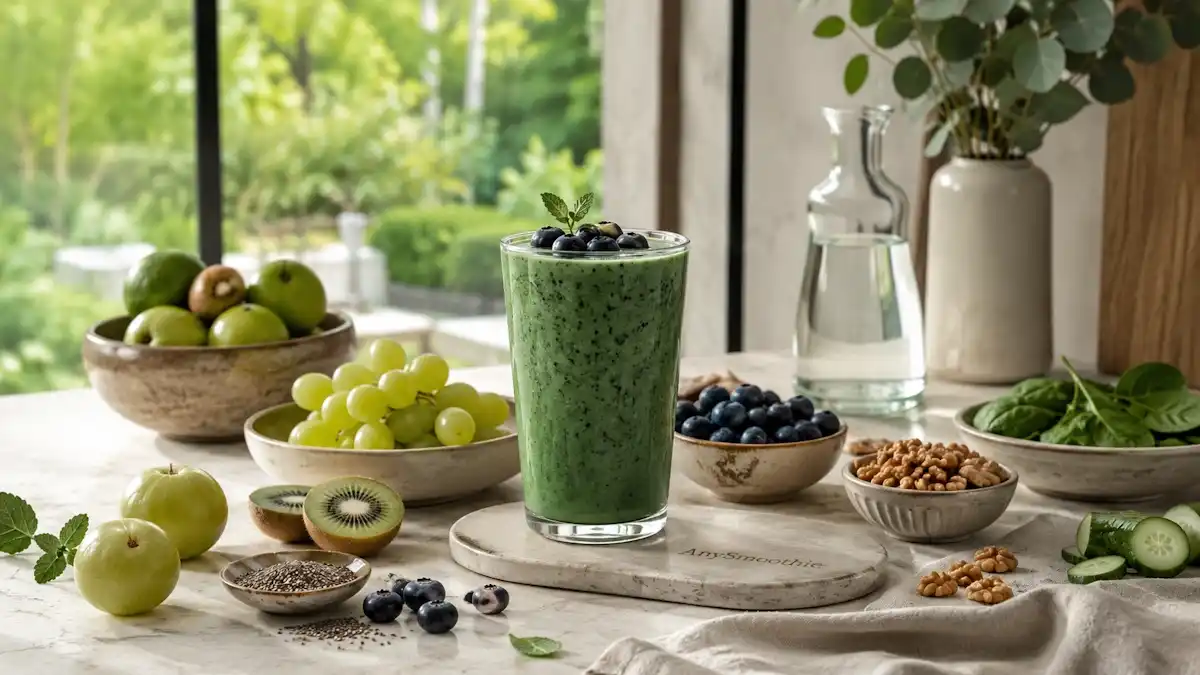
Amla has a sharp, puckering taste, but that tartness comes with a useful nutrient profile. If you want a food-first way to support endothelial function, smoothie form makes amla easier to use often.
This article looks at the science in plain language, the best ingredient pairings, three practical smoothie ideas, and a few ways to make them work in daily life without piling on sugar.
What endothelial protection really means, and why amla stands out
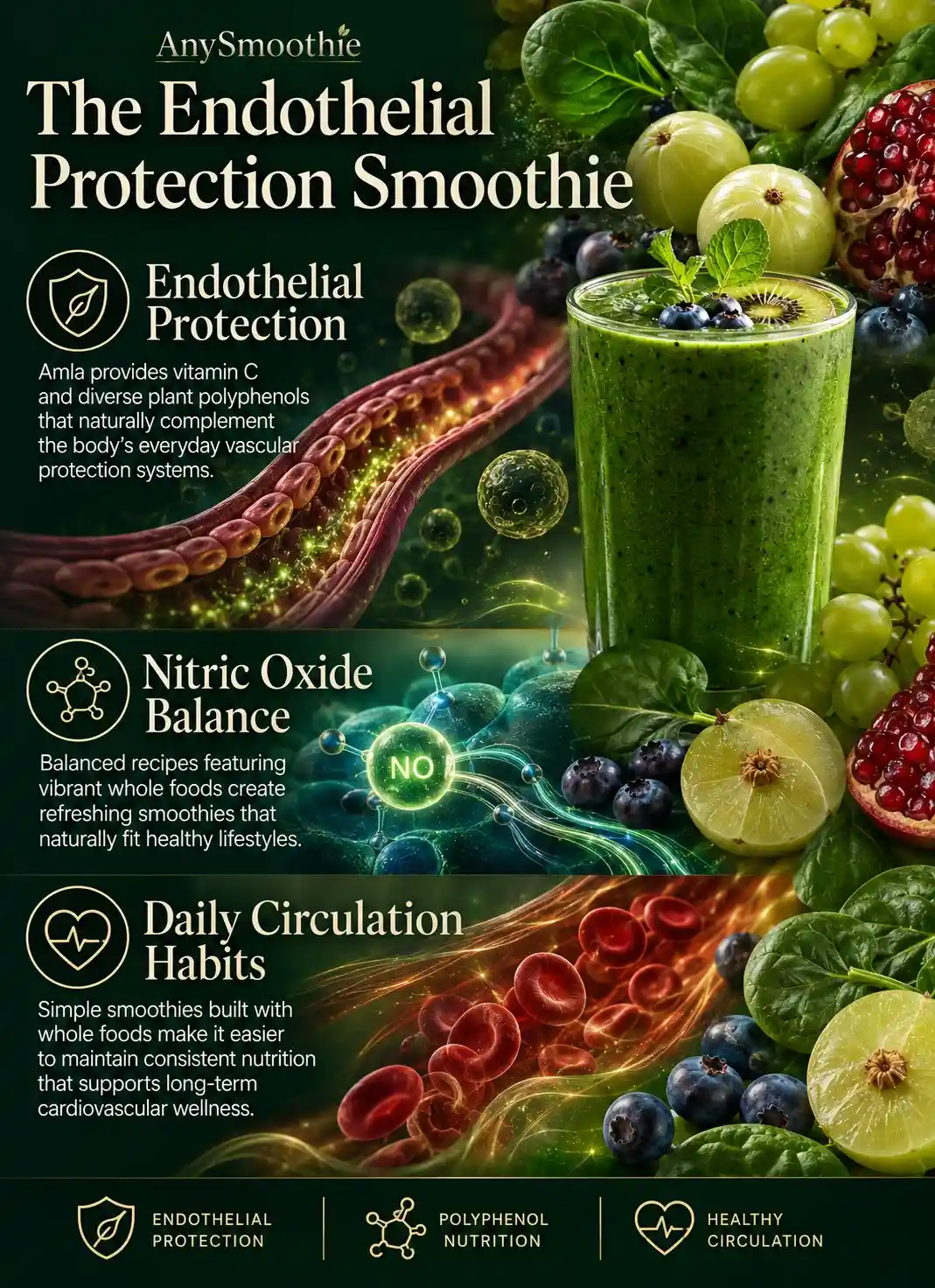
The endothelium is the thin lining inside your blood vessels. It helps regulate blood flow, vessel tone, and the balance between oxidative stress and recovery. When it’s working well, blood vessels can respond more smoothly to everyday demands.
Amla, also called Indian gooseberry, is interesting here because it brings vitamin C, polyphenols, and other plant compounds into one small fruit. A clinical evaluation of amla in healthy subjects reported changes tied to endothelial markers, and the paper is available in Clinical evaluation of Emblica officinalis.
How healthy blood vessel lining supports circulation
The endothelium helps release nitric oxide, a signaling molecule that tells blood vessels to relax. That matters because relaxed vessels tend to support better circulation and flexibility.
Poor sleep, inactivity, a low-fiber diet, and chronic inflammation can all place more pressure on this lining. Over time, that stress can affect how well the vessels respond.
Why amla is a strong fit for smoothie-based support
Amla is small, but its profile is dense. The fruit is known for vitamin C and a mix of plant antioxidants, and that combination is one reason it keeps showing up in nutrition discussions. A review on amla health benefits summarizes human and mechanistic findings around its antioxidant and cardiovascular support.
Smoothies make amla easier to repeat. That matters because routine use is more realistic than chasing a perfect ingredient list once in a while. The goal is nutritional support, not treatment.
The best smoothie ingredients to pair with amla for better support
Amla tastes best when it’s balanced with ingredients that soften its tart edge and round out the nutrient mix. Citrus, berries, leafy greens, fiber, and a little fat or protein all help.
If you like tart, plant-heavy blends, polyphenol-rich smoothie recipes show how berries, greens, and seeds can work together without extra sweetness.
| Ingredient | Main role | Flavor impact | Texture impact | Best use |
|---|---|---|---|---|
| Amla | Vitamin C and plant antioxidants | Sharp, tart base | Light and thin | Core ingredient |
| Citrus | Extra vitamin C and brightness | Brightens tart notes | Keeps it fresh | Green or tropical blends |
| Berries | Polyphenols and gentle sweetness | Softens sharpness | Thickens slightly | Antioxidant-focused smoothies |
| Leafy greens | Nitrates, folate, minerals | Mild, earthy | Adds body | Morning blends |
| Chia or flax | Fiber and healthy fats | Mutes tartness | Thickens a lot | Steadier energy and fullness |
The best takeaway is simple, add tart fruit, greens, and a little fat or fiber. That gives amla a better flavor and a better nutritional fit.
Citrus, berries, and leafy greens for antioxidant coverage
Orange, lemon, pineapple, blueberries, spinach, kale, and arugula all pair well with amla. Citrus sharpens the flavor in a clean way, while berries add more polyphenols and a softer fruit base.
Leafy greens bring a different benefit. Spinach, kale, and arugula add nitrates and micronutrients that fit well in a circulation-focused smoothie. The result is a blend that feels lighter, not heavier.
Healthy fats, fiber, and protein to slow the sugar hit
Chia seeds, flaxseed, plain yogurt, kefir, and nut butter help keep a smoothie more balanced. They slow digestion a bit, which can make the drink feel steadier and more satisfying.
That also helps with amla’s tart profile. When the smoothie has enough body, you don’t need to chase the flavor with sweeteners.
3 Amla smoothies for endothelial protection
How to make amla smoothies taste good without loading them with sugar
Amla gets easier to enjoy when you treat it like a bright accent, not the only flavor in the glass. Ripe banana, mango, pineapple, or a date or two can smooth the edges without turning the smoothie into dessert.
Vanilla, cinnamon, ginger, and coconut water also help. Use small amounts, because a little goes a long way.
Simple ways to soften amla’s sharp flavor
Ripe banana and mango add roundness. Pineapple gives a tropical note that hides bitterness well.
Dates work too, but keep them modest. Too much sweet fruit can overpower the balance you want.
Best times to drink it and how often to use it
Breakfast is the easiest time for most people. A post-workout window also works well, especially if you want something hydrating and light.
Start with a few servings per week, then build from there if the routine fits. Consistency matters more than volume.
Conclusion
Amla smoothies can be a simple, food-first way to support the lining inside your blood vessels. The best versions keep the recipe balanced, with tart fruit, greens, and enough fiber or protein to make the drink feel steady.
That’s the real advantage here, not complexity. A few repeatable blends can fit into daily life and give you a practical way to support endothelial function without overthinking it.
🛡️ Safety Notes & Dietary Interactions
- Serving Size: Begin with the amount recommended on your amla powder or extract label. Starting with a smaller serving allows you to adjust to the fruit’s naturally tart flavor while monitoring how it fits your daily routine.
- Digestive Comfort: Amla’s acidity may not suit everyone, particularly when consumed on an empty stomach. Pairing it with yogurt, kefir, healthy fats, or fiber-rich ingredients often creates a smoother, more comfortable drinking experience.
- Medication Awareness: If you take blood-thinning medication, medications for blood sugar management, or have a medical condition, consult a qualified healthcare professional before using amla supplements regularly as part of your smoothie routine.
- Product Quality: Select amla products from reputable manufacturers that clearly identify the ingredient source and serving size. Powders with minimal added ingredients and third-party quality testing are generally the easiest choice for consistent everyday smoothie preparation.
FAQ
What is the best form of amla to use in smoothies?
Amla powder is the most convenient choice because it blends easily and stores well. Fresh or frozen amla can also be used when available, while purees provide another practical option. Whichever form you choose, select products with minimal additives and follow the recommended serving size on the label.
Why is amla often paired with berries and citrus fruits?
Berries and citrus fruits naturally complement amla’s tart flavor while adding their own vitamin C, polyphenols, and vibrant taste. Together they create a more enjoyable smoothie without relying on excessive sweeteners, making the blend easier to drink consistently as part of a balanced, nutrient-rich eating pattern.
Can I drink an amla smoothie every day?
Many people can include an amla smoothie in their regular routine when it fits their diet and the serving follows product recommendations. A balanced recipe with protein, healthy fats, and fiber generally works better than a fruit-only blend. Consistency and overall dietary quality remain more important than frequent high servings.
What ingredients help reduce amla’s sour taste?
Banana, mango, pineapple, plain yogurt, kefir, almond butter, vanilla, cinnamon, and coconut water all help soften amla’s naturally sharp flavor. Using these ingredients creates a smoother texture and more rounded taste, making the smoothie enjoyable enough to prepare regularly without depending on large amounts of added sugar.
When is the best time to drink an amla smoothie?
Breakfast is a popular choice because it makes the smoothie easy to incorporate into an existing routine. Others prefer it after exercise or as a mid-morning snack. The ideal timing is whichever fits your schedule consistently, allowing the smoothie to become a sustainable long-term wellness habit rather than an occasional addition.

Medical Disclaimer: AnySmoothie content is for educational purposes only and is not a substitute for professional medical advice. Consult a healthcare provider for personalized guidance. See our full Disclaimer & Terms of Use. AI Transparency: AnySmoothie may use AI to support content development. All content undergoes human editorial review for accuracy, clarity, and editorial quality. See our full AI Transparency.