
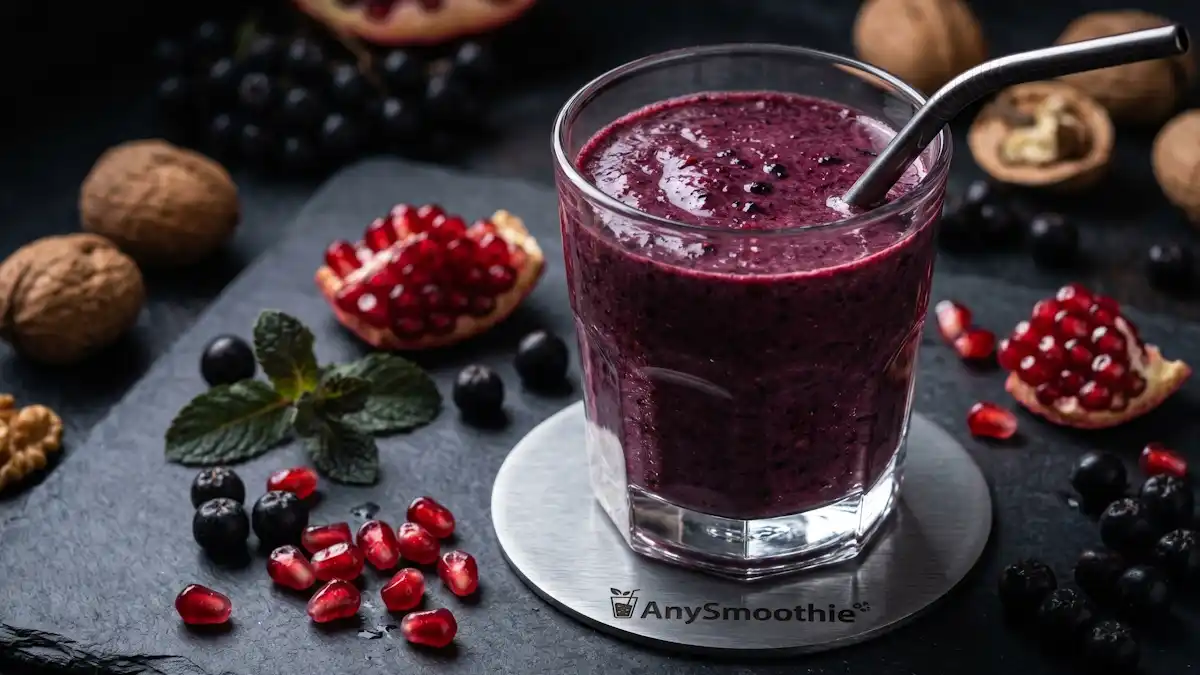
Akkermansia is one of the gut microbes that gets attention for a reason. It tends to do well when the gut lining and mucus layer are in good shape.
A polyphenol smoothie for Akkermansia balance can support that setting with plant compounds, fiber, and a low-sugar base. The formula is simple, but the details matter.
Berries, cocoa, tea, greens, seeds, and a few smart fats all play a role. This guide shows what polyphenols do, which ingredients are worth keeping, and how to build smoothies that taste good enough to repeat.
What Akkermansia does in the gut, and why food matters
Akkermansia muciniphila lives near the gut lining, where it interacts with the mucus layer. That layer helps create a protective buffer between food, microbes, and the intestinal wall.
Food choices shape that environment every day. A pattern rich in plants, fiber, and colorful compounds gives helpful microbes more to work with. A review on dietary polyphenols and Akkermansia explains why these plant compounds keep showing up in gut microbiome research.
Daily meals matter more than one-off fixes when you want a steady gut environment.
The gut mucus layer and microbial balance
The mucus layer is not just a coating. It is part of the gut’s front line, and it depends on a balanced microbial mix.
When meals bring in too much refined sugar and too few plant foods, that balance can drift. When meals include berries, greens, seeds, and herbs, the gut gets a better mix of inputs.
Why polyphenols are a smart support tool
Polyphenols are plant compounds found in berries, pomegranate, cocoa, tea, cherries, and colorful produce. Gut microbes can break them down into smaller compounds.
That matters because those compounds help shape a gut setting that Akkermansia tends to prefer. A newer paper on Akkermansia and dietary polyphenols adds another clue.
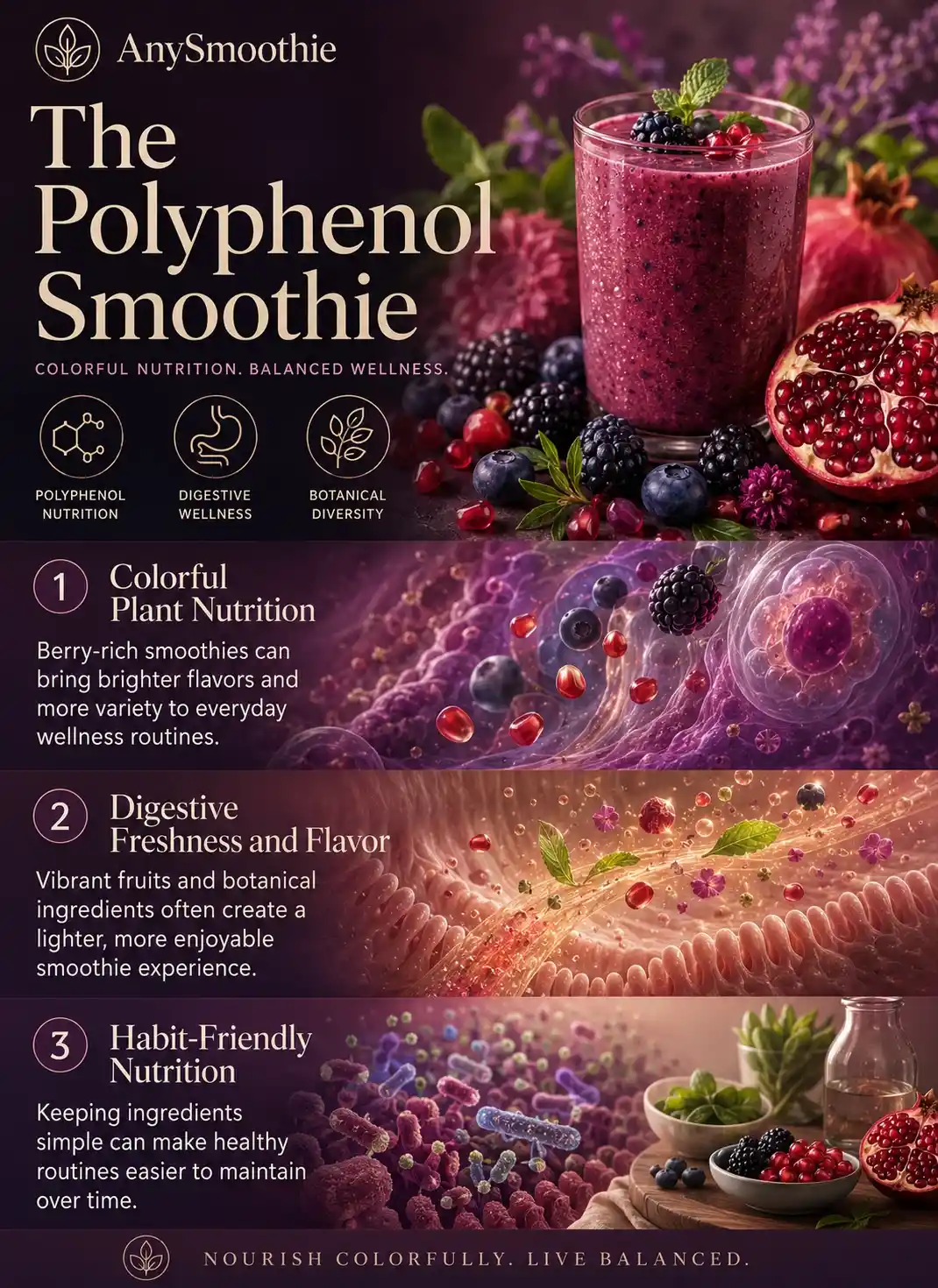
What makes a polyphenol smoothie for Akkermansia balance work
The best smoothie formula brings together three things: polyphenol-rich foods, fiber, and a base that does not flood the glass with sugar.
That does not mean you need a perfect recipe. It means you want a blend that feeds gut microbes slowly, keeps you satisfied, and avoids turning breakfast into dessert. A small amount of fat also helps the texture and makes the smoothie feel more complete.
Best ingredients to include for polyphenol density
Berries are the easiest place to start. Blueberries, blackberries, raspberries, tart cherries, pomegranate, cocoa, matcha, and green tea all bring useful plant compounds.
Spices count too. Cinnamon adds warmth, while a little vanilla can smooth out sharp flavors without much sugar.
How to pair polyphenols with fiber and fat
Chia, ground flax, oats, walnuts, and avocado help slow digestion and make the smoothie more filling. They also give the gut a steadier stream of substrate to work with.
If you want a silkier blend, use unsweetened yogurt, kefir, soy yogurt, or almond milk with one of those add-ins.
Ingredients to keep in check
Too much juice can push sugar up fast. Sweetened yogurt can do the same.
A better rule is simple: let fruit provide most of the sweetness, then use a creamy base and seeds to round it out. The result is easier to drink and easier to repeat.
3 Polyphenol smoothie Recipes for akkermansia balance
Use the table below as a quick guide, then pick the version that fits your taste and schedule.
| Recipe name | Main polyphenol sources | Fiber boosters | Flavor profile | Best time to drink |
|---|---|---|---|---|
| Berry and flax smoothie | Mixed berries, cinnamon | Ground flax, kefir or plain yogurt | Tart, creamy, mild | Breakfast or mid-morning |
| Cocoa cherry smoothie | Unsweetened cocoa, tart cherries | Chia seeds | Rich, dessert-like | Afternoon or post-workout |
| Green polyphenol smoothie | Matcha or cooled green tea, kiwi, spinach, lemon, mint | Kiwi, spinach, chia | Bright, fresh, herbal | Morning or after a walk |
How to make your smoothie more effective without making it complicated
Recent work on polyphenols and gut redox balance adds another useful angle. Plant compounds do more than bring color, because they also shape the chemical environment microbes live in.
Keep the routine simple. Use whole ingredients, keep added sugar low, and rotate berries, cocoa, tea, and greens across the week.
Simple swaps for different tastes and tolerances
If dairy does not sit well, use unsweetened soy yogurt, almond milk, or kefir-free blends.
If you want a gentler fruit choice, use strawberries, blueberries, or kiwi. For nut-free add-ins, chia, flax, and pumpkin seeds work well.
When to drink it and how often to rotate recipes
Breakfast is the easiest time, but a smoothie can also work as a snack or post-workout meal.
Rotation matters because different plants bring different compounds. A few versions each week give your gut a broader set of inputs without making the routine feel complicated.
Conclusion
A polyphenol smoothie for Akkermansia balance works best when it is part of a steady, plant-rich pattern. Berries, cocoa, tea, greens, flax, chia, and yogurt or kefir each add something useful.
Start with one recipe you can make on repeat, keep the sugar low, and keep the ingredients clear. Small, consistent choices are what shape a healthier gut setting over time.
🛡️ Safety Notes & Dietary Interactions
- Polyphenol Diversity and Microbiome Communication Support: Polyphenol-rich foods such as berries, cocoa, pomegranate, green tea, cherries, and colorful plant foods provide compounds that interact with gut microbes during digestion. Rotating a variety of polyphenol sources throughout the week may help support a broader microbial environment than relying on a single ingredient every day.
- Fiber Pairing and Akkermansia-Friendly Nutrition Patterns: The article emphasizes that polyphenols work best alongside fiber-rich foods rather than in isolation. Ingredients such as chia, flax, oats, kiwi, spinach, and berries help create a steadier nutrient-delivery profile while providing fermentable substrates that support a more diverse gut ecosystem.
- Sugar Load Management and Gut Environment Balance: Excess juice, sweetened yogurt, syrups, and highly sweetened smoothie formulas may work against the low-sugar structure highlighted throughout the article. Allowing whole fruit to provide most of the sweetness helps maintain a more balanced smoothie while preserving the fiber and polyphenol content naturally found in the ingredients.
- Healthy Fat Integration and Nutrient Absorption Dynamics: Avocado, walnuts, chia, flax, yogurt, and kefir help create a creamier texture while supporting satiety and slower digestion. Including moderate amounts of healthy fats may improve the overall smoothie structure and make polyphenol-rich recipes feel more complete and satisfying as part of a daily routine.
FAQ
What is Akkermansia muciniphila and why is it discussed so often in gut-health nutrition?
Akkermansia muciniphila is a gut microbe that resides close to the intestinal mucus layer. Researchers frequently study it because of its relationship with the gut environment and broader microbiome balance. The article emphasizes that daily dietary patterns rich in plants, fiber, and polyphenols help create conditions that may support a healthier microbial ecosystem overall.
Why are polyphenols considered important in Akkermansia-focused smoothie recipes?
Polyphenols are plant compounds naturally found in berries, cocoa, tea, cherries, pomegranate, and many colorful fruits and vegetables. Gut microbes interact with these compounds and transform them into smaller metabolites. This relationship is one reason polyphenol-rich foods appear frequently in discussions surrounding microbiome diversity and gut-environment support.
Why are flax seeds and chia seeds included in nearly every recipe?
Flax and chia contribute fiber, texture, and healthy fats while helping slow digestion and improve satiety. They also complement polyphenol-rich ingredients by creating a steadier nutritional environment inside the digestive tract. Their mild flavor allows them to blend easily into berry, cocoa, tea, and green-based smoothies without overwhelming the recipe.
Why is recipe rotation encouraged instead of drinking the same smoothie every day?
Different fruits, vegetables, herbs, teas, and seeds provide different polyphenols and fibers. Rotating berries, cocoa, matcha, greens, cherries, kiwi, and other ingredients broadens dietary diversity and exposes the gut microbiome to a wider range of nutritional inputs. The article presents variety as one of the simplest ways to support a richer food pattern.
What is the most important takeaway from the article?
The article repeatedly stresses consistency over complexity. A simple smoothie built from whole foods, moderate fiber, healthy fats, and polyphenol-rich ingredients is often more valuable than a highly complicated formula. Small, repeatable habits practiced over time are presented as the foundation for supporting a healthier gut environment and a more sustainable nutrition routine.

Medical Disclaimer: AnySmoothie content is for educational purposes only and is not a substitute for professional medical advice. Consult a healthcare provider for personalized guidance. See our full Disclaimer & Terms of Use. AI Transparency: AnySmoothie may use AI to support content development. All content undergoes human editorial review for accuracy, clarity, and editorial quality. See our full AI Transparency.