
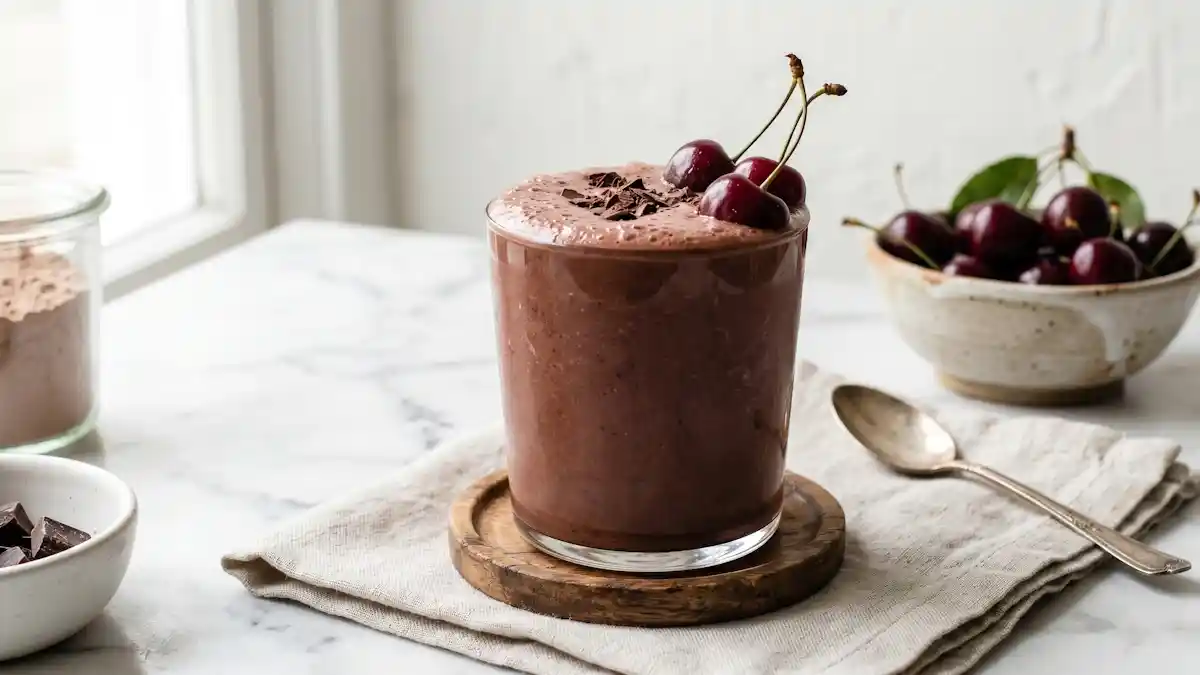
This Chocolate and Cherry Smoothie is a minimalist, nutrient-dense formulation engineered to support myocellular recovery and optimize post-exertion physiological pathways. By aligning the distinct polyphenol architecture of rich cocoa with the potent anthocyanin flux found in frozen cherries, this protocol delivers targeted structural support to cellular systems facing oxidative load, serving as an efficient tool for rapid amino acid delivery and muscular maintenance.
This guide provides a structurally optimized sequence to balance these deep botanical substrates while preserving their volatile compounds during homogenization. You will discover the exact layering mechanics required to eliminate clumping, achieve an optimal rheological texture, and customize the macronutrient configuration to support your physiological recovery windows without destabilizing blood sugar kinetics.
Chocolate Cherry Protein Shake (Minimalist Baker Style): What You Need and Easy Swaps
Minimalist-style smoothies work best when they stay simple and well balanced. Frozen fruit gives them that thick, cold texture, while a creamy base keeps the flavor smooth instead of sharp. For this shake, the goal is clear chocolate flavor, bright cherry notes, and a texture that feels rich without turning heavy.
If you want the original inspiration, Minimalist Baker’s version is here: Chocolate Cherry Protein Shake. This guide keeps the same simple idea, but adds practical swap options and fixes for common texture issues, so you can adjust it to what you have on hand.
| Myocellular Recovery Substrate | Physiological Mechanism | Peak Recovery Target | Best Smoothie Pairing | Target Muscle Component |
|---|---|---|---|---|
| Tart Cherry Anthocyanins | Reducing lipid peroxidation of the sarcolemma and easing post-exercise inflammatory load | Oxidative stress and post-workout soreness | Frozen cherries, cocoa, and a protein base | Muscle cell membrane and surrounding tissue |
| Cacao Flavanols (Epicatechins) | Upregulating eNOS for blood flux and metabolite clearance | Vascular transport | Banana, oat milk, and cocoa powder | Microcirculation and endothelial support |
| Branched-Chain Amino Acids (BCAAs) | Serving as direct substrates for myofibrillar protein synthesis | Structural repair | Greek yogurt, milk, and mixed berries | Myofibrillar protein and contractile tissue |
Tart Cherry Anthocyanins are the gold standard for reducing post-exercise mechanical soreness without blunting training adaptations. In a shake, they also pair well with cocoa, since the dark fruit and chocolate flavors fit naturally together. If you want a recovery drink that tastes good and still stays useful after training, this is the place to start.
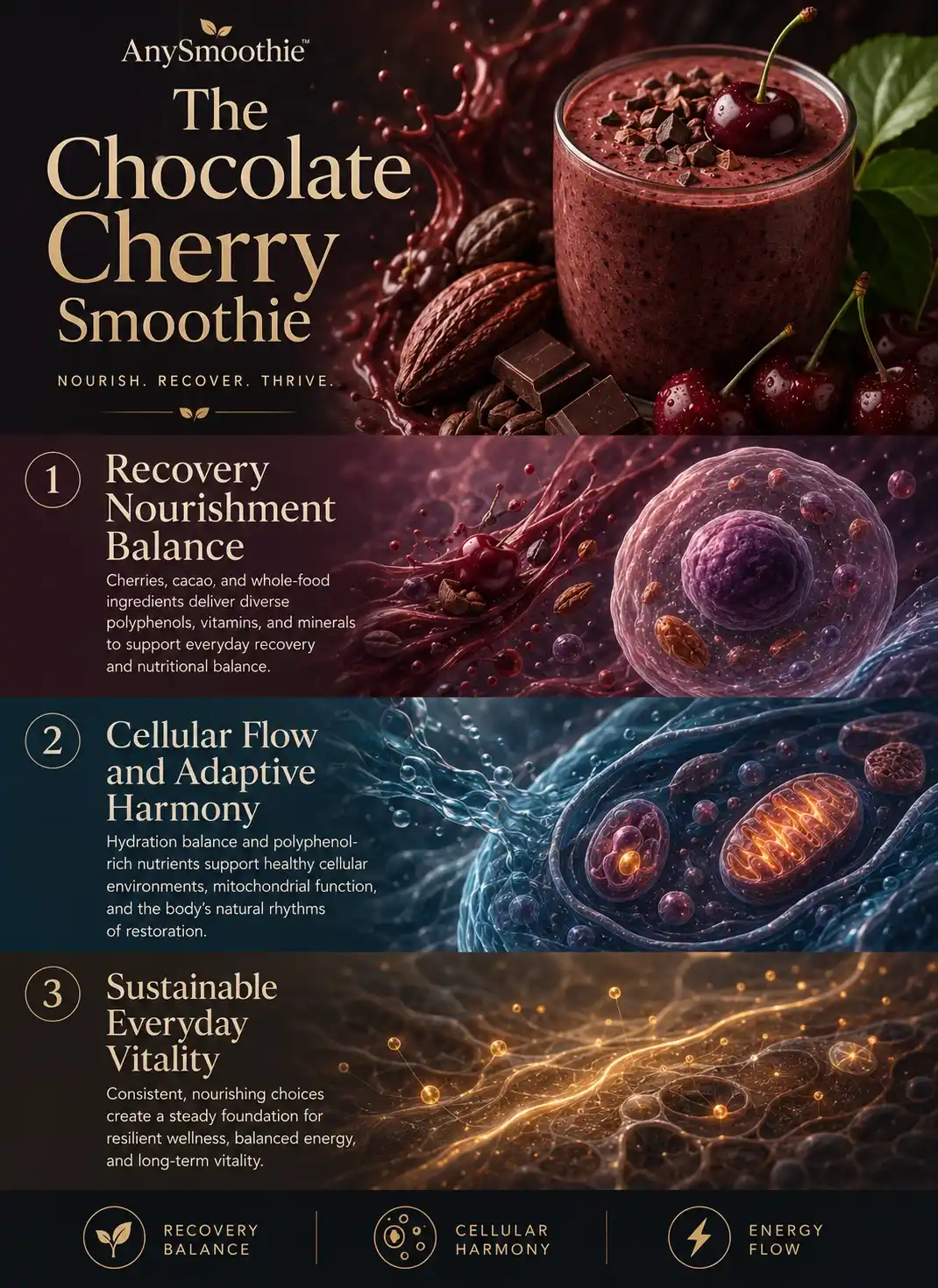
Core ingredients for the best chocolate cherry flavor
Frozen cherries are the backbone. They make the shake thick without watering it down, the way ice often does. If you only have fresh cherries, pit them first, then add a handful of ice (or freeze the cherries for an hour if you’ve got time).
Cocoa powder or cacao powder brings the chocolate. Cocoa powder tends to taste smoother and less sharp. Cacao powder can read more bitter and “dark,” which some people love. If your protein powder already has a strong chocolate flavor, start with less cocoa and build up.
Protein powder affects both flavor and texture more than people expect. Chocolate protein powders stack well with cherries, but vanilla can work too if you add a little extra cocoa. Unflavored is fine, but you’ll need more seasoning (vanilla, salt, sweetener) to make it taste like something you’d choose for fun.
A creamy base ties it together. These are the easiest options:
- Almond milk: light, clean, and lets cherry shine.
- Oat milk: naturally creamy and slightly sweet.
- Dairy milk: richest texture with classic milkshake vibes.
- Soy milk: creamier than most plant milks and adds more protein.
To boost cherry flavor without adding a lot of ingredients, pick one simple helper: a small splash of cherry juice, a few drops of almond extract (cherry’s best friend), or one pitted date to deepen sweetness. That last option is like adding a “caramel note” without using caramel.
Want more smoothie ideas in the same style? The Minimalist Baker smoothie archives are a great rabbit hole for quick, blender-friendly combos.
Protein and sweetness options that do not wreck the taste
Protein powders behave differently once they’re blended.
Whey usually blends smooth and tastes mild, especially in chocolate. Plant-based blends (pea, rice, hemp) can taste a bit earthy or “green,” even in chocolate flavors. That doesn’t mean they’re bad, it just means they need support.
Here are easy ways to cover off flavors without making the shake taste fake:
Extra cocoa: Adds depth and distracts from earthy notes.
Pinch of salt: Makes the chocolate taste bigger and rounds edges.
Vanilla extract: Helps the shake taste more like a dessert.
Sweetness is personal, and protein powder can trick you. Some powders are already sweetened, so add sweetener last.
Good sweetener choices (use what fits your diet and pantry):
- Banana: adds sweetness and thickness, but it becomes “cherry-chocolate-banana.”
- Date: sweetens without changing the flavor as much as banana.
- Maple syrup or honey: quick, dissolves fast (honey isn’t vegan).
- Stevia or monk fruit: use a tiny amount, and taste as you go.
For extra staying power, add-ins can help, but keep them modest so the shake doesn’t turn into pudding.
Chia or ground flax: Adds fiber, thickens as it sits.
Nut butter: Adds fats and a richer, rounder finish (also makes it more filling).
If you want a version with whole-food protein ideas and no powder, Minimalist Baker also has a helpful option: Chocolate Protein Shake (Protein Powder-Free!).
How to Make a Thick, Creamy Chocolate Cherry Protein Shake in 5 Minutes
This is a “trust your blender” recipe. The method matters as much as the ingredients, because cocoa and protein powders love to cling to the sides and hide in dry pockets.
Blender method, best order, and texture tips
Use this blending order to avoid clumps:
- Pour in the liquid first (milk of choice). This gives the blades something to grab.
- Add powders next (protein, cocoa, optional flax or chia). Powders blend better when they hit moving liquid.
- Add sticky sweeteners (date, maple syrup, honey) so they don’t glue to the bottom.
- Add frozen cherries last so they crush down and thicken everything.
Blend on low to break up the fruit, then finish on high until it looks glossy and uniform.
Consistency cues help more than exact measurements. A sippable shake should pour easily but still look thick. A spoonable shake should mound slightly when you tilt the glass, like soft-serve.
Quick fixes if it’s not right:
- Too thick: add a splash more milk and blend again.
- Too thin: add more frozen cherries, a few ice cubes, or a few chunks of frozen banana.
- Too bitter: add a tiny sweetener and a pinch of salt.
- Not chocolatey enough: add a bit more cocoa, blend, taste.
- Gritty: blend longer, use a higher speed, or try a different protein powder next time.
If you like comparing styles, EatingWell’s chocolate-cherry protein shake is another solid reference point, especially if you prefer Greek yogurt and peanut butter in the mix.
Make it your own: pre-workout, post-workout, or dessert shake
A good base shake is like a plain hoodie, you can dress it up depending on the day.
Pre-workout (lighter, more carbs): Add half a banana and use a lighter milk (like almond milk). Keep nut butter out so it digests easier.
Post-workout (more protein): Add Greek yogurt (if you do dairy) or use soy milk plus an extra half scoop of protein. Keep the cherries frozen so it stays thick without extra ice.
Dessert (milkshake energy): Add 1 tablespoon almond butter or peanut butter, then finish with cacao nibs or a small piece of dark chocolate blended in.
For a mocha cherry vibe, add a tiny pinch of espresso powder. Keep it small, it should whisper, not shout.
Meal Prep, Storage, and Serving Ideas (Plus Common Questions)
You can make this shake feel effortless even on weekdays, as long as you prep the parts that take the most time (measuring and pitting).
Freezer packs and make-ahead tips for busy mornings
Freezer packs are the minimalist trick that actually works. Portion the frozen cherries into a bag or jar, then add cocoa powder and any dry add-ins (like flax). Store it in the freezer.
At blend time, dump the pack into the blender, add milk, then add protein powder. Protein thickens and changes texture if it sits too long, so it’s best blended fresh.
Got leftovers? Store covered in the fridge and drink within 24 hours. Shake hard or re-blend to bring back the creamy texture.
Serving ideas and simple toppings that fit the Minimalist Baker vibe
Small details make a smoothie feel like a treat:
- Shaved dark chocolate or a light sprinkle of cacao nibs
- A few sliced cherries on top (fresh or thawed)
- A spoonful of granola for crunch
- A small dollop of coconut whip
- A thin drizzle of almond butter inside the glass
Chill the glass for a few minutes first, and use a wide straw if you like it extra thick.
Conclusion
This Chocolate Cherry Protein Shake, Minimalist Baker-inspired, is the kind of recipe that earns a permanent spot in your routine. It’s fast, deeply chocolatey, bright from the cherries, and easy to tune for your day, whether that’s breakfast, post-workout fuel, or a late-night dessert craving.
Start with frozen cherries, a creamy milk, cocoa, and your protein, then adjust sweetness and thickness at the end. Try it once, then make it yours. Save it, blend it again next week, and share your favorite swap when you find your perfect combo.
🛡️ Safety Notes & Contraindications
Antiplatelet Synergy with Anticoagulant Therapeutics: CRITICAL: High-potency cocoa flavanols (epicatechins) exert a documented antiplatelet effect, diminishing thromboxane $A_2$ synthesis and reducing platelet aggregation metrics. If you are prescribed anticoagulant therapeutics (e.g., Warfarin, DOACs) or antiplatelet drugs (e.g., Aspirin), daily integration of this targeted cacao-rich profile requires tight hematological monitoring to avoid bleeding risks.
Gastrointestinal Distress from Plant Protein Osmolarity: Utilizing plant-based isolated proteins (pea/rice/hemp) significantly alters the osmolarity of the blended chimo. In individuals with active irritable bowel syndrome (IBS) or sensitive mucosal linings, a rapid influx of high-density plant proteins on an empty stomach can trigger transient osmotic fluid draws into the bowel lumen, presenting as bloating, flatulence, or loose transit.
Paradoxical Fatigue from Reactive Hypoglycemia (The Banana Spike): Utilizing large ripe bananas or dense honey additions to counteract cacao bitterness triggers an acute, sharp insulin pulse. If this protocol is consumed as a pre-workout meal rather than post-workout recovery, it can induce a rapid cellular glucose clearance, leading to temporary reactive hypoglycemia, post-prandial lethargy, or loss of explosive physical torque.
Oxalate Seeding and Renal Saturation: Cacao powder and certain nut-milk derivatives concentrate a noticeable baseline structural density of soluble oxalates. If your clinical history presents underlying calcium-oxalate nephrolithiasis (kidney stones) or compromised glomerular filtration rates, ensure the shake includes a calcium source (such as dairy milk, kefir, or calcium-fortified plant bases) to safely complex oxalates directly in the intestine.
Caffeine/Theobromine Accumulation and HPA-Axis Anxiety: Raw cacao contains natural methylxanthines, primarily teobromina and small residual pools of caffeine. In individuals presenting with severe autonomic nervous system dysregulation, a hypersensitive HPA-axis, or chronic insomnia, consuming this dense chocolate protocol as a late-night dessert alternative can paradoxically trigger nocturnal alertness, tachycardia, or disrupted REM architecture. Restrict dessert use to a minimum of 3 hours before sleep.
FAQ
How do “Tart Cherry Anthocyanins” protect the sarcolemma from mechanical training strain?
Eccentric muscle contractions induce mechanical stress that can lead to lipid peroxidation of the sarcolemma (the muscle cell membrane). Biochemically, tart cherry anthocyanins function as targeted, lipid-soluble antioxidant shields that intercept reactive oxygen species (ROS) within the bilayer matrix. Supporting this physiological system through anthocyanin-rich smoothies optimizes the natural pathways of “membrane stabilization,” dampening post-exercise inflammatory signaling without blunting the essential adaptive stress required for muscular hypertrophy.
Why do “Cacao Flavanols” improve post-workout metabolite clearance via the eNOS pathway?
Cacao is highly concentrated in monomeric flavanols, specifically epicatechins. Biochemically, these compounds stimulate the phosphorylation of endothelial nitric oxide synthase (eNOS), driving an acute increase in localized nitric oxide production. Supporting this physiological system through flavanol-dense pairings facilitates the biochemical mechanics of “microcirculatory dilation,” accelerating the delivery of oxygenated blood and the rapid removal of metabolic waste products (like lactate) from recovering skeletal tissue.
What is the advantage of pairing “Branched-Chain Amino Acids” with a targeted insulin substrate?
Myofibrillar protein synthesis requires crossing a specific intracellular chemical threshold, heavily governed by the amino acid leucine. Biochemically, pairing a high-protein donor (like whey or soy) with a natural carbohydrate carrier (like a date or ripe banana) triggers a precise, metered insulin flux. Supporting this physiological system activates the PI3K/Akt/mTORC1 pathway, which unlocks the intracellular gates necessary to pull circulating amino acids directly into damaged contractile proteins for rapid structural repair.
How does the physical state of “Frozen Matrix Emulsification” protect delicate plant bioactives?
High-speed blender blades transfer significant kinetic energy into a fluid, raising the temperature and accelerating the degradation of volatile antioxidants. Biochemically, utilizing a frozen fruit matrix (frozen cherries) acts as a native thermodynamic heat sink. Supporting this physiological system lowers the kinetic energy during mechanical shear, preventing thermal denaturing and ensuring that vulnerable anthocyanins and flavanols are transferred into the gut lumen entirely intact.
Why does a “Lipid-Anchored Particle Sequence” optimize the transport of lipophilic pigments?
Many fat-soluble plant compounds and pigments are highly hydrophobic and exhibit low absorption rates in a purely water-soluble environment. Biochemically, adding polar lipids—such as the monounsaturated fats in almond butter or hemp seeds—triggers the spontaneous formation of micelles in the small intestine. Supporting this physiological system by blending powders directly into a lipid-and-liquid emulsion optimizes the natural pathways of “carrier-mediated transport,” significantly increasing the systemic bioavailability of the shake’s functional ingredients.

Medical Disclaimer: AnySmoothie content is for educational purposes only and is not a substitute for professional medical advice. Consult a healthcare provider for personalized guidance. See our full Disclaimer & Terms of Use. AI Transparency: AnySmoothie may use AI to support content development. All content undergoes human editorial review for accuracy, clarity, and editorial quality. See our full AI Transparency.