
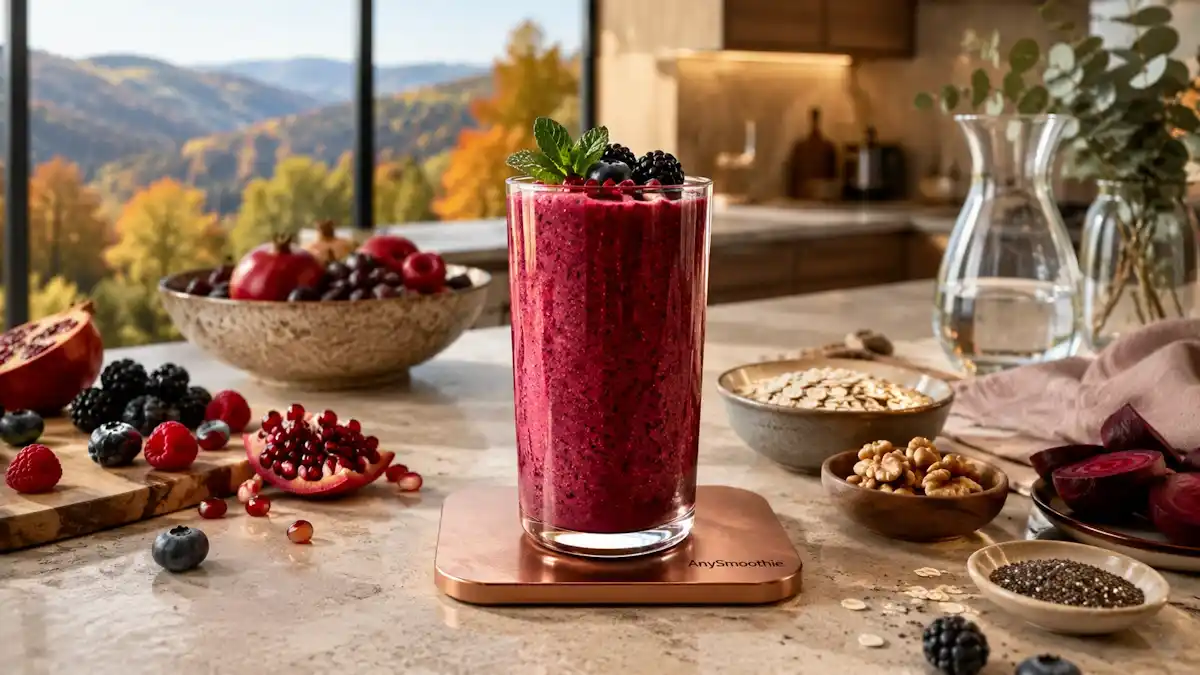
The endothelium is the thin lining inside your blood vessels, and it helps guide blood flow, vessel tone, and oxidative stress. CoQ10 matters here because it supports cellular energy and antioxidant balance, two pieces that keep that lining working well.
A smoothie is a delivery method, not a cure, but it can make CoQ10 easier to take because the nutrient absorbs better with fat. That makes CoQ10 smoothies for vascular endothelial support a practical option for older adults, people focused on heart health support, and anyone who wants a nutrient-dense routine.
How CoQ10 Supports Healthy Blood Vessel Function
CoQ10 sits inside mitochondria, where it helps support ATP production. Blood vessel cells use a lot of energy, so that matters. CoQ10 also helps buffer oxidative stress in its reduced form, ubiquinol. In a human study on vascular endothelial function, CoQ10 supplementation was associated with improvement, which is why it keeps showing up in circulation-focused routines. See the human study on endothelial function for the research reference.
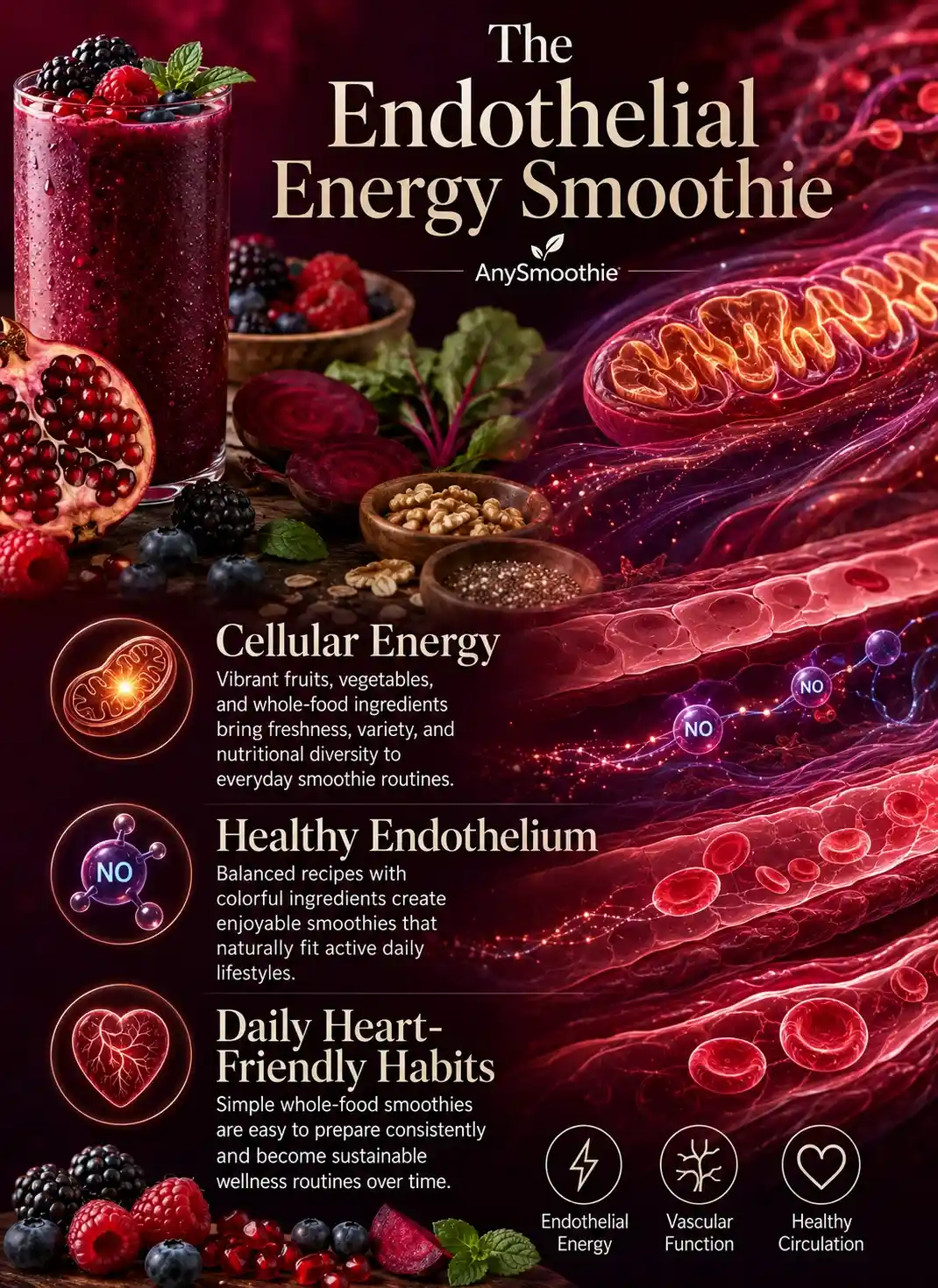
The endothelium also releases signals that tell vessels when to relax or tighten. One of the best known is nitric oxide, because it supports healthy dilation and blood flow. The Linus Pauling Institute on endothelial dysfunction gives a clear overview of that process. For a broader overview of how smoothie ingredients support endothelial function alongside nitric oxide pathways, see our guide to smoothie for endothelial function and nitric oxide. Ubiquinol is often chosen by older adults because it tends to absorb better than ubiquinone.
What the endothelium does all day
The endothelium is the inner skin of your arteries and veins. It senses pressure, blood flow, and chemical stress, then helps vessels stay flexible and responsive. When it runs smoothly, circulation feels less strained.
Why CoQ10 is paired with cardiovascular support routines
CoQ10 fits into cardiovascular support routines because it supports mitochondrial energy, antioxidant balance, and nitric oxide availability. That mix matters most when oxidative stress is higher or nutrient demand is higher, such as with age or hard training. For healthy people, it is a support nutrient, not a shortcut.
What to put in CoQ10 Smoothies for better absorption and vascular support
Because CoQ10 is fat-soluble, a low-fat blend is a weak match. Build the smoothie around a fat source, then add color, fiber, and protein.
| Ingredient | Why it helps | Flavor | Best use | Absorption note |
|---|---|---|---|---|
| Avocado | Creamy fat and texture | Mild, rich | Green or cacao blends | Helps CoQ10 ride with lipids |
| Nut butter | Fat plus protein | Nutty | Breakfast smoothies | Good with morning CoQ10 |
| Chia or flax | Fiber and some fat | Earthy | Berry blends | Best when ground or soaked |
| Greek yogurt or kefir | Protein and creaminess | Tangy | Daily smoothie base | Full-fat versions help uptake |
| Berries | Polyphenols and color | Bright, tart | Antioxidant blends | Pair with fat, not alone |
| Cocoa | Polyphenols and depth | Deep, chocolatey | Morning or dessert-style smoothies | Works well with nut butter |
| Oats or unsweetened milk alternatives | Body and balance | Neutral | Everyday blends | Choose unsweetened versions |
The pattern is simple, fat first, then polyphenols, then enough protein or fiber to make the drink steady. If you want more fiber-forward ideas, smoothies for gut microbiome support shows how to build a thicker base without making the drink heavy.
Best smoothie ingredients to pair with CoQ10
Fat sources like avocado, nut butter, and seeds help absorption. Berries and cocoa add polyphenols, while yogurt, kefir, and oats give the smoothie more staying power. A fruit-only blend tastes fine, but it is a weaker carrier for CoQ10.
When to blend, how much to use, and what to avoid
Morning smoothies work well because they create a steady habit. Post-workout blends also fit if they include protein and fat. Many routines use 100 to 200 mg with food, and larger amounts are often split into two doses.
Skip very sugary blends and thin, low-fat versions. If you take blood thinners such as warfarin or blood pressure medication, check with a clinician before using CoQ10 regularly.
3 CoQ10 smoothies for vascular endothelial support
These three blends keep the formula simple and fat-friendly.
How to choose the right CoQ10 form, dose, and timing
Ubiquinone and ubiquinol are the two main forms. Ubiquinol is the reduced form and usually absorbs better, which is why many people choose it when they want easier uptake. Ubiquinone can still work well, especially when it goes into a fat-rich smoothie.
Ubiquinol vs ubiquinone in plain English
Ubiquinone is the oxidized form, and ubiquinol is the reduced form. Ubiquinol tends to be the easier choice for older adults or anyone who wants better bioavailability. That matters most when absorption is the main goal.
Safety, medication checks, and smart label reading
Look for clear milligrams per serving, a short ingredient list, and third-party testing when possible. Watch for fillers you do not need. Mild stomach upset can happen, and people on anticoagulants or blood pressure medication should check with a healthcare professional first.
Conclusion
CoQ10 smoothies work because they solve two problems at once. They give CoQ10 the fat it needs for absorption, and they pair it with ingredients that support vascular endothelial health.
Keep the formula simple, use ingredients you’ll actually drink, and stay consistent. That combination is hard to beat.

Medical Disclaimer: AnySmoothie content is for educational purposes only and is not a substitute for professional medical advice. Consult a healthcare provider for personalized guidance. See our full Disclaimer & Terms of Use. AI Transparency: AnySmoothie may use AI to support content development. All content undergoes human editorial review for accuracy, clarity, and editorial quality. See our full AI Transparency.