
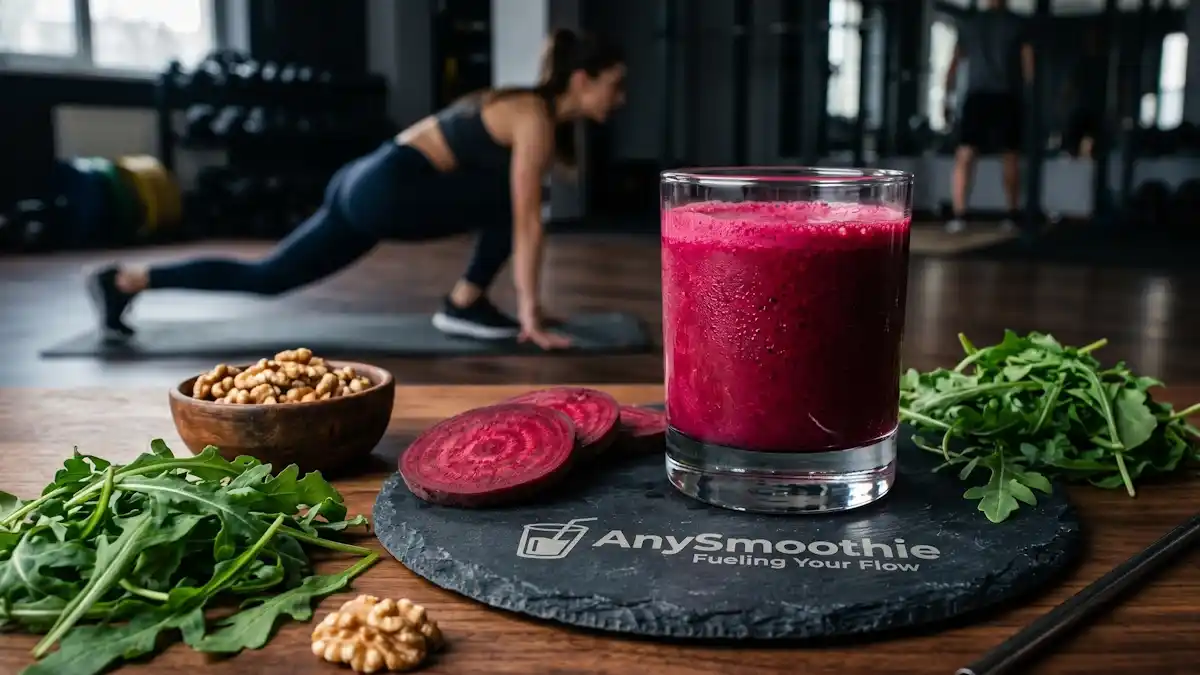
You wake up stiff. Your legs feel tight during that morning stretch. Simple moves hurt more than they help. But what if better blood flow could fix it? Nitric oxide relaxes blood vessels. It boosts circulation right where you need it.
Leg stretches create shear stress on vessel walls. This sparks natural nitric oxide release. Pair it with nitric oxide smoothies full of nitrates and amino acids. You get smoother flexibility, faster recovery, and stronger performance. These combos target endothelial function and myofascial elasticity.
This post breaks down the science, compares boosters, shares stretches, and gives recipes. You will build a stack that works.
The Vascular Window: Why Stretching and Nitric Oxide Go Hand in Hand
Leg stretches open blood flow. They trigger nitric oxide production up to six times higher. This happens through endothelial shear stress. Blood rubs vessel walls during movement. It activates the eNOS enzyme.
Direct stretch lets calcium enter cells. This releases more nitric oxide. Vessels relax fast. Studies on rats and humans show leg stretches improve dilation. For example, passive leg movement spikes flow because of nitric oxide. Check this study on passive leg movement and nitric oxide for details.
Benefits hit hard. Less inflammation means better femoral artery flow. Myofascial tissues glide easier. You feel a rush of blood in your next stretch. Stretching alone boosts nitric oxide. Smoothies amplify it for longer sessions.
Endothelial Shear Stress: How Mechanical Stretch Triggers Gas Release
Shear stress from stretches mimics exercise flow. It activates eNOS with hydrogen peroxide signals. Human protocols use 45 seconds on, 15 off. This raises shear short-term. Post-stretch, flow stays high.
Animal studies block eNOS. Benefits vanish. Think of it like a garden hose. Kink it, then release. Water sprays farther. In legs, it opens femoral paths. Research on shear stress in microcirculation confirms nitric oxide drives dilation.
Top Nitric Oxide Boosters Compared: Pick the Best for Your Smoothies
Smoothies pack nitric oxide precursors. Beetroot gives nitrates. L-Arginine and L-Citrulline fuel the urea cycle. Stack them for multiple paths. This beats solo use.
L-Citrulline shines as the sustained flow king. It raises arginine longer. Take 3-6 grams one to two hours before stretches. Effects last four to eight hours. Nitrates kick in fast but fade quicker.
Here’s a quick comparison:
| Booster | Pathway | Speed of Action | Sustained Effect Duration | Best Smoothie Pairing |
|---|---|---|---|---|
| Beetroot Juice (Nitrates) | Nitrate-Nitrite-NO | Fast (30-60 min) | 2-3 hours | Berries, lemon |
| L-Arginine | Urea Cycle | Very fast (15-30 min) | Short (1 hour) | Citrus, greens |
| L-Citrulline | Urea Cycle | Medium (45-60 min) | 4-8 hours | Watermelon, spinach |
Data matches real comparisons. See L-Citrulline vs. beet root details. For your routine, blend L-Citrulline with nitrates. Stretching then feels effortless.
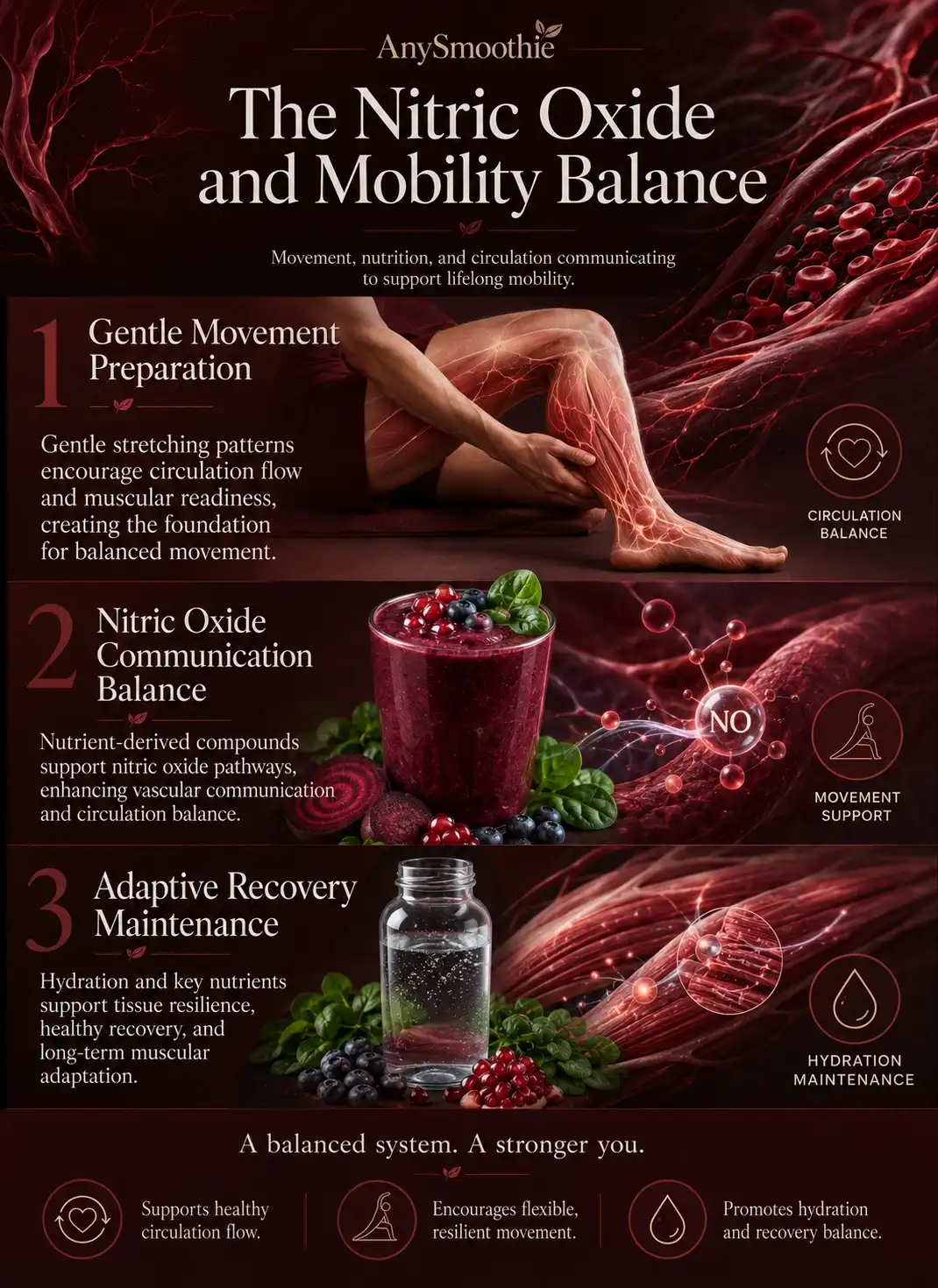
The Lower Body Flow: 3 Essential Stretches for Maximum Vasodilation
Target legs for max nitric oxide. Do these three times a week. Breathe deep. Hold 30-45 seconds per side. Warm up with leg swings first.
Hip flexor stretch: Runner’s lunge. Step back, drop knee. Push hips forward. It unblocks femoral artery pressure.
Hamstring stretch: Seated forward reach. Legs straight, fold over. Eases thigh pull for better flow.
Quad stretch: Standing heel pull. Grab ankle behind. Frees front thigh tension.
Each boosts shear stress. Fascia glides smoother. Studies link stretches to artery flexibility. You hit deeper poses with less pain.
Beyond the Hamstrings: Opening the Hip Flexors to Unblock the Femoral Artery
Desk life tightens hip flexors. They compress the femoral artery. Lunge forward. Front knee over ankle. Back knee down. Feel the pull in front hip.
Hold steady. Breathe into the stretch. This releases myofascial tension. Nitric oxide flows freer. Sessions build elasticity over time.
3 Nitric Oxide-Boosting Smoothie Recipes to Fuel Your Stretches
These recipes use beets for nitrates. Add vitamin C to protect nitric oxide. Blend 1-2 hours pre-stretch. Serve one or two.
Taste great cold. Add L-Citrulline powder for sustain.
The ‘Nitro-Beet’ Pre-Stretch Performance Catalyst
One medium beet (cooked), one cup frozen berries, one lemon (juiced), one cup water. Blend high two minutes. Drink fresh.
Beets convert to nitric oxide fast. Vitamin C stabilizes it. Pair with hip flexor lunge. Feel vessels open mid-session.
The Biohacker’s NO Stack: L-Citrulline, Nitrates, and Vitamin C
Stack for synergy. L-Citrulline sustains arginine. Nitrates hit quick via bacteria. Vitamin C doubles half-life.
Take 3-6g L-Citrulline, 300-500mg nitrates from beets, 500mg vitamin C. Nitric oxide rises 24 hours. Better than alone.
For stretches, flow lasts entire routine. Endothelial health improves with use. Caution: Since Nitric Oxide is a potent vasodilator, it can lower blood pressure. If you are already on antihypertensive medication, consult your doctor before stacking these boosters.
Maximizing the Half-Life: Timing Your Smoothie for Peak Vascular Opening
Sip one to two hours before. Citrulline and nitrates peak then. Vitamin C extends it. Avoid mouthwash; it kills nitrate bacteria.
No stomach upset if blended well. Test on rest days first.
Conclusion
Leg stretches plus nitric oxide smoothies boost flow and flexibility. Shear stress sparks natural release. Boosters like L-Citrulline sustain it. Recipes make it easy.
Your legs recover faster. Performance climbs. Stick consistent for lasting endothelial gains.
Try one smoothie and stretch today. Share how it feels in comments. Unlock smoother, stronger legs now.
🛡️ Safety Notes & Dietary Interactions
- Endothelial Shear Stress and Nitric Oxide Release Dynamics: Gentle leg stretching naturally increases blood-flow friction along vessel walls, which helps stimulate endothelial nitric oxide signaling through eNOS activity. Pairing mobility work with nitrate-rich smoothies may support smoother circulation and vascular relaxation without relying entirely on high-intensity exercise for blood-flow adaptation.
- Nitrate Conversion and Oral Microbiome Coordination: Beetroot-based smoothies depend partly on oral bacteria to convert dietary nitrates into nitric oxide precursors. Frequent antiseptic mouthwash use may interfere with that conversion pathway, which is why many nitric oxide-focused routines emphasize preserving normal oral microbial balance around nitrate intake windows.
- L-Citrulline Support and Sustained Vaso-Flow Signaling: L-Citrulline is often favored over direct arginine supplementation because it tends to sustain arginine availability for longer periods inside the nitric oxide cycle. Combined with beets, berries, spinach, and vitamin C-rich ingredients, it may help support steadier vascular responsiveness during stretching, walking, or lower-body recovery sessions.
- Vasodilation Balance and Blood Pressure Awareness: Nitric oxide signaling influences vascular relaxation and circulation dynamics, which means aggressive stacking strategies may not fit everyone equally. Individuals already using blood pressure medications or managing cardiovascular conditions should approach concentrated nitric oxide boosters carefully and prioritize balanced hydration, moderate dosing, and professional guidance when needed.
FAQ
Why do leg stretches naturally increase nitric oxide production?
Stretching creates mechanical shear stress along blood vessel walls as circulation changes through movement and muscular tension release. That friction stimulates endothelial nitric oxide synthase activity, which helps the body produce nitric oxide locally. In practical terms, this may support smoother blood flow, vascular flexibility, and a greater feeling of looseness during mobility work or recovery sessions.
Why are beets considered one of the strongest nitric oxide smoothie ingredients?
Beets naturally contain dietary nitrates that can convert into nitric oxide precursors through the nitrate-nitrite-NO pathway. This conversion may help support vascular relaxation, oxygen delivery, and circulation efficiency during exercise or stretching sessions. Pairing beetroot with vitamin C-rich ingredients like berries or lemon is also commonly used to help stabilize nitric oxide signaling.
How is L-Citrulline different from L-Arginine in nitric oxide support?
L-Citrulline generally stays active longer in circulation and supports a more sustained increase in arginine availability over time. While arginine can act more quickly, citrulline often provides a smoother and longer-lasting nitric oxide support curve. This is why many vascular-performance smoothie routines combine citrulline with nitrate-rich foods rather than relying on one pathway alone.
Why do hip flexor stretches matter so much for lower-body circulation?
Long periods of sitting can increase tightness around the hips and surrounding tissues, which may contribute to reduced mobility and less comfortable blood-flow dynamics through the upper leg region. Hip flexor stretches temporarily reduce tension around these areas, helping movement feel smoother and potentially improving lower-body circulation during stretching sessions.
Why is timing important for nitric oxide smoothies before stretching or exercise?
Nitric oxide precursors do not peak instantly after drinking the smoothie. Beet-derived nitrates and citrulline generally require some digestion and conversion time before circulation effects become noticeable. Many routines therefore use these blends roughly one to two hours before training, mobility work, or longer stretching sessions to better align nutrient timing with vascular responsiveness.

Medical Disclaimer: AnySmoothie content is for educational purposes only and is not a substitute for professional medical advice. Consult a healthcare provider for personalized guidance. See our full Disclaimer & Terms of Use. AI Transparency: AnySmoothie may use AI to support content development. All content undergoes human editorial review for accuracy, clarity, and editorial quality. See our full AI Transparency.