
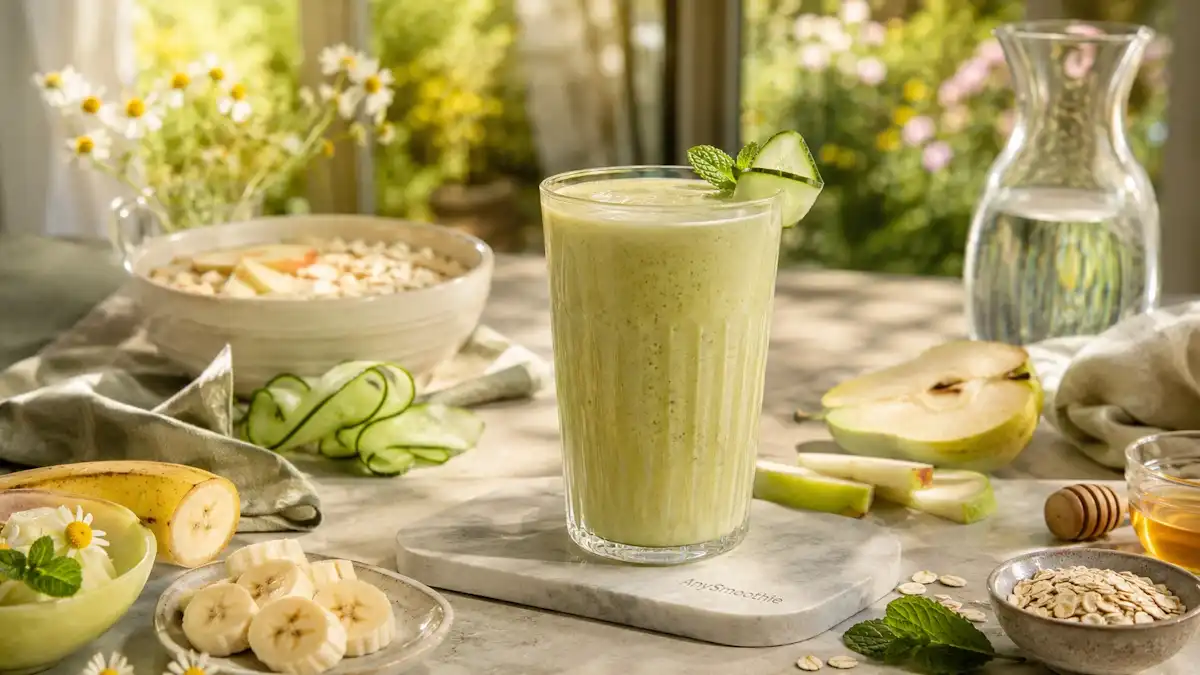
A smoothie can feel gentle one day and rough the next. The difference often comes down to fat, acidity, portion size, and ingredient choice.
That matters if you want low-fat smoothies for acid reflux support without making your drink heavy or sharp. The goal is comfort after meals, not a perfect formula that works for everyone.
Small changes can make a big difference. A lighter base, lower-acid fruit, and a sensible serving size can turn a noisy blend into something much easier to sip.
Why low-fat smoothies can be easier on reflux-prone stomachs
Higher-fat blends tend to sit heavier. Lower-fat versions often feel simpler because they put less strain on normal digestion and keep the drink less dense.
Texture matters too. A smooth, even blend is easier to sip than one with thick clumps, icy chunks, or gritty add-ins. If you want a broader ingredient list, fruit smoothies for acid reflux is a helpful companion.
A lot of comfort also comes down to trigger food patterns. Citrus, pineapple, chocolate, mint, and rich dairy can feel fine for some people and rough for others. The same is true for heavy nut butters.
How fat, acid, and volume affect comfort after blending
Fat slows the pace of stomach emptying, so a big spoonful of nut butter or a coconut milk base can make a smoothie feel richer than you want. Acidic fruit can add a bright bite that feels too sharp when your stomach is already sensitive.
Volume matters just as much. A giant smoothie can feel like a meal and a drink at the same time, which may be too much for some people.
Temperature can change the feel too. Very cold drinks sometimes feel bracing rather than soothing. A cool, not icy, blend is often easier to finish.
Ingredients that often cause trouble in reflux-friendly smoothies
These ingredients often deserve extra caution:
- Citrus juice, especially orange and lemon
- Pineapple, which is bright and acidic
- Mint, which can feel refreshing but may not suit everyone
- Chocolate, because it often comes with fat and sugar
- Full-fat yogurt or milk
- Heavy nut butters, especially in large amounts
Tolerance is personal. A smoothie that feels calm on Monday can feel off on Wednesday, so pay attention to patterns.
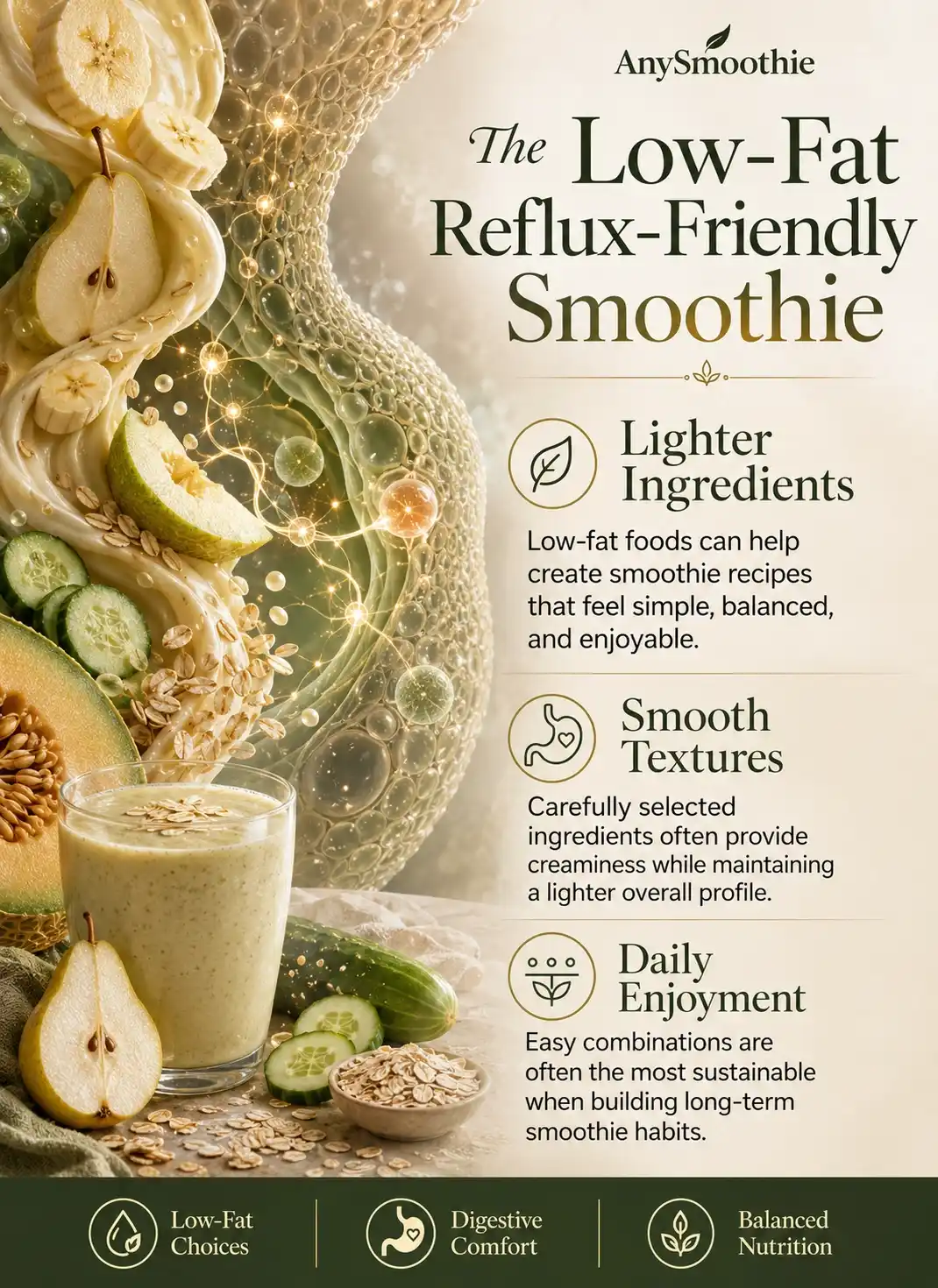
Build a reflux-friendly smoothie with the right ingredients
A simple formula keeps things easy: start with a mild liquid, add low-acid fruit, then use a small amount of texture builders if you want more body. That approach keeps the drink light while still giving it enough substance to feel like breakfast or a snack.
If you want more recipe structure, GERD-friendly smoothie recipes offers a useful reference point.
Best bases, fruits, and add-ins to keep things light
Water is the lightest base. Unsweetened oat milk also works well for many people because it adds creaminess without much richness. Unsweetened almond milk can fit too, if it sits well with you.
For fruit, ripe banana, pear, and melon are easy starting points. They bring sweetness without much acid. Cucumber can stretch a smoothie without making it heavy, and spinach adds color with a mild taste.
Oats can help with body and make a blend feel more filling. Use a small amount first. Leafy greens work best in modest handfuls, not giant piles.
Smart swaps that cut fat without losing texture
Yogurt adds body, but full-fat versions can feel dense. If dairy works for you, a smaller amount of low-fat yogurt may be easier than a large scoop. If not, extra banana or a spoonful of oats can create a similar creaminess.
Heavy nut butters are another common issue. A teaspoon of chia can thicken a smoothie for some people, but start small. Silken tofu can also smooth out texture without the same richness as nut butter.
Coconut milk brings a rich mouthfeel, yet it can push fat too high. Extra liquid, ripe banana, or a few oats usually gives a lighter result.
3 Low-Fat smoothies for acid reflux support
These three blends stay simple on purpose. Each one keeps acidity low, fat modest, and texture easy to sip.
Simple habits that make smoothies gentler on reflux
Ingredient choice matters, but how you drink the smoothie matters too. A good blend can still feel off if the portion is too large or the timing is poor.
Here’s a quick comparison of common smoothie styles and how they tend to behave:
| Smoothie choice | Ingredient focus | Fat level | Acidity and texture | Best time |
|---|---|---|---|---|
| Banana oat | Banana, oats, oat milk | Low | Mild, creamy | Breakfast |
| Pear cucumber green | Pear, cucumber, spinach, water | Very low | Light, fresh | Midmorning |
| Melon vanilla | Melon, oat milk, oats | Low | Soft, airy | Early day |
| Citrus nut-butter blend | Citrus, nut butter, yogurt | Higher | Sharp, rich | Often less ideal |
The table points to one pattern, lighter blends are easier to keep steady. Rich, acidic, or oversized smoothies ask more from your system.
Portion size, timing, and temperature tips
Smaller servings usually feel easier to manage than a huge glass. Start with 8 to 12 ounces, then adjust based on how you feel.
Timing matters too. A smoothie right before lying down is more likely to feel uncomfortable than one enjoyed earlier in the day. After a meal, give your body a little space before adding another large drink.
Temperature can also change the experience. Many people do better with cool or room-temperature smoothies than icy ones.
How to test tolerance without overcomplicating your routine
Change one thing at a time. If you swap banana for pear, or oat milk for water, you can see what actually shifted the result.
Keep notes on three details: ingredients, portion size, and timing. That simple record often reveals the pattern faster than guessing.
A smoothie journal does not need to be fancy. A few lines in your phone are enough to spot which blends support comfort and which ones do not.
Conclusion
Low-fat smoothies can fit reflux-prone routines when you keep fat low, acidity gentle, and portions sensible. That balance matters more than chasing a perfect recipe.
Start with one blend, drink it slowly, and note how it feels over the next few hours. Then adjust one ingredient at a time until you find the version your body handles best.
🛡️ Safety Notes & Dietary Interactions
- Individual Response: Reflux triggers vary considerably between individuals. A smoothie that feels comfortable one day may feel different another day, so track personal responses rather than relying only on general guidelines.
- Portion Awareness: Even low-fat smoothies can become uncomfortable when portions are too large. Moderate serving sizes often reduce stomach pressure and improve overall digestive comfort.
- Ingredient Changes: Introduce new fruits, liquids, or add-ins one at a time. This makes it easier to identify which ingredients support comfort and which may contribute to symptoms.
- Ongoing Symptoms: Frequent heartburn, persistent reflux, swallowing difficulties, or worsening digestive symptoms should be discussed with a qualified healthcare professional for individualized guidance.
FAQ
Are low-fat smoothies usually better for acid reflux?
Many people find lower-fat smoothies easier to tolerate because they tend to feel lighter and may move through digestion more comfortably. However, fat is only one factor. Acidity, portion size, texture, and personal food triggers also influence how a smoothie feels.
What are the best fruits for low-fat reflux-friendly smoothies?
Bananas, pears, melons, and sometimes ripe peaches are commonly used because they provide sweetness with relatively low acidity. These fruits often blend smoothly and work well with simple liquid bases such as water, oat milk, or almond milk.
Can oats help make a smoothie more reflux-friendly?
Oats can add gentle texture and help a smoothie feel more satisfying without adding much fat. Small amounts are often enough. Using too many oats may create a thicker texture that some individuals find less comfortable.
Is it better to drink a reflux-friendly smoothie cold or room temperature?
Many people tolerate cool or lightly chilled smoothies better than very icy drinks. Extremely cold beverages can sometimes feel harsh on sensitive digestion. Testing different temperatures can help determine which option feels most comfortable for you.
How can I tell if a smoothie ingredient is causing my reflux symptoms?
The simplest approach is changing only one ingredient at a time while keeping portion size and timing consistent. Tracking ingredients, serving size, and symptoms for several days often makes personal trigger patterns easier to identify.

Medical Disclaimer: AnySmoothie content is for educational purposes only and is not a substitute for professional medical advice. Consult a healthcare provider for personalized guidance. See our full Disclaimer & Terms of Use. AI Transparency: AnySmoothie may use AI to support content development. All content undergoes human editorial review for accuracy, clarity, and editorial quality. See our full AI Transparency.