
A busy morning can make breakfast feel like a choice between speed and comfort. For many people, a smoothie seems like the easiest answer, but the wrong mix can feel too sharp, too thin, or too heavy.
The good news is that GERD-friendly smoothies for everyday digestion can stay simple. The best ones use low-acid fruits, calm textures, and smart add-ins that support normal digestive function without turning breakfast into a gamble.
What Makes a Smoothie GERD-Friendly in the First Place?
A gentle smoothie starts with ingredients that are easy to blend and easy to sip. That means low-acid fruit, a mild liquid base, and just enough fiber or fat to slow things down a bit. For more on GERD-friendly eating, see the NIDDK guide.
Choose low-acid fruits that are easier on digestion
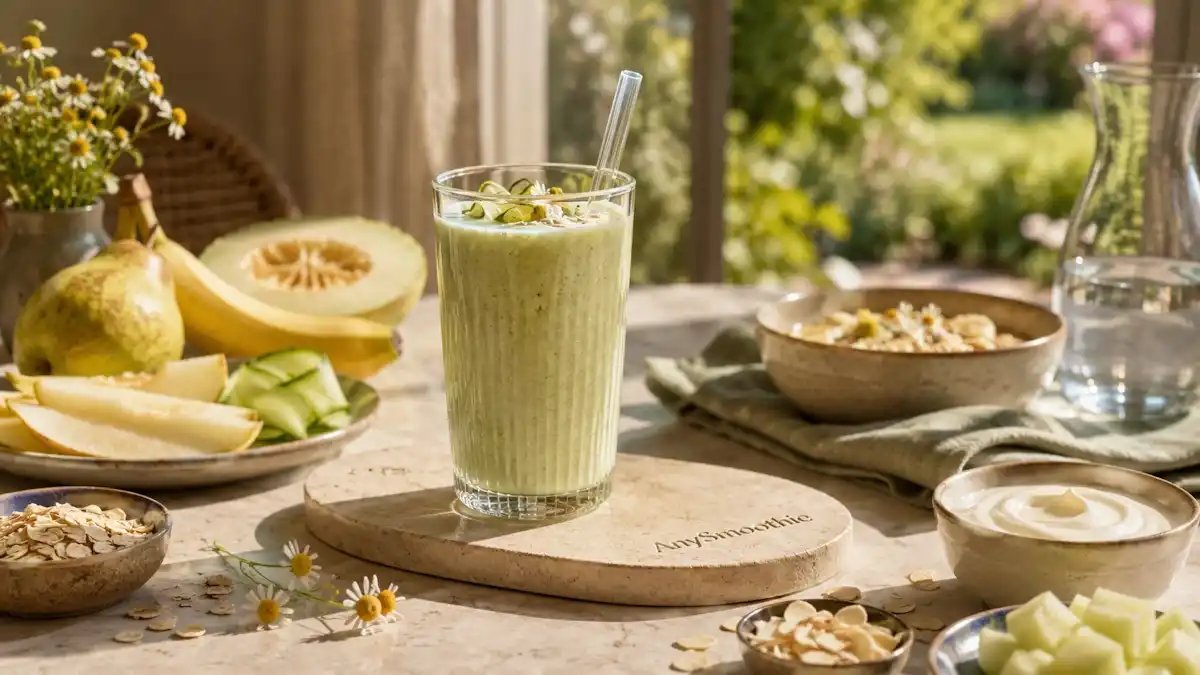
Bananas, pears, melons, and ripe mangoes usually work better than citrus, pineapple, or very tart berries. They bring sweetness without the sharp bite that some smoothies have.
Ripeness matters too. Softer fruit blends faster, tastes sweeter, and often needs less added sugar. That keeps the drink simple and more predictable.
Balance fiber, liquid, and fat so the smoothie feels calm and steady
Too much fiber at once can make a smoothie feel dense. Too little can leave it thin and fast-moving. A middle ground often feels better.
Oat milk or water can keep the base light. Small amounts of almond butter, chia, or flax can add body and help the texture feel smoother from the first sip to the last. or a medical overview of fiber, see Mayo Clinic Dietary Fiber.
Watch common trigger ingredients that can backfire
Many store-bought smoothies hide ingredients that can feel rough on a sensitive stomach. Citrus juice, chocolate, peppermint, espresso, heavy sweeteners, and big handfuls of raw greens are common trouble spots.
Label reading helps here. If a bottle lists several bold flavors and sweeteners, it may be better to pass and make your own.
The best ingredients for GERD-friendly smoothies for everyday digestion
A good smoothie formula usually has one fruit for flavor, one liquid for flow, and one add-in for texture. That mix gives you a drink that feels steady instead of loud.
| Ingredient | Why it may work well | Texture role | GERD caution | Best use |
|---|---|---|---|---|
| Banana | Mild, sweet, and easy to blend | Makes the smoothie creamy | Can get thick fast | Base for simple morning blends |
| Pear | Soft flavor with light sweetness | Adds smooth body | Use ripe pears for best texture | Pairs well with banana or oat milk |
| Oat milk | Neutral and soft on flavor | Keeps the blend silky | Choose unsweetened if possible | Everyday liquid base |
| Chia | Helps the smoothie gel a bit | Adds steady thickness | Use small amounts only | 1 teaspoon to 1 tablespoon |
| Avocado | Rich texture without sharp acid | Makes the drink fuller | Keep portions modest | Good for more filling blends |
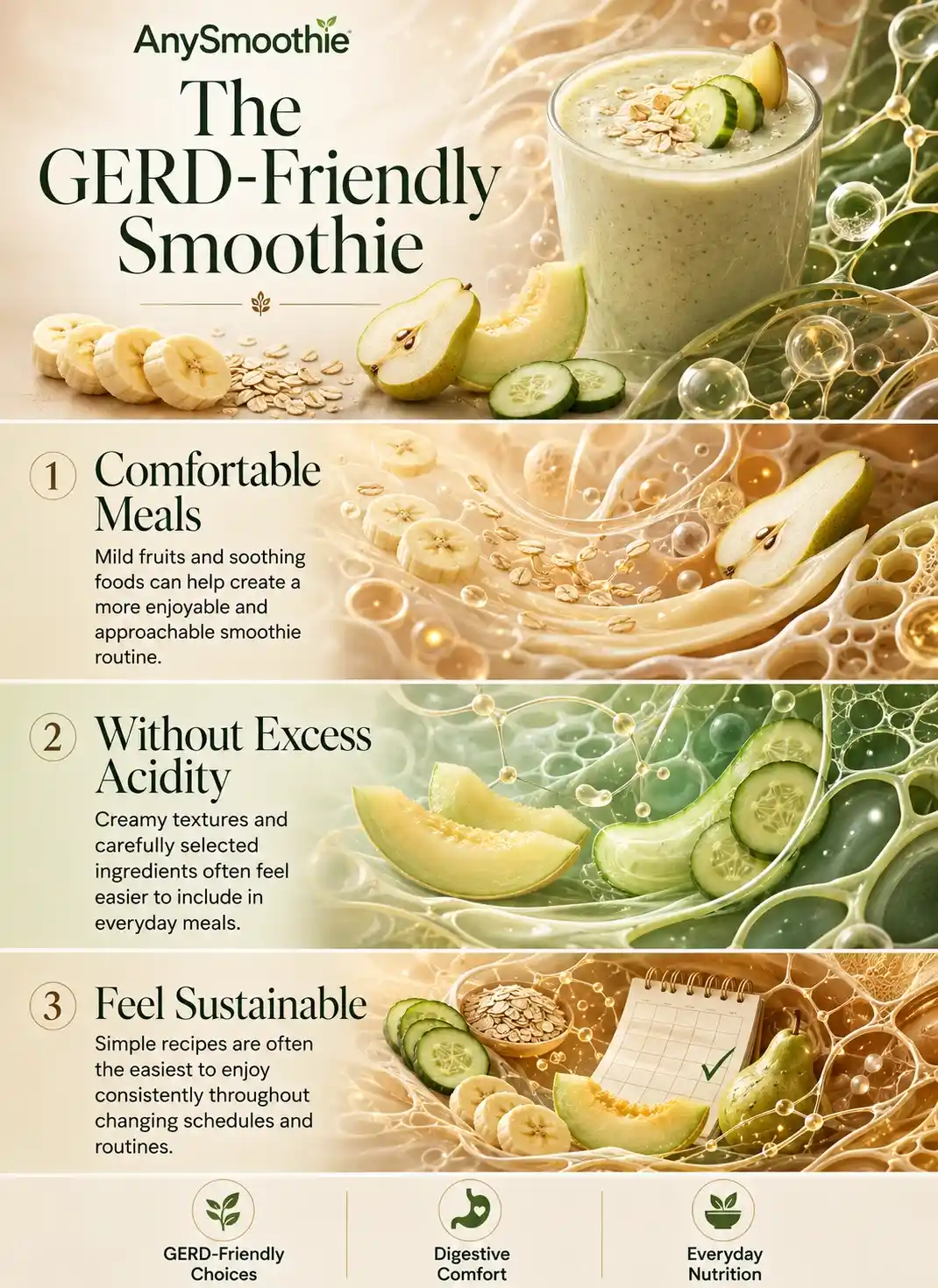
The table keeps the pattern simple. One fruit, one liquid, one texture booster is often enough.
Fruit choices that keep flavor gentle
Banana, pear, papaya, melon, peach, and avocado can all fit depending on what your stomach tolerates. Flavor does not need to be bright to be good.
A smoothie can taste fresh without using acidic fruit. That matters when you want something you can repeat often.
Liquids and bases that support a smoother blend
Oat milk, almond milk, plain water, and small amounts of coconut water all work well. Kefir can also fit if you already know it agrees with you.
A thinner liquid base often helps the smoothie feel lighter. It also blends more evenly, which matters when you want a drink that goes down easily.
Optional add-ins that improve texture without making it harsh
A few oats can give body. A little chia or ground flax can help the texture feel more settled. Yogurt or mild protein can work too, if you tolerate them.
The key is restraint. More is not always better when digestion is sensitive.
3 GERD-Friendly smoothie recipes for everyday digestion
How to make smoothies easier to digest every day
Timing matters. A huge smoothie first thing in the morning can feel like too much volume, especially if you are rushing. A smaller serving often feels more comfortable.
Blending also matters. The smoother the texture, the easier it usually is to sip without strain. Slow drinking helps too, because the stomach has more time to handle the volume.
Keep portions moderate so the stomach does not feel overloaded
Start with 8 to 12 ounces if that feels better than a large cup. You can always have more later if you still want it.
Blend until smooth and sip slowly
A longer blend can make oats, fruit, and seeds feel less rough. Then take your time with it instead of treating it like a race.
Conclusion
The best GERD-friendly smoothies stay low-acid, balanced, and simple enough to repeat. When you keep the fruit gentle and the texture steady, breakfast feels less unpredictable.
Start with one recipe, adjust the ingredients to your own tolerance, and build a routine you can live with. A calm smoothie is often the one you can drink again tomorrow.

Medical Disclaimer: AnySmoothie content is for educational purposes only and is not a substitute for professional medical advice. Consult a healthcare provider for personalized guidance. See our full Disclaimer & Terms of Use. AI Transparency: AnySmoothie may use AI to support content development. All content undergoes human editorial review for accuracy, clarity, and editorial quality. See our full AI Transparency.