
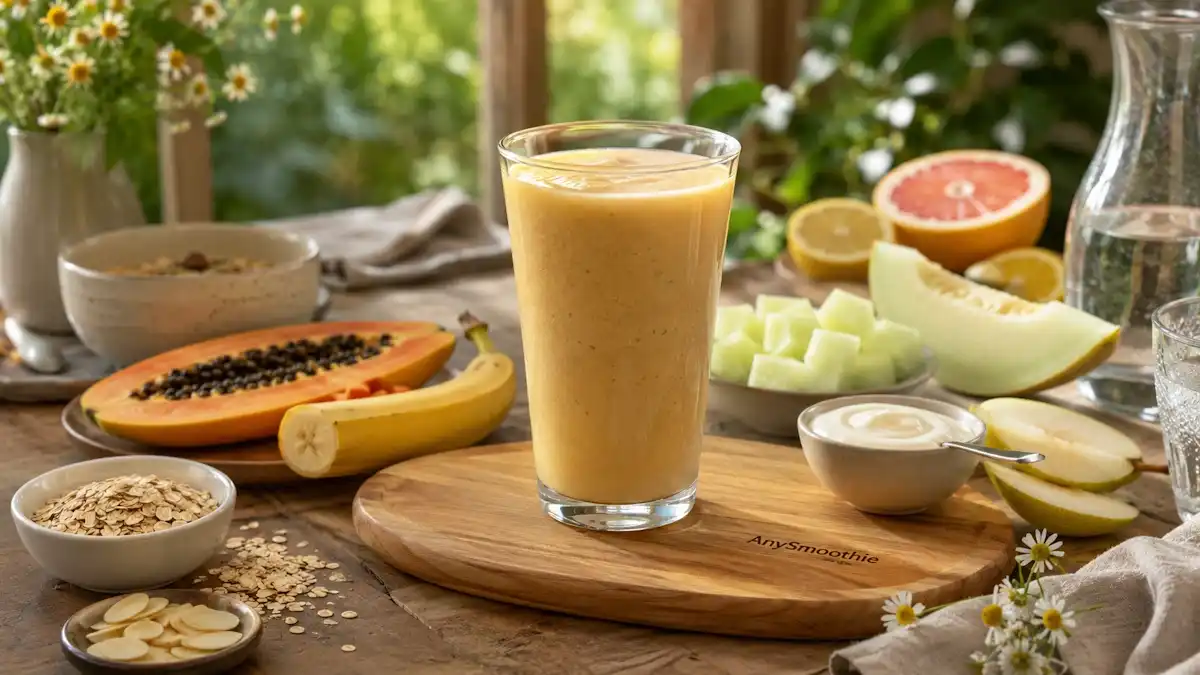
Acid reflux can turn a simple smoothie into a bad surprise. One blend feels smooth and easy, while the next leaves your chest warm and your throat raw.
The difference usually comes down to the ingredients. The goal here is not to cure reflux, but to choose fruits and add-ins that are easier on the stomach and support normal digestion. You’ll see which fruits usually work, which ones often backfire, how to build a gentler blend, and three reflux-friendlier smoothie ideas you can try at home.
How fruit smoothies affect acid reflux
Smoothies can feel soothing because they are soft, blended, and easy to sip. They can also cause trouble when they are too acidic, too sweet, too rich, or too large. Temperature matters too, because very cold drinks can feel harsh for some stomachs.
Your trigger list matters more than any universal smoothie rule.
Why acidity and sugar matter
Very acidic fruit can sting an already sensitive esophagus. Citrus, pineapple, and tart juice can make a blend taste brighter, but that brightness can also feel sharper after you drink it.
Sugar load matters as well. A sweet smoothie can move out of the stomach more slowly for some people, and that can raise pressure in the upper stomach. When pressure rises, reflux symptoms can feel more likely. For more on acid reflux, see the NIDDK guide.
The role of fat, fiber, and portion size
A little fiber can help a smoothie feel steady and filling. Too much fiber at once, though, can make the drink thick and heavy.
High-fat add-ins, such as large amounts of nut butter or coconut cream, can slow stomach emptying. A large smoothie can do the same by sheer volume. That is why testing one ingredient at a time helps, especially when you are figuring out fruit smoothies for acid reflux.
The best ingredients for fruit smoothies for acid reflux
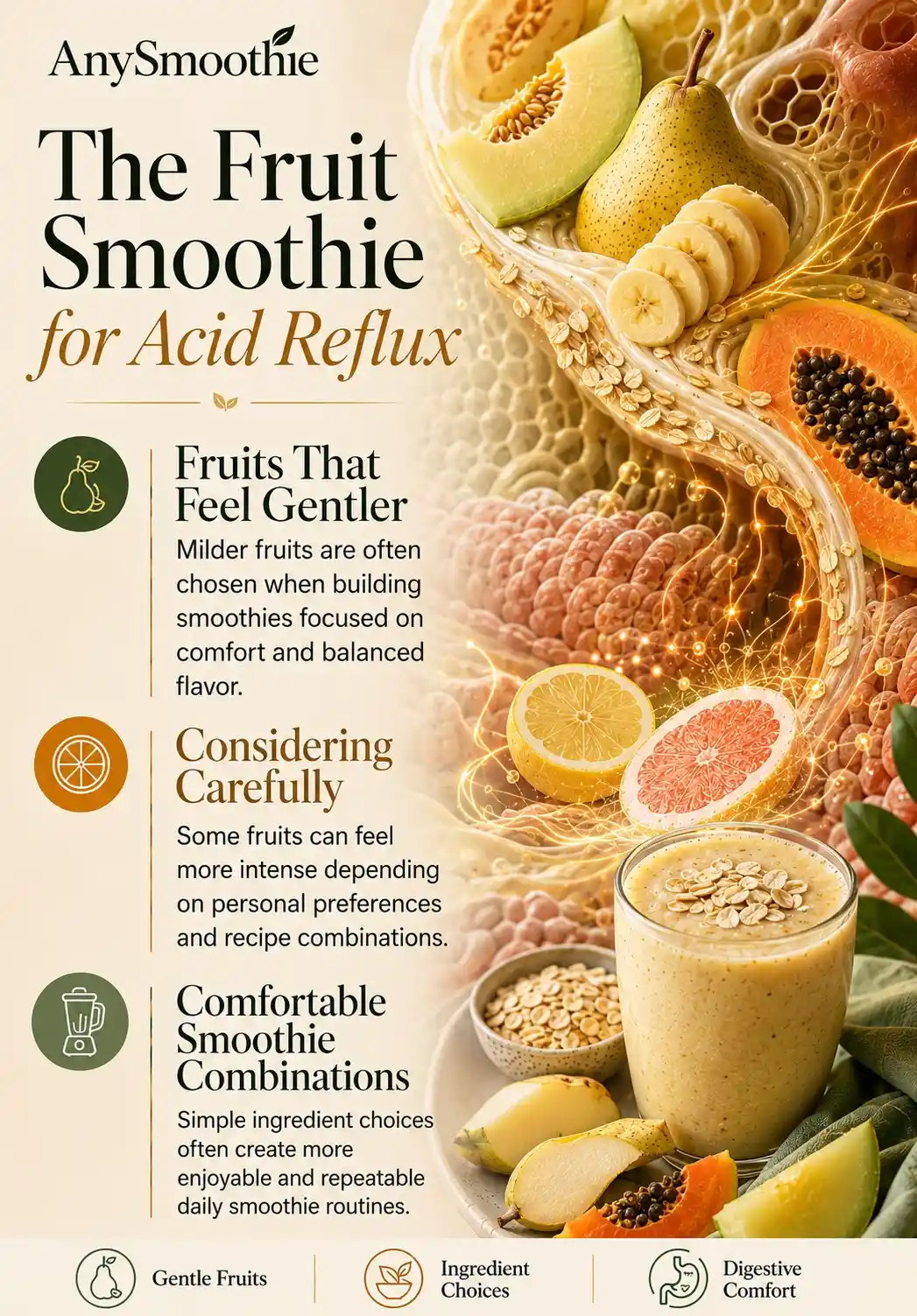
Simple ingredients usually work best. Lower-acid fruit, light liquids, and modest add-ins tend to be easier to tolerate than sharp, sweet, or heavy blends.
| Ingredient | Reflux-friendliness | Flavor | Benefits | Caution notes |
|---|---|---|---|---|
| Banana | Usually gentle | Mild and creamy | Adds body and natural sweetness | Use ripe banana for a softer taste |
| Pear | Usually gentle | Light and sweet | Blends well with other mild fruits | Choose ripe pears when possible |
| Melon | Often gentle | Cool and soft | Hydrating and low in acid | Keep portions moderate |
| Unsweetened almond milk | Usually gentle | Neutral | Light base with little acid | Check for added sugar or gums if they bother you |
| Oats | Usually gentle in small amounts | Mild and earthy | Adds thickness and staying power | Too much can make the smoothie heavy |
These are starting points, not rules. Ripe fruit and simple liquids usually work better than heavy, sweet blends.
Gentle fruits to start with
Bananas, pears, melons, and ripe peaches are common starting points. Ripe fruit usually tastes softer and has less bite than underripe fruit. If banana feels best, banana smoothie for acid reflux is a simple place to start.
Smooth bases that are usually easier to digest
Water keeps the blend light. Unsweetened almond milk and oat milk can add body without much acid. Coconut water can work in moderation, although some brands contain added sugar.
Dairy may work for some people, but not everyone tolerates it well. The best base is usually low in fat, low in sugar, and not overly acidic.
Supportive add-ins without overloading the smoothie
A small handful of spinach adds texture without much acid. Chia or oats can make the smoothie more filling, but keep the amounts modest. Ginger can work in tiny amounts if you already know it sits well with you.
The point is support, not overload. A smoothie should feel calm, not dense.
Ingredients to avoid if your smoothies trigger reflux
Common triggers vary, but some ingredients show up again and again. The Hopkins Medicine GERD diet guide also points to citrus, fried foods, and spicy items as frequent troublemakers.
High-acid fruits and juices
Oranges, grapefruits, lemons, limes, pineapples, and tart juices are common problem ingredients. Even a splash can make a smoothie feel sharper, especially when the rest of the blend is sweet. If citrus already bothers you, leave it out from the start.
Add-ins that can make symptoms worse
Mint can be a bad fit for some people. Chocolate, full-fat dairy, large scoops of nut butter, and heavy sweeteners can also push a smoothie in the wrong direction.
The issue is often pressure, richness, or a strong trigger profile, not one single ingredient. A smoothie can look healthy and still feel rough on reflux-prone digestion.
3 Fruit smoothies for acid reflux
If you want more low-acid combinations, gentle blender recipes for acid reflux show how to keep flavor simple without citrus.
Banana pear soothing blend
Ingredients
- 1 ripe banana
- 1 ripe pear
- 1 cup water or unsweetened almond milk
- 1 tablespoon rolled oats, optional
Blend until smooth.
The flavor stays mild, and the acid load stays low.
Estimated Nutrition per Serving
Estimated with unsweetened almond milk and 1 tablespoon rolled oats included.
- Calories: ~310 kcal
- Protein: ~6 g
- Carbohydrates: ~65 g
- Fat: ~4 g
- Fiber: ~11 g
- Sugars: ~36 g
Melon cucumber refresher
Ingredients
- 1 cup cantaloupe or honeydew
- 1/2 cucumber, peeled
- 3/4 cup water or unsweetened almond milk
- A few spinach leaves, optional
Blend until smooth.
This version is light, hydrating, and less sharp than citrus-based blends.
Estimated Nutrition per Serving
Estimated with cantaloupe, water, and without optional spinach.
- Calories: ~75 kcal
- Protein: ~2 g
- Carbohydrates: ~18 g
- Fat: ~0.5 g
- Fiber: ~2 g
- Sugars: ~14 g
Melon and cucumber are both naturally juicy, so 3/4 cup of liquid may be more than you need. Start with about half and add the rest gradually for a fresher, less watery texture.
Peach oat comfort smoothie
Ingredients
- 1 cup ripe peaches
- 1/4 cup rolled oats
- 1 cup water or unsweetened oat milk
- Melon or pear, as an alternative to peaches if needed
Blend until smooth.
It feels filling without leaning on heavy fats or tart fruit. If peaches bother you, swap in more melon or pear.
Estimated Nutrition per Serving
Estimated with ripe peaches and unsweetened oat milk.
- Calories: ~260 kcal
- Protein: ~7 g
- Carbohydrates: ~49 g
- Fat: ~5 g
- Fiber: ~7 g
- Sugars: ~19 g
How to make a smoothie that is easier on your stomach
Keep the portion moderate and blend until smooth. Sip slowly, because fast drinking can add air and pressure. Also, avoid lying down soon after you drink it.
Build it in the right order
Pour liquid first, then add fruit, then the extras. That order helps the blades move cleanly and keeps the texture thinner. A thinner smoothie is often easier to tolerate than a thick one.
Watch the timing and temperature
Some people do better with a smoothie earlier in the day or between meals. Very cold drinks can bother sensitive stomachs, so slightly chilled is a safer middle ground. If a smoothie feels off, change one thing at a time.
Conclusion
The best smoothie is the one your body handles well. Start with low-acid fruit, keep portions moderate, and leave out common triggers first.
Then track the ingredients, change one thing at a time, and let your symptoms guide the next version. With a little testing, fruit smoothies for acid reflux can become simple, calm, and easy to adjust.
🛡️ Safety Notes & Dietary Interactions
- Individual Trigger Foods Vary: Acid reflux triggers differ between individuals. Even fruits generally considered gentle may cause discomfort for some people, making personal observation and gradual ingredient testing important.
- Avoid Oversized Smoothies: Large smoothie servings can increase stomach pressure and contribute to reflux symptoms. Moderate portions are often easier to tolerate than oversized drinks packed with multiple ingredients.
- Watch Added Sugars Carefully: Sweetened yogurts, fruit juices, syrups, and flavored milks can increase overall sugar content. Choosing simple, unsweetened ingredients helps keep smoothies more balanced and easier to evaluate.
- Persistent Symptoms Need Evaluation: Frequent heartburn, ongoing reflux symptoms, swallowing difficulties, or persistent digestive discomfort should be discussed with a qualified healthcare professional for appropriate assessment and guidance.
FAQ
What fruits are usually best for acid reflux smoothies?
Bananas, pears, melons, ripe peaches, and papaya are commonly used because they are generally lower in acid than citrus fruits. These fruits often provide natural sweetness and a smooth texture without creating the sharp flavor profile that some people find uncomfortable when managing acid reflux symptoms.
Which fruits are most likely to trigger reflux symptoms?
Citrus fruits such as oranges, lemons, limes, and grapefruits are common triggers for many people. Pineapple can also be problematic because of its acidity. Individual tolerance varies, but starting with lower-acid fruits and gradually testing personal responses is usually a more comfortable and practical approach.
Is almond milk a good base for reflux-friendly smoothies?
Unsweetened almond milk is a popular option because it has a mild flavor and relatively low acidity. Many people find it works well with bananas, pears, melons, and oats. Choosing unsweetened varieties also helps avoid unnecessary added sugars that may complicate digestive comfort for some individuals.
Can smoothies be too thick for acid reflux?
Yes. Very thick smoothies containing large amounts of oats, chia seeds, nut butter, protein powders, or frozen fruit may feel heavier and slower to digest. A lighter consistency created with adequate liquid often feels easier on the stomach and may reduce discomfort after drinking.
How can I figure out which smoothie ingredients trigger my reflux?
The simplest approach is to change only one ingredient at a time. Keep portions moderate, track symptoms, and note the timing of each smoothie. Over several days or weeks, patterns often become easier to identify, helping you create blends that better match your own digestive tolerance.

Medical Disclaimer: AnySmoothie content is for educational purposes only and is not a substitute for professional medical advice. Consult a healthcare provider for personalized guidance. See our full Disclaimer & Terms of Use. AI Transparency: AnySmoothie may use AI to support content development. All content undergoes human editorial review for accuracy, clarity, and editorial quality. See our full AI Transparency.