
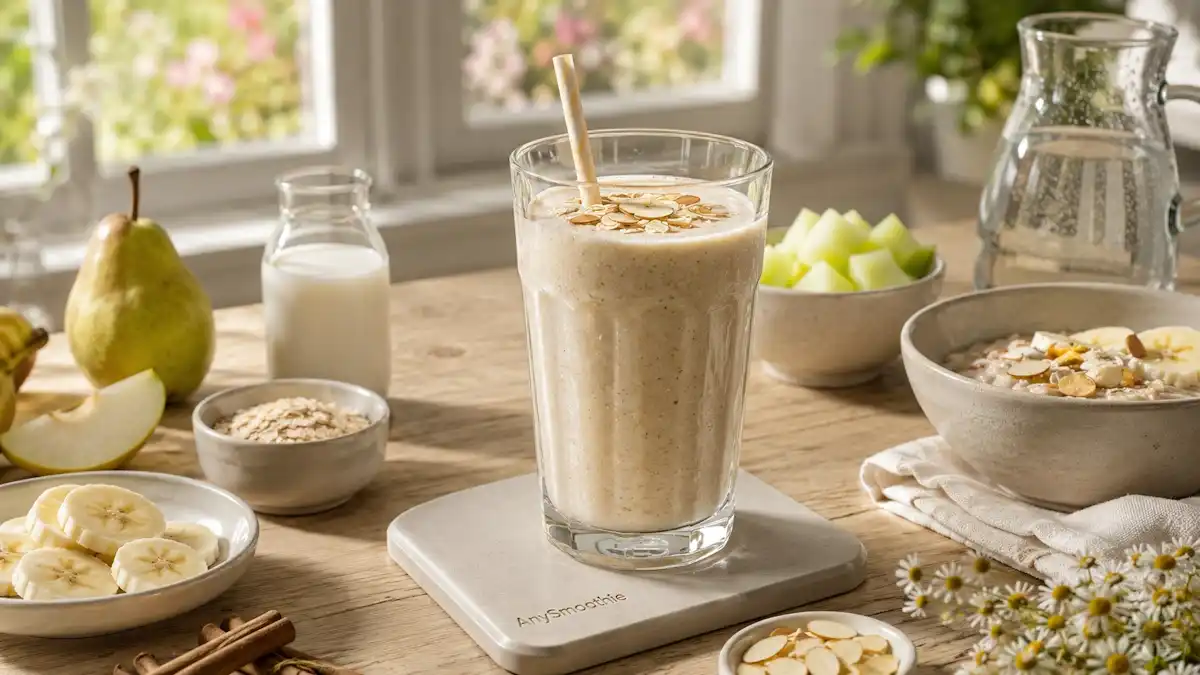
Breakfast can turn sour fast when a smoothie is too acidic, too rich, or too large. That first cold sip may seem harmless, then the rest of the morning feels off.
The good news is that GERD-friendly breakfast smoothies without dairy can still taste creamy and feel satisfying. Small ingredient changes, like softer fruit, lighter liquids, and modest portions, often help breakfast feel calmer without making big promises.
What makes a breakfast smoothie GERD-friendly
A reflux-friendly smoothie usually stays simple. It leans on lower-acid fruit, keeps fat modest, and avoids a sugar rush that can make a drink feel heavy. Banana, pear, melon, and ripe peach often fit better than citrus or pineapple. If you want a practical example, this banana smoothie for acid reflux shows how a simple low-acid ingredient combination can create a gentler breakfast blend.
Texture matters too. A smoothie that drinks like a milkshake can feel harder to finish than one with a lighter blend. Too much ice, too many add-ins, or a very thick mix can make the first meal of the day feel like work.
Ingredients that usually work better for reflux
Banana, pear, melon, and ripe peach bring mild sweetness without much bite. Oats add body, chia adds thickness in small amounts, and a little ginger can work for some people. Oat milk and almond milk keep the base dairy-free and gentle. Together, these ingredients blend into a softer morning meal that feels easier to sip. For more on reflux, see the Gastroesophageal reflux disease guide on Mayo Clinic.
Ingredients to limit when you want a calmer morning
Citrus and pineapple can feel sharp first thing in the morning. Cocoa and peppermint can also be triggers for some people. Large scoops of nut butter or rich dairy can push a smoothie into heavy territory. Tolerance still varies, so a food that feels fine one day may feel different the next.
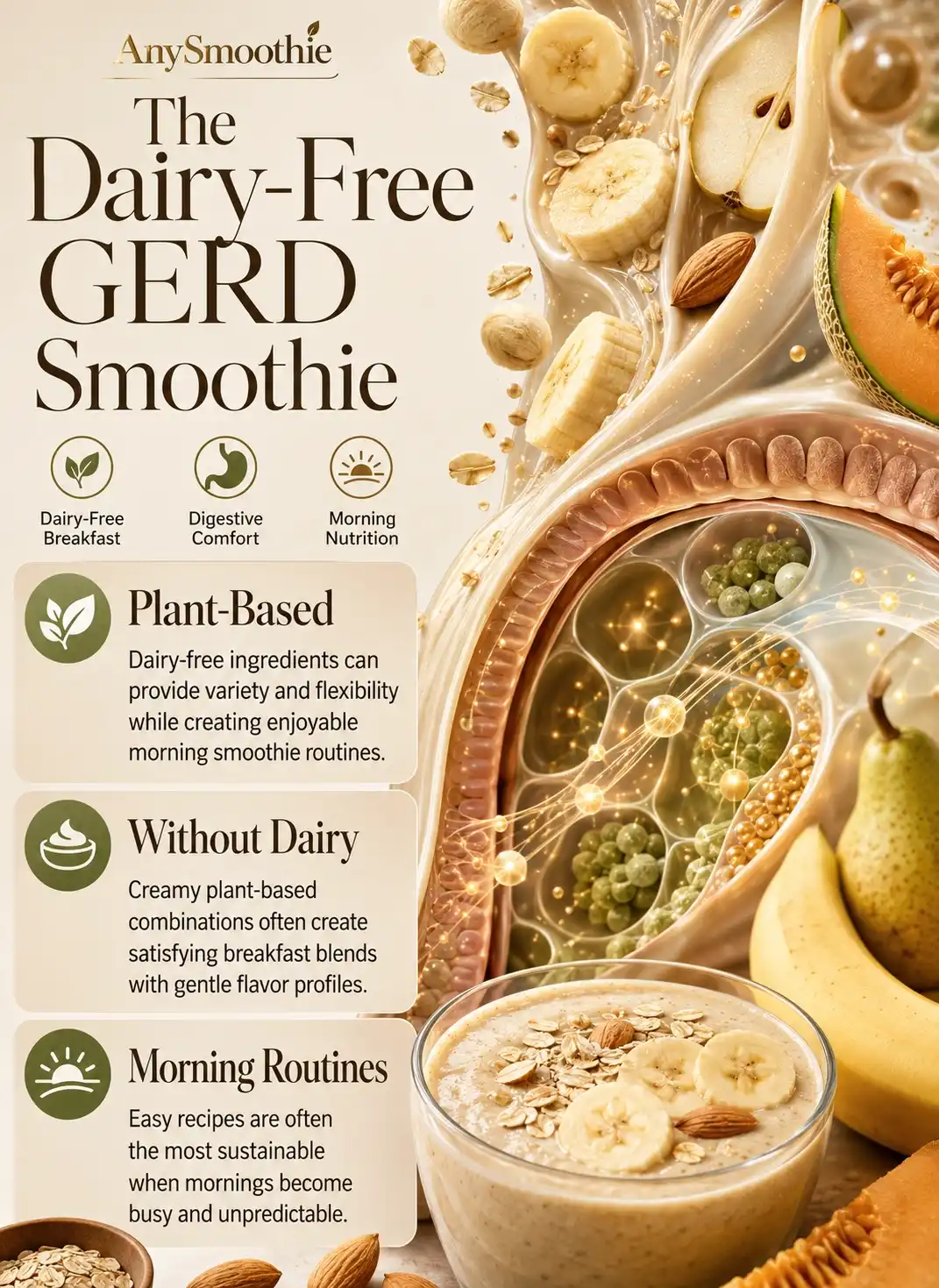
How to build dairy-free breakfast smoothies that feel balanced
A good breakfast smoothie needs a few parts working together. Use gentle carbs for quick fuel, a little fiber for steadier digestion, and a modest amount of fat or plant protein so the drink feels complete. Too much of any one piece can make the glass feel heavy.
Start with the liquid base, then add fruit, then any thickener or add-in. That order helps the blender move smoothly and keeps you from overloading the cup. If you want more blending help, simple fruit smoothie tips can make the texture easier to manage.
A thinner smoothie is often easier in the morning than an ultra-thick one.
Keep the serving size moderate, too. A medium glass is often enough, especially when you are drinking it first thing. Sip slowly, pause between swallows, and let your stomach catch up before you reach for more.
3 GERD-Friendly breakfast smoothies without dairy
A simple comparison table to help you choose the right smoothie
| Smoothie | Main ingredients | Flavor | Best time to drink | Why it may be gentler |
|---|---|---|---|---|
| Banana Oat Breakfast Smoothie | Banana, oat milk, oats, almond butter or chia | Soft, creamy, mild | Busy mornings | Oats add fullness without dairy |
| Pear Vanilla Smoothie | Pear, almond milk, oats or flax, vanilla | Light, sweet, smooth | Light breakfast | Pear has a calm flavor and low acid |
| Melon Cucumber Smoothie | Melon, cucumber, water or light oat milk, optional spinach | Fresh, light, clean | Warm days, small appetite | Less thick and less rich than heavier blends |
If you want the most filling option, start with banana and oats. If you want the lightest flavor, pear usually feels easy. If your stomach wants something simple, melon and cucumber keep things calm.
Small swaps that make dairy-free smoothies even easier on the stomach
Small changes matter more than fancy extras. Use less fruit if sweetness feels like too much. Keep the texture a little thinner if thick drinks sit poorly. Skip ice when cold drinks feel harsh, and test one new ingredient at a time so you can track what works.
Room-temperature liquid can also help on rough mornings. A smoothie does not need to be icy to feel fresh. Simple testing makes it easier to learn your own pattern, which is the part that matters most.
Conclusion
Breakfast does not need to feel like a gamble. With low-acid fruit, a light dairy-free base, and a modest serving size, these smoothies can feel filling without being heavy.
Start with one simple recipe and keep the ingredient list short. Then adjust one piece at a time until breakfast fits your comfort level. Small changes can make morning feel easier to enjoy.
🛡️ Safety Notes & Dietary Interactions
- Personal Triggers: GERD triggers vary from person to person. Even ingredients considered gentle may cause discomfort for some individuals. Introduce new foods gradually and pay attention to how your body responds.
- Portion Awareness: Large smoothies can increase stomach pressure and contribute to reflux symptoms. Moderate serving sizes are often easier to tolerate, especially during breakfast when the digestive system is just getting started.
- Ingredient Testing: When trying a new smoothie recipe, change only one ingredient at a time. This approach makes it easier to identify potential triggers and build a breakfast routine that feels more predictable.
- Medical Guidance: Frequent heartburn, ongoing reflux symptoms, or digestive discomfort should be discussed with a qualified healthcare professional. Smoothies may support dietary changes but are not a substitute for personalized medical advice.
FAQ
Are dairy-free smoothies better for GERD?
Not always, but many people find dairy-free smoothies easier to tolerate. Oat milk, almond milk, and other plant-based alternatives can provide a lighter texture than some dairy products. Individual tolerance varies, so the best option depends on how your body responds to specific ingredients and serving sizes.
What fruits are usually best for GERD-friendly breakfast smoothies?
Bananas, pears, melons, and ripe peaches are common choices because they tend to be lower in acid than citrus fruits. These fruits provide natural sweetness and a smooth texture while helping create a breakfast smoothie that feels gentler and easier to enjoy regularly.
Can oats help make a reflux-friendly smoothie more satisfying?
Yes. Oats add body, fiber, and a smoother texture without dramatically increasing richness. They can help a smoothie feel more filling and balanced while supporting a steadier breakfast experience. Using moderate amounts usually works better than creating an overly thick or heavy blend.
Should GERD-friendly smoothies be served cold?
Some people tolerate cold smoothies well, while others find very cold drinks uncomfortable. If chilled beverages seem irritating, try using room-temperature liquids and reducing ice. Testing different temperatures can help you identify which option feels most comfortable for your own digestion.
How can I make a dairy-free smoothie creamier without causing heaviness?
Banana, oats, chia seeds, avocado, and unsweetened oat milk can all create a smoother texture without relying on dairy. The key is moderation. Small amounts often provide enough creaminess while keeping the smoothie light, balanced, and easier to tolerate throughout the morning.

Medical Disclaimer: AnySmoothie content is for educational purposes only and is not a substitute for professional medical advice. Consult a healthcare provider for personalized guidance. See our full Disclaimer & Terms of Use. AI Transparency: AnySmoothie may use AI to support content development. All content undergoes human editorial review for accuracy, clarity, and editorial quality. See our full AI Transparency.