
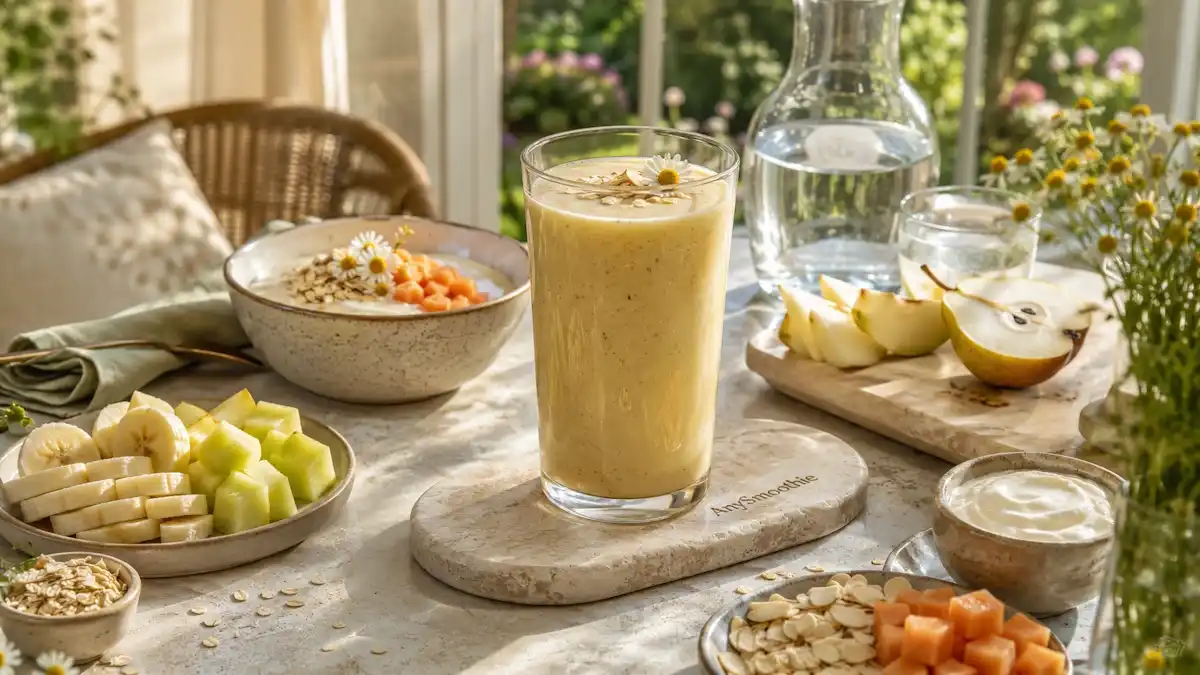
Acid reflux can turn a simple smoothie into a bad idea fast. Tart fruit, heavy add-ins, and oversized servings can all make the blend harder to tolerate.
The good news is that the best ingredients for acid reflux smoothies are usually easy to spot. They are mild, low-acid, and balanced enough to support digestion without making the drink feel heavy. This guide keeps the focus on what tends to sit easier, what often causes trouble, and how to build a blend that works for your own body.
What makes a smoothie gentle for acid reflux?
Reflux-friendly smoothies usually stay simple. Lower-acid fruits, modest fiber, and a light liquid base help the drink move through the stomach with less friction. Ingredients often used in reflux-friendly smoothies include bananas, oats, low-fat yogurt, and leafy greens, which fits that pattern.
Still, your own triggers matter most. One person may handle a certain fruit well, while another feels burning after a few sips. Timing also matters, because a smoothie after a large meal can feel different than one in the morning. For more on acid reflux and GERD, see the Cleveland Clinic overview.
The safest smoothie is often the simplest one, with a short ingredient list and a calm flavor.
Why low-acid ingredients matter
Low-acid ingredients keep the blend from feeling sharp. Bananas, pears, melon, papaya, and ripe peaches usually bring sweetness without the tang that citrus or pineapple can add. That softer profile is useful when the stomach already feels sensitive.
Tart ingredients can still work for some people, but they raise the odds of discomfort. A banana-oat base, for example, often feels steadier than a berry-heavy mix. If you want a practical example, this banana smoothie for acid reflux shows how mild fruit and simple ingredients can create a gentler blend.
How texture, fiber, and fat change the experience
Texture matters because a smoothie is still food. Thick drinks, too much chia, or heavy nut butter can sit like a brick instead of a sip. The goal is a smooth, easy blend that gives body without weighing things down.
Fiber helps when it stays moderate. Fat can also help with balance, but a little goes a long way. A light smoothie is easier to drink slowly, and slow sipping often feels better than rushing through a dense, icy shake.
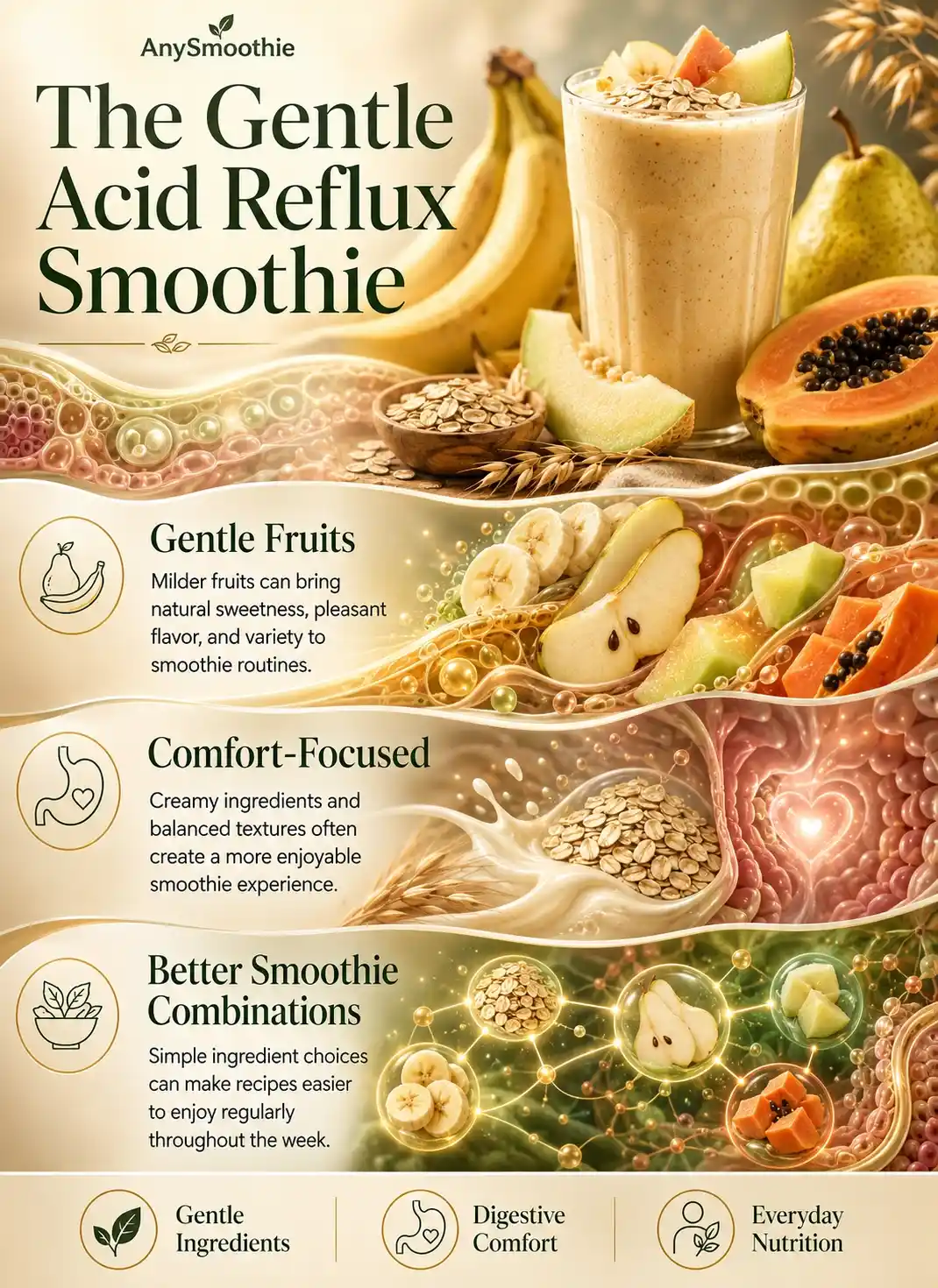
The best ingredients for acid reflux smoothies
The strongest blends usually pair mild fruit, light greens, and a gentle liquid. They work best in combination, not as solo stars. A single ingredient can taste flat, but the right mix gives flavor without a harsh edge.
| Ingredient | Why it helps | Flavor | Texture | Best use in smoothies |
|---|---|---|---|---|
| Banana | Soft, sweet, and low-acid | Mild and familiar | Creamy and thick | Use as the main fruit |
| Pear | Gentle sweetness with low tang | Light and fresh | Smooth and juicy | Great with greens |
| Melon | High water content and mild taste | Very soft | Light and cool | Best in simple blends |
| Papaya | Low sharpness and easy sweetness | Tropical, mellow | Silky when ripe | Works well with banana |
| Cucumber | Adds hydration without much acid | Fresh and clean | Thin and crisp | Good in green smoothies |
| Unsweetened oat milk | Mild base with a soft finish | Slightly oaty | Creamy but light | Good all-around liquid |
These ingredients work best when they stay in small, balanced amounts. Too much of any one thing can change the texture fast.
Low-acid fruits that bring flavor without too much tang
Bananas are the easiest starting point. They add sweetness and body without much bite. Pears do the same job with a lighter finish. Melon works well when you want a more hydrating blend, while papaya adds a mellow tropical note. Ripe peaches also fit well, since they keep the flavor soft and rounded.
Vegetables and greens that blend well
Cucumber is one of the most forgiving smoothie vegetables. It adds water and freshness without a strong taste. Zucchini blends in quietly and helps create volume. Spinach and romaine are also useful because they stay mild when you keep the amount modest. They add nutrients without turning the smoothie bitter.
Liquid bases that stay gentle
Unsweetened oat milk is a strong choice because it tastes soft and blends into a creamy finish. Almond milk is also mild, especially when it has no added sugar. Coconut water can work when you want a lighter feel, and plain water is the simplest option.
Smooth add-ins that support texture and balance
Oats can make a smoothie feel steadier without making it heavy. Ground flax and chia seeds add thickness, but keep the amount small. A spoonful of plain yogurt may work if dairy sits well for you. If you want a simple base to build from, a creamy Greek yogurt smoothie recipe shows how yogurt can stay light when it’s paired with mild fruit and enough liquid.
3 Acid reflux smoothies using gentle ingredients
A good reflux-friendly smoothie usually follows one quiet rule, keep the flavor soft and the texture balanced.
Ingredients and habits that can make reflux worse
Citrus, pineapple, tomato, chocolate, peppermint, and too much coffee can make a smoothie feel harsher. Added sugar can also push the drink in a direction that feels less steady. Large portions matter too, because even gentle ingredients can feel rough when the cup is huge.
Very high-fat add-ins, like heavy nut butters and coconut cream, can slow things down. Cold, oversized smoothies can be uncomfortable as well, even when the ingredients are otherwise mild. A smaller glass often works better than a giant one.
How to build a smoothie that works for your body
Start with one low-acid fruit, one mild vegetable or green, one liquid base, and one optional add-in. Keep the first version small, then adjust after you see how it feels.
Start simple, then change one ingredient at a time.
That makes it easier to spot your own triggers. A quick note on timing, portion size, and temperature can help too. If a blend feels too rich, thin it with water or oat milk.
Conclusion
The best ingredients for acid reflux smoothies are usually simple, low-acid, and balanced. Mild fruit, gentle greens, and light liquids give you a smoother drink without the sharp edge that can cause trouble.
Keep the recipe calm, not crowded. Adjust the blend to your own tolerance, and let your body set the pace. A good smoothie should feel easy from the first sip to the last.

Medical Disclaimer: AnySmoothie content is for educational purposes only and is not a substitute for professional medical advice. Consult a healthcare provider for personalized guidance. See our full Disclaimer & Terms of Use. AI Transparency: AnySmoothie may use AI to support content development. All content undergoes human editorial review for accuracy, clarity, and editorial quality. See our full AI Transparency.