
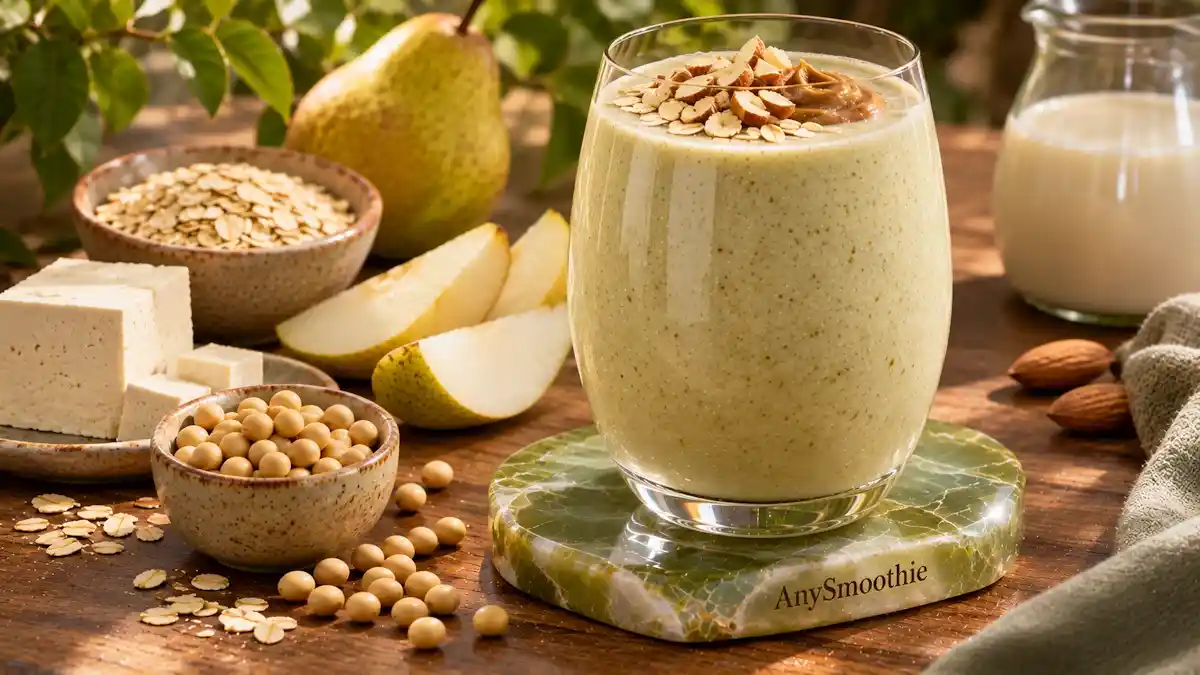
Soy smoothies offer an easy way to include soy isoflavones in your routine. Certain gut bacteria can convert one of those compounds into equol, but equol production varies from person to person.
These recipes pair soy foods with fruit and other ingredients for flavor and texture. Choose the combination you enjoy, while keeping the limits of that bacterial conversion in mind.
How soy isoflavones and gut bacteria relate to equol
This section explains how gut bacteria convert the soy isoflavone daidzein into equol, and why this process differs from person to person.
How daidzein becomes equol
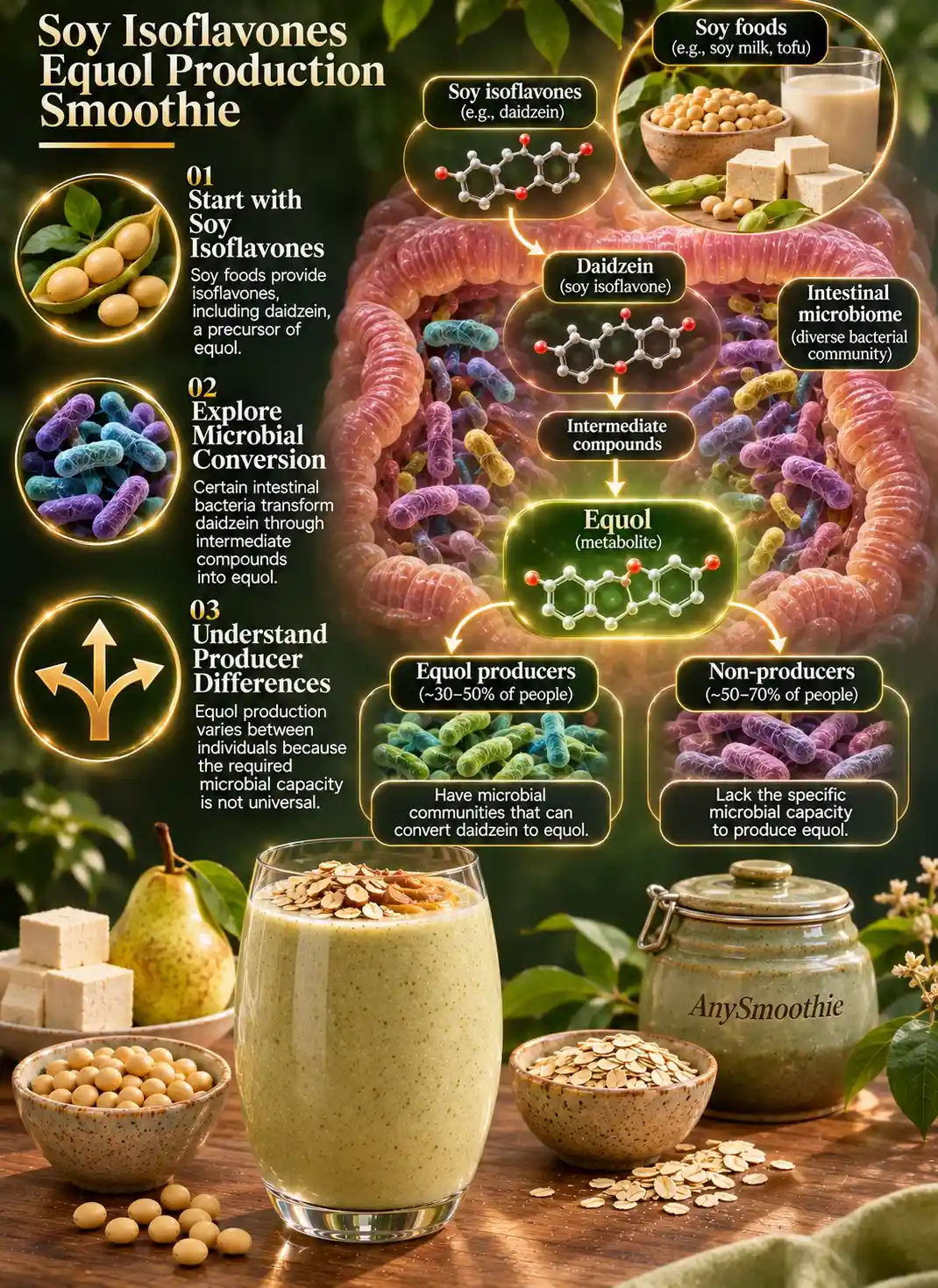
Soy foods contain a group of plant compounds called isoflavones. One isoflavone, daidzein, can be transformed into equol by certain bacteria in the digestive tract.
Soy isoflavones are also discussed in relation to estrogen metabolism in smoothies for estrogen phase i support.
That conversion takes several bacterial steps. As a review of equol-producing bacteria explains, the process depends on bacteria with the necessary metabolic abilities. The isoflavones in soy food provide starting material, while the bacteria carry out the conversion.
People don’t all have the same gut bacteria. As a result, some people produce equol after consuming soy and others don’t. The amount of isoflavones in a food also varies with the soy ingredients and products used, so a recipe alone can’t tell you how much equol a person will produce.
For another topic concerning the intestinal environment, see igg colostrum smoothies for gut barrier support.
What a smoothie can and cannot do
A smoothie makes soy foods convenient to include in a varied diet. It doesn’t control which bacteria live in your gut or establish that you produce equol. A research review on soy metabolism describes why the same soy compound can be metabolized differently among individuals.
For a broader look at the gut’s microbial ecosystem, see smoothie protocols for modulating fungal homeostasis.
These recipes also don’t measure equol production. Drinking one, even regularly, can’t promise a particular biochemical result.
For a related discussion of intestinal function and colon health, see tributyrin smoothies for colon integrity.
For a lower-added-sugar option, choose unsweetened soy milk and plain tofu or edamame. Unsweetened milk can still contain naturally occurring sugars, while fruit contributes its own sugars to the nutrition estimates. You can select the recipe based on what you like to eat rather than trying to match a presumed equol outcome.
3 Smoothies for Equol Production from Soy Isoflavones
Soy milk, tofu, and edamame supply isoflavones in these recipes. The other ingredients add flavor, texture, and nutrients. Each recipe makes one serving.
Blueberry, Banana, and Soy Smoothie
Ingredients
- 1 cup unsweetened soy milk
- 1/2 cup silken tofu
- 1/2 cup frozen blueberries
- 1/2 medium banana
- 1 tablespoon ground flaxseed
Instructions
Blend all ingredients until smooth. Add a splash of water or more soy milk if you prefer a thinner texture.
Estimated Nutrition (per serving)
- Calories: ~300 kcal
- Protein: ~15 g
- Carbohydrates: ~33 g
- Fat: ~14 g
- Fiber: ~7 g
- Sugars: ~16 g
Cherry, Cocoa, and Edamame Smoothie
Ingredients
- 1 cup unsweetened soy milk
- 1/3 cup shelled, cooked edamame, cooled
- 3/4 cup frozen pitted cherries
- 2 tablespoons rolled oats
- 1 tablespoon unsweetened cocoa powder
Instructions
Blend until creamy, scraping down the sides if needed. Add cold water a little at a time to reach your preferred consistency.
Estimated Nutrition (per serving)
- Calories: ~270 kcal
- Protein: ~15 g
- Carbohydrates: ~39 g
- Fat: ~8 g
- Fiber: ~7 g
- Sugars: ~21 g
Mango, Spinach, and Tofu Smoothie
Ingredients
- 1 cup unsweetened soy milk
- 3 ounces soft tofu
- 1/2 cup frozen mango chunks
- 1 cup baby spinach
- 1 teaspoon chia seeds
- 1 tablespoon lemon juice
Instructions
Blend until the spinach is fully broken down and the drink is smooth. Add cold water or soy milk if needed.
Estimated Nutrition (per serving)
- Calories: ~250 kcal
- Protein: ~16 g
- Carbohydrates: ~25 g
- Fat: ~11 g
- Fiber: ~5 g
- Sugars: ~16 g
Compare the three soy smoothies by flavor and fit
The recipes offer different tastes and textures, even though each includes a soy food. This comparison can help you choose a starting point.
| Smoothie | Soy source | Flavor profile | Nutrition snapshot | Best fit |
|---|---|---|---|---|
| Blueberry and banana | Soy milk and tofu | Fruity and mellow | Estimated 15 g protein | A creamy berry drink |
| Cherry and cocoa | Soy milk and edamame | Tart and chocolatey | Estimated 7 g fiber | A richer cocoa flavor |
| Mango and spinach | Soy milk and tofu | Fruity and bright | Estimated 16 g protein | A lighter fruit flavor |
Nutrition estimates vary by brand and serving size. Choose based on taste, texture, and dietary preferences rather than small differences between estimates.
The blueberry blend gets its creamy texture from silken tofu and banana. Cherry and cocoa offer a less mellow flavor, while oats give that smoothie more body. Mango and lemon bring a brighter taste to the spinach blend.
All three contain soy, so they aren’t suitable for someone avoiding soy because of an allergy. A different milk or tofu substitute would change the recipe’s soy isoflavone content as well as its nutrition.
If you want to limit added sugar, compare the Nutrition Facts labels on soy milk and packaged fruit. The labels distinguish added sugars from total sugars, which include those naturally present in fruit. Plain soy products also leave more room to adjust sweetness through your choice of fruit.
Conclusion: Enjoy soy foods as part of a varied diet
Soy-based smoothies can be a simple way to enjoy foods that contain isoflavones. Whether your gut bacteria convert daidzein into equol is a separate, individual process.
Pick the recipe that suits your taste and make it one part of a varied eating pattern. No particular smoothie can guarantee equol production.
🛡️ Safety Notes & Dietary Interactions
- Soy Allergy: All three recipes contain soy through soy milk, tofu, or edamame. They are not suitable for someone with a soy allergy, and substitutions would substantially change their isoflavone content.
- Digestive Tolerance: Edamame, oats, flaxseed, chia, spinach, and tofu contribute varying amounts of fiber. Start with a comfortable portion if your usual diet contains less fiber.
- Product Labels: Unsweetened soy milk and plain soy foods can still contain naturally occurring carbohydrates, while fruit contributes additional sugars. Compare labels when added sugar intake matters.
- Equol Expectations: Soy isoflavones provide daidzein, but equol production depends on gut bacteria with the necessary metabolic abilities. Drinking more soy does not guarantee that your body will produce equol.
FAQs
Which smoothie provides the most estimated protein?
The Mango, Spinach, and Tofu Smoothie provides the most estimated protein, at about 16 grams per serving. The Blueberry, Banana, and Soy Smoothie and Cherry, Cocoa, and Edamame Smoothie each provide approximately 15 grams. These differences describe the recipes’ nutrition, not their ability to produce equol.
Does everyone who eats soy produce equol?
No. The article explains that certain gut bacteria can convert daidzein into equol, but people differ in whether they carry bacteria with the necessary metabolic abilities. Therefore, consuming soy isoflavones does not establish that a particular person will produce equol or how much they might produce.
Can drinking more soy increase equol production?
Not necessarily. Soy foods provide isoflavones, including daidzein, which serves as starting material for equol production. However, the conversion depends on the individual’s gut bacteria. A larger smoothie or more frequent soy intake cannot guarantee that the required bacteria are present or that a particular biochemical result will occur.
Which smoothie has the most fiber?
The Cherry, Cocoa, and Edamame Smoothie and the Blueberry, Banana, and Soy Smoothie each provide approximately 7 grams of estimated fiber per serving. The Mango, Spinach, and Tofu Smoothie provides about 5 grams. Oats, fruit, flaxseed, chia, and soy foods contribute differently to these totals.
Can I replace the soy ingredients with another milk or tofu?
You can adapt the recipes for dietary reasons, but doing so changes their purpose as soy-isoflavone smoothies. Replacing soy milk, tofu, or edamame with non-soy alternatives would reduce or remove the recipe’s daidzein and other soy isoflavones, as well as altering the nutritional profile.

Medical Disclaimer: AnySmoothie content is for educational purposes only and is not a substitute for professional medical advice. Consult a healthcare provider for personalized guidance. See our full Disclaimer & Terms of Use. AI Transparency: AnySmoothie may use AI to support content development. All content undergoes human editorial review for accuracy, clarity, and editorial quality. See our full AI Transparency.