
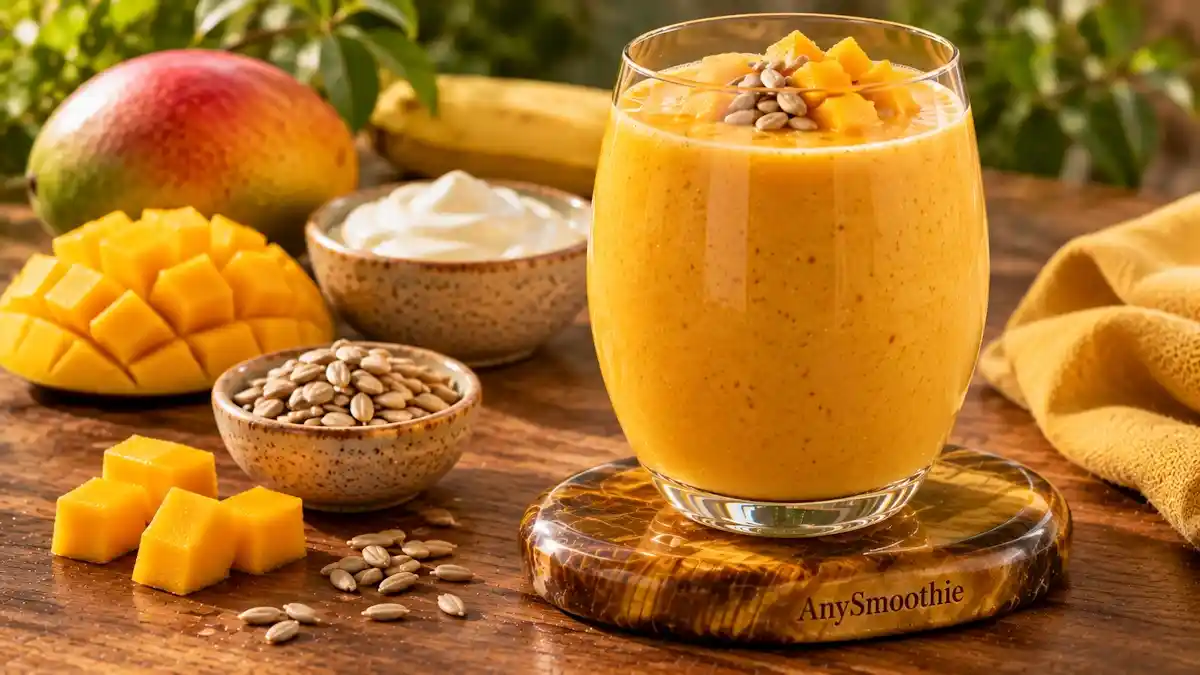
Vitamin B6 provides material your body uses to make pyridoxal 5′-phosphate (PLP), a coenzyme that helps enzymes carry out normal processes. These vitamin B6 smoothies for PLP enzyme support combine everyday foods without promising a particular health result.
The NIH’s vitamin B6 fact sheet explains the vitamin’s role in enzyme reactions. Start with one of these three recipes, then compare their nutritional profiles to find a practical fit.
How PLP participates in amino acid metabolism
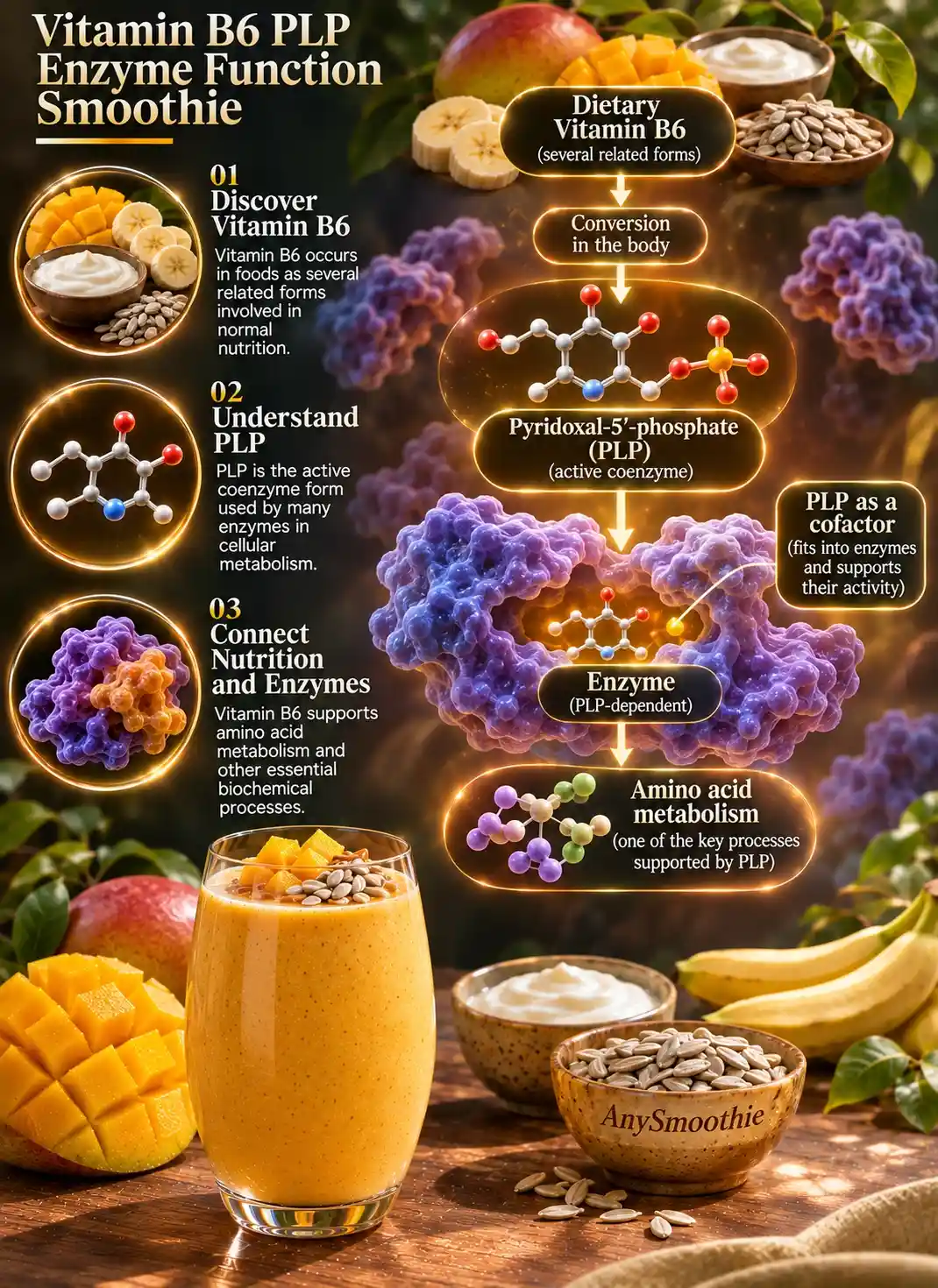
During amino acid metabolism, PLP-dependent enzymes help transfer amino groups between molecules. These reactions help the body process amino acids, the building blocks of proteins. Oregon State University’s explanation of vitamin B6 biochemistry describes PLP’s role in these reactions.
Tryptophan metabolism also involves PLP-dependent enzyme reactions, as discussed in tryptophan-kynurenine pathway smoothies.
After you eat B6-containing foods, your body absorbs and processes the vitamin into usable forms. Providing this nutrient supports normal physiological systems, but it doesn’t let you predict an individual enzyme’s activity.
A smoothie supplies dietary B6, but its ingredients alone can’t tell you how your PLP level or enzyme activity will change.
PLP also participates in the enzyme reactions involved in GABA production. A related food-focused discussion appears in smoothies for gaba balance.
Which smoothie ingredients contribute vitamin B6?
Banana and sunflower seeds contribute B6 to the first recipe. Chickpeas and mango contribute it to the second, while spinach and avocado provide some in the third. Milk and yogurt also contain smaller amounts.
However, B6 content varies by food type, serving size, and processing. A quarter avocado and a whole banana aren’t interchangeable portions. These recipes combine foods that contribute nutrients to your diet; none of the ingredients has a special effect on PLP-dependent enzymes simply because you blend it.
Vitamin B6 also participates in reactions involved in neurotransmitter synthesis. For a related example, see best dopamine-boosting smoothies for focus.
3 Vitamin B6 Smoothies for PLP Enzyme Support
Each recipe makes one serving. Nutrition values are estimates for the complete recipe, using unsweetened frozen fruit and the dairy products listed. Brands and produce sizes change the totals.
Banana-Sunflower Seed Smoothie
Ingredients
- 1 medium banana, sliced and frozen
- 1 tablespoon unsalted sunflower seed kernels
- 1/2 cup plain nonfat Greek yogurt
- 1/2 cup skim milk
Instructions
Blend the milk and yogurt first. Add the banana and sunflower kernels, then blend until smooth, scraping the sides if needed.
Estimated Nutrition (per serving)
- Calories: ~270 kcal
- Protein: ~19 g
- Carbohydrates: ~39 g
- Fat: ~5 g
- Fiber: ~4 g
- Sugars: ~25 g
Mango-Chickpea Smoothie
Ingredients
- 1 cup frozen mango chunks
- 1/2 cup cooked chickpeas, drained and rinsed
- 1/2 cup orange juice
- 1/4 cup cold water
- 1 teaspoon lime juice
Instructions
Blend the chickpeas, orange juice, water, and lime juice until smooth. Add the frozen mango and blend again until no chickpea pieces remain.
Estimated Nutrition (per serving)
- Calories: ~290 kcal
- Protein: ~10 g
- Carbohydrates: ~61 g
- Fat: ~3 g
- Fiber: ~9 g
- Sugars: ~37 g
Spinach-Avocado Yogurt Smoothie
Ingredients
- 1 cup raw baby spinach
- 1/4 medium avocado (about 50 g)
- 3/4 cup plain nonfat Greek yogurt
- 1/2 cup skim milk
- 1/2 cup frozen pineapple chunks
Instructions
Blend the spinach and milk until the leaves break down. Add the avocado, yogurt, and pineapple, then blend until creamy and evenly green.
Estimated Nutrition (per serving)
- Calories: ~270 kcal
- Protein: ~24 g
- Carbohydrates: ~28 g
- Fat: ~8 g
- Fiber: ~5 g
- Sugars: ~21 g
How Vitamin B6 Supports PLP-Dependent Enzymes
PLP is an active coenzyme form of vitamin B6. A coenzyme assists an enzyme’s chemical work. The enzyme also depends on its own structure and the availability of other reaction materials.
Riboflavin provides a different vitamin-derived coenzyme system, involving FMN and FAD, explored in riboflavin smoothies for fad-dependent enzymes.
Compare the Smoothies and Choose One for Your Routine
The recipes differ in flavor, texture, and estimated nutrient content, so your preference can guide the choice.
Match the flavor and texture to your preferences
Banana offers familiar sweetness with a mild, nutty finish. Meanwhile, mango produces a brighter, tangier drink with a thicker texture. The green smoothie tastes creamy and lightly tropical, although the spinach adds a mild vegetable note.
Use these differences to narrow your choice.
| Smoothie | Flavor | Texture | Nutritional profile | Best fit |
|---|---|---|---|---|
| Banana-Sunflower | Sweet and mildly nutty | Creamy, slightly textured | Moderate protein and fiber | Familiar flavors |
| Mango-Chickpea | Fruity and citrusy | Thick and dense | Highest fiber and carbohydrates | Dairy-free preference |
| Spinach-Avocado Yogurt | Mildly green and tropical | Rich and creamy | Highest protein and fat | Less-sweet preference |
The mango recipe has the most fiber, while the spinach version has the most protein. Those differences describe the recipes, not a ranking of their health effects.
Keep B6 intake balanced and practical
Because vitamin B6 occurs in many foods, smoothies can complement a varied diet without becoming its centerpiece. Other meals can contribute B6 through foods such as fish, potatoes, and poultry. Supplements aren’t automatically needed because you’re interested in PLP-dependent enzymes.
Your overall eating pattern matters more than repeating one recipe daily. Also, adding a B6 supplement changes your intake beyond what’s in the glass. If you have questions about B6 intake, supplements, or medicines you take, speak with a qualified health professional. A registered dietitian or pharmacist can help you review your food and supplement choices together.
Conclusion: Choose a Smoothie You Enjoy Drinking
Banana-sunflower, mango-chickpea, and spinach-avocado yogurt smoothies offer three practical ways to include B6-containing foods. Your body uses dietary B6 to make PLP for normal enzyme processes.
Choose according to taste and nutritional fit. The useful habit is including varied foods, without expecting one glass to produce a measurable biochemical change.
🛡️ Safety Notes & Dietary Interactions
- B6 Intake: These recipes provide dietary vitamin B6, but adding a B6 supplement can substantially increase total intake. Review combined food and supplement sources with a pharmacist or dietitian.
- Digestive Tolerance: Chickpeas, sunflower seeds, spinach, avocado, and Greek yogurt add fiber or richness. Start with a comfortable portion if higher-fiber or thicker smoothies are unfamiliar.
- Dairy and Allergens: Banana-sunflower and spinach-avocado smoothies contain milk and yogurt, while sunflower seeds and chickpeas add additional allergen considerations. Check labels and choose suitable alternatives when needed.
- Medication Context: Vitamin B6 supplements can be relevant to medication and health circumstances, while food-based smoothies are different. Discuss supplements with a qualified professional rather than increasing B6 independently.
FAQs
Which smoothie provides the most protein?
The Spinach-Avocado Yogurt Smoothie provides the most estimated protein, at about 24 grams per serving. The Banana-Sunflower Seed Smoothie provides approximately 19 grams, while the Mango-Chickpea Smoothie provides around 10 grams. These differences describe the recipes’ nutritional composition and do not indicate which smoothie produces greater PLP availability or enzyme activity.
Does eating more vitamin B6 increase PLP-dependent enzyme activity?
Not predictably. Dietary vitamin B6 provides material used to form PLP, but individual PLP status and enzyme activity depend on broader physiological factors. These smoothies can contribute B6-containing foods to a varied diet, but increasing one ingredient or repeating a recipe does not guarantee a measurable biochemical change.
Why does the mango-chickpea smoothie have more fiber?
The mango-chickpea smoothie combines half a cup of cooked chickpeas with mango and orange juice, giving it an estimated 9 grams of fiber. Chickpeas contribute substantial fiber, while the other recipes contain different combinations of fruit, seeds, spinach, avocado, and dairy.
Can I make the smoothies dairy-free?
Yes, but substitutions change the nutritional profile. The Mango-Chickpea Smoothie is already dairy-free. For the yogurt-based recipes, suitable plant yogurt and fortified plant milk can replace dairy, but protein, vitamin B6, calcium, and other nutrients may differ between products.
Do I need a B6 supplement for PLP-dependent enzymes?
Not automatically. The article emphasizes that B6 is available from many foods, including the ingredients used here, and that overall dietary variety matters. A supplement changes total B6 intake beyond the smoothie. If you’re considering supplementation, especially alongside medicines, review the choice with a qualified health professional.

Medical Disclaimer: AnySmoothie content is for educational purposes only and is not a substitute for professional medical advice. Consult a healthcare provider for personalized guidance. See our full Disclaimer & Terms of Use. AI Transparency: AnySmoothie may use AI to support content development. All content undergoes human editorial review for accuracy, clarity, and editorial quality. See our full AI Transparency.