
You grab your phone for a quick check. Minutes turn into hours. Work piles up, and your mind wanders. In April 2026, distractions hit harder than ever with endless notifications and tight deadlines.
Dopamine acts as your brain’s motivator. It drives focus, rewards effort, and sharpens concentration. Science shows certain foods supply tyrosine, the building block for dopamine. Antioxidants protect those brain pathways too.
This guide shares dopamine boosting smoothies you can blend in minutes. Four tasty recipes use research-backed ingredients for better focus. First, we cover the science. Then, the recipes. Finally, habits to amplify results.
Dopamine 101: How It Fuels Your Focus and Why Foods Matter
Dopamine keeps your brain on track. It sparks the urge to start tasks. You feel that push after a solid breakfast. Low levels lead to fog and delays.
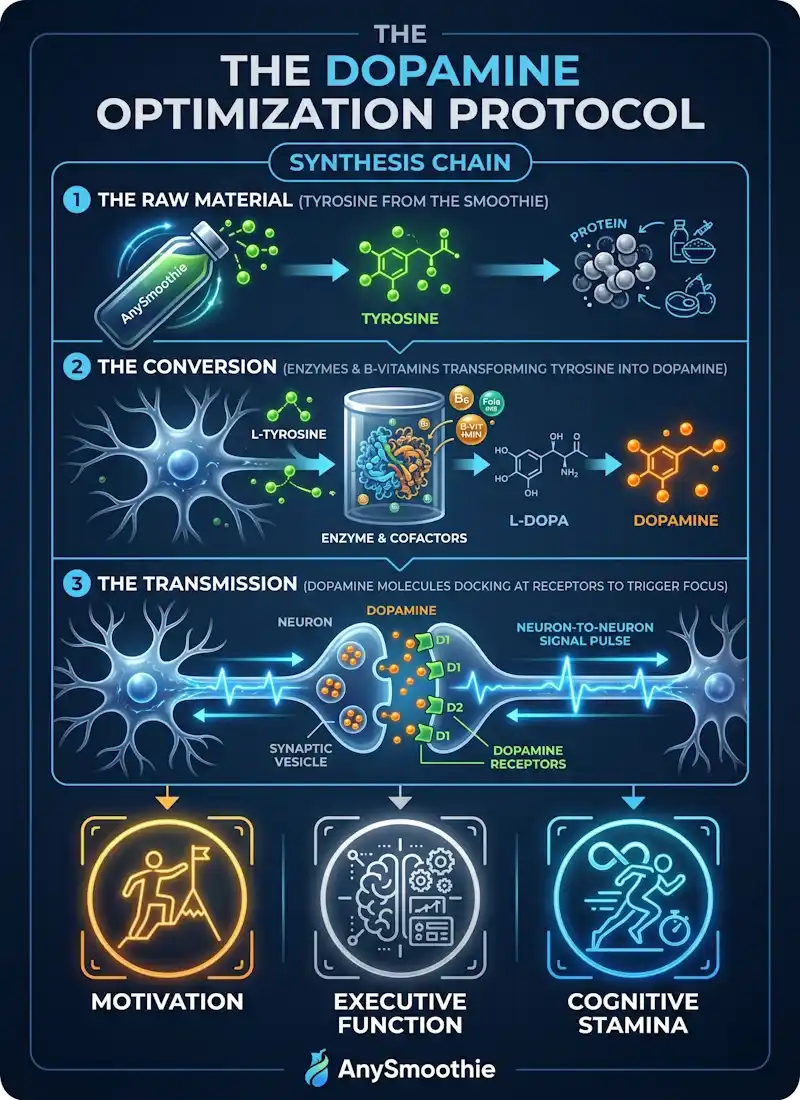
Foods play a big role. Tyrosine from proteins turns into dopamine. Antioxidants guard neurons from damage. Healthy fats help the process along. Studies link these nutrients to sharper cognition.
For example, tyrosine-rich meals improve mental performance under stress. A good smoothie packs them all. This sets up blends that sustain energy without crashes.
Dopamine’s Key Jobs in Keeping You Locked In
Dopamine ignites motivation. You tackle that report because it promises a win. It holds your attention steady through long meetings.
Rewards tie in too. Finish a task, and dopamine floods in. That feel-good hit keeps you going. Low dopamine shows as procrastination or scattered thoughts.
Stress drains it fast. Poor sleep worsens the dip. Harvard research connects low dopamine to ADHD traits. Everyday signs match: you skip workouts or zone out.
Fixes start simple. Right foods rebuild stores. They signal your brain to stay sharp.
Science-Backed Ingredients That Supercharge Dopamine
Bananas pack tyrosine, dopamine’s starter. Slice one in for steady supply.
Blueberries deliver antioxidants. They shield dopamine neurons. One study showed blueberries boost cognition in older adults.
Spinach offers folate. It aids dopamine synthesis.
Almonds bring tyrosine plus fats. They support brain signals.
Avocado adds creamy fats. These enhance nutrient uptake.
Cacao contains phenylethylamine. It lifts mood fast.
Oats provide complex carbs. They keep blood sugar even.
Matcha pairs L-theanine with caffeine. This calms jitters while aiding focus.
A Nutrients journal piece notes tyrosine helps under pressure. These mix into powerful smoothies for focus.
4 Delicious Dopamine Boosting Smoothies to Sharpen Your Day
These recipes take under five minutes. You need a blender and basics from your kitchen. Each hits 300-400 calories for full energy.
They target dopamine smartly. Blueberries guard pathways. Cacao sparks signals. All taste great, no chalky vibes. Try variations for your prefs.
Start your day right. Or sip mid-afternoon. Brain boosting smoothies recipes like these beat coffee jitters.
Make These Smoothies Work Harder: Smart Habits for Max Focus
Time your sip right. Drink within 30 minutes of waking. It kickstarts dopamine.
Pair with a 10-minute walk. Exercise releases more. Rotate recipes weekly. Variety keeps it fun.
Fresh beats stored. Overnight ok in fridge, but blend new for max nutrients. Track your focus in a journal. Note energy shifts.
Sleep seven hours nightly. It rebuilds dopamine stores. These habits stack with smoothies for concentration.
Not medical advice. See a doctor for issues. Small changes yield big wins.
Simple Blends for Lasting Sharpness
Dopamine boosting smoothies fix focus woes naturally. Ingredients like blueberries and cacao back science for real results.
Pick one recipe tomorrow. Blend it fresh. Feel the difference in motivation.
What’s your go-to tweak? Share below or subscribe for more brain fuel. These sips build concentration one glass at a time.
⚠️ Specific Safety Notes
Blood Pressure & Tyrosine: Tyrosine-rich foods (banana, almonds, oats) can interact with MAOIs (certain older antidepressants) and may slightly increase blood pressure. If you have hypertension, monitor your levels.
L-Dopa Medications: If you are taking medications for Parkinson’s disease (like Levodopa), consult your neurologist. High amounts of dietary tyrosine can compete with the absorption of your medication.
Thyroid Health: Tyrosine is also a precursor to thyroid hormones. If you have hyperthyroidism or Graves’ disease, excessive intake may overstimulate your thyroid.
Sugar Sensitivity: To maintain steady focus, avoid adding honey or syrups. Spiking your blood sugar leads to a temporary dopamine high followed by a “crash” that leaves you less focused than before.
The Caffeine Factor: If you use Matcha or Coffee as a base, remember that caffeine sensitizes dopamine receptors. While great for focus, don’t overdo it; excessive caffeine can lead to “dopamine depletion” the following day.
FAQ
How does L-Tyrosine act as the “Rate-Limiting Precursor” for Dopamine?
L-Tyrosine is the amino acid required for the initial step of dopamine synthesis. Biochemically, it is converted into L-DOPA by the enzyme tyrosine hydroxylase, which is then transformed into dopamine. Supporting this physiological system through tyrosine-rich ingredients like almonds, bananas, and oats ensures the biochemical mechanics of “neurotransmitter production” have an adequate supply of raw materials, especially under cognitive stress.
Why are “Anthocyanins” in berries essential for dopamine neuron protection?
The neurons that produce and transmit dopamine are highly susceptible to oxidative stress. Biochemically, anthocyanins in blueberries act as potent antioxidants that can cross the blood-brain barrier to neutralize free radicals. Supporting this physiological system through antioxidant-rich smoothies optimizes the natural pathways of “neuroprotection,” ensuring the biochemical mechanics of the dopamine signaling system remain structurally intact over time.
How does “Matcha (L-Theanine)” modulate the dopamine response?
L-Theanine, found in matcha, influences the release of dopamine and GABA in the brain. Biochemically, it promotes an increase in dopamine levels while simultaneously balancing the excitatory signals of caffeine. Supporting this physiological system through matcha-infused smoothies optimizes the natural pathways of “calm focus,” ensuring the biochemical mechanics of motivation are not accompanied by sympathetic nervous system overstimulation.
What is the role of “Folate and B-Vitamins” in dopamine synthesis?
B-vitamins, particularly folate (B9) and B6, are critical cofactors in the enzymatic reactions that convert tyrosine into dopamine. Biochemically, they facilitate the methylation and decarboxylation steps required for neurotransmitter formation. Supporting these physiological systems through leafy greens like spinach or kale optimizes the natural pathways of “enzymatic flux,” ensuring the biochemical mechanics of focus are supported at a fundamental cellular level.
Why is “Lipid Signaling” from avocado important for brain function?
The brain’s signaling pathways, including those for dopamine receptors, depend on the integrity and fluidity of neuronal membranes. Biochemically, monounsaturated fats from avocado provide the structural components for these membranes and enhance the absorption of fat-soluble antioxidants. Supporting this physiological system optimizes the natural pathways of “receptor sensitivity,” ensuring the biochemical mechanics of the dopamine reward signal are effectively received and processed.

Medical Disclaimer: AnySmoothie content is for educational purposes only and is not a substitute for professional medical advice. Consult a healthcare provider for personalized guidance. See our full Disclaimer & Terms of Use. AI Transparency: AnySmoothie may use AI to support content development. All content undergoes human editorial review for accuracy, clarity, and editorial quality. See our full AI Transparency.