
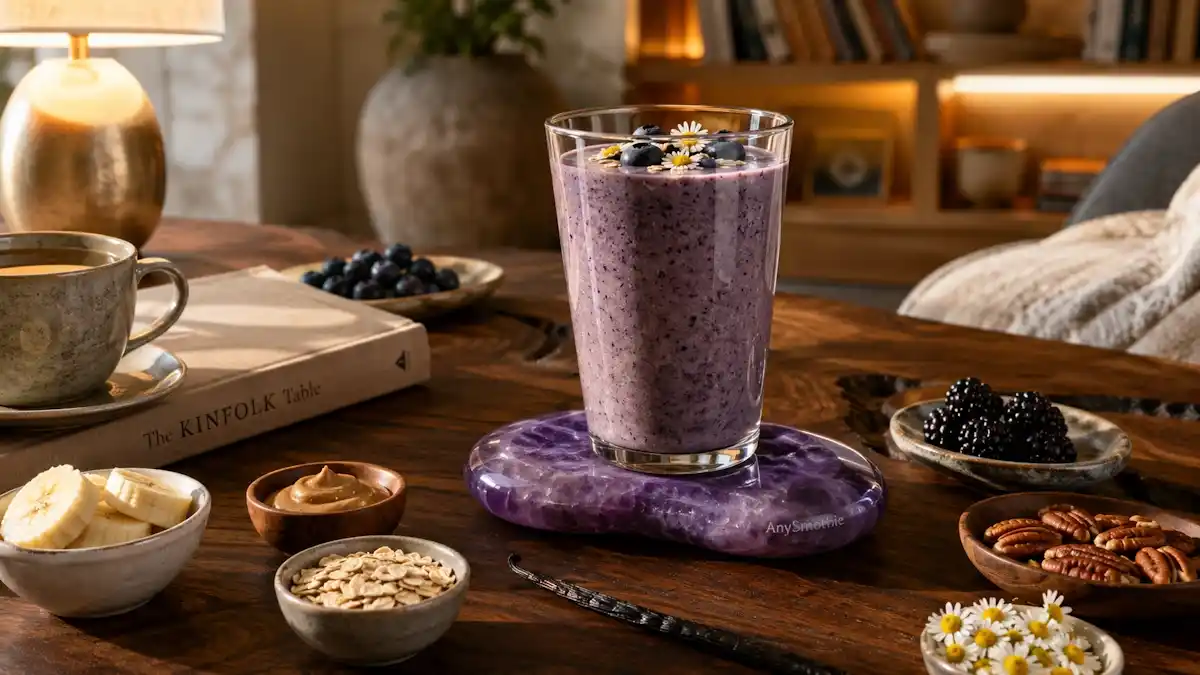
GABA helps your brain turn the volume down when the day feels loud. It is one of the body’s main calming neurotransmitters, and it helps keep nerve signals in balance.
You can’t force a smoothie to create a certain feeling, but you can give your body nutrients it uses for healthy brain and nerve function. That is why smoothies for GABA balance can fit so easily into a daily routine, especially when they include magnesium, vitamin B6, protein, fiber, and healthy fats. The right mix can support steadier energy, a calmer mind, and better digestion without turning breakfast into a science project.
How GABA works, and why your smoothie ingredients matter
GABA helps the nervous system shift out of high alert. When that balance is off, you may feel tense, wired, or mentally scattered. For a plain-language overview, the Cleveland Clinic’s GABA guide explains how this neurotransmitter works in the brain.
Food doesn’t act like a switch. Still, nutrients can support the pathways your body uses every day. Smoothies make that easy because they let you combine several helpful ingredients in one glass. You can blend amino acids, minerals, antioxidants, and healthy fats without much effort.
What GABA does in the nervous system
GABA helps signals slow down when the brain needs a break. That matters for stress, focus, and sleep quality in a general sense. When your system stays stuck in “go” mode, even a small task can feel heavier than it should.
A smoothie can’t do the work of rest, but it can support the conditions your body likes. Pairing protein, minerals, and fiber gives your body a steadier base to work from.
The nutrients that help support GABA pathways
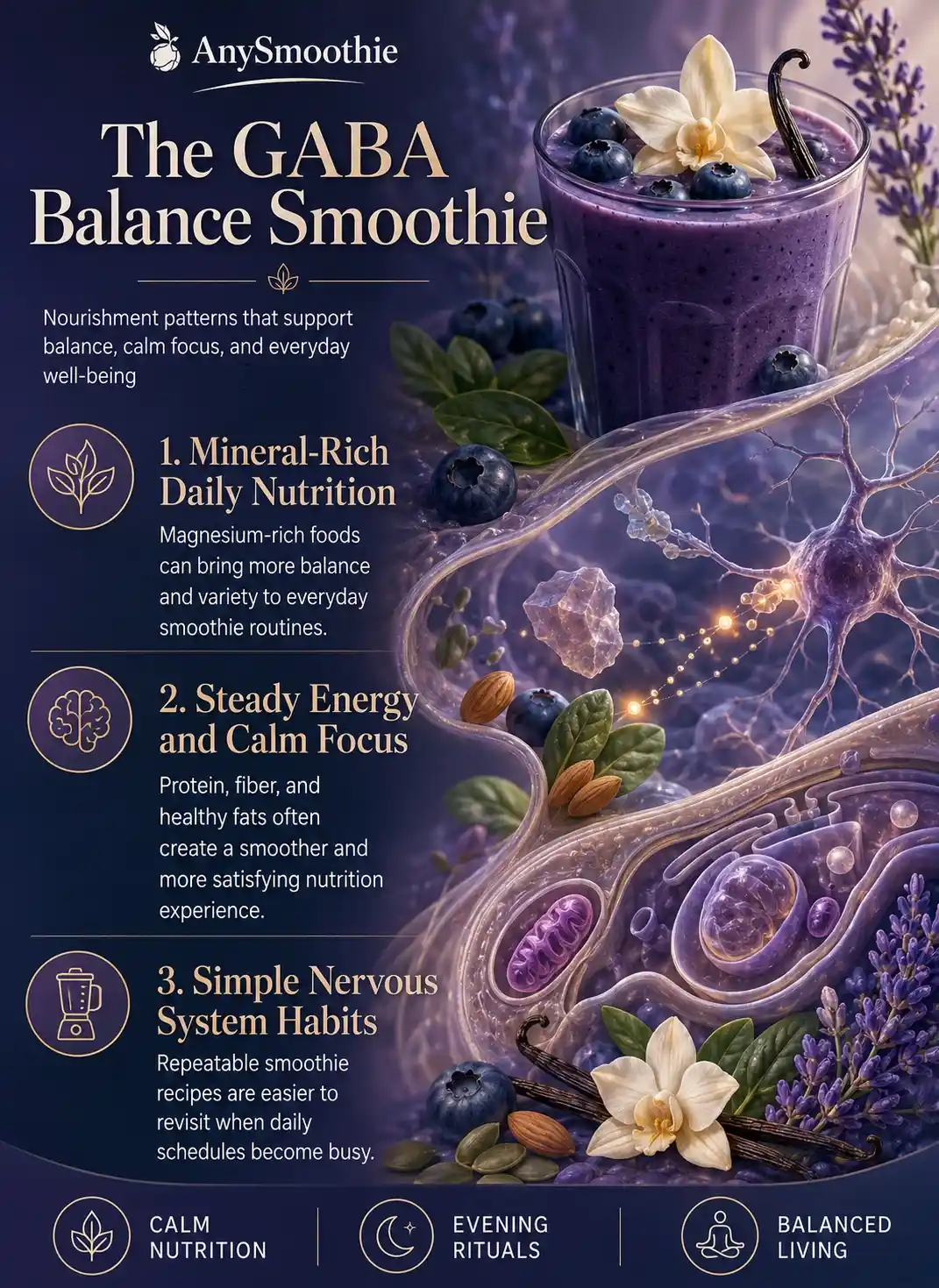
Magnesium gets a lot of attention here, and for good reason. It supports nerve function and helps the body manage stress load. Vitamin B6 also matters because it takes part in several enzyme steps tied to GABA production.
Fermented foods can help, too. A review on probiotic strains and GABA production found that some bacteria can influence GABA-related activity in the body. That connects well with the gut-brain axis, which links digestion and mood regulation.
Antioxidant-rich produce also deserves a place in the blender. Berries, leafy greens, cherries, and kiwi bring plant compounds that support overall recovery. When you add protein and fat, the smoothie stays useful longer.
The best smoothie ingredients for GABA balance
This table can help you pick ingredients for a calm morning, steadier afternoon, or easier wind-down.
| Ingredient | Key nutrient | How it supports GABA pathways | Best time to use it | Simple smoothie pairings |
|---|---|---|---|---|
| Spinach | Magnesium, folate | Supports nerve function and mineral balance | Morning or afternoon | Banana, berries, kefir |
| Banana | Vitamin B6, potassium | B6 helps enzyme steps linked to GABA production | Morning or post-workout | Almond butter, oat milk |
| Kefir | Protein, probiotics | Supports digestion and the gut-brain axis | Morning or evening | Berries, chia, vanilla |
| Chia seeds | Fiber, omega-3s | Slows digestion and helps energy stay steadier | Any time | Yogurt, cacao, fruit |
| Tart cherries | Polyphenols | Supports antioxidant intake and recovery | Evening | Greek yogurt, flax, vanilla |
The best smoothies usually start with a mineral-rich base, then add one protein source and one fat source. That keeps the drink from turning into fast sugar.
Fruits and vegetables that add minerals and antioxidants
Spinach blends in almost invisibly, yet it adds magnesium and folate. Avocado works the same way and gives the smoothie a creamy texture. Banana adds potassium and B6, while blueberries bring color and a bright, tart taste.
Tart cherries and kiwi can fit well when you want a later-day smoothie. They add antioxidants and a fresh flavor that doesn’t need much sweetener. For more examples, Everyday Health’s list of high-GABA foods is a useful starting point.
Protein, fat, and fermented add-ins that make a smoothie more balanced
Greek yogurt, kefir, and even a plain dairy-free yogurt give the blend a stronger base. Collagen can work as a protein add-in if you already use it, though it won’t replace a full protein source on its own. Chia seeds, hemp seeds, and almond butter add fat and slow the pace of digestion.
A smoother result usually comes from pairing produce with protein and fat.
Small amounts of fermented ingredients can also support the gut-brain connection. A spoonful of kefir or yogurt goes a long way.
Ingredients to limit if you want a calmer result
Too much caffeine can make a smoothie feel sharp instead of steady. Added sugar can do the same, especially when it shows up in flavored yogurt or juice-heavy blends. Fruit-only smoothies can taste great, but they often fade fast.
Balance matters more than trendy add-ins. A simple smoothie with real food ingredients usually works better than a long list of powders.
3 Smoothies for GABA balance
How to build a GABA-friendly smoothie routine that actually fits your day
A smoothie works best when it matches your schedule. Breakfast blends can be bigger and more balanced. Afternoon blends can be lighter, especially if you’re pairing them with lunch or a snack. Early evening blends should stay gentle and simple.
Portion size matters, too. A full meal smoothie usually needs protein, fiber, and fat. A snack smoothie can be smaller, but it still benefits from one anchor ingredient like yogurt, kefir, chia, or nut butter.
Choose the right smoothie for your schedule
Morning is a good time for spinach, banana, and kefir. Post-workout blends can lean more on protein and carbs. In the afternoon, a berry-based smoothie can help you avoid the crash that comes from grabbing something sweet with no protein.
Later in the day, keep caffeine low and use tart cherries, yogurt, or flax instead. That keeps the drink supportive without feeling heavy.
Make it easier to stick with the habit
A short prep system helps more than a long shopping list.
- Freeze fruit, spinach, and banana in single-serve bags.
- Keep chia, hemp seeds, and nut butter in reach.
- Use one repeatable formula, produce plus protein plus fat plus liquid.
That simple setup turns smoothie making into a five-minute habit instead of a morning decision.
Conclusion
Smoothies can be an easy way to support GABA pathways, stable energy, and nervous system balance. The best ones combine minerals, protein, fiber, and healthy fats in a form you can use often.
Small choices matter more than perfect recipes. A steady routine with balanced ingredients will always beat a complicated plan that never gets made.
🛡️ Safety Notes & Dietary Interactions
- Magnesium-Rich Ingredient Support: Spinach, chia seeds, and other mineral-rich foods contribute nutrients involved in normal nervous system function. Including them regularly may help support broader neurological and metabolic balance.
- Protein and Neurotransmitter Precursors: Protein-containing ingredients provide amino acids used throughout normal neurotransmitter pathways. Pairing protein with fiber and healthy fats may support steadier energy and meal satisfaction.
- Caffeine Load Awareness: Matcha, cacao, and other naturally stimulating ingredients can affect the overall feel of a smoothie. Adjusting timing and serving size may help maintain better routine consistency.
- Gut-Brain Axis Nutrition: Kefir, yogurt, and fermented foods add nutritional complexity while supporting dietary patterns commonly associated with gut-brain communication and digestive balance.
FAQ
What is GABA and why is it discussed in nutrition-focused smoothies?
GABA, or gamma-aminobutyric acid, is one of the body’s primary neurotransmitters involved in balancing nerve signaling activity. The article explains that smoothies do not directly control GABA levels, but they can provide nutrients that participate in physiological pathways associated with nervous system function, energy regulation, and everyday stress-response balance.
Why are magnesium-rich ingredients used so often in GABA-support smoothie recipes?
Magnesium is involved in numerous biochemical processes related to nerve function and cellular communication. Ingredients such as spinach, chia seeds, avocado, and certain seeds provide magnesium while also contributing fiber and texture. The article highlights these foods because they fit naturally into balanced smoothie routines without requiring complicated preparation.
How do kefir and yogurt fit into a GABA-friendly smoothie approach?
Kefir and yogurt provide protein while also contributing fermented components that connect to discussions surrounding the gut-brain axis. They help create a more satisfying smoothie structure and pair well with fruits, seeds, and greens. According to the article, these ingredients support a broader nutritional pattern rather than acting as standalone solutions.
Why is protein considered important in these smoothie recipes?
Protein contributes amino acids used throughout normal neurotransmitter and cellular communication pathways. It also slows digestion and improves satiety when paired with healthy fats and fiber. The article repeatedly emphasizes that protein helps transform a smoothie from a quick fruit drink into a more stable and balanced meal or snack.
What is the most important principle behind a GABA-friendly smoothie routine?
The article consistently emphasizes simplicity and repeatability. Rather than relying on long ingredient lists or excessive supplementation, it recommends building smoothies around minerals, protein, fiber, healthy fats, and whole-food ingredients. A routine that is easy to maintain regularly is presented as more valuable than a highly complex formula that is difficult to repeat.

Medical Disclaimer: AnySmoothie content is for educational purposes only and is not a substitute for professional medical advice. Consult a healthcare provider for personalized guidance. See our full Disclaimer & Terms of Use. AI Transparency: AnySmoothie may use AI to support content development. All content undergoes human editorial review for accuracy, clarity, and editorial quality. See our full AI Transparency.