
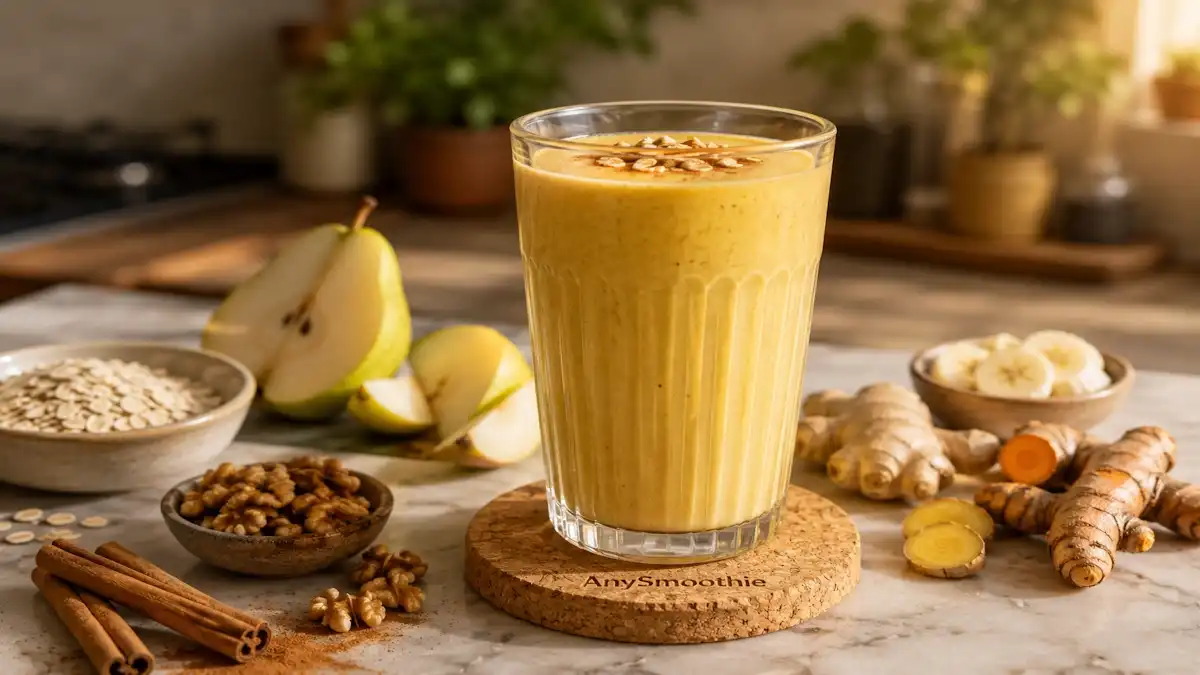
TUDCA is a bile acid derivative that some people add to smoothies because the routine is simple and easy to keep up. The goal here is not to make medical claims. It is to support normal cellular stress response, digestion-friendly nutrition, and daily resilience.
That matters because your cells deal with plenty of strain already. Poor sleep, travel, heavy meals, and hard workouts all add pressure. A good smoothie can make a supplement habit feel less like a chore and more like part of breakfast.
What TUDCA Does in the Body and Why It Matters for Stress Resilience
TUDCA is tauroursodeoxycholic acid, and it has a few jobs that make it interesting to people who pay attention to recovery and metabolism. It helps bile move, and it also acts as a chemical chaperone. In plain language, that means it may support the cell’s protein-folding system and its cleanup work.
A review on TUDCA’s chaperone activity in PMC breaks down these cellular effects in more detail. The broad idea is simple: when cells handle proteins well, they can manage stress with less friction.
That matters after a huge meal, a short night of sleep, a red-eye flight, or a tough training session. Those moments do not break the body, but they do ask more from it.
The basic job of TUDCA in cellular cleanup and protein folding
Inside cells, the endoplasmic reticulum helps fold proteins into the right shape. When that system gets overloaded, cells send stress signals and shift resources toward repair. TUDCA is studied because it may help that process stay organized.
That is one reason it shows up in biohacking circles. People want tools that support normal cellular housekeeping without making the routine complicated. TUDCA fits that idea because it sits close to bile flow, protein handling, and stress signaling.
Why smoothie format can make daily use easier
A smoothie can help because it adds food, fluid, and texture around the supplement. That can make the experience gentler and more repeatable. It also gives you room to add fiber, fat, and protein in one glass.
For a plain-language background on bile flow and TUDCA’s place in that system, see this overview of TUDCA and ox bile.
Consistency beats complexity when a supplement needs to become a habit.
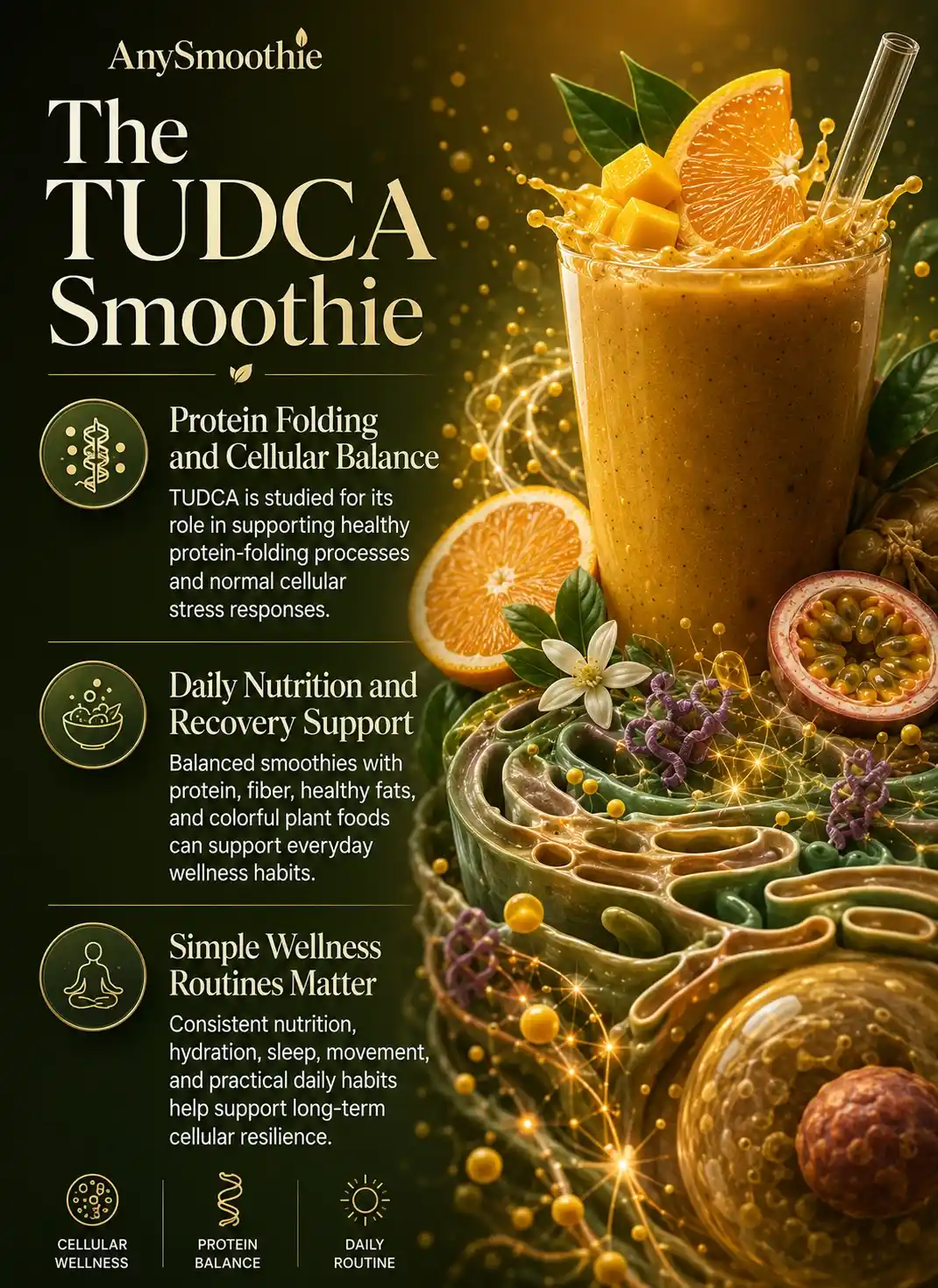
How to Build TUDCA Smoothies for Better Cellular Stress Resilience
A strong smoothie formula supports the supplement and keeps blood sugar steadier. It also should not feel heavy enough to make you skip it the next day. The best blends are balanced, not overloaded.
| Ingredient type | Purpose | Best examples | Possible concern | Smoothie role |
|---|---|---|---|---|
| Protein base | Helps keep energy steady | Greek yogurt, kefir, whey, pea protein | Can feel thick or heavy | Gives the smoothie structure |
| Healthy fat | Adds creaminess and a fuller meal feel | Avocado, nut butter, hemp seeds | Too much can be rich | Supports satiety |
| Fiber source | Slows the sugar hit and adds texture | Chia, flax, spinach | Too much can get dense | Balances the blend |
| Antioxidant fruit | Improves flavor and color | Blueberries, raspberries, kiwi | Large amounts can push sugar up | Makes the smoothie easy to drink |
| Digestive spice | Lifts flavor and helps the mix feel lighter | Ginger, cinnamon, lemon | Too much can taste sharp | Keeps the drink bright |
Choose ingredients that support bile flow, antioxidants, and steady blood sugar. Avocado, yogurt or kefir, berries, spinach, ginger, chia, and protein all fit that pattern. They do not perform magic, but they can make the smoothie more useful as a daily habit.
What to avoid is pretty simple. Too much fruit can turn a support drink into a sugar bomb. Very large portions can leave you bloated. Artificial sweeteners may bother some people, especially if digestion is already touchy. A few ingredients often work better than a crowded blender.
Where TUDCA fits depends on the product directions. Some people use a powder, while others use capsules only as directed on the label. Do not assume every formula mixes the same way. Timing matters less than consistency, but many people prefer it with food rather than on an empty stomach.
3 TUDCA Smoothie Recipes and Cellular Stress Resilience
Green recovery smoothie for balanced daytime support
Ingredients
- 1 cup spinach
- 1/2 cucumber
- 1/2 avocado
- 1 scoop plain protein powder
- 1 kiwi
- 1 tablespoon lemon juice
- 3/4 cup cold water
- Ice, as needed
- TUDCA, according to the product label
Blend until smooth. Add TUDCA according to the label and mix until smooth.
This one stays light, but it still feels like a real breakfast. The greens and cucumber keep the sugar load low, while the protein and fat help it hold you over.
Estimated Nutrition per Serving
Estimated with a standard whey protein powder and excluding TUDCA, whose contribution varies by product.
- Calories: ~365 kcal
- Protein: ~31 g
- Carbohydrates: ~30 g
- Fat: ~18 g
- Fiber: ~12 g
- Sugars: ~10 g
Berry cocoa smoothie for antioxidant support after hard training
Ingredients
- 1 cup mixed berries
- 1 tablespoon unsweetened cocoa
- 3/4 cup plain Greek yogurt
- 1 tablespoon chia seeds or ground flaxseed
- 1 tablespoon almond butter
- 1/2 cup cold water or milk of choice
- TUDCA, according to the product label
Blend well.
The berries bring color and polyphenols, while cocoa adds a rich flavor that can mask the supplement taste. The fat and protein make it a better fit after a hard session.
Estimated Nutrition per Serving
Estimated with nonfat Greek yogurt, chia seeds, almond butter, and water. TUDCA is excluded because products vary.
- Calories: ~390 kcal
- Protein: ~26 g
- Carbohydrates: ~48 g
- Fat: ~14 g
- Fiber: ~16 g
- Sugars: ~22 g
Cocoa, chia, and almond butter can make this combination considerably thicker than it looks from the ingredient list. I’d keep a little extra water nearby and adjust only after the first full blend.
Creamy ginger vanilla smoothie for a gentler low-sugar option
Ingredients
- 1 small banana or 1 cup frozen cauliflower rice
- 1/2 teaspoon vanilla extract
- 1/4 teaspoon freshly grated ginger
- 1 tablespoon almond butter
- 1 scoop plain protein powder
- 1 cup unsweetened almond milk
- Ice, as needed
- TUDCA, according to the product label
Blend until creamy. Add TUDCA per the product label and finish with ice.
This version is calm and easy on the stomach. It works well on mornings when you want something mild, not a heavy meal. Ginger gives it a clean finish.
Estimated Nutrition per Serving
Estimated with a small banana, almond butter, unsweetened almond milk, and standard whey protein powder. TUDCA is excluded because products vary.
- Calories: ~355 kcal
- Protein: ~30 g
- Carbohydrates: ~37 g
- Fat: ~13 g
- Fiber: ~6 g
- Sugars: ~17 g
Safety, Timing, and Who Should Be Extra Careful with TUDCA
Follow the product instructions first. If you have a health condition, take medication, or are pregnant or breastfeeding, talk with a qualified clinician before adding TUDCA. That advice matters even more if you plan to use it often.
For a research-facing summary of TUDCA’s bile-acid background, the Alzheimer’s Drug Discovery Foundation overview gives a useful technical snapshot. TUDCA can feel different from one person to the next, especially when it is mixed into a rich smoothie or taken without food.
If a formula feels off, keep it simple. Smaller portions, fewer ingredients, and a lower-fat blend can make a big difference.
Simple signs a smoothie formula may be too much at once
Bloating, nausea, heaviness, and loose stools are the main signs to watch. They do not always mean something is wrong. They often mean the blend is too large, too rich, or too dense for your current tolerance.
Conclusion
TUDCA smoothies can be a practical way to support cellular stress resilience without turning your routine into a project. The best versions pair the supplement with protein, fiber, and a modest amount of fat, so the drink feels steady and easy to repeat.
Keep the formula simple, choose quality ingredients, and pay attention to how your body responds. With TUDCA, the win is rarely a dramatic moment. It is a routine that fits, feels good, and stays consistent.
🛡️ Safety Notes & Dietary Interactions
- Follow Product Directions Carefully: TUDCA supplements come in different forms and strengths. Always follow the manufacturer’s instructions and avoid assuming that one product’s serving size applies to another.
- Use Caution With Digestive Sensitivities: Some people may notice digestive discomfort when introducing TUDCA or when combining it with rich, high-fat smoothies. Starting with smaller portions can help assess tolerance.
- Medication and Health Condition Considerations: Individuals with liver, gallbladder, digestive, or metabolic conditions, or those taking prescription medications, should consult a qualified healthcare professional before using TUDCA regularly.
- Pregnancy and Breastfeeding Precautions: Safety data may be limited for certain populations. Pregnant or breastfeeding individuals should seek professional guidance before adding TUDCA supplements to a daily routine.
FAQ
What is TUDCA and why is it used in smoothies?
TUDCA (tauroursodeoxycholic acid) is a bile acid derivative that some people include in smoothies because it is convenient and easy to incorporate into an existing nutrition routine. Smoothies can provide a practical way to combine TUDCA with protein, fiber, hydration, and nutrient-dense ingredients.
Does TUDCA improve cellular stress resilience on its own?
TUDCA is studied for its role in cellular protein handling and stress-response pathways, but it should not be viewed as a stand-alone solution. Sleep quality, balanced nutrition, physical activity, hydration, and overall lifestyle habits remain the foundation of long-term resilience.
What ingredients pair well with TUDCA in a smoothie?
Many people combine TUDCA with ingredients such as berries, spinach, avocado, chia seeds, flaxseed, kefir, Greek yogurt, protein powders, ginger, and cocoa. These foods can help create a balanced smoothie that is satisfying and easy to consume consistently.
When is the best time to drink a TUDCA smoothie?
There is no universally ideal time. Many people prefer taking TUDCA with food, often at breakfast or alongside a meal-support smoothie. Following the directions provided with the specific supplement product is usually the best approach.
What are common mistakes when making TUDCA smoothies?
Overloading the smoothie with fruit, excessive fats, too many ingredients, or very large portions can make the drink difficult to digest. Simple recipes with balanced amounts of protein, fiber, healthy fats, and moderate sweetness are often easier to tolerate and maintain as a routine.

Medical Disclaimer: AnySmoothie content is for educational purposes only and is not a substitute for professional medical advice. Consult a healthcare provider for personalized guidance. See our full Disclaimer & Terms of Use. AI Transparency: AnySmoothie may use AI to support content development. All content undergoes human editorial review for accuracy, clarity, and editorial quality. See our full AI Transparency.