
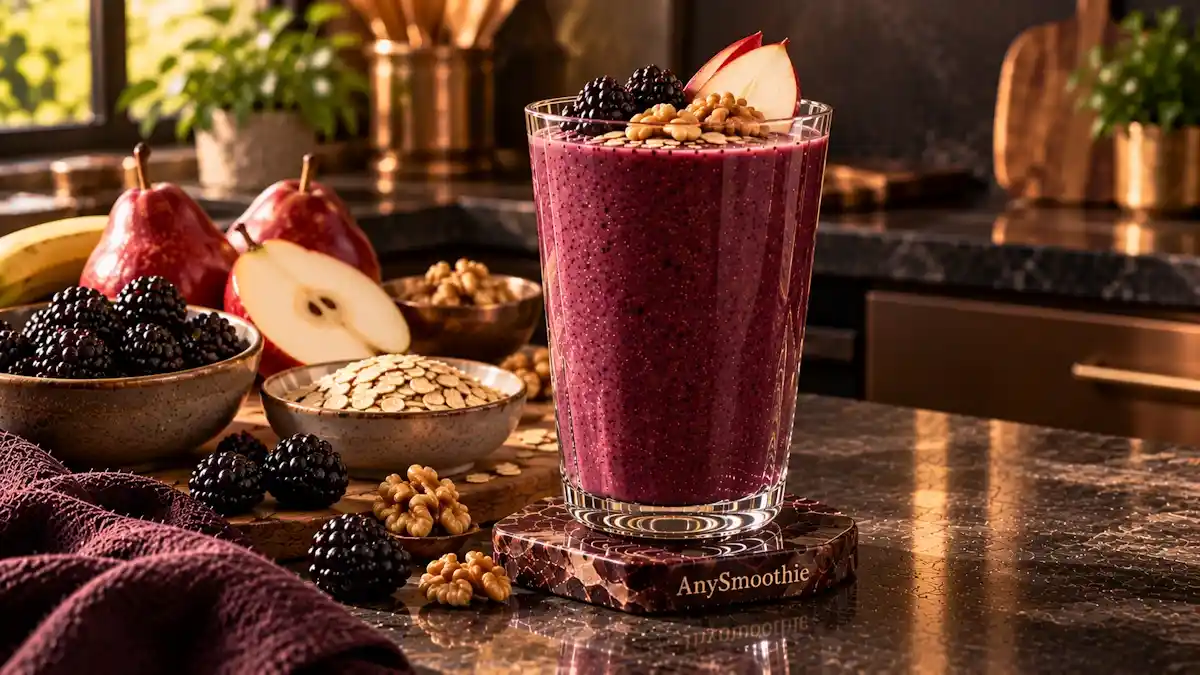
Sphingolipids are fats involved in cell membranes and cell signaling. Smoothies can fit into a varied eating pattern, but no smoothie is proven to balance sphingolipid signaling or target a specific pathway.
If you’re choosing ingredients with cellular health in mind, focus on everyday nutrition rather than promises about changing individual molecules. Fruit, vegetables, protein sources, and unsaturated fats supply nutrients that support physiological systems. Start with what sphingolipids do, then build a satisfying blend without assigning it effects that research hasn’t established.
What Sphingolipid Signaling Does, and What Food Can Support
A closer look at how ceramide and S1P regulate cellular signals and which nutrients support normal cell function.
How ceramide and sphingosine-1-phosphate fit into cell signaling
Ceramides help form cell membranes and participate in signals related to stress responses, growth, and cell death. Sphingosine-1-phosphate, or S1P, is a related molecule involved in cell survival, movement, and other functions.
As a review of sphingolipid signaling describes, these molecules participate in interconnected metabolic processes. Their effects depend on where they’re produced and which cellular machinery receives their signals. Neither molecule is universally “good” or “bad,” and there isn’t one ideal balance for every tissue.
For a related but distinct membrane-lipid topic, see phosphatidylserine smoothies for cortisol control. Phosphatidylserine is a different type of phospholipid, so it shouldn’t be treated as interchangeable with sphingolipids.
Why a smoothie cannot switch a pathway on or off
Enzymes build, convert, and break down sphingolipids. Cell type, metabolic conditions, and the location of those enzymes all affect signaling.
Food supplies raw materials for metabolism, but eating an ingredient doesn’t deliver a predictable instruction to a particular cell. Overall diet also matters alongside other biological factors. Supporting normal nutrition is a reasonable goal; claiming that a smoothie changes ceramide or S1P activity requires evidence that these recipes don’t have.
For another discussion of a separate cellular signaling pathway, see glucoraphanin smoothie for cellular defense signaling. Its topic complements the broader discussion of cell signaling, but it doesn’t establish a way to control sphingolipid activity.
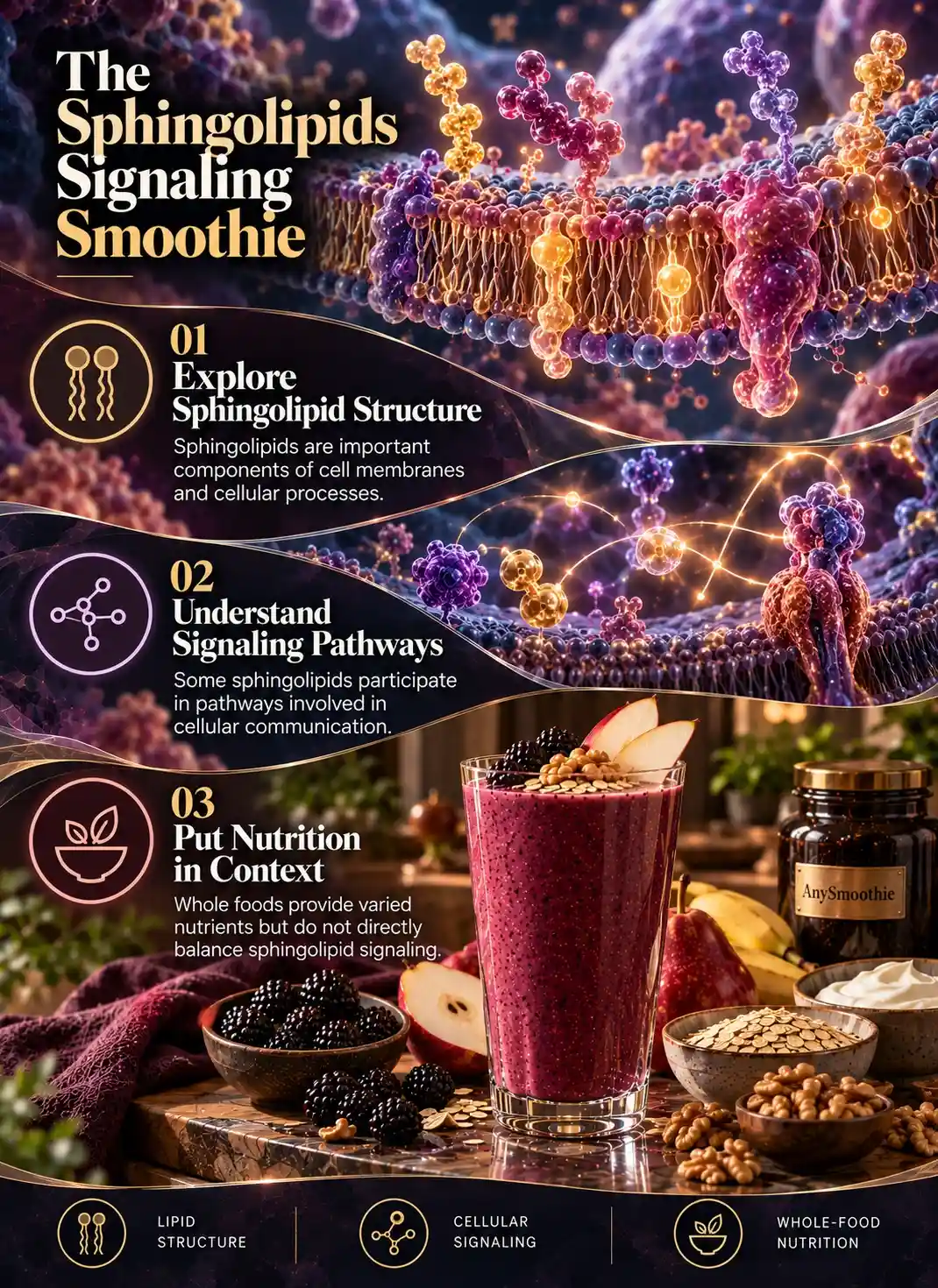
3 Smoothies for Sphingolipid Signaling
These recipes are nutrient-dense food ideas, not treatments or proven ways to balance signaling. Each makes roughly one serving, depending on your preferred thickness.
The nutrition estimates below assume plain low-fat dairy yogurt, water in the berry and citrus recipes, and 2% dairy milk in the cocoa recipe. Different products and substitutions will change the values.
Berry, Spinach, and Chia Smoothie
Ingredients
- 3/4 cup frozen berries
- A handful of spinach, about 1 cup loosely packed
- 1 tablespoon chia seeds
- 1/2 cup plain yogurt
- 1/2 cup water or milk
Steps
Blend the berries, spinach, chia seeds, yogurt, and water or milk until smooth.
Berries and chia contribute fiber, while yogurt supplies protein. For a thicker blend, start with less liquid and add more only as needed. Unsweetened, fortified soy yogurt is a dairy-free option.
A practical texture check helps here: chia continues absorbing liquid after blending, so add a small splash of water if the smoothie thickens while standing.
Estimated Nutrition per Serving
- Calories: ~200 kcal
- Protein: ~9 g
- Carbohydrates: ~29 g
- Fat: ~6 g
- Fiber: ~11 g
- Sugars: ~16 g
A refreshing, fiber-rich smoothie with a creamy texture and a little extra thickness from chia seeds.
Oat, Cocoa, and Peanut Butter Smoothie
Ingredients
- 1/4 cup rolled oats
- 1 tablespoon unsweetened cocoa
- 1 tablespoon peanut butter
- One small banana
- 3/4 cup milk or unsweetened soy milk
Steps
Combine the rolled oats, cocoa, peanut butter, banana, and milk or unsweetened soy milk. Blend until the oats are finely broken down.
Oats give this blend a filling texture, while cocoa adds flavor without added sugar. Use frozen banana for a colder, thicker drink. Choose peanut butter without added sugar if that’s your preference.
Estimated Nutrition per Serving
- Calories: ~360 kcal
- Protein: ~14 g
- Carbohydrates: ~51 g
- Fat: ~14 g
- Fiber: ~8 g
- Sugars: ~22 g
Avocado, Citrus, and Yogurt Smoothie
Ingredients
- 1/4 medium avocado
- One small peeled and seeded orange
- 1/2 cup plain yogurt or unsweetened fortified soy yogurt
- 1/4 cup water
Steps
Blend the avocado, orange, yogurt, and water until creamy.
Avocado contributes unsaturated fat, while the whole orange retains fiber that juice lacks. Use plain yogurt and skip honey to avoid added sweetness. If the mixture is too thick, add water a tablespoon at a time.
Estimated Nutrition per Serving
- Calories: ~200 kcal
- Protein: ~7 g
- Carbohydrates: ~24 g
- Fat: ~9 g
- Fiber: ~6 g
- Sugars: ~17 g
The estimates are approximate and depend on the products used. Fortified soy yogurt may differ from dairy yogurt in protein, fat, sugars, and micronutrients.
Compare the blends by ingredients and eating preferences, rather than expected signaling effects.
| Smoothie | Main ingredients | Nutrition focus | Flavor and texture | Easy adjustment |
|---|---|---|---|---|
| Berry-spinach | Berries, spinach, chia, yogurt | Fiber and protein | Tart, lightly textured | Use less liquid |
| Oat-cocoa | Oats, cocoa, peanut butter, banana | Whole grains and unsaturated fat | Chocolatey and thick | Use sunflower seed butter |
| Avocado-citrus | Avocado, orange, yogurt | Unsaturated fat and protein | Creamy and bright | Add water |
All three offer variety; none has a demonstrated advantage for controlling sphingolipid pathways.
Build a Smoothie Around Fiber, Healthy Fats, and Whole Foods
Build a satisfying smoothie with fiber-rich foods, healthy fats, and balanced ingredients that support everyday nutrition.
Choose ingredients for a filling, balanced blend
Combine fruit and leafy greens with plain yogurt, oats, or seeds. Fiber, protein, and unsaturated fats can make a smoothie more satisfying while contributing to a balanced diet.
Your body uses amino acids and fatty acids in sphingolipid synthesis. However, that biochemical connection doesn’t mean a particular food controls the process. A review of nutrition and sphingolipid physiology examines dietary influences across complex metabolic systems, rather than establishing a smoothie formula.
For a complementary look at how dietary fiber relates to fatty-acid metabolism, see pectin smoothies for short-chain fatty acids. Short-chain fatty acids are distinct from sphingolipids, but the topic provides another perspective on how dietary components participate in metabolism.
For dairy-free blends, unsweetened, fortified soy yogurt or soy milk can supply protein. Other plant-based alternatives vary substantially in protein and fortification.
Use a simple mix-and-match formula
Start with one fruit, one vegetable, a protein source, a fiber-rich addition, and a modest portion of nuts or seeds. These categories can overlap: chia seeds supply both fiber and unsaturated fat.
Use water, milk, or an unsweetened fortified alternative as your base. Add liquid gradually because frozen fruit, oats, and seeds thicken blends differently. For sweetness, adjust the fruit before reaching for honey or syrup. A ripe banana needs no added sweetener.
Another distinct topic involving phospholipid structures and cellular redox processes is liposomal glutathione smoothie for redox sgnaling. It provides a related angle on lipid-based delivery, not evidence that a smoothie can regulate sphingolipid signaling.
Keep Smoothies in Perspective and Make Them Work for You
A smoothie is one food choice within your overall eating pattern. You can also eat its ingredients separately, such as yogurt with berries or oats with nuts. Blending isn’t necessary for supporting physiological systems.
Portion size matters because large servings can combine more food than you intended. Consider whether your smoothie is a snack or part of a meal, then adjust quantities accordingly. Fruit contributes sweetness, so juice, flavored yogurt, and syrups may be unnecessary.
Also account for allergies and personal dietary needs. Peanut butter, dairy, and soy require suitable substitutions when relevant. People with kidney disease or other conditions that affect nutrient needs may need different ingredients or portions. A registered dietitian or another qualified health professional can provide individualized nutrition advice.
Conclusion
Choose varied, minimally processed ingredients for everyday nutrition, while keeping the biology in perspective. Smoothies haven’t been shown to control sphingolipid signaling, and a recipe can’t establish what’s happening inside particular cells.
Try whichever blend suits your taste, then adjust its thickness, fruit, or protein source. The useful goal is a satisfying food choice that fits your needs and overall eating pattern.
🛡️ Safety Notes & Dietary Interactions
- Signaling expectations: These recipes provide fiber, protein, unsaturated fats, and whole-food nutrients, but none is proven to balance ceramide or S1P signaling. Treat them as everyday nutrition rather than pathway-specific interventions.
- Fiber and thickness: The berry-spinach smoothie supplies about 11 g of fiber, while chia continues absorbing liquid after blending. Increase fiber gradually if needed and thin the drink before consuming if its texture becomes too thick.
- Allergen awareness: The recipes include dairy, peanut butter, chia, and soy-based alternatives. Check labels carefully and use suitable substitutions for allergies, particularly when replacing yogurt, milk, or peanut butter.
- Individual dietary needs: Large portions of avocado, nuts, seeds, oats, or other energy-dense ingredients can substantially change a smoothie. People with kidney disease or other dietary restrictions may need individualized ingredient and portion choices.
FAQs
Can these smoothies actually balance sphingolipid signaling?
No. The article explains that sphingolipid signaling involves interconnected metabolic pathways influenced by cell type, enzymes, and cellular conditions. These smoothies supply ordinary nutrients, but there is no demonstrated recipe that can predictably control ceramide, sphingosine-1-phosphate, or another specific sphingolipid pathway.
Why is chia useful in the berry-spinach smoothie?
Chia contributes fiber and unsaturated fat, making it a nutrient-dense addition to the blend. Its inclusion isn’t based on a demonstrated effect on sphingolipid signaling. Because chia absorbs liquid after blending, the smoothie may continue thickening while it stands and may need additional water.
Which smoothie is highest in calories?
The oat, cocoa, and peanut butter smoothie is the most energy-dense, at approximately 360 kcal per serving. Oats, banana, peanut butter, and milk or soy milk contribute to its higher calorie content. It may work better as part of a meal than as a small snack for some people.
Can I make these smoothies without dairy or peanuts?
Yes. The berry-spinach and avocado-citrus recipes can use unsweetened fortified soy yogurt, while the oat-cocoa recipe can use sunflower seed butter instead of peanut butter. Check labels carefully because substitutions can change protein, fat, sugar, and micronutrient content.
Do I need to drink these smoothies to support normal sphingolipid metabolism?
No. The article emphasizes that blending isn’t necessary for supporting physiological systems. You can eat the ingredients separately, such as yogurt with berries or oats with nuts. What matters is the overall dietary pattern, while the smoothie simply provides a convenient way to combine foods.

Medical Disclaimer: AnySmoothie content is for educational purposes only and is not a substitute for professional medical advice. Consult a healthcare provider for personalized guidance. See our full Disclaimer & Terms of Use. AI Transparency: AnySmoothie may use AI to support content development. All content undergoes human editorial review for accuracy, clarity, and editorial quality. See our full AI Transparency.