
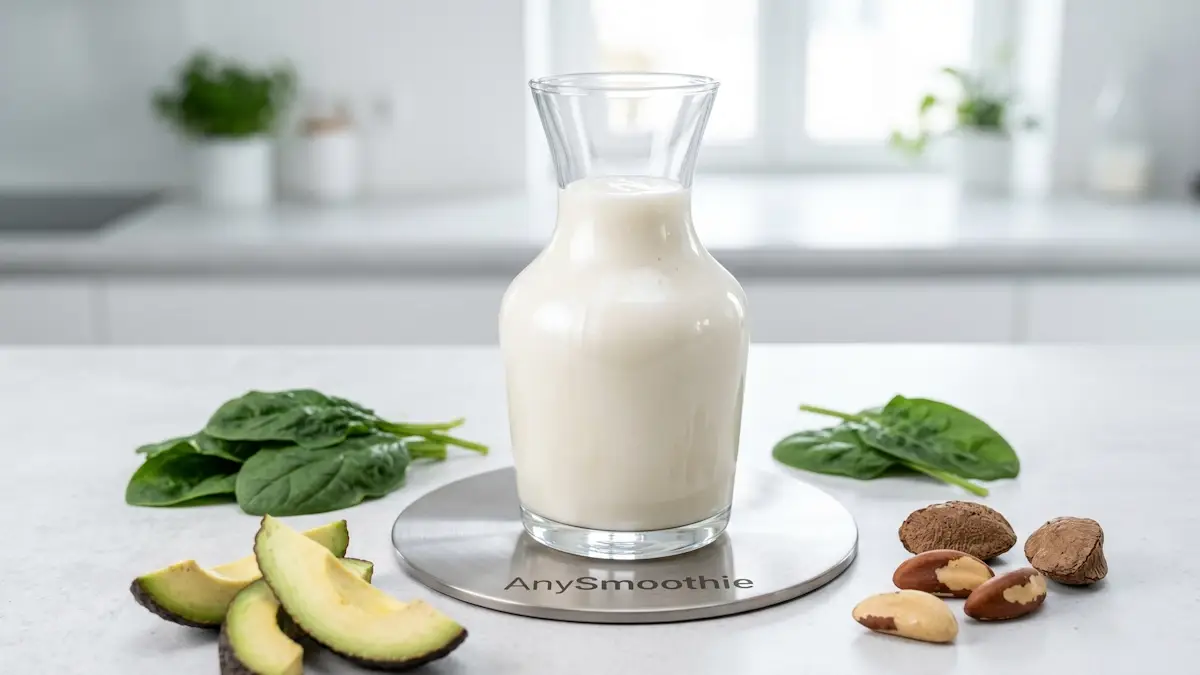
A liposomal glutathione smoothie is a simple way to support antioxidant status without making breakfast complicated. You get a key cellular antioxidant, plus foods that help your body use it well.
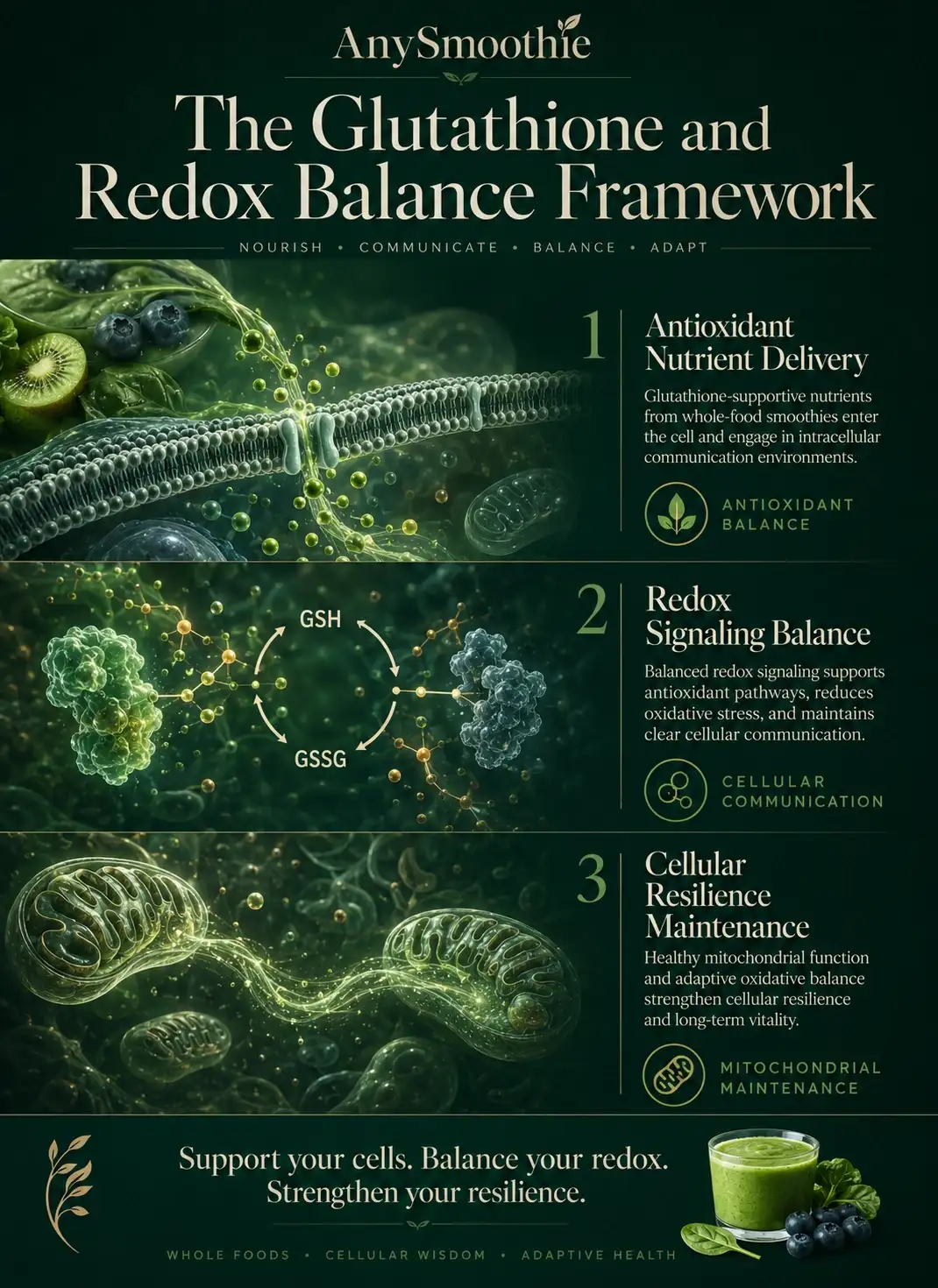
The goal is redox balance, where oxidation and recovery stay in step. That balance depends on liposomal transport, smart fats, bright fruit, and a few co-factors that support cellular defense and metabolic efficiency.
Done right, the smoothie feels easy. Under the hood, it supports a system that cells use all day.
The Master Antioxidant: Glutathione’s Role in Cellular Defense
Glutathione is a small molecule built from three amino acids, and cells use it constantly. It helps manage reactive byproducts, supports enzyme systems that handle metabolic waste, and keeps the cell’s internal chemistry steady. For a solid overview, see the NIH review on glutathione redox homeostasis.
That is why glutathione gets called the master antioxidant. It sits near the center of cellular defense, and mitochondria depend on that balance too.
Redox Homeostasis, Made Simple
Redox homeostasis means balance between oxidants and reductants. Some oxidation is normal because it comes with energy production and cell signaling. Trouble starts when oxidants build faster than antioxidant systems can clear them. Steady glutathione helps keep that gap from widening.
Why Glutathione Is Central to Recovery and Resilience
Glutathione also helps recycle vitamins C and E, which keeps the antioxidant network moving. After physical strain or a poor night of sleep, that recycling support matters because cells need repair capacity, not panic. It is one reason glutathione is tied to recovery and resilience.
Liposomal Delivery: Overcoming the Gastric Barrier for Absorption
Plain oral glutathione often loses ground in digestion. Stomach acid, enzymes, and membrane barriers can reduce how much reaches the bloodstream. Liposomal glutathione uses a phospholipid shell to help protect the payload on the way through the gut.
A small human comparison found better uptake and systemic availability with a liposomal form than with plain glutathione, and a related paper reported higher body stores after regular use. That fits the basic logic of liposomal transport, better survival through digestion means more chance of intracellular delivery. See the PubMed comparison of liposomal and plain glutathione.
Phospholipid Encapsulation: Ensuring Direct Intracellular Transport
A liposome is a tiny fat-like bubble. In a smoothie, that shell can help glutathione stay stable and move more smoothly through digestion. Compared with plain powder or capsules, the liposomal form is built for better absorption, which is the whole point when you want support beyond the gut.
What Makes Liposomal Glutathione Different from NAC and Standard Oral Glutathione
NAC works one step upstream. It gives the body cysteine, a key building block for making glutathione. Standard oral glutathione supplies the molecule itself, but liposomal delivery can offer better systemic retention when the goal is direct support of intracellular redox status.
A Quick Comparison of Common Antioxidant Delivery Options
Here is a quick side-by-side view.
| Delivery System | Physiological Bioavailability | Cellular Mechanism | Best Smoothie Pairing | Target Benefit |
|---|---|---|---|---|
| Standard Oral Glutathione | Low to moderate | Often broken down in digestion before much reaches cells | Citrus, berries, simple greens | General antioxidant support |
| Liposomal Glutathione | Highest of the three for systemic retention | Phospholipid-mediated absorption and transport | Blend first, stir in at the end | Supports intracellular redox status |
| NAC | Moderate, depends on diet and protein intake | Precursor conversion to glutathione | Protein-rich fruit and greens smoothie | Supports the body’s own glutathione production |
For a smoothie built around redox support, liposomal delivery is the most direct option. NAC still has a place, but it works earlier in the pathway.
How to Build a Liposomal Glutathione Smoothie That Works with Your Body
Start with a base that helps nutrient partitioning. Greens like spinach and romaine bring plant compounds. Berries add polyphenols. Avocado, chia, hemp, or almond butter slow the sugar hit and add a smoother feel. Citrus gives vitamin C and a clean finish.
If you use a liquid liposomal product, stir it in after blending. Heat and hard blending can work against the liposome.
Timing matters too. A calm stomach often feels better. Keep added sugar low, and skip heated ingredients. A clean formula is easier to repeat.
3 Redox-Prime Glutathione Support Smoothie Recipes
Synergistic Co-factors: Pairing Glutathione with Vitamin C and NAC
Glutathione works best inside a network. A pilot human study on liposomal glutathione reported higher blood stores after regular use, which is one reason co-factors matter. The smoothie gives you a delivery system, but vitamin C, NAC, selenium, and protein keep the pathway stocked.
Why Vitamin C and Glutathione Work Well Together
Vitamin C helps recycle oxidized antioxidants, including glutathione. That recycling loop matters because it keeps the redox network moving instead of leaving one compound stuck in its spent form. Fruit like citrus or berries fits that job well.
Where NAC Fits as a Glutathione Precursor
NAC is useful when dietary cysteine is low. It supports your own glutathione production, so it makes sense in a broader smoothie plan. In practice, it works best as a support piece, not the main event.
Protecting the Electron Transport Chain
Inside mitochondria, glutathione helps protect the electron transport chain from excess oxidative load. Selenium supports glutathione-dependent enzymes, and protein foods provide the amino acids behind new glutathione synthesis. That setup supports metabolic efficiency without making the recipe complicated.
Conclusion
A liposomal glutathione smoothie works best when the parts fit together. Liposomal transport helps with absorption, while good ingredients and co-factors support the rest of the redox system.
Keep the recipe simple, add the liposomal dose at the end, and aim for consistency over perfection. That is usually what supports better antioxidant status over time.
🛡️ Safety Notes & Contraindications: Liposomal glutathione smoothies
Mechanical integrity: do not blend liposomal glutathione at high speeds; the sheer force can rupture the liposomes, destroying the phospholipid shield and reverting the supplement to a standard (low-bioavailability) oral form.
Sulfite sensitivity: individuals with a rare genetic sulfite oxidase deficiency or high sensitivity to sulfites may experience adverse reactions to glutathione, which contains sulfur groups; symptoms include wheezing or skin rashes.
Zinc depletion: long-term, high-dose glutathione supplementation may interfere with zinc levels; ensure your smoothie routine includes zinc-rich seeds (pumpkin or hemp) or monitor your mineral status.
Chemotherapy and radiation: because glutathione is a potent cellular protector, it may theoretically protect cancer cells from oxidative treatments like chemotherapy or radiotherapy; consult an oncologist before use during active treatment.
Asthma warning: some inhaled forms of glutathione can trigger bronchospasm; while oral liposomal forms are generally safer, individuals with sensitive airways should monitor for any respiratory changes during the first few days of use.
FAQ
How does Liposomal Delivery bypass the “Gastric Barrier” for Glutathione?
Standard oral glutathione is frequently degraded by peptidase enzymes in the stomach and small intestine before it can reach the bloodstream. Biochemically, liposomal glutathione is encapsulated in a phospholipid bilayer that mimics cellular membranes. Supporting this physiological system through liposomal transport optimizes the natural pathways of absorption, protecting the antioxidant payload from gastric acid and facilitating the biochemical mechanics of direct intracellular delivery.
Why is Glutathione considered the “Master Antioxidant” in the Redox Network?
Glutathione is unique because it not only neutralizes reactive oxygen species (ROS) directly but also regenerates other antioxidants like Vitamin C and Vitamin E. Biochemically, it acts as the primary electron donor in the redox cycle. Supporting this physiological system through targeted smoothies ensures that the entire antioxidant network remains functional, optimizing the natural pathways of cellular defense and preventing the accumulation of spent, pro-oxidant molecules.
What is the role of Selenium as a co-factor for Glutathione Peroxidase?
Glutathione does not work alone; it requires the enzyme glutathione peroxidase (GPx) to neutralize hydrogen peroxide. Biochemically, selenium is an essential structural component of GPx. Supporting this physiological system through selenium-rich ingredients (like Brazil nuts) in your smoothie optimizes the natural pathways of enzyme activity. This synergy ensures that the biochemical mechanics of “redox clearance” are supported at the enzymatic level.
How does Glutathione support “Mitochondrial Priming” during energy production?
The electron transport chain (ETC) naturally produces superoxide radicals as a byproduct of ATP synthesis. Biochemically, mitochondrial glutathione is the primary shield that prevents these radicals from damaging mitochondrial DNA and membrane lipids. Supporting this physiological system through a liposomal routine facilitates cleaner energy production. This optimization ensures that the biochemical mechanics of the ETC remain efficient, supporting long-term metabolic steady-state.
Why is “Stirring In” the liposomal dose better than high-speed blending?
Liposomes are delicate phospholipid structures that can be disrupted by the high shear forces of a blender or by excessive heat. Biochemically, protecting the structural integrity of the liposome is essential for its “stealth” transport properties. Supporting this physiological system by adding the dose at the end of the smoothie prep ensures that the biochemical mechanics of encapsulation remain intact, maximizing the potential for systemic absorption and cellular uptake.

Medical Disclaimer: AnySmoothie content is for educational purposes only and is not a substitute for professional medical advice. Consult a healthcare provider for personalized guidance. See our full Disclaimer & Terms of Use. AI Transparency: AnySmoothie may use AI to support content development. All content undergoes human editorial review for accuracy, clarity, and editorial quality. See our full AI Transparency.