
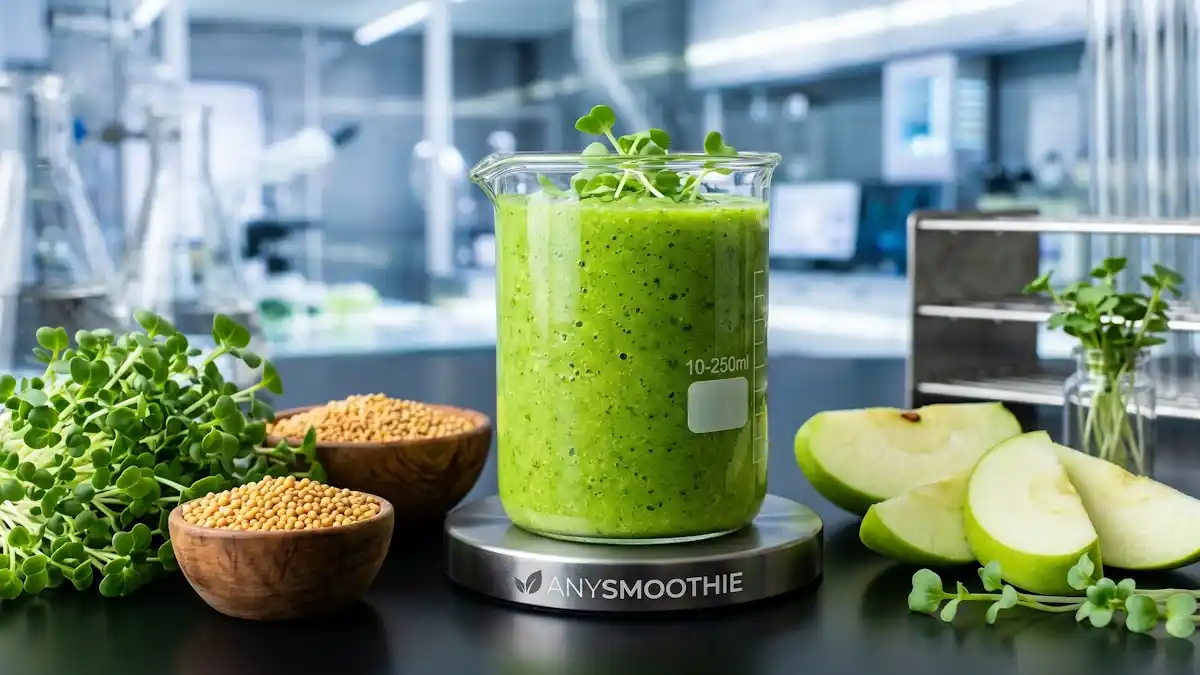
Cruciferous compounds keep showing up in nutrition for a good reason. They fit into the body’s own defense chemistry, and they do it without much fuss. A glucoraphanin smoothie for cellular defense can be a simple way to work that idea into your day.
The key is conversion. Glucoraphanin is the starting compound, but the useful signal comes after it turns into sulforaphane. This guide keeps that process practical, with the core mechanism, smart ingredient pairings, and a few easy smoothie ideas.
How glucoraphanin supports the body’s built-in defense network
Glucoraphanin is a glucosinolate found in cruciferous foods, especially broccoli sprouts. By itself, it is a precursor, so it needs the right conditions to do its job. That matters because plant compounds like this can support the body’s natural stress-response systems.
In plain language, glucoraphanin is part of the signal chain. When you use it well, you are feeding pathways that help cells handle everyday oxidative stress and keep protective enzymes active. That is a modest goal, but it is a useful one.
From glucoraphanin to sulforaphane, what myrosinase does
Myrosinase is the enzyme that helps convert glucoraphanin into sulforaphane. The smoother the conversion, the more of the active compound you get from the same ingredients. Fresh prep matters here, because heat, long storage, and poor mixing can reduce that handoff.
This is where mustard seeds come in. They bring myrosinase into the blend and can noticeably improve sulforaphane formation in a smoothie. A small amount is enough, and starting small helps because the flavor can get sharp fast. For more background, see sulforaphane research.
Why Nrf2 and ARE matter for cellular defense
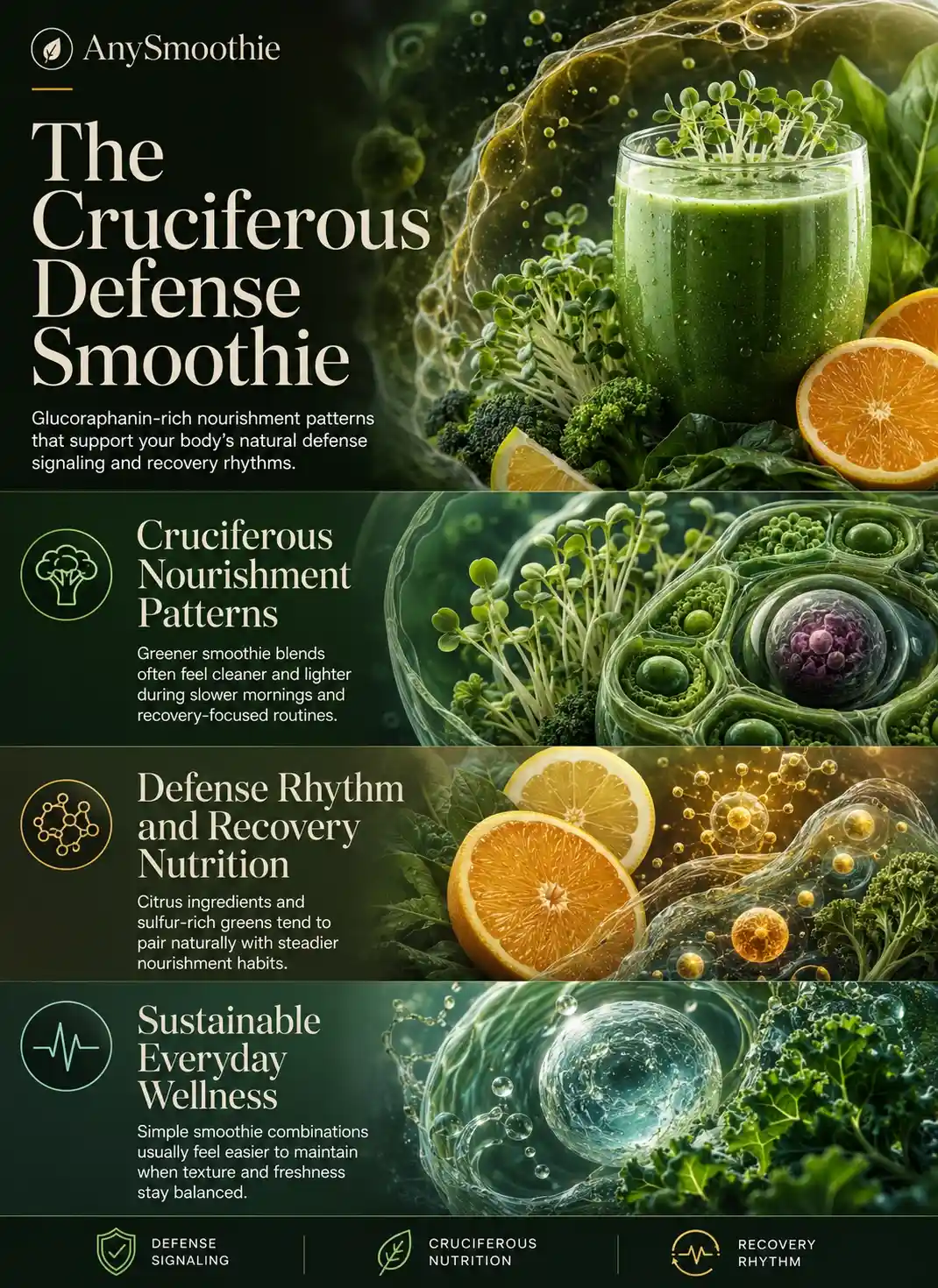
Nrf2 is often called a master switch because it helps turn on protective genes. One of those control points is the antioxidant response element, or ARE. Together, they help cells respond to stress and support enzymes that manage reactive compounds.
That matters for a smoothie because sulforaphane is known for signaling these pathways. The point is not hype. The point is supporting a normal defense response that already exists in the body.
The Difference Between Glucoraphanin, Sulforaphane, and I3C
Here is the quick comparison that keeps the chemistry straight.
| Compound | Physiological Mechanism | Bioavailability Factor | Best Smoothie Pairing | Target Defense System |
|---|---|---|---|---|
| Glucoraphanin (Precursor) | Supports Nrf2 signaling after conversion to sulforaphane | Requires myrosinase to convert well | Broccoli sprouts, mustard seed, pineapple | Cellular defense signaling |
| Sulforaphane (Active Isothiocyanate) | Directly supports antioxidant and phase II enzyme pathways | Highly reactive, short half-life | Fresh, cold smoothie with citrus | Oxidative stress response |
| Indole-3-Carbinol (I3C) | Influences estrogen metabolite pathways | Acid-dependent conversion in the stomach | Cruciferous greens with fruit | Hormone metabolism support |
The active payoff depends on conversion. Without myrosinase, glucoraphanin stays in its starting form.
Mustard seeds are a smart addition because they supply that enzyme and can improve conversion in a glucoraphanin smoothie.
What to blend for better uptake and a stronger defense effect
A good smoothie does more than taste fine. It has to support conversion, be easy to drink, and fit real life. If the flavor is harsh, you will skip it. If the texture is off, you will stop making it.
Start with a cruciferous base, then add fruit for balance and a little fat for mouthfeel. That helps nutrient uptake and makes the blend more satisfying. It also keeps the smoothie from tasting like a salad in a cup.
Choose the right base, broccoli sprouts, fruit, and healthy fat
Broccoli sprouts are the strongest place to start because they are mild and rich in glucoraphanin. You can also fold in baby greens, but keep them in the background. Their job is to support nutrient density without taking over the flavor.
Fruit matters because it softens the green edge. Frozen pineapple, mango, or apple all work well. A little avocado, hemp seed, or chia adds creaminess and helps the smoothie feel complete.
Why mustard seeds can boost sulforaphane conversion
A small pinch of ground mustard seed can change the chemistry in a useful way. It brings myrosinase into the mix, which helps convert more glucoraphanin into sulforaphane. That is the biohacker trick here, and it stays grounded in food, not supplements.
Start small because mustard is strong. A little goes a long way, especially with pineapple or citrus in the same glass.
Simple blending habits that help preserve active compounds
Use fresh ingredients when you can. Blend briefly, not endlessly. Keep the liquid cold or room temperature, and avoid hot ingredients that can work against delicate plant enzymes.
Citrus, pineapple, and ginger also help the taste. They do not hide the cruciferous base, they make it easier to drink. That matters more than perfect macros.
3 cell-shield smoothie ideas you can make at home
These recipes are simple on purpose. They are built to support a glucoraphanin smoothie cellular defense routine without making prep feel like a project.
The broccoli sprout, mustard seed, and pineapple blend
Ingredients
- 1 cup broccoli sprouts
- 3/4 cup pineapple
- 1/2 cucumber
- 1 tablespoon lemon juice
- 1/4 teaspoon ground mustard seed
- 3/4 cup cold water
Blend until smooth.
This is the most direct option if your goal is conversion and flavor at the same time.
Pineapple takes the edge off the sprouts. Cucumber and lemon keep it bright, while mustard helps push more sulforaphane formation.
Estimated Nutrition per Serving
Estimated with fresh broccoli sprouts, pineapple, cucumber, and ground mustard seed.
- Calories: ~130 kcal
- Protein: ~5 g
- Carbohydrates: ~28 g
- Fat: ~2 g
- Fiber: ~5 g
- Sugars: ~18 g
Mustard can become surprisingly dominant against the mild cucumber and sprouts. I’d start with the small measured amount rather than adding an informal pinch, then adjust only after tasting.
The green recovery smoothie with avocado and spinach
Ingredients
- 1 cup broccoli sprouts
- 1 cup spinach
- 1/4 avocado
- 1 small green apple
- 1 tablespoon lime juice
- 1 cup unsweetened almond milk
Blend until smooth.
This version is smoother and more filling, so it works well when you want something that feels like a meal.
Avocado adds creaminess and helps the texture. Spinach supports the green profile without burying the cruciferous base.
Estimated Nutrition per Serving
Estimated with unsweetened almond milk, one small green apple, and 1/4 avocado.
- Calories: ~270 kcal
- Protein: ~9 g
- Carbohydrates: ~39 g
- Fat: ~12 g
- Fiber: ~12 g
- Sugars: ~20 g
The bright citrus smoothie with ginger and hemp seeds
Ingredients
- 1 cup broccoli sprouts
- 1 medium orange, peeled
- 1 teaspoon fresh ginger
- 1 tablespoon hemp seeds
- 3/4 cup cold water
- 1/4 teaspoon ground mustard seed, optional
- Ice, as needed
Blend until smooth.
This one is lighter and sharper. Ginger lifts the flavor, hemp seeds add body, and citrus keeps the smoothie easy to finish.
Estimated Nutrition per Serving
Estimated with hemp seeds and without optional mustard seed.
- Calories: ~175 kcal
- Protein: ~8 g
- Carbohydrates: ~25 g
- Fat: ~7 g
- Fiber: ~7 g
- Sugars: ~14 g
If the orange is especially juicy, I’d blend with only about 1/2 cup water initially. The sprouts also release some moisture, so adding all the water at once can make this lighter than intended.
How this smoothie fits a bigger cellular defense routine
Food works best when the rest of the routine is steady. Sleep, movement, hydration, and a varied diet all shape how well your cells handle stress. A glucoraphanin smoothie can support that pattern, but it cannot replace it.
Phase II enzyme support and why it matters
Isothiocyanates, including sulforaphane, are known for supporting phase II enzyme activity. Those enzymes help the body process compounds more efficiently. In plain terms, they support the cleanup systems that cells already use every day.
That is one reason this smoothie idea matters. It fits into normal defense work without asking for a drastic diet overhaul.
How Daily Habits Support Cellular Energy
Mitochondria make energy, and they also deal with oxidant pressure while doing it. A well-built smoothie can support the balance around that work. It is a small part of a bigger picture, but small parts matter when they repeat daily.
If you want better resilience, keep the rest of the routine simple too. Sleep enough, move often, and stay hydrated.
Conclusion
A glucoraphanin smoothie for cellular defense works best when the chemistry is handled with care. Glucoraphanin needs conversion, sulforaphane is the active signal, and myrosinase from mustard seeds can help bridge that gap.
The best recipe is the one you will keep making. Start with broccoli sprouts, keep the flavor bright, and keep the process simple.
Pick one blend, make it cold, and let it earn a place in your routine.
🛡️ Safety Notes & Contraindications: Cruciferous Defense Smoothies
Thyroid Interference (Goitrogens): Cruciferous vegetables contain goitrogens that can interfere with iodine uptake; individuals with diagnosed hypothyroidism should avoid consuming large amounts of raw broccoli sprouts daily and should consult an endocrinologist.
Gastrointestinal Distress: The rapid breakdown of glucosinolates can cause significant gas, bloating, and abdominal cramps, especially in those with sensitive digestion or SIBO; start with a very small portion (1/4 cup) of sprouts.
Mustard Allergy: Ground mustard seed is a potent allergen; if you have a known allergy to the Brassicaceae family, omit the mustard seed entirely.
Blood Thinning Interaction: Sulforaphane and cruciferous compounds may have mild antiplatelet effects; if you are on anticoagulant therapy (e.g., Warfarin), maintain consistent intake and notify your healthcare provider.
Pregnancy and Nursing: While dietary amounts are generally safe, the highly concentrated nature of sprout-based smoothies has not been extensively studied in pregnancy; focus on culinary amounts of mature cruciferous vegetables instead.
FAQ
How does “Myrosinase Activity” determine the efficacy of a glucoraphanin smoothie?
Glucoraphanin is a glucosinolate that requires the enzyme myrosinase to convert into the active isothiocyanate, sulforaphane. Biochemically, myrosinase is often inactivated by heat or commercial processing. Supporting this physiological system by adding a pinch of raw mustard seed or using raw broccoli sprouts provides an exogenous source of the enzyme. This optimizes the natural pathways of “precursor conversion,” ensuring the biochemical mechanics of sulforaphane formation are maximized within the blender and the gut.
Why is the “Nrf2-ARE Pathway” considered the master switch for cellular defense?
Nrf2 (Nuclear factor erythroid 2-related factor 2) is a transcription factor that, when activated by sulforaphane, translocates to the nucleus and binds to the Antioxidant Response Element (ARE). Biochemically, this triggers the expression of a battery of protective genes, including those for glutathione synthesis and Phase II enzymes. Supporting this physiological system through targeted smoothies facilitates the biochemical mechanics of “endogenous protection,” helping cells maintain homeostasis against everyday oxidative pressure.
What is the role of “Phase II Enzymes” in systemic detoxification support?
Phase II enzymes, such as quinone reductase and glutathione S-transferase, are responsible for neutralizing reactive metabolites and preparing them for excretion. Biochemically, sulforaphane is one of the most potent natural inducers of these enzymes. Supporting this physiological system through a glucoraphanin-rich protocol optimizes the natural pathways of “metabolic cleanup,” ensuring the biochemical mechanics of cellular detoxification are supported at a fundamental genomic level.
How does “Indole-3-Carbinol (I3C)” differ from sulforaphane in its physiological target?
While both are derived from cruciferous vegetables, I3C undergoes acid-dependent conversion in the stomach into DIM (diindolylmethane). Biochemically, I3C and DIM primarily influence estrogen metabolite pathways and aryl hydrocarbon receptor (AhR) signaling, whereas sulforaphane focuses on Nrf2-mediated antioxidant defense. Supporting these distinct physiological systems by using a variety of cruciferous greens (like kale and broccoli sprouts) ensures the biochemical mechanics of both hormone metabolism and cellular defense are addressed.
Why is “Mitochondrial Priming” relevant to cruciferous compound intake?
Mitochondria are the primary site of reactive oxygen species (ROS) production during ATP synthesis. Biochemically, sulforaphane supports mitochondrial biogenesis and protects the electron transport chain from oxidative damage through its signaling effects. Supporting this physiological system through nutrient-dense smoothies facilitates the biochemical mechanics of “mitochondrial resilience,” providing the cellular energy centers with the defense substrates required to operate efficiently under metabolic demand.

Medical Disclaimer: AnySmoothie content is for educational purposes only and is not a substitute for professional medical advice. Consult a healthcare provider for personalized guidance. See our full Disclaimer & Terms of Use. AI Transparency: AnySmoothie may use AI to support content development. All content undergoes human editorial review for accuracy, clarity, and editorial quality. See our full AI Transparency.