

A hard workout, a high-protein day, or a run of poor sleep can leave you flat, foggy, and slower to recover. One reason is ammonia load, a normal byproduct of protein use and intense effort that needs steady clearance.
That’s where ammonia clearance pathway support smoothies fit in. They are not treatment drinks, and they do not replace medical care, but they can support natural nitrogen handling with the right mix of amino acids, carbs, fluids, and plant compounds.
This post keeps it practical. You’ll see how the urea cycle works, why citrulline, ornithine, and AKG matter, and how to build smoothies that support recovery without feeling heavy.
Nitrogen Homeostasis: Why Ammonia Buildup Feels Rough
Your body is always balancing nitrogen. When you break down protein, train hard, or burn through fuel, ammonia rises as a normal waste product. Under good conditions, the liver and other tissues keep that load moving.
When that system gets stressed, you may feel it as low energy, dull focus, or poor exercise tolerance. Heavy training, low-carb eating, very high protein intake, and weak recovery can all raise the burden.
For a plain-language overview of the pathway, the NCBI urea cycle review gives a solid biochemical summary. The key point is simple, ammonia is part of normal metabolism, but clearance has to keep pace.
The urea cycle and how the liver handles metabolic waste
The urea cycle is the body’s main cleanup system for ammonia. It happens mostly in the liver, where nitrogen gets converted into urea and prepared for removal.
That process costs energy, so liver function and mitochondrial output matter. When fuel is low or recovery is poor, the cycle can feel less efficient. A recent review of urea synthesis and nitrogen metabolism explains how circulating ammonia is scavenged before final elimination.
Why smoothies can be a smart delivery system for support nutrients
Smoothies work well because they are easy to digest and easy to dose. You can pair amino acids with fruit, greens, and fluids without a heavy meal sitting in your gut.
That matters after training, when blood flow, fuel use, and recovery all need support at once. A smart blend can support circulation, hydration, and metabolic flow with less digestive drag than a dense plate of food.
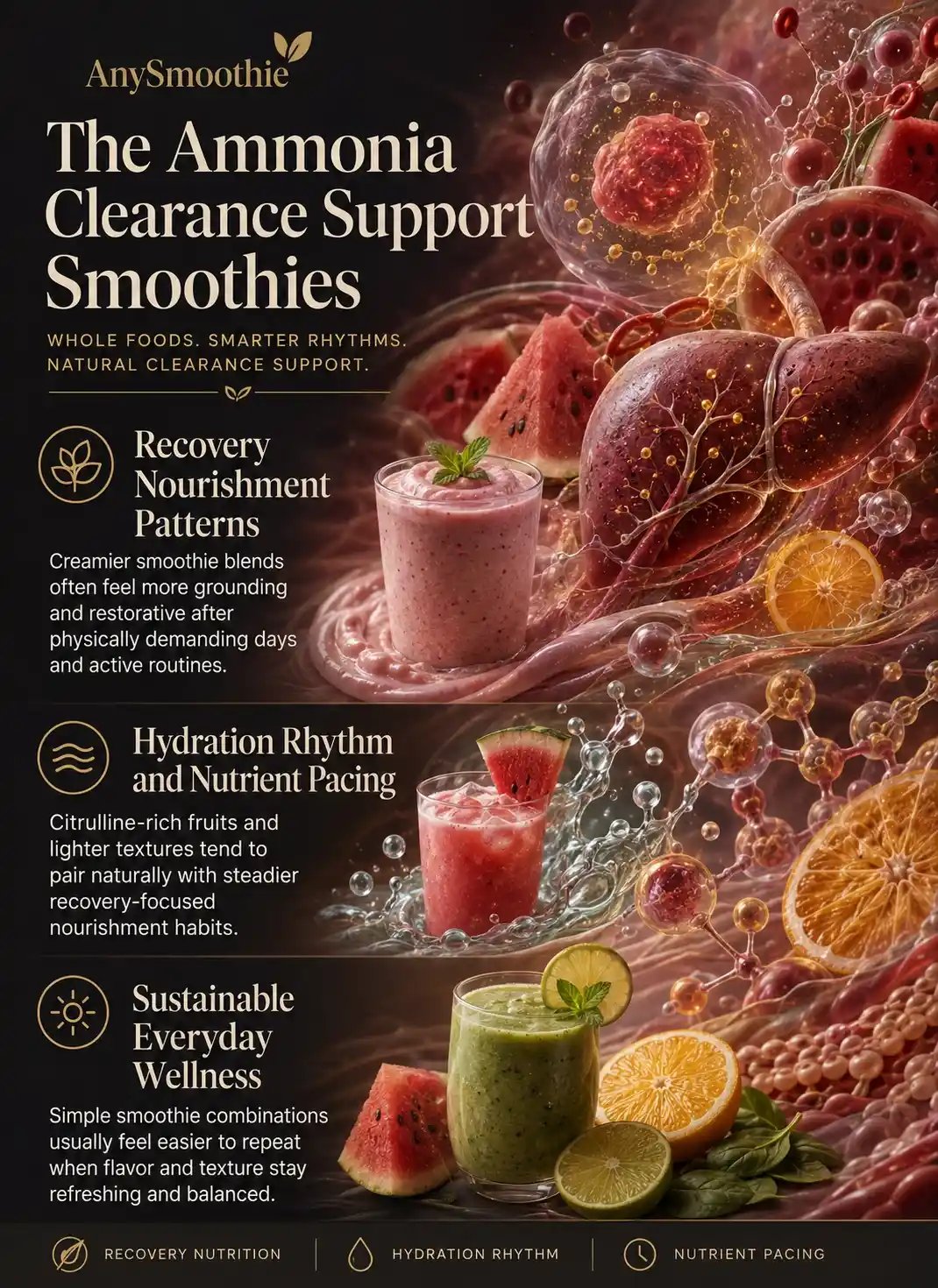
How Citrulline, Arginine, and Ornithine Work Together
These three amino acids sit close to the urea cycle, but they do different jobs. Citrulline helps raise arginine levels over time, arginine supports nitric oxide and nitrogen flow, and ornithine sits closer to ammonia handling in the cycle itself.
Citrulline is often the best pick for sustained support because it has better bioavailability than arginine. That means more of it reaches systemic circulation, which is useful when you want smoother support instead of a short spike.
Citrulline, arginine, and ornithine, what each one does differently
Citrulline is a strong fit for smoothies because it blends well and pairs nicely with fruit. Arginine can still help, but it is less efficient when taken orally. Ornithine is useful when you want to focus more on nitrogen flow and recovery support.
Malate synergy: Supporting the Krebs cycle during nitrogen stress
Malate pairs well with citrulline because it connects nitrogen support with energy metabolism. It sits in the Krebs cycle, so it can help keep fuel handling moving when training stress is high.
That matters because the body does not clear ammonia for free. It needs ATP, and ATP comes from healthy mitochondrial work. Smoothies that combine malate, fruit, and electrolytes can support that energy demand without a heavy load.
Here is a quick comparison of the main options:
| Ingredient | Physiological Mechanism | Efficiency in Exercise | Best Smoothie Pairing | Target System |
|---|---|---|---|---|
| L-Citrulline | Supports urea cycle flow and raises arginine more steadily | Strong for sustained support, because it is more bioavailable than arginine | Watermelon, citrus, beet, coconut water | Liver, muscle |
| L-Ornithine | Helps move nitrogen through the urea cycle | Good when recovery and nitrogen handling are the focus | Greens, cucumber, berries | Liver, brain |
| Alpha-Ketoglutarate | Helps convert ammonia toward glutamate and ties into the Krebs cycle | Useful under training stress and fuel demand | Banana, cocoa, oats, yogurt | Muscle, liver |
3 Clear-Flow Ammonia Support Smoothie Recipes
This is the practical part. These blends are simple, fast, and built around real kitchen ingredients. Adjust the dose of amino acids to the product label you use.
Mental Energy and Recovery Rhythms
Central fatigue can feel like mental drag, slower reaction time, and a drop in drive. Ammonia is one factor behind that sensation, which is why stable clearance matters for brain comfort as well as muscle output.
The brain is sensitive to metabolic stress, so cleaner nitrogen handling supports clearer sessions and better recovery. Classic exercise and muscle ammonia metabolism research also shows that carbohydrate availability can blunt the ammonia response.
Mitochondrial priming: Energy requirements for urea synthesis
The urea cycle needs energy, so mitochondrial support matters. If you are underfed, under-recovered, or training on low carbs all week, that energy demand can become harder to meet.
A smoothie can help because it gives you quick fuel without a heavy meal. That is one reason these blends work best when they match the timing of your training and your total protein intake.
Conclusion
Ammonia clearance pathway support smoothies are a practical way to support nitrogen balance, recovery, and energy efficiency. The best blends are simple, not overloaded, and built around ingredients that fit the urea cycle and related fuel pathways.
Citrulline gives the strongest sustained support, ornithine adds useful nitrogen-handling support, and AKG connects well with energy metabolism. Choose the version that fits your workout, digestion, and daily rhythm, then keep it consistent.
🛡️ Safety Notes & Contraindications: Ammonia Clearance Smoothies
Pre-existing Liver or Kidney Disease: These protocols are designed for healthy metabolic support during exercise recovery; individuals with hepatic encephalopathy, cirrhosis, or chronic kidney disease (CKD) must strictly avoid supplemental amino acids and follow medical guidance regarding protein intake.
Genetic Urea Cycle Disorders (UCDs): People with undiagnosed or mild UCDs (like OTC deficiency) can experience dangerous ammonia spikes; if you experience severe headaches, vomiting, or confusion after high-protein meals or intense exercise, seek medical evaluation immediately.
Herpes Simplex Virus (HSV): High levels of arginine (produced from citrulline) can potentially trigger HSV outbreaks in susceptible individuals; if you are prone to cold sores, maintain a high Lysine-to-Arginine ratio in your diet.
Blood Pressure Interactions: Citrulline and Arginine support nitric oxide production and may lower blood pressure; use caution if you are already taking antihypertensive medications or nitrates.
Gastric Distress: High doses of Citrulline Malate can be acidic and may cause stomach cramps or heartburn; always blend with a buffering liquid like coconut water or almond milk.
FAQ
How does “L-Citrulline” optimize the biochemical mechanics of the urea cycle?
L-Citrulline is a key intermediate in the urea cycle, the body’s primary system for neutralizing ammonia. Biochemically, citrulline is more bioavailable than arginine and is converted into it within the kidneys and liver. Supporting this physiological system through citrulline-rich smoothies (or watermelon-based blends) facilitates the biochemical mechanics of “nitrogen flux,” ensuring that ammonia is efficiently processed into urea for systemic elimination.
Why is “Alpha-Ketoglutarate (AKG)” critical for ammonia scavenging?
Alpha-Ketoglutarate acts as a metabolic bridge between the Krebs cycle and nitrogen metabolism. Biochemically, AKG can react with free ammonia to form glutamate, a process that “scavenges” nitrogen before it can accumulate to levels that induce metabolic fatigue. Supporting this physiological system optimizes the natural pathways of “ammonia buffering,” helping the mitochondria maintain energy output even under high training loads.
What is the role of “Mitochondrial Priming” in urea synthesis?
The conversion of ammonia into urea is an energy-intensive process that requires significant ATP (adenosine triphosphate). Biochemically, the first steps of the urea cycle occur within the mitochondrial matrix. Supporting this physiological system by providing balanced carbohydrates and co-factors (like malate) facilitates the biochemical mechanics of “metabolic efficiency,” ensuring the liver has the necessary cellular energy to clear metabolic waste without taxing systemic reserves.
How does “Ammonia Load” contribute to the physiology of central fatigue?
Elevated systemic ammonia can cross the blood-brain barrier and interfere with neurotransmitter balance and astrocyte function. Biochemically, this can result in the sensation of “brain fog” or a drop in central drive. Supporting the physiological system of ammonia clearance through targeted amino acid support optimizes the natural pathways of “neuro-metabolic protection,” helping to maintain cognitive clarity and reaction time during prolonged recovery phases.
Why is “Hydration and Electrolyte Balance” essential for nitrogen handling?
The final product of the urea cycle, urea, is water-soluble and must be excreted via the kidneys. Biochemically, insufficient fluid intake increases the concentration of metabolic byproducts in the blood, placing additional stress on the renal system. Supporting this physiological system with water-rich fruits and coconut water optimizes the natural pathways of “renal clearance,” ensuring the biochemical mechanics of waste removal are supported by adequate luminal and systemic hydration.

Medical Disclaimer: AnySmoothie content is for educational purposes only and is not a substitute for professional medical advice. Consult a healthcare provider for personalized guidance. See our full Disclaimer & Terms of Use. AI Transparency: AnySmoothie may use AI to support content development. All content undergoes human editorial review for accuracy, clarity, and editorial quality. See our full AI Transparency.