
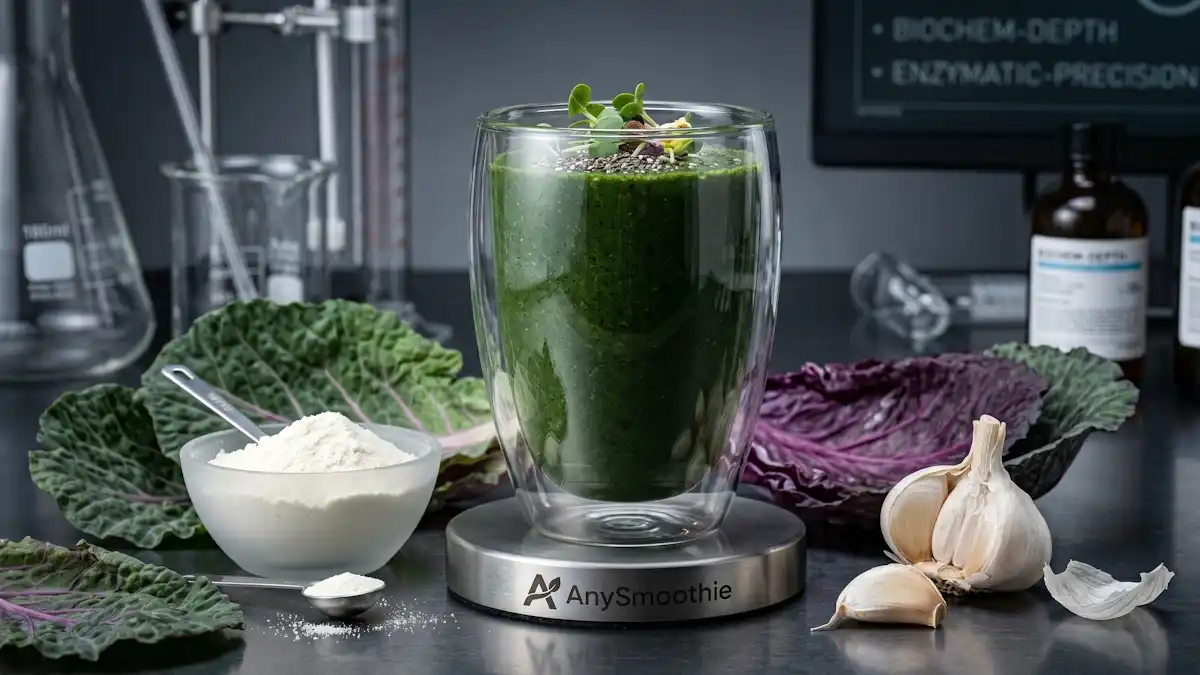
Phase II liver support is the body’s normal cleanup step, where enzymes help prepare compounds for easier removal. In plain food terms, that means the ingredients you choose can matter as much as the recipe itself.
Hepatic Phase II support smoothies make it easy to pack protein, fiber, antioxidants, and plant compounds into one glass. The goal is simple, steady nourishment that fits normal detox pathways and supports metabolic efficiency without turning breakfast into a project.
This guide focuses on ingredient choices, how the blends work, and three easy recipes you can repeat.
How Phase II liver support works in everyday nutrition
Phase II is the stage where the liver helps make certain compounds more water-friendly so the body can move them out more easily. That process uses enzymes, amino acids, and other nutrients from food.
For a research-backed look at how foods and nutrients can shape detoxification pathways, see this review of metabolic detoxification. The main idea is simple: the body handles waste better when the raw materials are there.
What Phase II means in simple terms
Think of it as a tag-and-release step. The liver uses nutrients to attach small helper groups to compounds, which changes how they move through the body.
That matters because food quality can support the normal flow of this work. When the system gets a steady supply of amino acids, plant compounds, and minerals, the process feels less strained.
Why smoothies can fit this support pattern
Smoothies make it easy to combine several useful ingredients without a lot of prep. You can blend greens, protein, fruit, and fats in one pass, then drink them when time is tight.
They also help with nutrient partitioning, since protein and fiber slow the rush of sugar. That can support steadier energy and a calmer morning. A well-built smoothie can also fit mitochondrial priming, because balanced fuel is easier to use than a quick sugar spike.
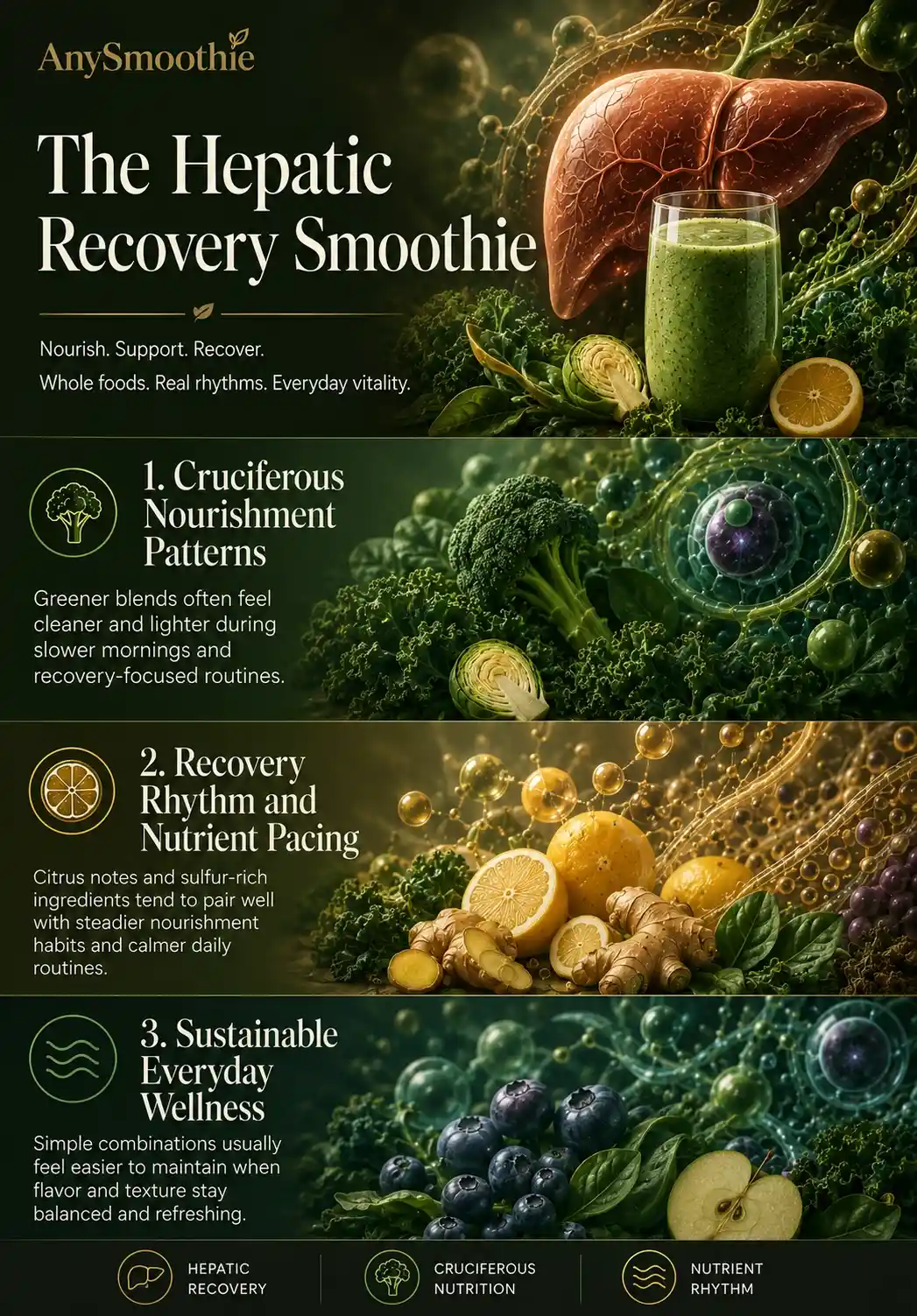
The best smoothie ingredients for hepatic Phase II support
The strongest blends are built around a few core groups. Each one brings a different piece of the puzzle, so the glass feels complete instead of random.
A broad Phase 2 detox overview can help connect the dots between nutrients and enzymes, but the practical version is easy to remember. Greens bring plant compounds, protein supplies amino acids, fiber helps normal elimination, and fats improve satiety and texture.
Leafy greens, crucifers, and herbs that bring plant compounds
Spinach, kale, arugula, parsley, and cilantro are easy ways to add chlorophyll, folate, and a mix of plant compounds. They blend well and keep sugar low.
Small amounts of cruciferous ingredients, like broccoli sprouts, can add sulfur-containing compounds without taking over the flavor. Use a little at first. Their taste is strong, but their role in the blend is useful.
Protein, fiber, and fats that help the blend work better
Protein gives the body a steady amino acid pool, which fits the way the liver uses nutrients for normal processing. That is one reason a smoothie works better when it acts like a meal.
Fiber matters too, because it supports regular elimination and helps the drink feel more stable. Healthy fats, such as avocado or chia, add creaminess and help you stay full longer. Together, they make the smoothie easier to use as part of a real routine.
Fruit choices that add taste without overloading sugar
Berries are usually the best starting point because they bring color, flavor, and a lower sugar load than many other fruits. Citrus, kiwi, and green apple also work well.
These choices keep the taste bright without turning the blend into a dessert. If you want the smoothie to support metabolic efficiency, keep the fruit balanced and let the greens and protein do some of the work.
Fresh ingredients and daily recovery
This table keeps the most useful ingredients in one place.
| Functional Ingredient | Nutrition Context | Wellness Role | Ingredient Source | Everyday Use |
|---|---|---|---|---|
| Leafy greens | Low-sugar base with minerals | Supports plant compound intake | Spinach, kale, arugula | 1 to 2 handfuls per blend |
| Citrus | Bright, acidic flavor | Adds freshness and vitamin C | Lemon, lime, orange | Juice or zest in small amounts |
| Berries | Lower-sugar fruit choice | Brings polyphenols and color | Blueberries, raspberries, blackberries | 1/2 to 1 cup |
| Flax or chia | Fiber-rich seed option | Helps texture and satiety | Ground flax, chia seeds | 1 to 2 tablespoons |
| Avocado | Creamy fat source | Supports fullness and smoother texture | Ripe avocado | 1/4 to 1/2 fruit |
| Ginger | Pungent root with sharp taste | Adds freshness and balance | Fresh ginger | Small knob, grated |
| Protein powder or Greek yogurt | Protein-rich anchor | Supports amino acid availability | Whey, pea, or plain Greek yogurt | One serving |
These ingredients work best when you mix them with a clear purpose. A simple base beats a crowded blender full of random extras.
For a protein-focused look at why amino acids matter in Phase II support, this Phase 2 liver detox guide keeps the point practical.
3 Hepatic phase II support smoothie recipes
How to build a smoothie that actually feels good
A smoothie that sits well beats a louder recipe every time.
Start with balance, not just superfoods. If you use greens or tart fruit, pair them with protein and a little fat so the drink feels steady and complete.
Texture matters too. Use frozen fruit for thickness, add liquid slowly, and blend long enough to avoid grit. If a smoothie keeps getting skipped, simplify it.
Timing matters as well. Morning and midafternoon are the easiest windows for most people, but the best smoothie is the one you’ll actually drink consistently.
Conclusion
Hepatic Phase II support smoothies work best when they stay simple, balanced, and easy to repeat. Protein, fiber, greens, citrus, berries, and a little healthy fat do more for the blend than a long list of extras.
The table gives you a quick ingredient map, and the three recipes offer a clean starting point for breakfast, recovery, or a steady afternoon lift. Keep the flavors readable, keep the sugar in check, and let consistency do the heavy lifting.
🛡️ Safety Notes & Contraindications: Hepatic Phase II smoothies
Phase I/II Imbalance: excessive induction of Phase I (e.g., through high caffeine or certain pollutants) without adequate Phase II substrate support can lead to the accumulation of highly reactive intermediate metabolites, causing localized liver tissue damage.
Acetaminophen (Paracetamol) interaction: the liver uses glutathione and sulfation to clear acetaminophen; consuming these smoothies may support the pathway, but they are not a treatment for overdose, which requires immediate medical intervention (N-acetylcysteine).
Cruciferous and Thyroid: large amounts of raw sulfur-rich greens (cabbage, kale) contain goitrogens that may interfere with iodine uptake; individuals with hypothyroidism should rotate greens or lightly steam them before blending.
Selenium toxicity: including Brazil nuts for glutathione support requires precision; consuming more than 1–2 nuts daily can lead to selenium toxicity (selenosis), causing hair loss and nail brittleness.
Protein load: individuals with advanced liver cirrhosis or urea cycle disorders must monitor protein intake (whey, collagen) carefully, as the liver’s ability to process nitrogenous waste may be compromised.
FAQ
How does Phase II conjugation prevent the accumulation of “Reactive Intermediates”?
Phase I detoxification often transforms non-polar compounds into reactive intermediates that can be more unstable than the original molecule. Biochemically, Phase II pathways append a polar group—such as glucuronic acid or sulfate—to these intermediates to make them water-soluble. Supporting this physiological system through substrate-rich smoothies ensures that the biochemical mechanics of “packaging” stay in sync with Phase I, preventing metabolic drag and systemic oxidative stress.
Why is “Substrate Availability” the primary bottleneck in Phase II clearance?
Unlike Phase I, which primarily relies on oxygen and specific enzymes, Phase II pathways are “substrate-limited,” meaning they require a constant supply of donor molecules like glycine, taurine, and sulfur. Biochemically, if these precursors are depleted, conjugation capacity slows down. Supporting these physiological systems with amino acid and sulfur donors optimizes the natural pathways of clearance, ensuring that the biochemical mechanics of the liver remain proactive rather than reactive.
How does Glucuronidation facilitate the systemic “Hormonal Exit”?
Glucuronidation is a major Phase II pathway that attaches glucuronic acid to steroid hormones and bilirubin to facilitate their excretion. Biochemically, this process reduces the biological activity of the hormone and ensures it can be moved through bile or urine. Supporting this physiological system with fiber and magnesium-rich ingredients optimizes the natural pathways of hormonal balance, ensuring that the biochemical mechanics of elimination are efficient and steady.
What is the role of “Sulfur Donors” in the Sulfation pathway?
Sulfation is critical for the clearance of neurotransmitter byproducts and environmental phenols. Biochemically, this pathway requires inorganic sulfate, which is derived from sulfur-containing amino acids like cysteine and methionine. Supporting this physiological system with cruciferous greens and whey protein optimizes the natural pathways of sulfate availability. This ensures that the biochemical mechanics of the “sulfation shuttle” have the necessary fuel to handle the metabolic load.
Why is “Kinetic Balance” between Phase I and Phase II essential for detox?
Metabolic detoxification is a two-step sequence that must operate at a balanced pace. Biochemically, if Phase I is over-stimulated (e.g., by excessive caffeine or pollutants) while Phase II lacks the substrates to complete the job, reactive intermediates can accumulate. Supporting these physiological systems through balanced nutrition facilitates “kinetic synergy”. This optimization ensures that the biochemical mechanics of Phase II can effectively neutralize the outputs of Phase I, supporting overall tissue integrity.

Medical Disclaimer: AnySmoothie content is for educational purposes only and is not a substitute for professional medical advice. Consult a healthcare provider for personalized guidance. See our full Disclaimer & Terms of Use. AI Transparency: AnySmoothie may use AI to support content development. All content undergoes human editorial review for accuracy, clarity, and editorial quality. See our full AI Transparency.