
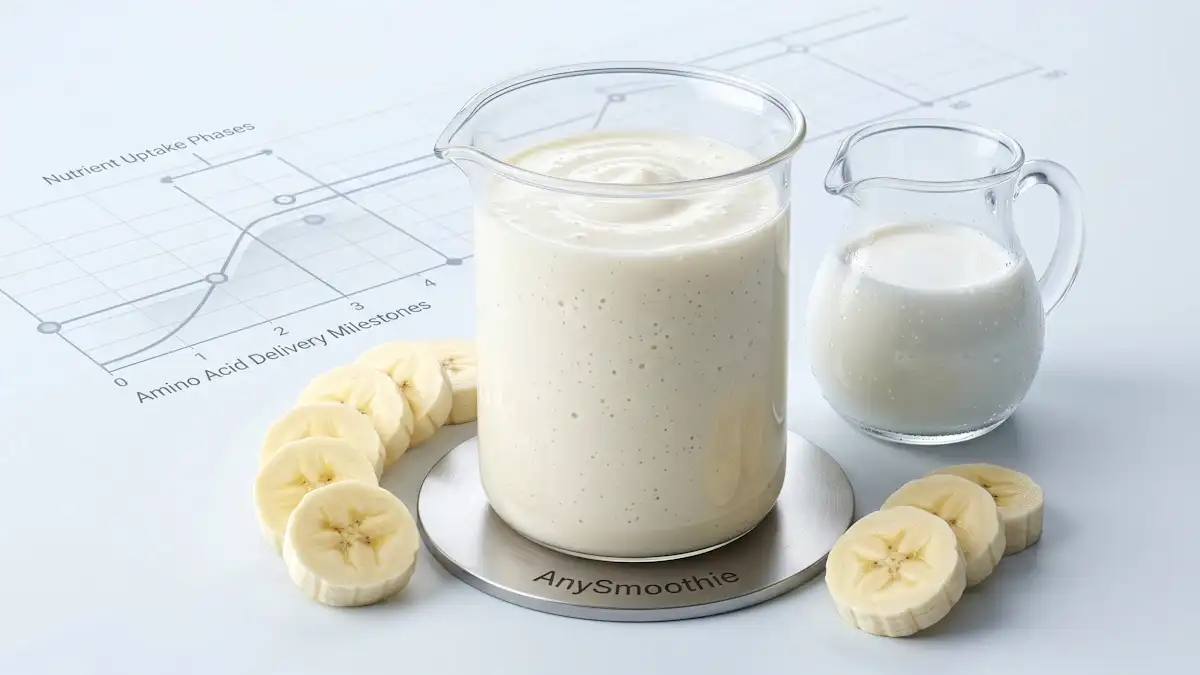
A banana, milk, and yogurt smoothie can do more than taste good. It can give you a fast amino acid rise, then a slower release that keeps supply going.
That mix matters when you want a smoothie for amino acid delivery, because milk and yogurt bring different protein speeds, while banana adds quick carbs. Used well, the drink supports normal recovery, energy use, and cleaner nutrient timing without feeling heavy.
The Dual-Phase Protein Matrix: Casein and Whey Influx Kinetics
Milk and yogurt do not behave the same once they hit your stomach. Milk brings casein and whey, while yogurt adds concentrated dairy protein and a thicker texture. Put them together, and you get a front-end pulse plus a back-end tail.
Gastric Coagulation Dynamics: How Milk Peptides Meter Amino Acid Release
Casein is the slow mover in this blend. In the stomach, it forms a softer gel, which slows gastric emptying and stretches peptide release over a longer window. That means amino acids enter the blood in a steadier way, instead of flooding in all at once.
That slower pattern matters because the body can use a steadier stream more efficiently. You get less of a spike and more of a useful curve, which is the whole point of a balanced amino acid delivery drink.
| Component | Physiological Mechanism | Serum Influx Velocity (Minutes to Peak) | Best Smoothie Pairing | Target Downstream Consequence |
|---|---|---|---|---|
| Whey Proteins (from Yogurt) | Rapid amino acid pulse that can support a leucine-driven mTORC1 signal | 20 to 60 | Banana plus milk for a quick first wave | Early protein availability |
| Micellar Caseins (from Milk) | Forms a micellar gel bed that slows gastric emptying and meters peptide release | 60 to 180 | Banana plus yogurt for a longer tail | Steadier plasma amino acids |
| Monosaccharides/Starches (from Banana) | Raises glucose, supports insulin release, and helps GLUT-4 move nutrients into tissue | 15 to 30 | Dairy proteins with a moderate fruit base | Better transport and easier fuel access |
Used together, milk and yogurt create a dual-phase absorption curve that is easier to use than a sharp spike. The early wave matters, and the long tail matters too.
Why Yogurt Adds a Faster Protein Pulse to the Blend
Yogurt, especially strained or Greek-style yogurt, gives you concentrated protein in a smaller volume. It also feels more substantial, so each sip carries more protein per mouthful than milk alone.
Fermentation changes the texture and the way the drink lands in your stomach. That can make the first amino acid rise feel quicker, while milk still adds the slower casein release behind it. If you want a more immediate protein signal, yogurt helps. If you want a longer tail, milk keeps the curve going. A useful milk protein digestion kinetics study shows that protein type and processing shape how fast amino acids appear in circulation. In a smoothie, that matters.
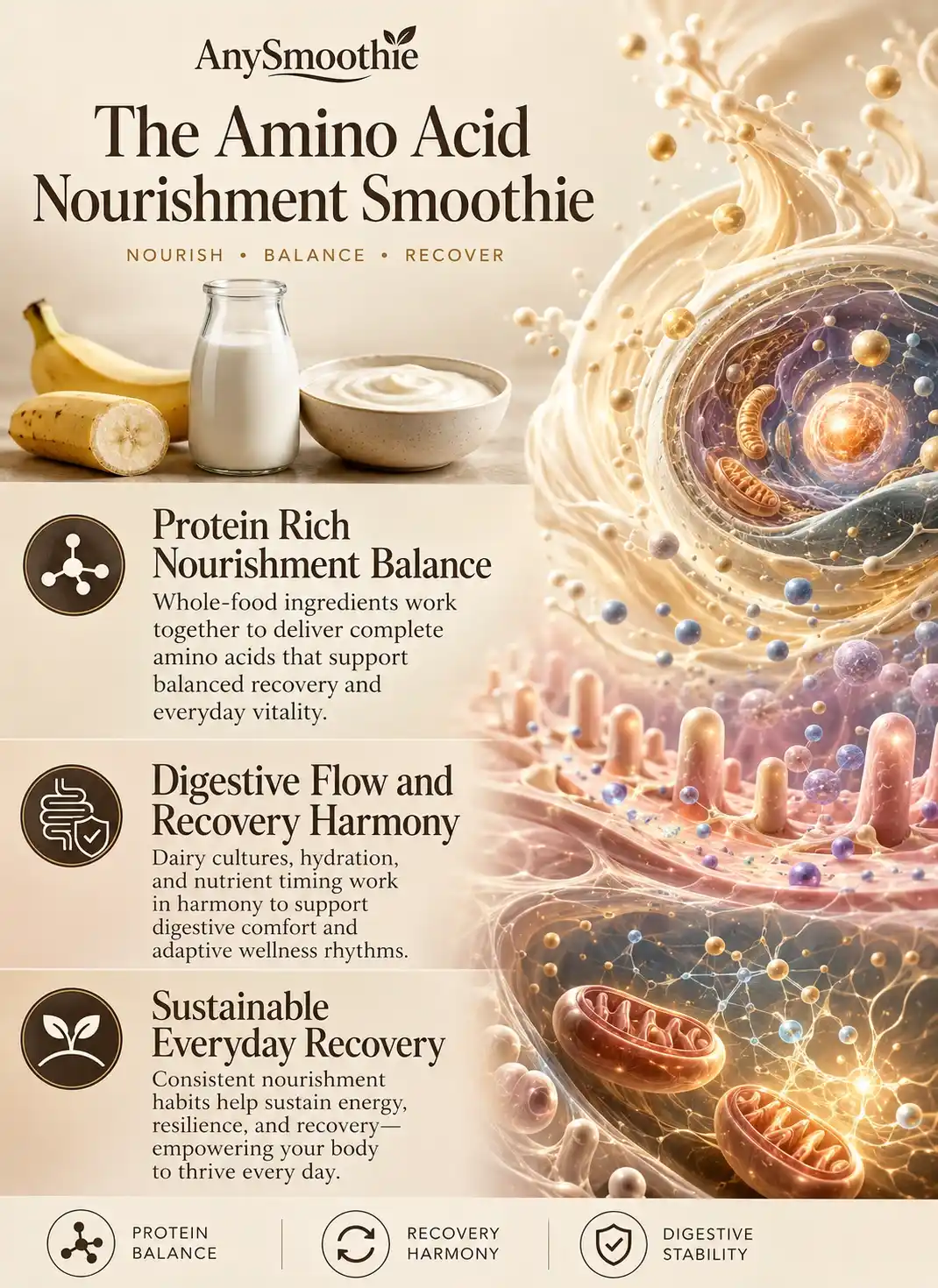
Carbohydrate-Driven Transmembrane Transport: The Role of Insulin Flux
Banana is not just there for sweetness. Its carbs help support insulin release, and insulin helps move nutrients into cells where they can be used. That matters after training, between meals, or any time you want a more efficient nutrient response.
A little banana also gives the shake easy fuel. That can help amino acids stay available for repair and synthesis instead of being used as quick energy. The result is a smoother, more practical recovery drink.
Saturation of LAT1 and SNAT Transporters: Maximizing Myocellular Influx
Amino acids do not move into tissue on their own. Transporters handle that work, and LAT1 and SNAT are part of that system. LAT1 handles large neutral amino acids, while SNAT helps move other neutral amino acids.
Insulin does not force the process. It helps set the stage. With enough carbohydrate, the body clears nutrients more cleanly, and the amino acids from the smoothie have a better shot at reaching muscle and other tissues.
That is why a banana works so well here. It gives the drink a real transport function, not just flavor. It also keeps the smoothie easy to drink, which matters more than people think.
Mitochondrial Priming: Fueling the Energetic Cost of Intestinal Peptide Cleavage
Digestion and transport cost energy. Your gut cells need ATP to break down peptides and move nutrients across membranes. Banana carbs help cover part of that energy demand.
That small fuel bump matters because it supports the work happening inside the gut and muscle cells at the same time. In plain terms, the smoothie has enough glucose on hand to keep the protein side focused on delivery.
3 “Amino-Delivery” Protein-Lean Smoothie Recipes
These are simple starting points, not rigid formulas. The best version depends on whether you want faster delivery, steadier release, or a lighter breakfast.
If you want the smoothie to act more like a recovery drink, keep the fruit base moderate and the protein clear. If you want it to last longer, keep the texture a little thicker.
Easy Ways to Upgrade the Smoothie Without Losing the Main Effect
Small add-ins can help, but too many extras can slow the drink down. Oats add more staying power. Chia adds texture and a little fat. Cinnamon improves flavor without pushing the sugar load higher. A small scoop of plain protein powder can help if the base looks too light.
The main mistake is turning a focused smoothie into a dessert. Too much nut butter, too much sweetener, or too much ice cream makes the drink heavy and slows digestion. Too little protein has the opposite problem, because then the banana dominates and the amino acid signal gets weak.
Keep the blend simple if your goal is amino acid delivery. The best version is usually the one your stomach handles easily, because consistency beats complexity.
Conclusion
A banana, milk, and yogurt smoothie works because it gives you two speeds at once. The dairy proteins create a slow tail, and the banana supports a faster opening.
That is why this drink can support efficient amino acid delivery, normal recovery, and easy daily nutrition when the balance is right. It is simple, practical, and easy to adjust for your schedule.
The goal is a clean curve, not a crowded cup.
🛡️ Safety Notes & Dietary Interactions
Transmembrane Transporter Saturation: Introducing a high-density influx of diverse dietary amino acids engages the competitive LAT1 and SNAT transport networks within cell membranes. To prevent an intracellular transport bottleneck and support optimal structural utilization, consume these protein-dense matrices at a steady, consistent pace rather than drinking the entire formulation rapidly.
Gastric Gelation and Motility Dynamics: The unique biochemical structure of milk caseins triggers a natural coagulation process upon contact with gastric acids, forming a temporary micellar gel bed. While this mechanism is excellent for a metered peptide release, individuals operating on a highly sensitive gastrointestinal baseline should utilize room-temperature dairy components to support comfortable gastric emptying.
Insulin-Mediated Electrolyte Flux: The synchronized delivery of banana monosaccharides alongside rapidly absorbable whey proteins drives a controlled insulin response that assists the movement of both amino acids and potassium ions into the myocytes. If you track your daily metabolic parameters or manage specific glucose metrics, maintaining a standardized fruit-to-dairy ratio ensures your biological data remains flat and aligned.
Proteolytic Ecosystem Balance: Flooding the lower intestinal tract with excessive, unabsorbed dairy peptides can alter the metabolic activity of your resident gut microbiota. To optimize net protein utilization and maintain a balanced local environment, scale the total protein volume of your smoothie to match your actual daily physical load rather than over-saturating the matrix.
FAQ
Why is combining milk and yogurt structurally superior to using a single protein source?
The advantage comes down to creating a highly efficient property known as a dual-phase absorption curve. Yogurt, particularly strained or Greek-style configurations, provides a rapid, upfront pulse of highly bioavailable whey proteins and pre-digested peptides that enter systemic circulation quickly. Conversely, fluid milk introduces intact, high-molecular-weight micellar caseins that behave very differently under gastric conditions. Combining the two ensures your body receives an immediate, powerful wave of essential amino acids followed by a sustained, multi-hour release tail.
How do casein micelles physically alter digestion speed inside the stomach?
Casein possesses a unique, highly specialized molecular structure that reacts immediately to the highly acidic environment of the stomach. Upon arrival, these floating casein micelles undergo a process called gastric coagulation, weaving together to form a soft, physical protein gel or “clot.” This natural biochemical reaction forces your stomach’s digestive enzymes to work from the outside inward, chipping away at the matrix at a measured pace. This structural delay stretches peptide release over an extended window, preventing an sudden amino acid overload in the liver.
What is the specific role of banana carbohydrates in moving amino acids into your muscles?
A banana is included for a much deeper physiological reason than adding texture; it acts as the primary driver for carbohydrate-driven transmembrane transport. The natural sugars and starches in the banana trigger a modest, synchronized release of insulin from the pancreas. Insulin serves as the chemical command that activates your cellular transport infrastructure, signaling GLUT-4 gates to open and sensitizing the LAT1 and SNAT amino acid transporters. This insulin vector forces your muscle cell membranes to aggressively pull the circulating nutrients out of the blood and lock them inside the tissue for structural repair.
Why does the digestion and absorption of a protein smoothie require substantial cellular energy?
Breaking down complex dietary proteins into individual, absorbable building blocks is not a passive process; it demands a high amount of localized cellular energy. Your enterocytes (the cells lining your small intestinal wall) must continuously generate intracellular ATP to fuel the active transport pumps that drag cleaved peptides across the intestinal membrane and into portal circulation. The clean, easily accessible glucose provided by a moderate banana portion covers this immediate metabolic cost on the spot, ensuring your gut cells have the energy required to complete digestion without creating a systemic energy drain.
When is the absolute most efficient window to time a dual-phase amino acid smoothie?
To achieve the highest return on nutrient partitioning and muscle protein turnover, the ideal window is within 45 to 60 minutes following an intense physical session, or as a structured morning breakfast baseline. Post-workout, your skeletal muscle tissues are highly receptive and undergo rapid metabolic shifts that favor glycogen replenishment and amino acid uptake. Flooding your enterocytes with a liquid, low-friction matrix of fast-and-slow proteins alongside clean carbohydrates at this exact moment directs the incoming fuel straight toward recovery and tissue retention, preventing afternoon fatigue and hunger spikes.

Medical Disclaimer: AnySmoothie content is for educational purposes only and is not a substitute for professional medical advice. Consult a healthcare provider for personalized guidance. See our full Disclaimer & Terms of Use. AI Transparency: AnySmoothie may use AI to support content development. All content undergoes human editorial review for accuracy, clarity, and editorial quality. See our full AI Transparency.