
Riboflavin smoothies for FAD-dependent enzymes can provide vitamin B2 through everyday foods such as milk, yogurt, and fortified soy drinks. Your body uses this vitamin to make FMN and FAD, two coenzymes involved in normal cell processes.
A smoothie supports normal nutrient intake, but it can’t guarantee increased enzyme activity or treat a health condition. Start with how riboflavin works, then choose a recipe that fits your tastes and dietary needs.
How Riboflavin Helps FAD-Dependent Enzymes Do Their Work
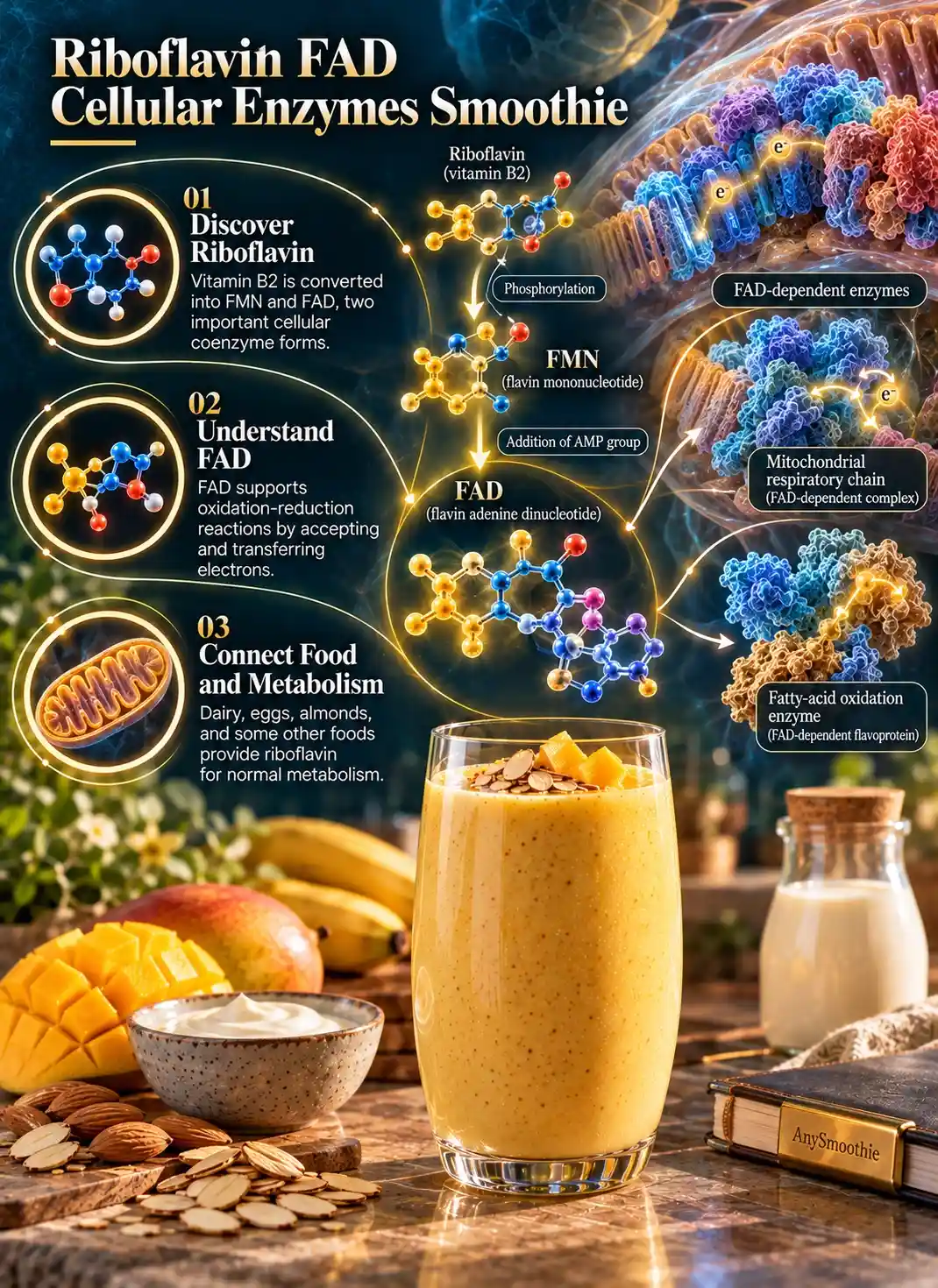
Riboflavin is another name for vitamin B2. After you consume it, your body converts it into flavin mononucleotide (FMN) and flavin adenine dinucleotide (FAD). These coenzymes help many enzymes complete chemical reactions.
FMN and FAD participate in electron-transfer reactions, also called oxidation-reduction reactions. During these reactions, molecules gain or lose electrons. This chemistry helps cells process nutrients and produce usable energy.
A related topic involving cellular adaptation to oxygen availability is smoothies for hif-1α and oxygen adaptation.
For example, FAD-dependent enzymes help break down fatty acids. Another FAD-containing enzyme, succinate dehydrogenase, participates in both the citric acid cycle and the mitochondrial electron transport chain. FMN also contributes to electron transport.
The regulation of cellular energy use is also explored in ampk pathway smoothies for metabolic health.
These processes depend on more than one nutrient. Enzyme availability, other coenzymes, and the body’s current energy needs also matter. Riboflavin provides a necessary building block within this larger system.
Mitochondrial maintenance and the removal of damaged mitochondria are related topics covered in smoothies for healthy mitophagy.
Getting enough riboflavin supports these normal pathways. However, consuming extra riboflavin doesn’t automatically increase their activity, especially when your intake already meets your needs.
For a broader perspective on how cells adapt to different energy demands, see smoothies for metabolic flexibility during fasting.
A smoothie supplies nutrients that cells can use to make coenzymes; drinking one doesn’t directly switch FAD-dependent enzymes on.
3 Riboflavin Smoothies for FAD-Dependent Enzymes
Each recipe makes one serving. Dairy foods or a riboflavin-fortified plant drink provide the main B2 source. Nutrition estimates are approximate and vary with brands, fruit size, and product formulation.
Blueberry Greek Yogurt Smoothie
Ingredients
- 1 cup low-fat milk
- 3/4 cup plain Greek yogurt, 2% milk fat
- 1/2 cup blueberries
- 1/2 medium banana
- 1 tablespoon almond butter
Instructions
Blend all ingredients until smooth. Add a small splash of milk if needed to thin it, then serve.
Estimated Nutrition (per serving)
- Calories: ~425 kcal
- Protein: ~26 g
- Carbohydrates: ~49 g
- Fat: ~13 g
- Fiber: ~6 g
- Sugars: ~33 g
Strawberry Kefir Oat Smoothie
Ingredients
- 1 cup plain low-fat kefir
- 1 cup strawberries, fresh or frozen
- 1/3 cup rolled oats
- 1 tablespoon chia seeds
- 1 teaspoon honey
Instructions
Blend the kefir, strawberries, oats, chia seeds, and honey until smooth. Let the drink sit for a few minutes if you prefer a thicker texture.
Estimated Nutrition (per serving)
- Calories: ~340 kcal
- Protein: ~15 g
- Carbohydrates: ~53 g
- Fat: ~8 g
- Fiber: ~10 g
- Sugars: ~25 g
Mango Spinach Soy Smoothie
Ingredients
- 1 cup unsweetened fortified soy milk
- 1 cup fresh spinach
- 1 cup mango chunks, fresh or frozen
- 1/2 cup silken tofu
- 1 tablespoon tahini
Instructions
Blend all ingredients until creamy. Add cold water a little at a time to reach your preferred consistency.
Estimated Nutrition (per serving)
- Calories: ~365 kcal
- Protein: ~18 g
- Carbohydrates: ~42 g
- Fat: ~16 g
- Fiber: ~7 g
- Sugars: ~29 g
Compare These Smoothies by Flavor, Texture, and Nutrition
Choose according to what you enjoy drinking and how the smoothie fits your day. The blueberry option has the highest estimated protein, while the strawberry version supplies the most fiber. The mango option offers a dairy-free choice when made with suitable products.
| Smoothie | Riboflavin source type | Nutrition emphasis | Texture and flavor | Best use |
|---|---|---|---|---|
| Blueberry Greek Yogurt | Dairy foods | Higher protein | Thick, creamy, mildly tart | Substantial snack |
| Strawberry Kefir Oat | Cultured dairy | Higher fiber | Tangy, berry-forward, thickens over time | Breakfast pairing |
| Mango Spinach Soy | Fortified plant foods | Plant-based protein | Creamy, tropical, lightly nutty | Dairy-free routine |
These differences don’t establish which drink provides the most riboflavin. That comparison would require product-specific nutrient information, especially for the fortified soy drink. Choose by preference rather than an assumed effect on enzymes.
Choose a Smoothie That Fits Your Diet and Daily Routine
Milk and yogurt are familiar riboflavin sources, as described in the NIH riboflavin fact sheet. Some fortified plant drinks also contribute B2, but their nutrient profiles vary. A drink fortified with calcium or vitamin D doesn’t necessarily contain added riboflavin.
For the dairy-free recipe, choose fortified soy milk that lists riboflavin or vitamin B2. The ingredient list can identify added riboflavin, although the Nutrition Facts panel doesn’t always declare this vitamin. Also, replacing soy milk with another plant drink can change protein and calorie totals.
Match portions to your appetite and the rest of your meal. These recipes are substantial drinks, so their energy content matters when deciding between a snack and a breakfast component. Meanwhile, the fruit, oats, seeds, and nut or seed butter contribute nutrients beyond B2.
Smoothies can add variety without replacing whole meals or other food groups. Keep eating a varied diet that fits your preferences and dietary restrictions.
If you need personalized guidance, a registered dietitian or another qualified health professional can help assess your nutrition needs, particularly when you exclude several food groups.
Conclusion: A Convenient Food Choice, With Realistic Expectations
Riboflavin provides the starting material for FMN and FAD, which help enzymes carry out normal cellular reactions. These smoothies offer convenient ways to include foods that supply B2.
Choose the blueberry, strawberry, or mango recipe according to your tastes and dietary needs. Keep the goal at adequate nutrition: a smoothie is a food choice, not a promise of changing enzyme activity.
🛡️ Safety Notes & Dietary Interactions
- Dairy Tolerance: Milk, Greek yogurt, and kefir provide riboflavin but also contain dairy proteins and, depending on the product, lactose. Choose alternatives if dairy causes symptoms or is unsuitable.
- Fortified Soy: The mango smoothie depends on fortified soy milk for its intended riboflavin contribution. Check the label because replacing it with another plant drink can substantially change the vitamin and protein content.
- Allergen Awareness: Almond butter, tahini, soy, dairy, chia, and other ingredients introduce different allergy considerations. Check labels carefully, particularly when using packaged milk, yogurt, or seed products.
- Portion Size: These are relatively substantial smoothies, ranging from roughly 340–425 calories. Match the serving to your appetite and overall meal pattern rather than treating additional riboflavin as a reason to increase portions.
FAQs
Which smoothie has the highest estimated protein?
The Blueberry Greek Yogurt Smoothie provides the most estimated protein, at about 26 grams per serving. The Mango Spinach Soy Smoothie provides approximately 18 grams, while the Strawberry Kefir Oat Smoothie provides about 15 grams. These values vary with the specific milk, yogurt, kefir, and fortified soy products used.
Does drinking more riboflavin automatically increase FAD-dependent enzyme activity?
No. Riboflavin is converted into FMN and FAD, which participate in normal enzyme reactions, but consuming additional riboflavin does not automatically increase enzyme activity when nutritional needs are already being met. Enzyme availability, other nutrients, and cellular energy demands also influence these processes.
Why does the mango smoothie need fortified soy milk?
The recipe identifies fortified soy milk as its main plant-based riboflavin source. Because fortification varies between products, the label should specifically indicate riboflavin or vitamin B2. Switching to another plant drink may change the smoothie’s riboflavin, protein, calorie, and overall nutrient profile.
Which smoothie is best if I want a dairy-free option?
The Mango Spinach Soy Smoothie is the dairy-free choice, provided the soy milk and tofu are suitable for you. It combines fortified soy milk with tofu and tahini for a creamy, plant-based drink. The other two recipes rely on milk or cultured dairy products.
Is the strawberry smoothie higher in riboflavin because it contains kefir?
Not necessarily. Kefir is a riboflavin-containing dairy food, but the article does not provide enough product-specific data to rank the three recipes by riboflavin content. The exact amount depends on the brands and formulations used, so kefir alone does not establish that this smoothie supplies the most B2.

Medical Disclaimer: AnySmoothie content is for educational purposes only and is not a substitute for professional medical advice. Consult a healthcare provider for personalized guidance. See our full Disclaimer & Terms of Use. AI Transparency: AnySmoothie may use AI to support content development. All content undergoes human editorial review for accuracy, clarity, and editorial quality. See our full AI Transparency.