
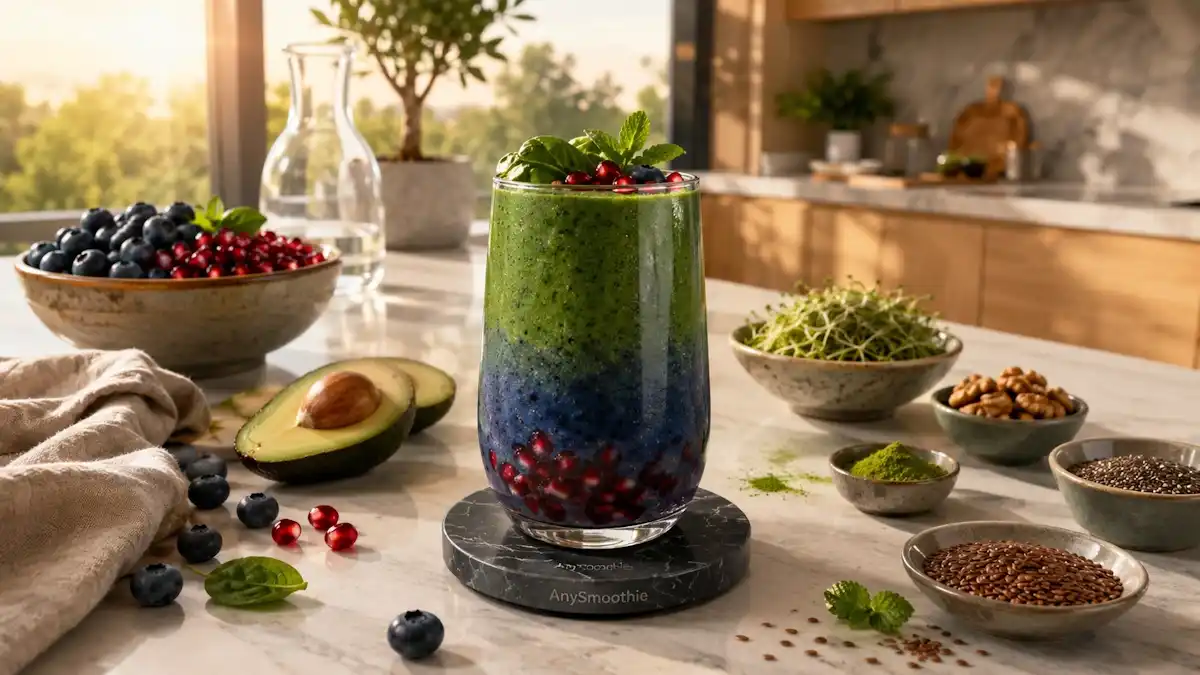
Mitophagy is the body’s natural process for identifying and recycling worn-out mitochondria. Since mitochondria help produce cellular energy, this quality-control system supports normal cell function over time.
A smoothie can’t trigger a guaranteed cellular reset. However, it can combine whole foods that support antioxidant defenses, metabolic health, fiber intake, and normal energy pathways. The goal is a balanced drink, not a supplement-like formula or extreme cleanse.
These three recipes use ordinary grocery-store ingredients, modest fruit portions, protein, and little added sugar. First, it helps to understand how nutrition fits into the biology.
How Nutrition Supports Healthy Mitophagy and Mitochondrial Function
Mitochondria constantly adapt to energy needs. When one becomes damaged or inefficient, cells can repair it or remove it through quality-control pathways that include mitophagy. This process is connected with autophagy, the body’s broader system for breaking down and recycling cellular components.
Oxidative stress can affect mitochondrial structures, while normal antioxidant systems help manage reactive molecules. Foods rich in polyphenols, vitamin C, carotenoids, fiber, and healthy fats can support the body’s overall redox and metabolic systems. Berries, leafy greens, cocoa, green tea, ginger, seeds, and legumes fit that pattern.
Research on specific compounds and mitophagy often comes from cell or animal studies. A review in PubMed’s mitophagy research collection describes the cellular mechanisms without showing that one food or smoothie directly increases mitophagy in humans. That distinction matters. Food supports physiology, but it isn’t a guaranteed treatment.
The Best Smoothie Ingredients for Cellular and Metabolic Support
Colorful produce supplies polyphenols and vitamin C. Leafy greens add folate, carotenoids, and volume without much sugar. Chia and ground flax contribute fiber plus plant-based fats, while plain Greek yogurt or kefir adds protein.
Fiber slows digestion and can make a drink more satisfying. Protein also helps a smoothie function as part of a meal instead of a quick source of fruit sugar. Unsweetened milk, soy milk, or water usually works better than juice when you want to keep added sugar low.
Whole foods aren’t equivalent to concentrated extracts or supplements. A supplement may provide a dose that doesn’t occur in an ordinary serving of food, and some products can interact with medications.
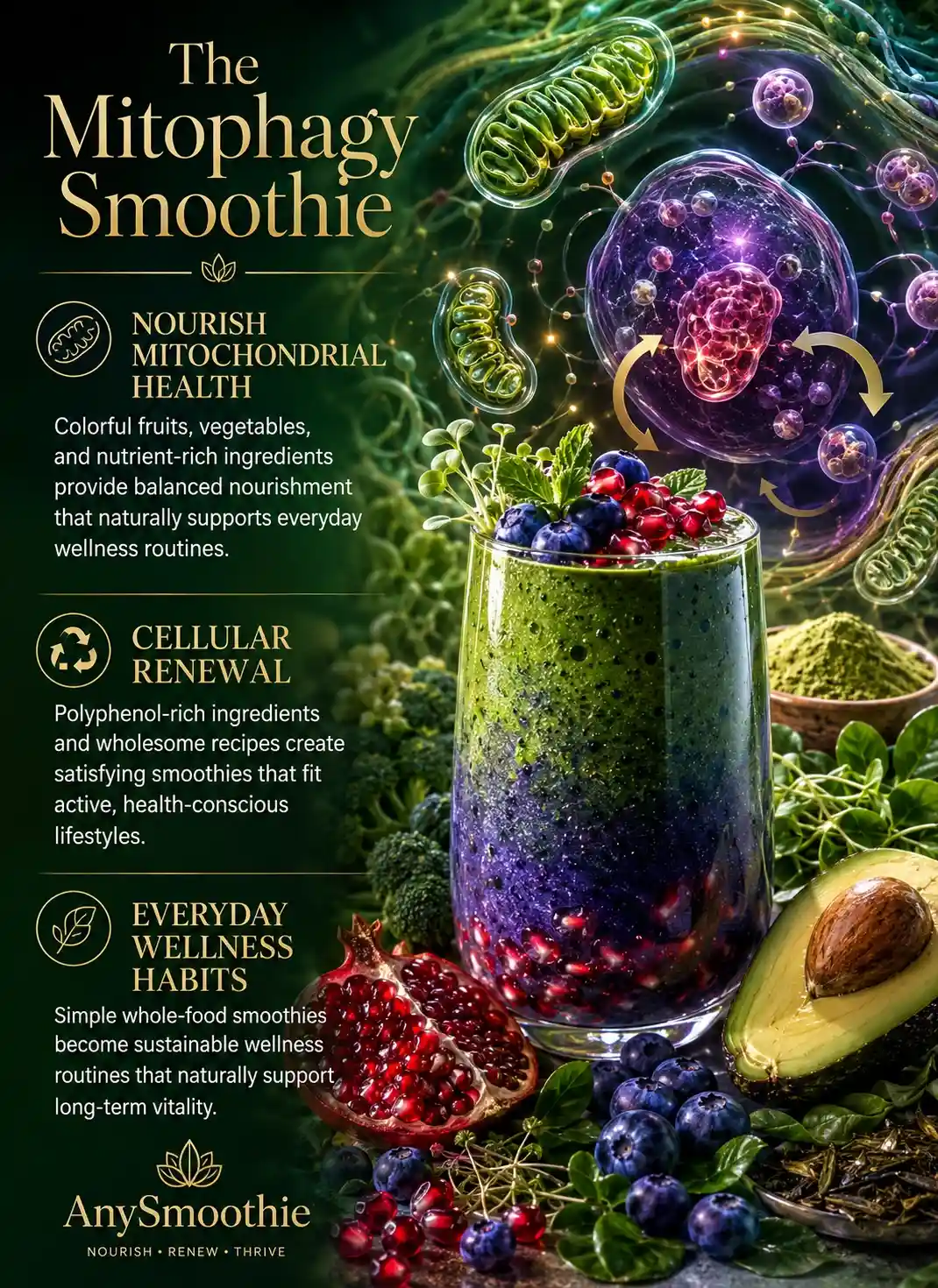
Why Exercise, Sleep, and Meal Timing Still Matter
A smoothie is one small part of a lifestyle that supports mitochondrial function. Regular movement gives muscles a reason to produce and manage energy, while adequate sleep supports normal metabolic regulation. Hydration also helps maintain circulation, digestion, and exercise performance.
You don’t need extreme fasting to support mitophagy. Consistent eating patterns may be easier to maintain than long fasting periods, especially when your schedule or health needs vary. People with diabetes, those who are pregnant, anyone with a history of disordered eating, and people taking blood-sugar medication should ask a qualified health professional before making major dietary changes.
3 Smoothies for Healthy Mitophagy
These recipes support a varied, whole-food eating pattern and normal physiological pathways. Human studies haven’t proven that any of them directly increase mitophagy.
How to Use These Smoothies Wisely
For most people, a 10- to 16-ounce smoothie works better than a large blended meal. Add Greek yogurt, kefir, silken tofu, or unsweetened soy milk when you need more protein. Use water or unsweetened tea instead of juice, and drink the smoothie with a meal when liquid calories alone don’t keep you full.
Blending breaks food into a drink, but chewing whole produce may feel more satisfying for some people. You can also serve a smaller smoothie beside eggs, oatmeal, or whole-grain toast instead of replacing every meal.
| Smoothie | Main ingredients | Key nutrition focus | Best time to enjoy | What to watch for |
|---|---|---|---|---|
| Berry cacao | Berries, cocoa, yogurt, chia | Polyphenols, protein, fiber | Breakfast or snack | Added sugar in cocoa or yogurt |
| Green ginger | Greens, cucumber, kiwi, ginger | Produce variety, fluids, low added sugar | With breakfast | Caffeine if using green tea |
| Cherry flax | Cherries, flax, kefir, cinnamon | Fiber, protein, plant-based fats | After movement or with lunch | Juice and sweetened dairy |
Common Mistakes That Make a Healthy Smoothie Less Balanced
Too much fruit can turn a nutritious drink into a high-sugar serving. Fruit juice, sweetened protein powders, large spoonfuls of nut butter, and flavored yogurt can add calories without improving the overall balance.
More antioxidants aren’t always better. Concentrated supplements may provide amounts that differ from food and may interact with medications. Read labels, keep portions sensible, and speak with a qualified health professional if you have a medical condition or take prescription medication.
Conclusion: A Practical Way to Use Mitophagy-Supportive Smoothies
The best smoothie for healthy mitophagy is a balanced whole-food drink with colorful produce, fiber, protein, and little added sugar. No recipe can guarantee a specific cellular result, because mitophagy is a natural process shaped by many signals inside the body.
Build the habit around regular movement, adequate sleep, hydration, and a varied diet. The NIH MedlinePlus guide to dietary fiber also supports choosing fiber-rich foods as part of everyday nutrition.
Try one recipe, adjust the ingredients to your needs, and treat the smoothie as one useful part of your eating pattern rather than a shortcut to cellular change.

Medical Disclaimer: AnySmoothie content is for educational purposes only and is not a substitute for professional medical advice. Consult a healthcare provider for personalized guidance. See our full Disclaimer & Terms of Use. AI Transparency: AnySmoothie may use AI to support content development. All content undergoes human editorial review for accuracy, clarity, and editorial quality. See our full AI Transparency.