
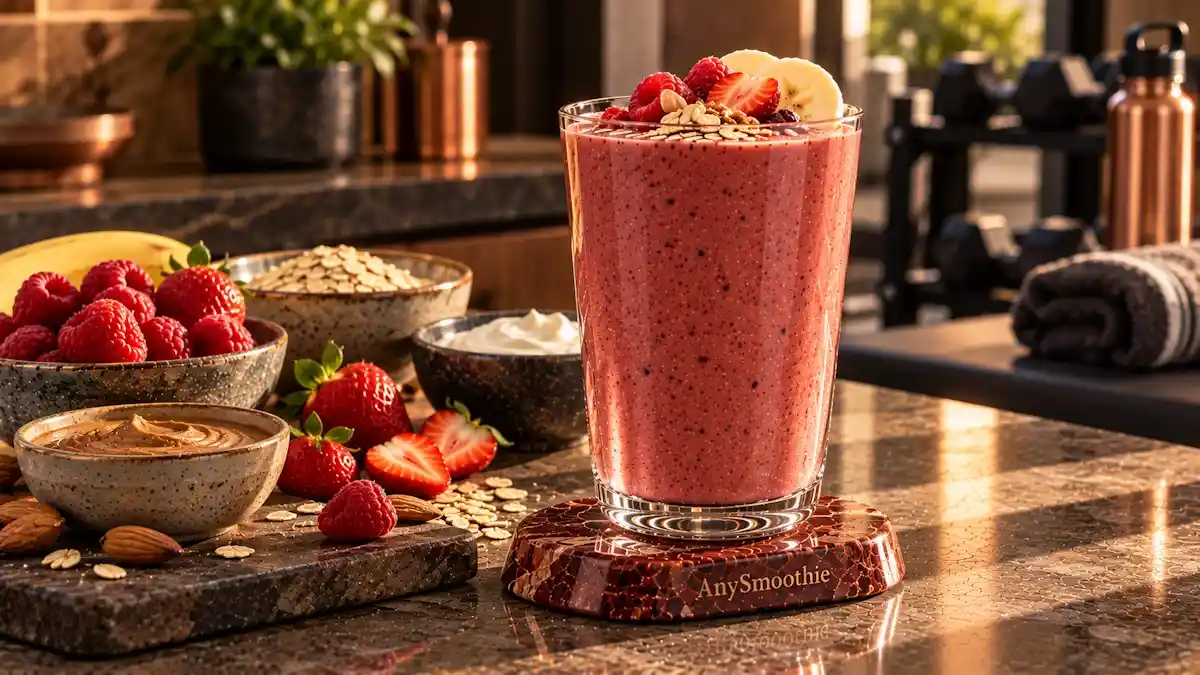
Can a smoothie make beta-alanine work better? A smoothie is a convenient way to take it, but no special recipe creates its muscle-buffering effect.
That effect depends on consistent use over time, as your muscles build carnosine. Fruit, yogurt, and oats contribute nutrition and flavor, while the supplement has a separate biochemical role.
Start with that distinction, then choose one of three simple recipes that fits your routine and dietary needs.
What Beta-Alanine Does for Muscle Buffering
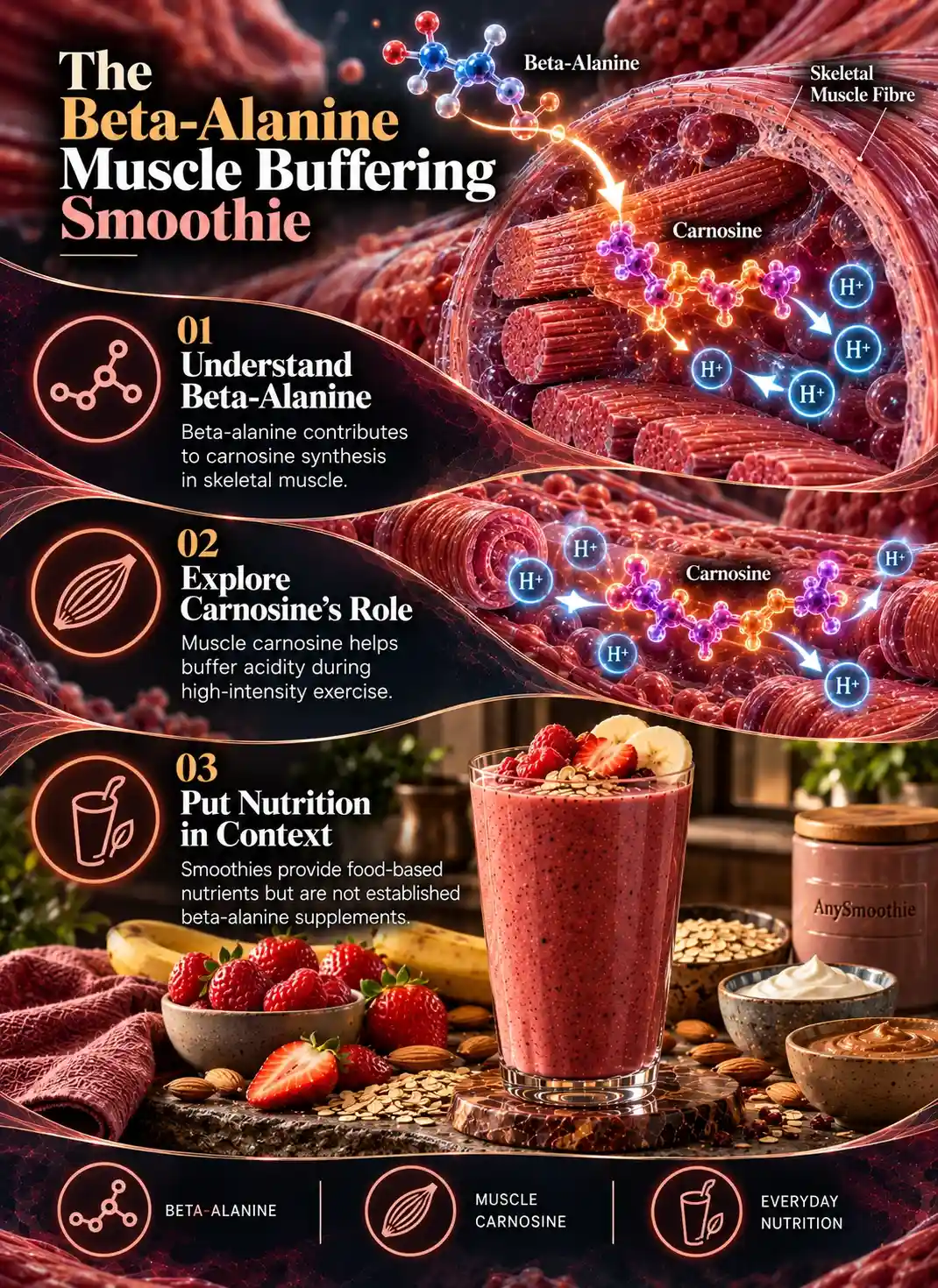
Your muscles combine beta-alanine with the amino acid histidine to make carnosine. As the International Society of Sports Nutrition explains, increasing beta-alanine availability can raise muscle carnosine levels, supporting the body’s natural buffering pathway. For another discussion of carnosine in a different cellular context, see carnosine smoothies for cellular antiglycation. The two topics involve the same compound but address different proposed physiological roles.
How Carnosine Helps Manage Acidity
During hard exercise, muscle chemistry can shift toward greater acidity as hydrogen ions accumulate. Carnosine binds some of those ions, which helps manage changes in muscle pH.
This buffering system matters during intense efforts, such as hard cycling intervals. However, buffering is only one part of exercise physiology. Training, recovery, and fuel availability also influence what you can sustain. For a related but distinct topic, see smoothies for lactate metabolism and exercise recovery. Lactate metabolism and carnosine buffering are different processes, even though both are relevant to exercise physiology.
Smoothie ingredients don’t create this buffering effect. Their role is to provide food and a practical way to consume the supplement.
Why Consistent Use Matters More Than Workout Timing
Muscle carnosine builds over weeks of regular beta-alanine intake. A single pre-workout smoothie shouldn’t be treated as an immediate performance fix, and beta-alanine doesn’t provide an instant energy boost.
Because this process takes time, the exact minute you drink your smoothie matters less than your overall routine. Follow your product’s directions rather than assuming every powder has the same serving instructions. A qualified sports dietitian can help you decide whether supplementation fits your training and how to account for other products you use.
3 Smoothies for Beta-Alanine and Muscle Buffering
These beta-alanine smoothies offer different flavors and textures, so you can choose one you’ll enjoy regularly. Each recipe makes one smoothie, although thickness varies with your ingredients and blender.
The nutrition estimates below cover the food ingredients only and exclude beta-alanine powder. Values are approximate and assume plain nonfat Greek yogurt and 2% dairy milk where specified. Substitutions may change the results.
Berry-yogurt smoothie
Ingredients
- 1 cup frozen mixed berries
- 3/4 cup plain Greek yogurt
- 1/2 cup milk
- One serving of beta-alanine, according to the product label
Steps
Blend the milk and yogurt first, then add the berries and blend until smooth. Add more liquid if needed.
Add beta-alanine according to the product’s serving directions. Blend briefly again to distribute it through the smoothie.
Estimated Nutrition per Serving
- Calories: ~230 kcal
- Protein: ~22 g
- Carbohydrates: ~30 g
- Fat: ~4 g
- Fiber: ~5 g
- Sugars: ~21 g
The mixed berries give this smoothie a refreshing, slightly tart flavor, balanced by the creamy Greek yogurt. If the texture feels too thick, a small splash of milk makes it easier to blend and sip.
Banana-oat smoothie
Ingredients
- 1 banana
- 1/4 cup rolled oats
- 1 cup milk
- 1 tablespoon peanut butter
- One serving of beta-alanine, according to the product label
Steps
Blend the oats with the milk, then add the banana and peanut butter. Blend until smooth.
Add beta-alanine according to the product’s serving directions and blend briefly again.
Estimated Nutrition per Serving
- Calories: ~390 kcal
- Protein: ~16 g
- Carbohydrates: ~54 g
- Fat: ~15 g
- Fiber: ~6 g
- Sugars: ~27 g
Tropical smoothie
Ingredients
- 1/2 cup frozen mango
- 1/2 cup frozen pineapple
- 3/4 cup unsweetened soy milk
- 1/4 cup plain yogurt
- One serving of beta-alanine, according to the product label
Steps
Blend the soy milk and yogurt first, then add the frozen fruit. Blend until smooth, adding a little liquid if needed.
Add beta-alanine according to the product’s serving directions and blend briefly again.
Estimated Nutrition per Serving
- Calories: ~190 kcal
- Protein: ~10 g
- Carbohydrates: ~28 g
- Fat: ~4 g
- Fiber: ~3 g
- Sugars: ~21 g
Compare these smoothie options to find the best fit for your taste preferences, desired texture, and training routine.
| Smoothie | Main Benefit | Texture | Flavor Profile | Best For |
|---|---|---|---|---|
| Berry-yogurt | Creamy, protein-rich option | Thick and creamy | Tart and fruity | A balanced, refreshing snack |
| Banana-oat | More substantial option | Smooth and filling | Mild, nutty, and sweet | A more satisfying training snack |
| Tropical | Light, fruit-forward option | Soft and spoonable | Bright and tropical | A refreshing option with tropical flavors |
These estimates describe the food ingredients, not the supplement. Actual values vary by product, fruit ripeness, and ingredient substitutions.
The main difference is taste and food composition, not a different muscle-buffering mechanism.
For a thinner drink, add a little more liquid. If your blender struggles with frozen fruit, let it soften briefly before blending. Use plain ingredients when you want more control over sweetness.
You can also swap milk or yogurt for a suitable alternative. However, protein content varies, so an oat-based drink won’t necessarily provide the same nutrition as dairy milk or soy milk.
How to Use Beta-Alanine Smoothies Consistently and Sensibly
Fit your smoothie into an existing meal or snack routine rather than chasing a precise pre-workout window. The Gatorade Sports Science Institute’s beta-alanine review describes how supplementation increases muscle carnosine over time. Regular intake matters more than drinking it immediately before exercise.
Make the Routine Comfortable
Follow the product label for serving size, frequency, and preparation. Don’t put an entire day’s suggested intake into one smoothie unless the directions call for that amount at once.
Some people experience temporary skin tingling, called paresthesia. Tingling isn’t proof of effectiveness, and it doesn’t measure how much carnosine your muscles have built. Smaller, divided servings, when consistent with label directions or professional advice, may help manage it. Don’t take extra powder to chase that sensation.
Also, count beta-alanine in pre-workout blends toward your total intake. If you have a medical condition, take medication, or are pregnant or breastfeeding, seek qualified guidance before use.
Coaches and athletes who are planning food around training may also find smoothies for personal trainers useful as a complementary resource for practical smoothie ideas.
Build a Balanced Smoothie Around Your Training
Fruit and oats supply carbohydrates, while Greek yogurt, dairy milk, and soy milk can contribute protein. These foods support general fueling and nutrition, but they don’t replace beta-alanine or directly raise muscle carnosine.
For a different aspect of exercise nutrition, see GLUT4 smoothies for muscle glucose uptake. GLUT4 is involved in glucose transport into cells, a separate process from the carnosine-based buffering pathway.
Choose the recipe around your appetite and the rest of your diet. For example, the banana-oat version includes peanut butter, so it may suit a more substantial snack.
Account for allergies and tolerances, too. The recipes include potential allergens such as milk, soy, and peanuts. Use substitutions that meet your needs, and choose certified gluten-free oats if you need to avoid gluten.
For an example of planning snacks around a demanding sport session, see smoothies for weekend rock climbing. The practical food-planning angle is complementary; it doesn’t imply that a smoothie or beta-alanine guarantees better performance.
A useful habit is to write down which recipe and portion you prefer, so you can repeat the food combination without guessing about the supplement serving. Keep supplement quantities tied to the product label rather than adjusting them by taste.
Conclusion: Keep the Recipe Simple and Expectations Realistic
Beta-alanine supports the body’s carnosine-based buffering pathway through regular intake over time. Smoothies offer a convenient way to take it alongside useful foods, but the recipe itself doesn’t create that biochemical effect.
Choose a flavor you enjoy and follow the product directions. Keep consistency at the center of your routine, with realistic expectations about what supplementation can contribute alongside training, recovery, and a balanced diet.
🛡️ Safety Notes & Dietary Interactions
- Supplement serving: Beta-alanine amounts vary by product; follow its serving directions and count beta-alanine from pre-workout blends toward your total rather than adding extra powder.
- Paresthesia: Temporary tingling can occur with beta-alanine and isn’t evidence of effectiveness. Don’t increase the dose to chase this sensation; divided servings may help when consistent with product directions.
- Allergen awareness: These recipes contain potential milk, soy, peanut, and gluten-related ingredients. Check labels carefully and use suitable substitutions, especially for certified gluten-free requirements or known allergies.
- Training context: A smoothie can provide carbohydrates and protein around exercise, but beta-alanine isn’t an instant energy source. Individual training, diet, medications, and health conditions may require professional guidance.
FAQs
Does beta-alanine need to be taken immediately before a workout?
No. The article emphasizes consistent use over time because beta-alanine raises muscle carnosine gradually. The exact minute you drink the smoothie is less important than maintaining an appropriate routine. A pre-workout smoothie can be convenient, but it shouldn’t be viewed as an immediate muscle-buffering solution.
Which of these smoothies is best for a more substantial training snack?
The banana-oat smoothie is the most substantial, providing approximately 390 calories, 16 grams of protein, 54 grams of carbohydrates, and 6 grams of fiber before adding beta-alanine. Peanut butter and oats make it more filling, so it may suit a larger snack better than the lighter fruit-based options.
Why does beta-alanine sometimes make the skin tingle?
Beta-alanine can cause temporary paresthesia, experienced as tingling or prickling sensations. This sensation isn’t a measure of muscle carnosine levels or proof that the supplement is working. The article notes that smaller divided servings may help manage tingling when consistent with the product’s directions or professional advice.
Can I use a dairy-free smoothie with beta-alanine?
Yes. The tropical recipe already uses soy milk, while yogurt and milk in the other recipes can be replaced with suitable alternatives. However, substitutions can change protein, carbohydrate, calorie, and allergen profiles. Choose products that fit your dietary needs rather than assuming every plant-based alternative provides equivalent nutrition.
Do the smoothie ingredients improve beta-alanine’s muscle-buffering effect?
The article does not establish that any particular fruit, oat, yogurt, or milk combination makes beta-alanine work better. These ingredients mainly provide food, flavor, carbohydrates, protein, and a convenient delivery vehicle. The muscle-buffering pathway depends on beta-alanine availability and consistent use over time, alongside training and recovery.

Medical Disclaimer: AnySmoothie content is for educational purposes only and is not a substitute for professional medical advice. Consult a healthcare provider for personalized guidance. See our full Disclaimer & Terms of Use. AI Transparency: AnySmoothie may use AI to support content development. All content undergoes human editorial review for accuracy, clarity, and editorial quality. See our full AI Transparency.