
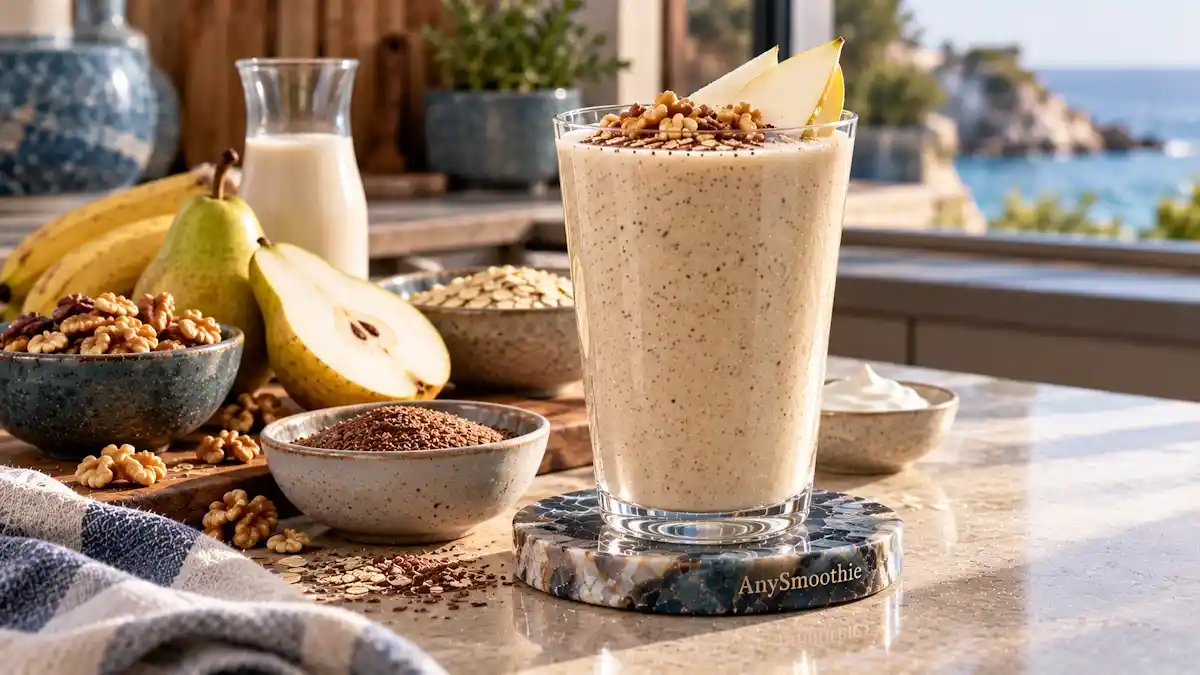
Most smoothie ingredients provide little or no EPA or DHA, so adding these omega-3 fats requires a suitable algae- or seafood-based ingredient. Fruit, greens, and seeds can round out your drink, but they don’t replace a direct source of these fats.
A measured serving of food-grade oil can fit into familiar smoothie combinations without much extra preparation. Start by understanding the label, then choose a source and recipe that suit your taste, dietary preferences, and usual serving size.
How smoothies can provide omega-3 EPA and DHA
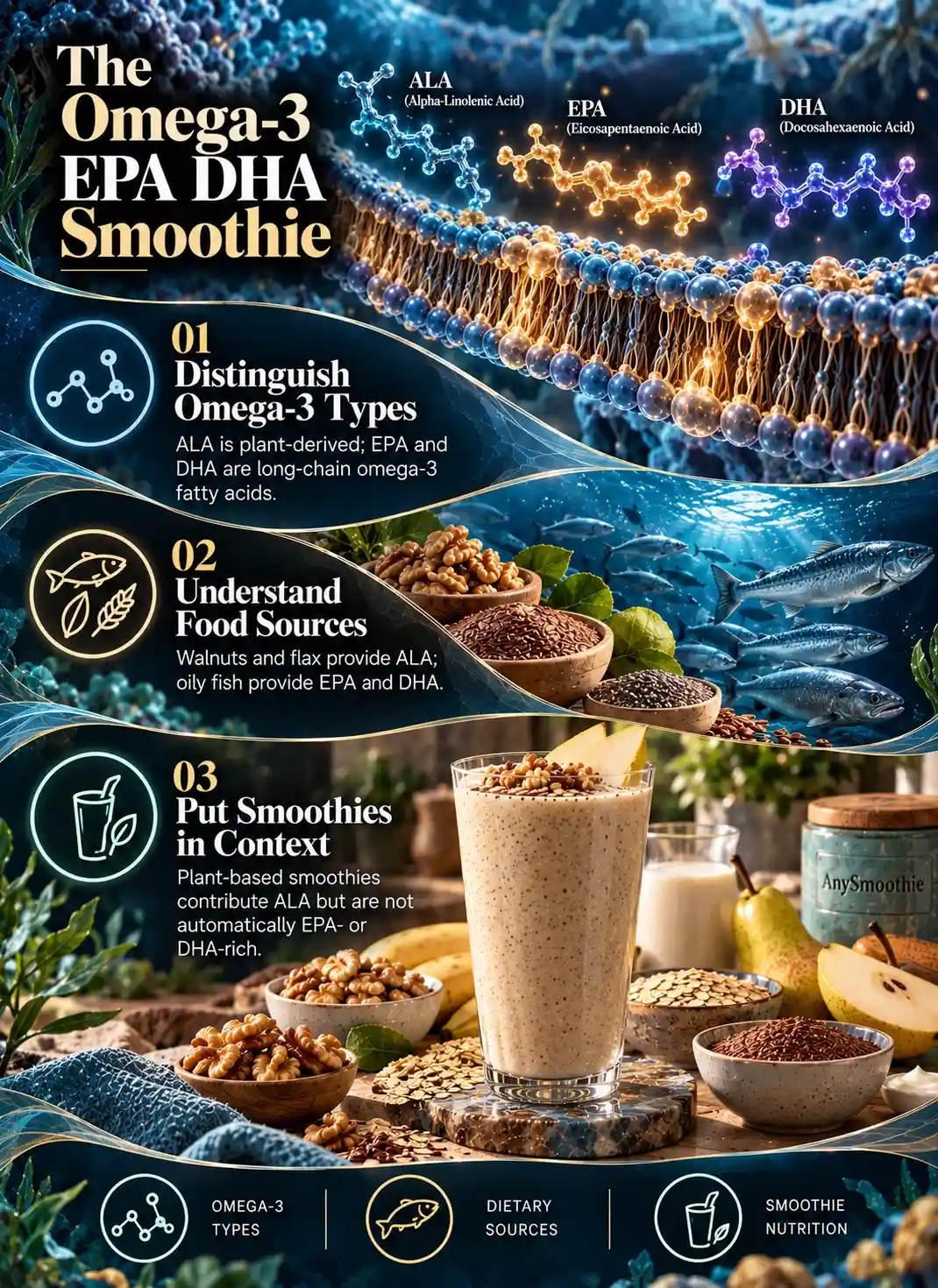
EPA (eicosapentaenoic acid) and DHA (docosahexaenoic acid) are long-chain omega-3 fats found mainly in seafood and algae. Certain oils made from these sources offer a practical way to add them to smoothies.
Chia seeds, flaxseed, and walnuts supply alpha-linolenic acid, or ALA. Your body can convert ALA into EPA and then DHA, but the NIH’s omega-3 fact sheet describes this conversion as limited. Therefore, a spoonful of flax doesn’t provide the same fats as a measured serving of algae oil.
EPA and DHA contribute to cell membranes, where fatty acids influence membrane properties and cellular signaling. DHA is a structural component of membranes in the brain and retina. For more on the structural role of lipids in nervous tissue, see smoothies for myelin lipid support.
EPA also supplies material for signaling molecules involved in normal physiological processes. For a related discussion of omega-3-derived lipid mediators, see smoothies for specialized pro-resolving mediators. These mediators are distinct from simply consuming EPA or DHA, and their production can’t be predicted from a smoothie recipe.
These biochemical roles explain their contribution to supporting physiological systems. They don’t mean a particular smoothie produces an immediate or predictable effect.
3 Smoothies for Omega-3 EPA and DHA Intake
Each recipe makes one large smoothie. Its EPA and DHA content depends on the product label and measured serving used, not the fruit or greens.
The nutrition estimates below describe each smoothie before adding algae or fish oil. Because product serving sizes and EPA/DHA concentrations vary, calculate the added oil separately using its label.
Berry smoothie with algae oil
Ingredients
- 1 cup frozen mixed berries
- 1/2 banana
- 1/2 cup plain low-fat yogurt or unsweetened soy yogurt
- 1/2 cup milk or soy milk
- One measured serving of food-grade algae oil, according to its product directions
Steps
Combine the berries, banana, yogurt, and milk or soy milk. Blend until smooth, then add the measured serving of food-grade algae oil according to its directions. Blend briefly again, adding liquid if needed.
Choose an oil that lists DHA and, if available, EPA. A neutral-tasting product may blend most easily with the berries and yogurt.
Estimated Nutrition per Serving
- Calories: ~260 kcal
- Protein: ~12 g
- Carbohydrates: ~46 g
- Fat: ~5 g
- Fiber: ~9 g
- Sugars: ~28 g
Mango and spinach smoothie with algae oil
Ingredients
- 1 cup frozen mango
- 1/2 cup loosely packed spinach
- 3/4 cup milk or unsweetened soy milk
- 1 tablespoon lime juice
- One measured serving of food-grade algae oil, according to its product directions
Steps
Blend the mango, spinach, milk or soy milk, and lime juice until smooth.
Next, add the measured serving of food-grade algae oil and blend briefly. Adding the oil last lets you assess the base’s thickness before adjusting the finished drink with more liquid.
Here, the algae oil supplies DHA and any labeled EPA. Mango and spinach provide the smoothie base.
Estimated Nutrition per Serving
- Calories: ~200 kcal
- Protein: ~8 g
- Carbohydrates: ~36 g
- Fat: ~4 g
- Fiber: ~3 g
- Sugars: ~32 g
The mango brings a natural sweetness to this smoothie, while a squeeze of lime keeps it fresh and bright. Add the algae oil at the end for an easy way to include DHA and any EPA listed on the product label.
Creamy avocado smoothie with fish oil
Ingredients
- 1/4 ripe avocado
- 3/4 cup frozen pineapple
- 1/2 peeled orange
- 3/4 cup cold water
- One measured serving of a fish-oil product specifically labeled for food use and suitable for mixing into a smoothie
Steps
Combine the avocado, pineapple, orange, and cold water. Blend until creamy.
Add the measured serving of the food-grade fish oil according to its directions, then blend briefly again.
The fish oil supplies EPA and DHA in the amounts listed on its label. Choose a flavor intended to work in drinks; a citrus-flavored oil may suit this combination.
Estimated Nutrition per Serving
- Calories: ~175 kcal
- Protein: ~2 g
- Carbohydrates: ~29 g
- Fat: ~8 g
- Fiber: ~7 g
- Sugars: ~19 g
The estimates for all three recipes exclude the added oil. The final calories and fat will increase according to the quantity of oil used. Milk and yogurt substitutions can also change the nutrition values.
Compare algae oil, fish oil, and plant-based omega-3s
For a vegetarian smoothie, algal oil is an omega-3 option, but a DHA-only formula won’t add EPA. Fish oil commonly supplies both, while seeds supply ALA.
These differences help you choose an ingredient for your preferences.
| Source | EPA and DHA provided | Who may prefer it | Flavor or blending notes | What to check on the label |
|---|---|---|---|---|
| Algae oil | DHA; some products also provide EPA | People avoiding fish or following vegetarian diets | Neutral or flavored liquids vary | EPA and DHA amounts, serving size, food-use directions |
| Fish oil | Usually both EPA and DHA; amounts vary | People comfortable with fish-derived ingredients | Fishy or flavored notes may affect taste | Individual EPA and DHA amounts, allergens, food-use directions |
| Chia or flax | ALA rather than meaningful EPA or DHA | People adding plant-based fats and fiber | Chia thickens; ground flax adds texture | Ingredients, serving size, storage directions |
No source is universally best. Choose according to the fats you want, dietary restrictions, and whether you enjoy the finished drink.
The total oil amount on a label isn’t necessarily the EPA-plus-DHA amount. Use the individual EPA and DHA entries when calculating your smoothie’s content.
ALA-rich foods can accompany either oil, but they aren’t a direct substitute for EPA and DHA. The body uses these fatty acids through different metabolic pathways. For a broader look at how dietary fats relate to lipid metabolism, see smoothies for fat oxidation support. Fat oxidation is a separate process and should not be confused with the amount of EPA or DHA delivered by a smoothie.
EPA and DHA are also involved in lipid-derived signaling processes. Dietary fats contribute to several types of cellular signaling, including the pathway discussed in smoothies for endocannabinoid system balance. These pathways are distinct, and including omega-3 oil doesn’t establish a particular signaling outcome.
Blend and store omega-3 smoothies with care
Use only products intended for consumption and suitable for mixing into food. Follow the serving directions rather than estimating a spoonful. If you divide a smoothie between two glasses, each glass contains only its share of the added oil.
Also, consider any other omega-3 supplements you use. Adding oil to a smoothie still contributes to your total supplemental intake.
Keep the preparation cold. Blend the fruit, vegetables, and liquid first, then mix in the oil briefly. Avoid heating the oil, and follow its storage instructions after opening.
Before using it, look at the expiration date and any directions for refrigeration. Discard oil that smells rancid or has changed unexpectedly in taste.
A practical tip: taste the fruit base before adding the oil. This helps you anticipate whether its flavor will stand out, while still allowing you to measure the final oil serving according to the product directions.
For the freshest flavor, blend just before drinking. Refrigerate leftovers promptly in a sealed container and use them within 24 hours, or sooner if the product directions require it.
If you’re pregnant, take medication, have a fish allergy, or have another personal health concern, discuss supplement use with a qualified health professional.
Conclusion: Choose the source before blending
The EPA and DHA in a smoothie come from a suitable seafood- or algae-based ingredient. Seeds and fruit contribute other nutrients, but they don’t supply equivalent amounts of these long-chain fats.
Choose a source that fits your preferences, read the individual EPA and DHA amounts, and follow the serving directions. Then try one recipe with a flavor combination you already enjoy.
🛡️ Safety Notes & Dietary Interactions
- Supplement dosage: Algae and fish oils can vary substantially in EPA/DHA concentration; use the measured serving on the label rather than assuming the total oil weight equals EPA plus DHA.
- Medication considerations: Because supplemental omega-3 oils can interact with individual medication or health circumstances, review regular use with a qualified professional, particularly when taking medications affecting bleeding.
- Allergy and dietary fit: Fish oil is unsuitable for people avoiding fish or with relevant fish allergies; algae oil may be preferable, while soy-based ingredients require checking labels for personal tolerances.
- Storage and freshness: Follow each oil’s refrigeration and storage instructions, check expiration dates, and discard products with rancid odors or unexpected flavor changes rather than trying to mask them in smoothies.
FAQs
Does flaxseed provide the same EPA and DHA as algae oil?
No. Flaxseed and chia provide ALA, an omega-3 fatty acid that the body can convert to EPA and DHA only to a limited extent. A measured algae-oil serving provides its labeled DHA and, depending on the product, EPA directly, making the two sources nutritionally distinct.
How should I calculate the EPA and DHA in these smoothies?
Use the individual EPA and DHA amounts listed on the algae- or fish-oil label, not the product’s total oil weight. The article’s nutrition estimates exclude the added oil, so calories and fat will also increase according to the measured serving used.
Is algae oil always better than fish oil for smoothies?
Neither is universally better. Algae oil can suit vegetarian diets and may provide DHA with or without EPA, depending on the formula. Fish oil commonly provides both. Flavor, dietary preferences, allergies, and the individual EPA/DHA amounts on the label should guide the choice.
Can I prepare an omega-3 smoothie ahead of time?
Yes, provided the ingredients and oil are handled according to their storage directions. The article recommends blending fresh when practical, refrigerating leftovers promptly in a sealed container, and using them within 24 hours or sooner if the product requires it.
Should I add extra omega-3 oil if I already take a supplement?
Not automatically. The oil added to a smoothie still contributes to your overall supplemental omega-3 intake. Check the EPA and DHA amounts in both products rather than comparing only total oil weight, and discuss combined use with a qualified health professional when medication or health concerns are involved.

Medical Disclaimer: AnySmoothie content is for educational purposes only and is not a substitute for professional medical advice. Consult a healthcare provider for personalized guidance. See our full Disclaimer & Terms of Use. AI Transparency: AnySmoothie may use AI to support content development. All content undergoes human editorial review for accuracy, clarity, and editorial quality. See our full AI Transparency.