
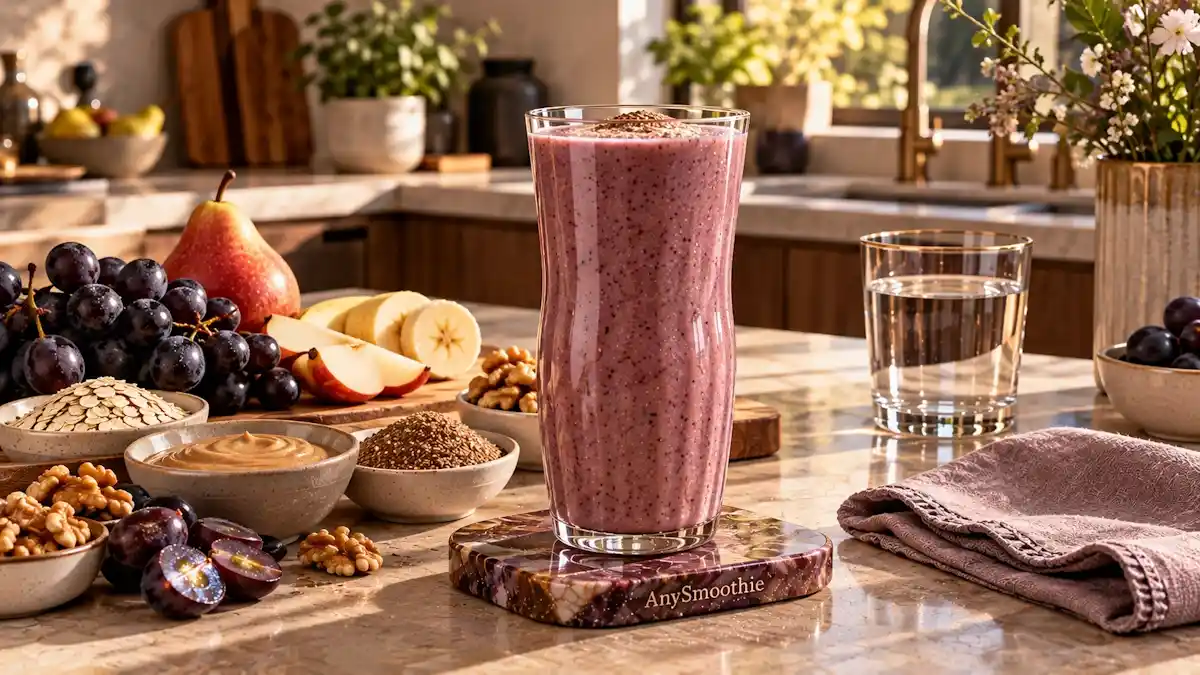
No smoothie is proven to directly balance the endocannabinoid system or treat conditions involving it. If you’re curious about smoothies for endocannabinoid system balance, focus on everyday nutrition rather than targeted effects.
A varied diet supplies nutrients your body uses in normal physiological processes. Smoothies can make fruit, vegetables, protein, and unsaturated fats easier to include, but no recipe guarantees a change in signaling.
Start with the science, then use simple ingredient choices to make the three recipes below.
What the endocannabinoid system does, and where food fits
The endocannabinoid system, or ECS, includes signaling molecules your body produces, receptors that receive those signals, and enzymes that make or break down the molecules. Two well-studied receptors are CB1 and CB2.
This network participates in normal processes, including appetite and communication between cells. A review of the ECS and eating behavior describes its relationship with food intake, but that relationship doesn’t establish a smoothie treatment.
For a related but distinct lipid-signaling pathway, see OEA smoothies for optimizing lipid signaling. OEA is a lipid-derived signaling molecule related to the endocannabinoid system, but it isn’t one of the two main endocannabinoids discussed above.
The nutrients that support normal signaling pathways
Fatty acids provide building materials for cell membranes and certain signaling molecules. Your body produces endocannabinoids, including anandamide and 2-arachidonoylglycerol (2-AG), from membrane lipids.
For more background on the role of membrane lipids, see lipid membrane smoothies for cellular health.
Meanwhile, fiber and varied plant foods belong within a balanced eating pattern. They contribute nutrients through different pathways, rather than producing one predictable ECS response. Including these foods supports everyday nutrition, without guaranteeing changes in endocannabinoid activity.
Why food isn’t a switch for the ECS
Signaling depends on where molecules form, which receptors they reach, and how enzymes process them. Eating an ingredient doesn’t control all those steps.
Also, “balance” isn’t something you can determine from a smoothie’s ingredient list. A nutrient’s biochemical role doesn’t prove that consuming more improves the system’s function.

3 Smoothies for Endocannabinoid System Balance
These are nutrient-rich smoothie ideas, not treatments or proven ways to alter endocannabinoid function. Each combines familiar foods you can adjust to your preferences
Berry, chia, and yogurt smoothie
Ingredients
- 1 cup mixed berries, fresh or frozen
- 1/2 cup plain nonfat Greek yogurt
- 1 tablespoon chia seeds
- 1/2 cup 2% milk
Steps
Blend the berries, Greek yogurt, chia seeds, and milk until smooth. Add more liquid if the blades struggle or the texture feels too thick.
Chia absorbs liquid, so the smoothie thickens as it sits. For a thinner drink, blend again with a splash of milk before serving.
Berries contribute fiber and plant compounds, including polyphenols. Chia supplies fiber and ALA, while the yogurt’s protein contribution depends on the product. These are ordinary nutritional contributions, not evidence of direct ECS regulation.
Estimated Nutrition per Serving
- Calories: ~260 kcal
- Protein: ~19 g
- Carbohydrates: ~32 g
- Fat: ~7 g
- Fiber: ~11 g
- Sugars: ~20 g
Green avocado and flax smoothie
Ingredients
- 1 cup spinach
- 1/4 medium avocado
- 1 small banana
- 1 teaspoon ground flaxseed
- 3/4 cup unsweetened soy milk
Steps
Combine the spinach, avocado, banana, ground flaxseed, and soy milk. Blend until smooth, adding liquid gradually to reach a pourable texture.
Start with that small flax portion. If you enjoy the texture and tolerate it comfortably, use a little more next time. Frozen banana makes the drink thicker without needing ice.
Avocado contributes unsaturated fat, while flax supplies ALA. Research on dietary fats and endocannabinoid signaling discusses fatty acids as precursors within signaling pathways. However, that biochemical connection doesn’t demonstrate that this recipe changes ECS function.
Estimated Nutrition per Serving
- Calories: ~250 kcal
- Protein: ~9 g
- Carbohydrates: ~31 g
- Fat: ~12 g
- Fiber: ~8 g
- Sugars: ~15 g
If you’re new to ground flaxseed, the modest amount here is a reasonable starting point. You can adjust the texture and portion next time according to your preferences, without assuming a larger serving will have a different effect on endocannabinoid signaling.
Cocoa, banana, and almond smoothie
Ingredients
- 1 small banana
- 1 tablespoon unsweetened cocoa powder
- 1 tablespoon almond butter
- 1/2 cup plain nonfat Greek yogurt
- 1/2 cup 2% milk
Steps
Blend the banana, cocoa powder, almond butter, Greek yogurt, and milk until smooth. Add more milk if needed.
Taste before adding a sweetener, because ripe banana already contributes sweetness. Cocoa brings some bitterness, so adjust its amount to your preference.
This recipe combines fruit, protein, and fat in a satisfying drink. Its nutritional value comes from those ingredients, without requiring claims about mood, sleep, pain, or other health outcomes.
Estimated Nutrition per Serving
- Calories: ~330 kcal
- Protein: ~21 g
- Carbohydrates: ~39 g
- Fat: ~13 g
- Fiber: ~6 g
- Sugars: ~22 g
The following table compares three smoothie options by ingredients, nutrient focus, flavor, and simple substitutions to suit different dietary needs.
| Smoothie | Main ingredients | Nutrient focus | Flavor | Simple swap |
|---|---|---|---|---|
| Berry, chia, and yogurt | Berries, yogurt, chia, milk | Fiber, protein, ALA | Tangy and fruity | Soy yogurt for dairy yogurt |
| Green avocado and flax | Spinach, avocado, flax, banana | Unsaturated fat, fiber, ALA | Mild and creamy | Frozen mango for banana |
| Cocoa, banana, and almond | Banana, cocoa, almond butter, yogurt | Protein, fiber, unsaturated fat | Chocolate and nutty | Sunflower seed butter for almond butter |
Choose by flavor and dietary needs; none has a demonstrated advantage for ECS “balance.”
How to build smoothies that support everyday nutrition
Use a simple formula: fruit or vegetables, a protein source, an unsaturated-fat source, and enough liquid to blend. Compared with fruit and juice alone, this combination provides a broader nutrient mix and can be more filling.
For practical ideas on blending plant-based fats with liquid, see vegan smoothie for optimizing plant-based lipid emulsions.
Choose whole-food fats, fiber, and protein
Chia seeds and ground flaxseed supply fiber and alpha-linolenic acid, or ALA, a plant omega-3 fat. Avocado and nut butter offer additional unsaturated-fat options.
For produce, try berries, spinach, or banana. Keep the edible pulp rather than straining your drink, since straining removes some fiber.
Plain dairy yogurt and unsweetened soy milk contribute protein. Almond and coconut beverages generally contain less, as USDA’s food composition data show. Soy yogurt varies by product, so its protein content deserves attention when choosing ingredients.
Keep portions and add-ins in perspective
Choose whole fruit and unsweetened liquids as your starting point. Then use modest amounts of seeds or nut butter, because these ingredients are calorie-dense.
Check labels for added sugars, protein content, and allergens. “Plant-based” doesn’t automatically mean unsweetened or protein-rich.
Personal tolerance matters, too. Start with smaller seed portions if a fiber-rich drink causes digestive discomfort. If you follow a prescribed diet or take medication with food restrictions, select ingredients that fit those requirements. A clinician or registered dietitian can help with individual safety concerns.
Conclusion: Keep smoothies part of a varied eating pattern
Smoothies can make fiber, protein, and unsaturated fats easier to enjoy. They can’t guarantee endocannabinoid system balance or replace medical care.
Choose ingredients you like and portions that suit your needs. The strongest reason to make these recipes is everyday nutrition, as one enjoyable part of a varied eating pattern.
🛡️ Safety Notes & Dietary Interactions
- ECS expectations: These recipes provide nutrients involved in ordinary lipid and cellular processes, but none is proven to balance endocannabinoid signaling or directly alter ECS function. Avoid treating ingredient combinations as targeted interventions.
- Fiber tolerance: Chia and flax increase fiber substantially, while avocado and berries add additional fiber. Start with modest seed portions if fiber-rich smoothies are unfamiliar or cause digestive discomfort.
- Allergen awareness: The recipes contain dairy, chia, flax, almond butter, and soy, with sunflower seed butter suggested as an alternative. Check labels and cross-contact warnings when making substitutions.
- Medication and dietary needs: Individual food restrictions can affect appropriate ingredient choices. If you follow a prescribed diet or have medication-related food restrictions, select ingredients accordingly and seek individualized professional guidance when needed.
FAQs
Can these smoothies actually balance the endocannabinoid system?
No. The article explicitly presents them as nutrient-rich foods rather than treatments or proven ways to alter endocannabinoid function. Fatty acids such as ALA participate in normal biological pathways, but that biochemical relationship does not demonstrate that eating a particular smoothie produces a predictable ECS response.
Why are chia and flax included in these recipes?
Chia and ground flax provide fiber and alpha-linolenic acid (ALA), a plant omega-3 fatty acid. The article includes them as whole-food sources of these nutrients, not as ingredients with a demonstrated ECS-balancing effect. Because both can increase fiber intake, starting with the modest portions listed may be more comfortable for people unfamiliar with them.
Which smoothie provides the most protein?
The berry, chia, and yogurt smoothie has the highest estimated protein content at approximately 19 grams per serving. The green avocado and flax smoothie provides about 9 grams. The exact contribution depends on the products used, particularly when replacing dairy yogurt or milk with plant-based alternatives whose protein content can vary considerably.
Can I use sunflower seed butter instead of almond butter?
Yes, the cocoa, banana, and almond smoothie can use sunflower seed butter as a suggested alternative when appropriate. However, the substitution doesn’t automatically eliminate every allergen concern. Check the product’s ingredient list and cross-contact information, particularly if the smoothie is being prepared for someone with a significant food allergy.
Does eating more healthy fat improve ECS signaling?
The article does not establish that consuming more dietary fat improves ECS function. Avocado, chia, flax, and nut or seed butter provide different unsaturated fats, including ALA, that participate in normal nutrition. Their biochemical roles are relevant to physiology, but increasing their intake does not provide a predictable or guaranteed change in endocannabinoid signaling.

Medical Disclaimer: AnySmoothie content is for educational purposes only and is not a substitute for professional medical advice. Consult a healthcare provider for personalized guidance. See our full Disclaimer & Terms of Use. AI Transparency: AnySmoothie may use AI to support content development. All content undergoes human editorial review for accuracy, clarity, and editorial quality. See our full AI Transparency.