
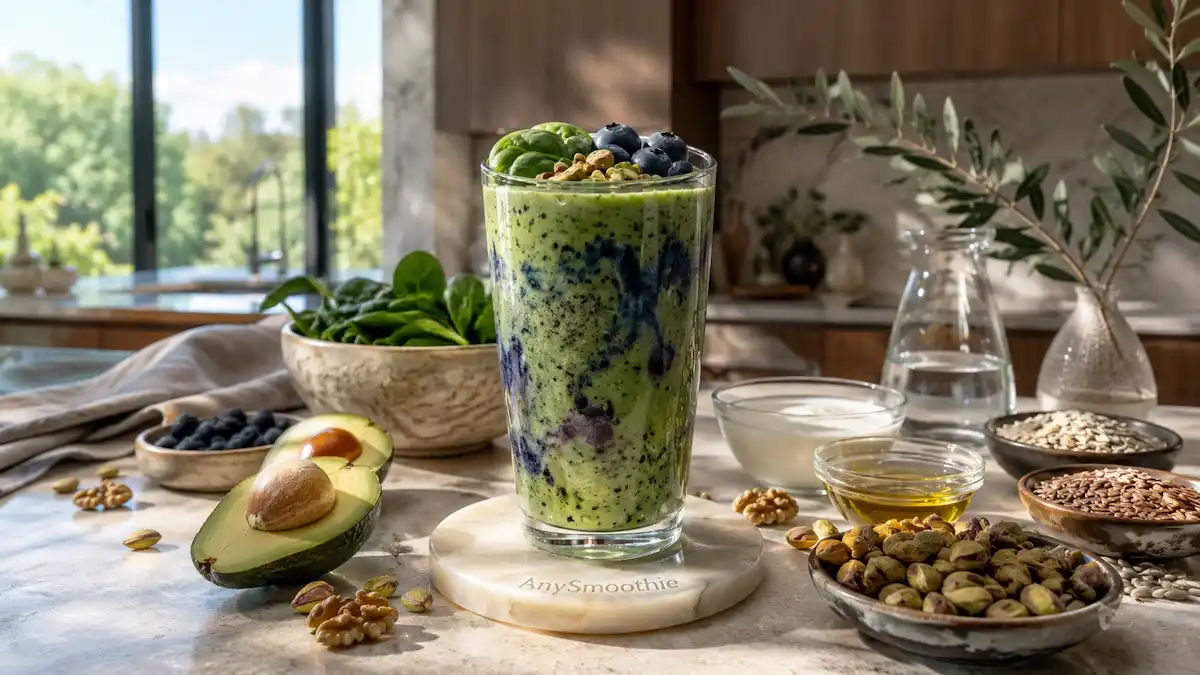
Your cell membranes are built from lipids, so the fats in your smoothie matter more than most people think. A well-made lipid membrane smoothie gives you fats, antioxidants, and minerals that support membrane structure and normal cell communication.
The goal is simple, feed the blend with ingredients that help cells stay flexible and well supplied, without turning the glass into a sugar bomb. That means choosing the right fats, then pairing them with plant compounds that keep the whole mix balanced.
What a lipid membrane smoothie is, and how it supports cells
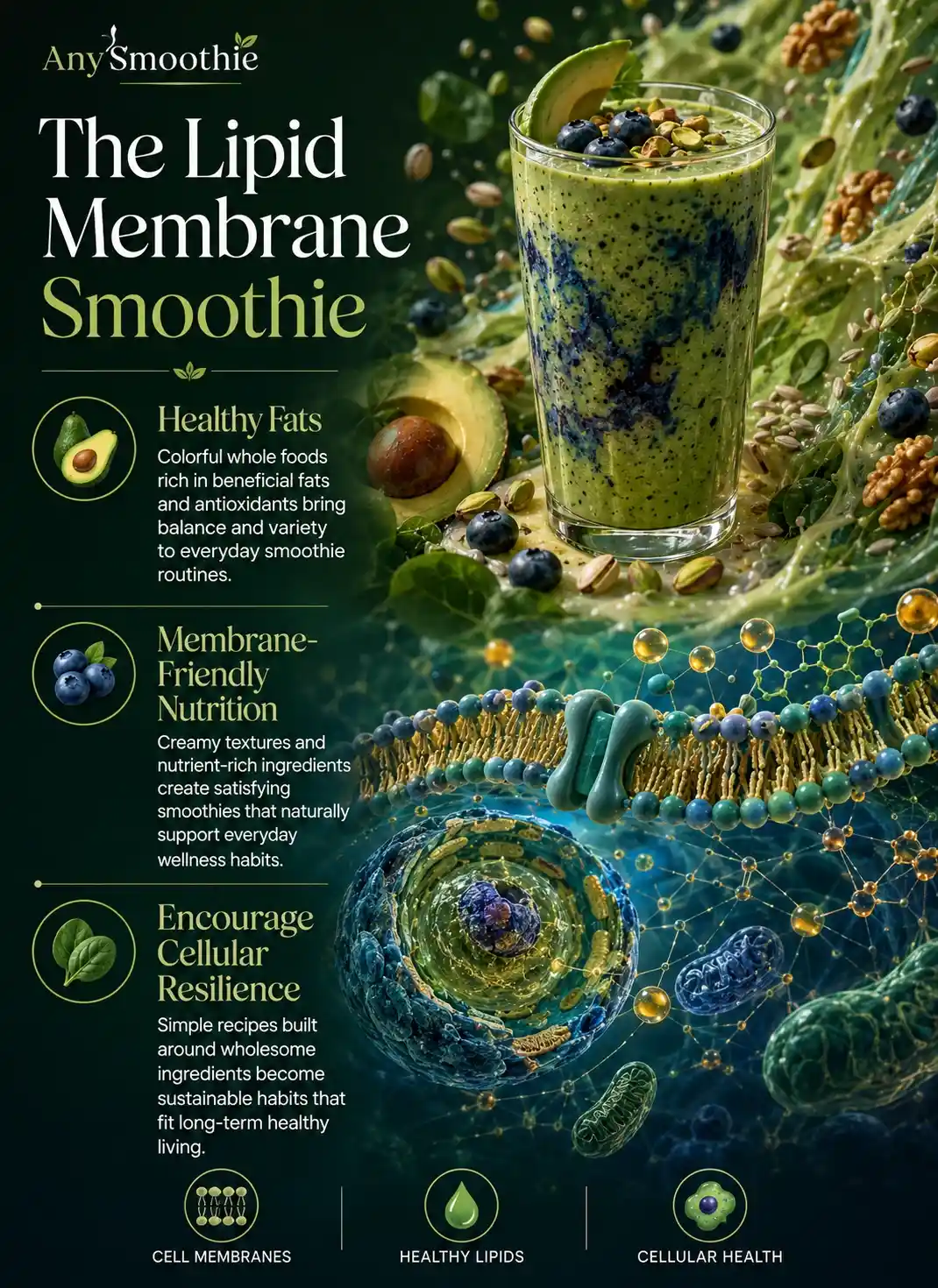
A cell membrane is the outer layer that helps cells hold their shape and interact with their environment. In food terms, that means the fats you eat can influence the raw material your body uses to build and refresh those membranes.
Harvard Health notes that polyunsaturated fats are used to build cell membranes and nerve coverings, which is one reason fat quality matters in a smoothie. A review indexed in PubMed on dietary fats and membrane function also found that membrane composition responds to the mix of dietary fats, especially n-3 fats.
Not all fats work the same way. A smoothie built around avocado, seeds, or nuts brings a different profile than one built around sweetened creamers or random oils, so ingredient quality matters.
Why cell membranes need the right fats
Cell membranes depend on phospholipids and other dietary lipids to stay flexible. That flexibility helps membranes do their job, because cells need to exchange signals and materials with the world around them.
Omega-3 fats, especially from flax, chia, and hemp, are popular in smoothie blends for a reason. They help diversify the fat profile, and that matters more than loading up on one type of fat alone. In plain English, membrane quality is about balance, not just fat quantity.
If you’d like a closer look at how phospholipids contribute to healthy cell membranes, explore our guide to phospholipid smoothies for healthy cell membranes.
The other nutrients that matter beyond fat
Fat does not work alone. Antioxidants, fiber, minerals, and polyphenols help round out the formula and support normal cellular processes.
Berries, greens, cacao, and citrus bring protective plant compounds that help keep fats from oxidizing too fast. Fiber also slows the mix down a bit, which makes the smoothie easier to handle and usually more satisfying.
The best ingredients for lipid membrane smoothies
A useful smoothie starts with a few dependable building blocks. The best ingredients give you fats, protein, and protective plant compounds without making the texture muddy or the flavor flat.
| Ingredient | Key nutrient | Main membrane support role | Best use case | Flavor or texture |
|---|---|---|---|---|
| Avocado | Monounsaturated fat, potassium | Adds a creamy lipid base | Green or breakfast smoothies | Mild and thick |
| Ground flaxseed | ALA omega-3, fiber | Supports omega-3 intake and texture | Daily berry blends | Nutty and light |
| Chia seeds | Omega-3s, soluble fiber | Helps create body and balance | Make-ahead smoothies | Neutral and pudding-like |
| Hemp hearts | Fatty acids, protein | Balances fat with protein | Quick everyday blends | Soft and creamy |
| Greek yogurt | Protein, calcium | Rounds out fat-heavy blends | Morning or post-workout smoothies | Tangy and thick |
Use the table as a starting point, then build around one main fat, one protein source, and one color-rich plant ingredient.
Healthy fats that fit well in a smoothie
Avocado gives a smooth base and blends easily with greens or citrus. Chia and flax bring omega-3 fats plus fiber, while hemp hearts add a softer, more neutral finish.
Nut butters work well too, especially almond, peanut, or cashew. Coconut milk or coconut cream can add body, but they work best as a texture ingredient, not the whole recipe.
If you want a simple framework, the simple smoothie ingredient protocol keeps the fat, protein, and plant mix easy to manage. It’s a good fit when you want less guessing and fewer ingredients.
Add-ins that protect fats and support balance
Berries bring color, acid, and polyphenols. Spinach and kale add folate, magnesium, and a milder taste than many people expect. Cacao, turmeric, ginger, lemon, and lime all help the blend taste brighter while adding more plant compounds.
A smoothie built on fats alone gets heavy fast. Protein, fiber, and color keep it usable.
If you like a broader template, the ultimate guide to functional smoothies can help you shape the mix without crowding the blender.
Protein, fiber, and minerals that round out the formula
A smoothie made only from fats is incomplete. Protein helps balance the drink, fiber adds body, and minerals like potassium and magnesium support normal cellular work.
Good options include Greek yogurt, skyr, soy yogurt, silken tofu, plain protein powder, oats, and leafy greens. Together, they make the smoothie more practical as a meal and less like flavored fat in a cup.
3 Lipid membrane smoothies for cellular health
These three blends show how the idea works in real life. Each one uses a different flavor profile, so you can match the smoothie to your morning or afternoon routine.
A Creamy Omega-3 Berry Smoothie
Ingredients
- 1 cup unsweetened milk
- 1 cup frozen mixed berries
- 1 tablespoon ground flaxseed
- 1 tablespoon chia seeds
- 2 tablespoons hemp hearts
- 1/2 banana
Blend until smooth and creamy.
This blend is easy to drink and brings a solid mix of fats, fiber, and berry polyphenols. It works well when you want something simple that still feels complete.
Estimated Nutrition per Serving
Estimated with unsweetened soy milk, mixed berries, ground flaxseed, chia seeds, hemp hearts, and half a medium banana.
- Calories: ~445 kcal
- Protein: ~19 g
- Carbohydrates: ~52 g
- Fat: ~22 g
- Fiber: ~16 g
- Sugars: ~24 g
Flax, chia, and hemp all contribute differently to the texture, and chia keeps absorbing liquid after blending. If you’re not drinking it immediately, leave the smoothie slightly looser so the berry blend remains easy to sip later.
A Green Membrane-Support Smoothie With Avocado and Citrus
Ingredients
- 1 cup spinach or baby kale
- 1/2 avocado
- 1 small banana
- Juice of 1/2 lemon or lime
- 1 cup plain Greek yogurt or unsweetened soy yogurt
- 3/4 cup cold water or milk
Blend until completely smooth.
The avocado gives you creaminess, while the citrus keeps the flavor bright. The yogurt or soy yogurt adds protein, so the texture stays smooth instead of thin.
Estimated Nutrition per Serving
Estimated with spinach, half a medium avocado, one small banana, lime juice, plain nonfat Greek yogurt, and cold water.
- Calories: ~390 kcal
- Protein: ~26 g
- Carbohydrates: ~49 g
- Fat: ~14 g
- Fiber: ~12 g
- Sugars: ~25 g
A Cacao and Seed Smoothie for Steady Fuel
Ingredients
- 1 cup milk of choice
- 1 tablespoon cacao powder
- 1 tablespoon almond butter
- 1 tablespoon ground flaxseed or chia seeds
- 1 scoop plain protein powder or 1/2 cup Greek yogurt
- 1 small frozen banana
Blend until creamy.
This version is richer and more filling. It fits a morning routine or a post-workout meal when you want something that tastes like a treat but still has a solid nutrient base.
Estimated Nutrition per Serving
Estimated with 2% milk, unsweetened cacao, almond butter, ground flaxseed, one typical serving plain protein powder, and one small frozen banana.
- Calories: ~485 kcal
- Protein: ~38 g
- Carbohydrates: ~48 g
- Fat: ~20 g
- Fiber: ~9 g
- Sugars: ~24 g
A fully frozen banana makes this considerably thicker than the ingredient list suggests, especially with flax and protein powder. Blend the milk and banana first, then add the dry ingredients so the cacao and protein powder don’t collect in dense pockets around the blades.
How to blend them for better texture, taste, and absorption
Start with liquid, then add soft ingredients, seeds, and frozen fruit. That order helps the blender move faster and keeps the texture smoother.
A good starting ratio is 1 to 1.5 cups liquid for 1 to 2 cups fruit or greens, plus one fat source and one protein source. If the smoothie feels heavy, add ice, frozen fruit, or a little citrus. If it feels thin, add chia, avocado, or yogurt.
Simple ratios that keep smoothies creamy, not greasy
Use one main fat, not three or four. A tablespoon of nut butter or seeds is enough for many blends, and half an avocado usually goes a long way.
Pairing fats with whole-food antioxidants may help the body handle nutrients more efficiently. That is one reason berries, greens, and citrus work so well with seed-rich smoothies.
Common mistakes that weaken the formula
Too much juice or sweetener turns a smart smoothie into a sugar-heavy drink. Too many ingredients can blur the flavor and make the texture harder to fix.
Skipping protein is another common miss. So is relying on sweetened nut milks, flavored syrups, or heavy add-ins that crowd out the foods you actually want.
Healthy cell membranes benefit from consistency more than complexity. A balanced smoothie made regularly is usually more useful than an occasional recipe overloaded with trendy ingredients.
Conclusion
Lipid membrane smoothies for cellular health are a food strategy, not a miracle. They make sense because they combine the fats cells use, the antioxidants that protect those fats, and the protein and fiber that keep the blend balanced.
Start with one recipe, taste it, then adjust the fat, liquid, or fruit until it fits your day. Small changes matter, and a good smoothie is usually the one you can repeat.
🛡️ Safety Notes & Dietary Interactions
- Balance Fat Intake: Healthy fats are essential for cell membranes, but portion size still matters. Combining several fat-rich ingredients in one smoothie can quickly increase calories, so choose one primary fat source and build the recipe around balanced protein, fiber, and whole foods.
- Seed and Nut Allergies: Flax, chia, hemp hearts, and nut butters are excellent additions for many people, but they are not suitable for everyone. If you have food allergies or sensitivities, substitute tolerated ingredients that provide similar nutritional benefits.
- Digestive Comfort: High-fiber smoothies made with seeds, avocado, and leafy greens may cause bloating or digestive discomfort if introduced too quickly. Increase fiber gradually, drink adequate water throughout the day, and adjust serving size according to your own digestive tolerance.
- Whole-Diet Perspective: No single smoothie can build healthier cell membranes on its own. Membrane health depends on consistent intake of varied healthy fats, sufficient protein, colorful fruits and vegetables, regular physical activity, and an overall balanced eating pattern maintained over time.
FAQ
Why are healthy fats important for cell membranes?
Cell membranes are naturally composed of lipids, so dietary fats provide some of the building blocks your body uses during normal membrane maintenance. Choosing foods such as avocado, flaxseed, chia seeds, hemp hearts, nuts, and olive oil contributes to a more balanced fat intake than relying heavily on highly processed fats or trans fats.
Which fats work best in lipid membrane smoothies?
A combination of monounsaturated and polyunsaturated fats usually works well. Avocado provides a creamy source of monounsaturated fat, while flaxseed, chia seeds, and hemp hearts contribute plant omega-3 fatty acids. Using one primary fat source alongside protein, fiber, and colorful produce generally creates a more balanced smoothie than combining many rich ingredients together.
Can I drink a lipid membrane smoothie every day?
Yes, for most healthy adults a balanced smoothie can fit comfortably into a daily routine when it complements an overall nutritious diet. Rotating ingredients throughout the week helps provide a broader variety of vitamins, minerals, fatty acids, and plant compounds while preventing the recipe from becoming repetitive or overly dependent on one ingredient.
Do omega-3 seeds replace eating fish?
Not completely. Flaxseed, chia seeds, and hemp hearts supply alpha-linolenic acid (ALA), a plant omega-3 fatty acid. Fatty fish provide EPA and DHA directly, which the body uses differently. Plant sources remain valuable, especially for people following vegetarian or vegan diets, but they should be viewed as part of an overall balanced nutrition strategy.
Should a lipid membrane smoothie contain protein?
Yes. Protein helps transform the smoothie from a snack into a more satisfying meal by supporting fullness and providing amino acids needed for normal tissue maintenance. Greek yogurt, kefir, soy yogurt, silken tofu, or a quality protein powder pair well with healthy fats, fiber, and antioxidant-rich fruits to create a more complete nutritional profile.

Medical Disclaimer: AnySmoothie content is for educational purposes only and is not a substitute for professional medical advice. Consult a healthcare provider for personalized guidance. See our full Disclaimer & Terms of Use. AI Transparency: AnySmoothie may use AI to support content development. All content undergoes human editorial review for accuracy, clarity, and editorial quality. See our full AI Transparency.