
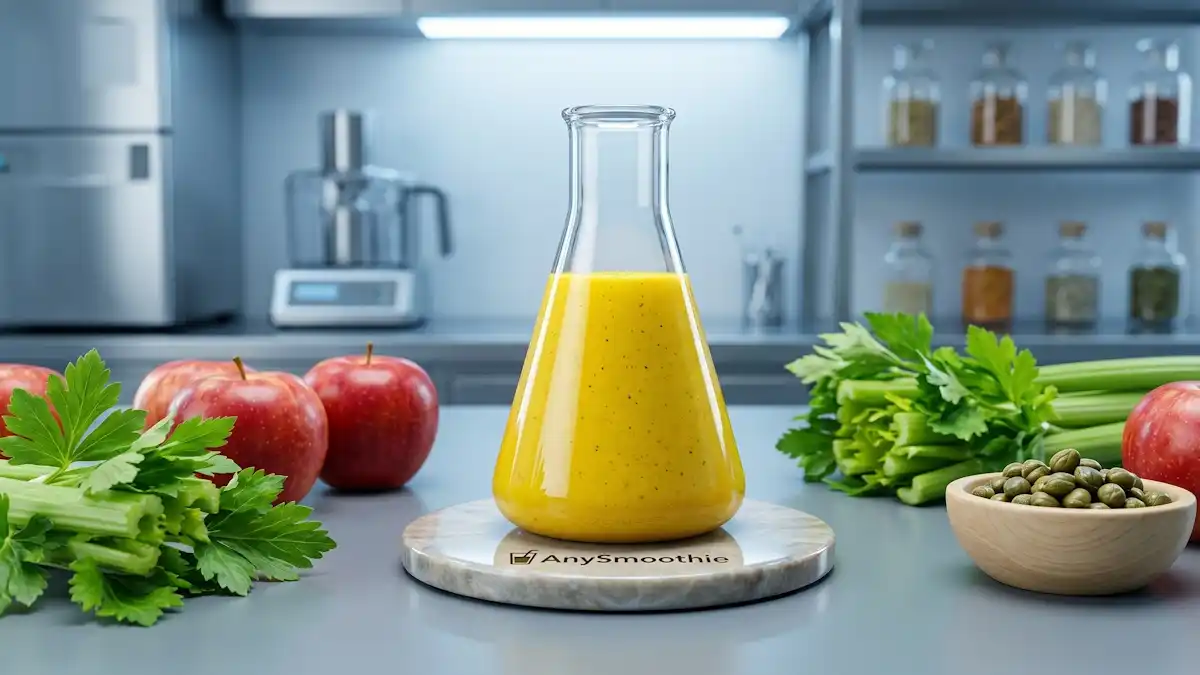
Mast cells are part of your first-response immune system. They help spot threats, then send out signals fast. That speed is useful, but it works best when the cell membrane stays stable.
That’s where a quercetin smoothie for mast cell membrane integrity fits in. It uses food-based compounds to support normal immune signaling, antioxidant defense, and barrier resilience without turning the formula into a chemistry project. The goal is simple: give your cells a calmer environment, then keep the ingredients gentle enough for daily use.
Mast Cell Vigilance: Maintaining the Biological Border Control
Mast cells sit at the border between you and the outside world. They watch the gut lining, skin, and airways, then respond when something looks off. In plain terms, they are the body’s border control.
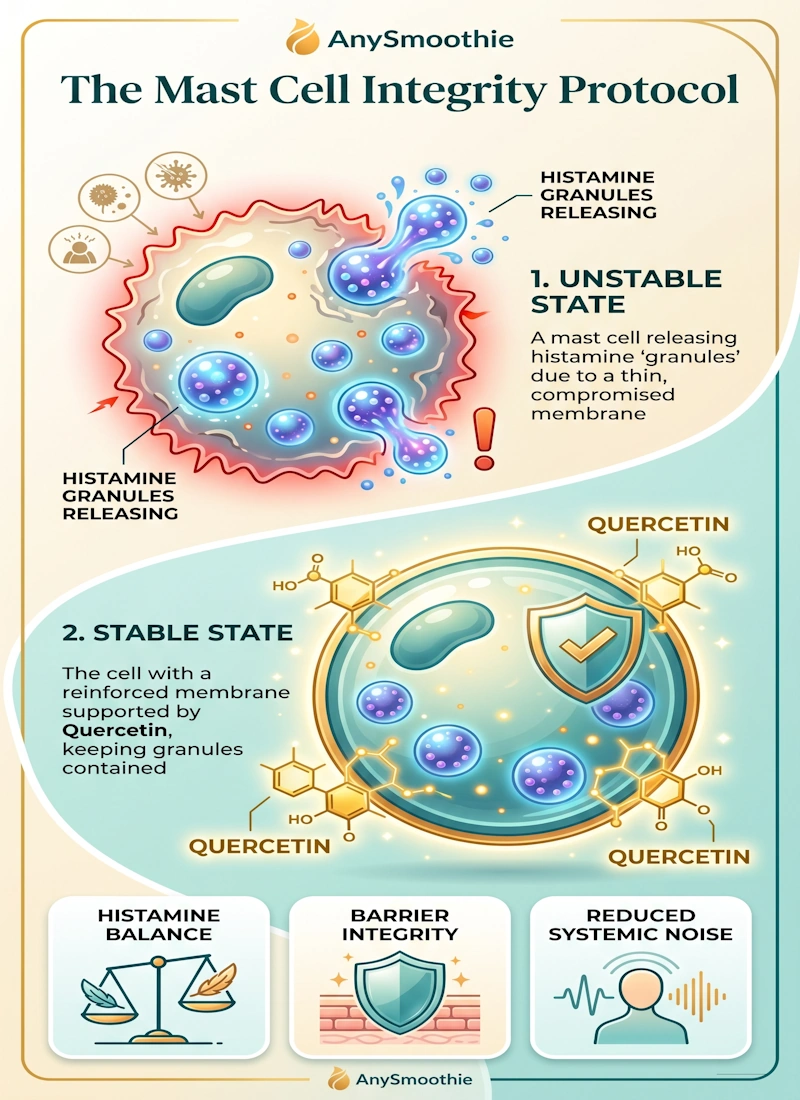
When mast cell membranes stay intact, the cell can often respond in a more controlled way. When the membrane gets stressed, signaling can feel less steady. That matters because unstable cells may release more mediators than you want.
A review on polyphenols and mast cells in the NIH archive describes how quercetin and luteolin interact with mast-cell pathways. The point is not to chase a miracle food. It’s to reduce stress on a system that already does a lot of work.
Degranulation Dynamics: The Science of Histamine Management
Degranulation is the moment a mast cell opens its internal packets and releases stored signals. Histamine is one of those signals, but it’s not the only one. Tryptase, cytokines, and lipid mediators can also move at the same time.
Oxidative stress can make this process noisier. Poor diet, sleep debt, environmental irritants, and chronic stress can all add pressure. That’s why a smoothie built around quercetin and other antioxidants can be useful. It supports the terrain before the cell gets pushed too hard.
The Quercetin Shield: Stabilizing the Lipid Bilayer
Quercetin is a flavonoid found in foods like apples and capers. It gets attention because it can support antioxidant defense and help steady mast-cell signaling. One mechanism is membrane support. Another is how it influences inflammatory pathways that shape the cell’s response.
The membrane is a lipid bilayer, which means it is partly fat-based and easy to disturb. Quercetin helps create a more stable environment around that structure. In simple terms, it acts like a buffer around the cell’s outer wall.
Researchers have also looked at quercetin’s role in mast-cell activation and histamine release. For a plain-language summary of those effects, see the MDPI review on quercetin and anti-allergic immune response. The takeaway is steady support, not a cure.
Ion Channel Modulation: Controlling the Calcium Influx
Calcium matters because it helps trigger mast-cell activation. When calcium rushes in too fast, the cell gets a louder activation signal. Quercetin may help support more balanced calcium signaling, which is one reason it appears in mast-cell-friendly formulas.
That matters if you want a food-first routine with fewer spikes. A stable signal is easier to manage than a noisy one.
Simple formulas usually work best when mast cells are reactive.
What to Put in a Mast-Cell-Friendly Quercetin Smoothie
A good smoothie starts with a mild base, then adds targeted support. Apples are useful because they bring quercetin without a harsh taste. Ginger adds brightness, while pear or cucumber can soften the texture.
Avoid stacking too many strong flavors at once. A long ingredient list can be harder on digestion. Texture matters too, so aim for smooth, thin, and easy to sip.
Quercetin Sources That Work Well in Smoothies
Apples are the easiest food source to use. Capers are rich in quercetin too, but they do not belong in every smoothie. Onion-skin extract is more of a focused add-in, since the flavor is not the point.
That kind of approach keeps the drink food-based and usable. You get the flavonoid support without turning the smoothie bitter.
Why Luteolin and Vitamin C Make Strong Teammates
Luteolin pairs well with quercetin because both compounds are often discussed in mast-cell support. They may work together on Th2-skewed signaling and broader system stability. Celery and peppers are practical food sources.
Vitamin C is the other useful piece. It supports antioxidant defense and helps recycle flavonoids. Camu camu is a clean option if you want a concentrated vitamin C source without citrus.
A Quick Comparison of Three Mast Cell Stabilizer Ingredients
These three ingredients play different roles, but they fit together well. Quercetin and luteolin are often paired because they may support a steadier Th2 response and wider mast-cell balance.
| Ingredient | Physiological Mechanism | Synergistic Bio-enhancer | Best Smoothie Pairing | Target Barrier |
|---|---|---|---|---|
| Quercetin | Supports membrane stability, degranulation control, and antioxidant defense | Vitamin C, luteolin | Apple, ginger, onion-skin extract | Gut, skin, respiratory |
| Luteolin | Supports inflammatory signaling balance and mast-cell steadiness | Quercetin, vitamin C | Celery, pear, cucumber | Gut, respiratory |
| Vitamin C | Supports antioxidant defense and flavonoid recycling | Quercetin, luteolin | Camu camu, mild fruit, greens | Skin, gut |
The short version is clear. Quercetin leads on membrane support, luteolin fills in the signaling side, and vitamin C helps keep the whole mix efficient.
3 Mast-Cell-Stable Quercetin Focus Smoothie Recipes
Bioavailability Logistics: Enhancing Flavonoid Transport
Ingredient choice matters, but transport matters too. A smoothie works best when it is simple, well blended, and easy to digest. Too much fiber, too much acid, or too many add-ins can get in the way.
Use a small amount of healthy fat if the texture improves. Keep the base mild. That lowers the digestive load and helps the formula feel repeatable.
Bromelain Synergy: Accelerating the Uptake of Plant Polyphenols
Some people use bromelain alongside quercetin because it may support polyphenol handling. Tolerance matters here. If your mast cells are reactive, a small amount is enough, and leaving it out is fine.
The rule is simple. Less can be more when the goal is calm, steady support.
Conclusion
Quercetin can fit neatly into a food-first routine that supports mast cell membrane integrity, antioxidant defense, and steadier signaling. The best results usually come from simple ingredients, consistent use, and formulas your body tolerates well.
Start with one recipe, keep the blend gentle, and notice how you feel over a few tries. A repeatable smoothie often works better than a crowded one, especially when mast cells need less noise and more balance.
🛡️ Safety Notes & Contraindications
🛡️ Watch Your Medication Timing: Quercetin can bind to certain medications in your gut, especially antibiotics like fluoroquinolones, making them much less effective. To stay completely safe, always drink your quercetin smoothie at least 2 to 3 hours away from taking any prescription medicine.
🛡️ Check for Blood and Hormone Shifts: Quercetin naturally thins the blood slightly and possesses mild phytoestrogen properties. If you take daily blood thinners (like Aspirin or Warfarin), or if you manage hormone-sensitive conditions, you should avoid heavy, concentrated extracts and keep your portions food-based.
🛡️ Ease the Load on Your Filters: Your kidneys are fully responsible for processing and flushing out the leftovers of heavy plant flavonoids. If your kidney filters are managing any chronic fatigue or kidney disease (CKD), avoid stacking high-dose isolated quercetin powders and stick to simple, whole fruits.
🛡️ Monitor Sensitive Glands: Large, isolated concentrations of quercetin can occasionally interfere with how your body processes thyroid hormones. If you manage a diagnosed thyroid condition, it is best to avoid aggressive, pure extract powders and enjoy your nutrients through natural sources like berries and apples.
FAQ
How does quercetin help stop mast cells from releasing too much histamine?
Mast cells are an important part of your immune system, acting like tiny storage vaults for histamine and other signaling compounds. When these cells get irritated or unstable, they burst open (a process called degranulation) and flood your system, causing seasonal or digestive discomfort. Quercetin works behind the scenes by strengthening the outer membrane of these cells. It helps regulate the microscopic channels that let calcium flood into the cell—because it’s that sudden rush of calcium that acts like a trigger, telling the cell to pop open. By keeping calcium levels steady, quercetin helps the cell membrane stay calm and intact.
Why is bromelain almost always paired with quercetin in supplements and recipes?
On its own, quercetin is notoriously hard for your body to absorb; it dissolves poorly in water, meaning a lot of it simply passes through your digestive tract unused. Bromelain—a natural enzyme extracted from pineapple stems—acts like a perfect delivery partner. It helps break down structural barriers in your gut lumen, making it much easier for the quercetin to cross your intestinal wall and enter your bloodstream. Pairing them together ensures you actually absorb the nutrient, sending it straight to your tissues where it can do its job.
Can you get enough quercetin from regular foods like apples and onions?
While a concentrated supplement capsule obviously offers a higher dose, adding whole foods like red onions and apples (especially the skins) to your routine is a fantastic way to get bioavailable quercetin. Nature packages these foods with a built-in support crew: vitamins, minerals, and co-factors. For instance, the natural Vitamin C found in these fruits acts like a protective shield, stopping the delicate quercetin molecules from breaking down or oxidizing too quickly. This keeps the nutrient stable in your system for a longer period of time.
What is luteolin, and how does it work alongside quercetin?
Luteolin is another powerful plant compound found in foods like celery and parsley, and it works like a teammate to quercetin. While quercetin focuses on strengthening the outer cell wall to stop histamine from leaking, luteolin goes deeper, working inside the cell. It helps quiet down the internal alarm systems and signaling loops (like the NF-kB pathway) that tell your body to create stress and irritation. Using both together gives you a double layer of defense—one working at the gate, and the other keeping things calm on the inside.
When is the best time to drink an immune-support smoothie?
To give these plant compounds enough time to get to work, the ideal window to drink this smoothie is about 20 to 30 minutes before you face your daily triggers—whether that’s heading out into a high-pollen area or eating a complex meal. This timing gives your digestive system a head start to break down the smoothie, absorb the flavonoids, and send them into your circulation so they are already standing guard at the cellular level right when your body needs them most.

Medical Disclaimer: AnySmoothie content is for educational purposes only and is not a substitute for professional medical advice. Consult a healthcare provider for personalized guidance. See our full Disclaimer & Terms of Use. AI Transparency: AnySmoothie may use AI to support content development. All content undergoes human editorial review for accuracy, clarity, and editorial quality. See our full AI Transparency.