
Senescent cells are old, worn-out cells that stop dividing, yet they don’t always leave quietly. Biohackers and wellness-focused readers care because these cells can pile up with age and nudge the body toward a noisier inflammatory state.
Senolytic smoothies for cellular renewal are not medicine, and they won’t remove cells on command. They are food-based blends built to support healthy cleanup pathways, using whole ingredients and bioactives like fisetin, quercetin, and curcumin in a simple, repeatable way.
What senescent cells do to the body, and why cleanup matters
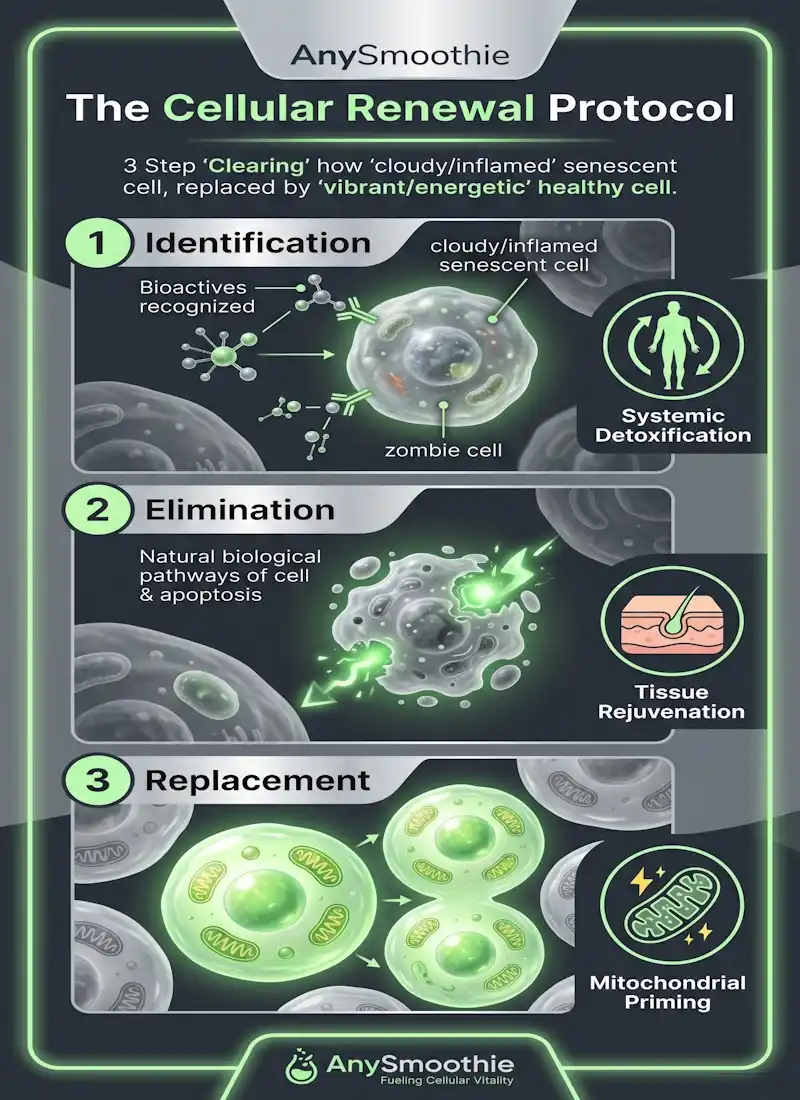
When a cell becomes senescent, it stays alive but shifts out of normal work. It no longer helps the tissue in the same way, and over time, a larger senescent burden can make systems feel less efficient.
That matters because the body depends on turnover. Old parts need clearing so new ones can do their job. When cleanup slows, the internal environment can get louder, less flexible, and harder to balance. A study in Nature shows how senescent cells can drive harmful tissue changes over time.
SASP, the aging signal that can spread trouble
Senescent cells also release a mix of signals called SASP, short for senescence-associated secretory phenotype. These signals can include inflammatory messengers, enzymes, and stress cues.
In plain terms, SASP is one way senescent cells can affect nearby cells. It doesn’t mean damage is guaranteed, but it does help explain why cellular clutter can ripple through tissues over time.
Clean-up support matters most when it works with the body’s own repair rhythms, not against them.
The key bioactives behind senolytic smoothies
Three plant compounds show up often in this space: fisetin, quercetin, and curcumin. They each bring a different angle, from stress response support to redox balance and signaling control.
The table below keeps the comparison simple.
| Bioactive | Physiological mechanism | Selectivity index | Best smoothie pairing | Synergistic bio-enhancer |
|---|---|---|---|---|
| Fisetin | BCL-2 family modulation, stress-response support, redox balance | Highest of the three, based on preclinical interest | Strawberries, apple, plain yogurt | A little fat, like avocado or coconut milk |
| Quercetin | SIRT1 support, antioxidant signaling, membrane-level stress response | Moderate to high | Berries, citrus, green apple | Vitamin C foods, small fat source |
| Curcumin | NF-kB modulation, antioxidant pathway support | Moderate | Pineapple, mango, turmeric blends | Piperine, black pepper, fats |
Fisetin gets the most attention for systemic renewal support because it has the strongest reputation as a natural senolytic candidate. Quercetin is a strong companion compound. Curcumin adds a useful layer, especially when you pair it with fat and black pepper.
Fisetin from strawberries: the standout compound for renewal support
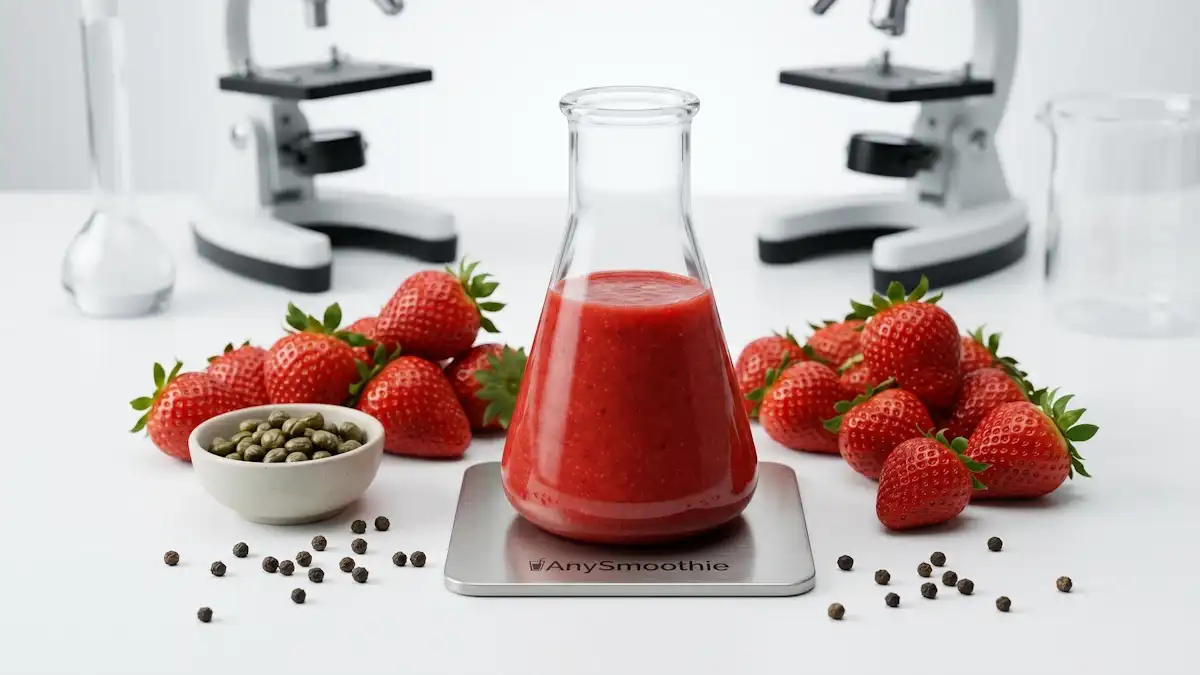
Strawberries are the easiest way to build a fisetin-forward smoothie. They taste good, blend well, and fit cleanly into a morning routine.
Fisetin matters here because it is often highlighted in longevity circles for selective cleanup support. That makes it a smart anchor ingredient when the goal is cellular renewal, not just a sweet drink.
Quercetin from capers and apples: a strong supporting player
Quercetin fits well beside fisetin because it supports a similar wellness theme without overpowering the blend. Apples, berries, and even a small amount of capers can help you bring it in through food.
Capers are strong in flavor, so use them lightly. A small amount can pair with fruit and yogurt or plant milk, which helps the smoothie stay drinkable while still carrying useful plant compounds.
Curcumin from turmeric: useful, but best with the right carrier
Curcumin works best when you respect its absorption needs. It pairs well with fats and black pepper, which help it move through the body more efficiently.
That makes turmeric a good fit for a smoothie, as long as the blend includes coconut milk, avocado, or another fat source. It may support healthy inflammatory balance and antioxidant pathways, especially when the recipe stays simple.
SCAT pathways and selective cleanup support
Some biohacking circles use SCAT as a shorthand for selective cleanup support around non-functional cells. The useful idea is straightforward, the body does better when it can target old, stressed cells while leaving healthy ones alone.
That is why compound choice matters. You want ingredients that support selective stress responses, not a random pile of powders. A review on senolytics and senescence-targeted treatments outlines this idea well.
How to build a smoothie that supports nutrient partitioning and absorption
A good renewal smoothie is about structure, not just ingredients. Fruit brings the polyphenols, fat helps transport fat-soluble compounds, fiber slows the sugar hit, and spices can sharpen the mix.
That balance supports nutrient partitioning, which simply means your body gets a better chance to use what you give it. It also helps the blend feel steadier, especially if you want metabolic efficiency instead of a quick sugar rush.
Best add-ins for better uptake, from black pepper to healthy fats
Black pepper is the easiest upgrade for turmeric smoothies because piperine helps curcumin absorption. Coconut milk, avocado, chia, and flax all help fat-soluble compounds travel better.
A small amount of fat goes a long way. Too little, and absorption drops. Too much, and the smoothie can feel heavy.
What to avoid if you want a cleaner, more effective blend
Keep the formula clean. Added sugar can push the blend toward a dessert pattern, and that works against the goal of steady energy.
Also avoid overloading the cup with too many powders. A simple mix is easier to digest and easier to repeat.
- Use one main bioactive focus per smoothie.
- Keep sweeteners low or skip them.
- Choose whole food ingredients first.
- Let texture and taste stay practical.
3 renewal-prime smoothie recipes to try first
These are templates, not rigid rules. Start simple, then adjust based on taste and digestion.
The Bio-Clear strawberry blend with fisetin, apple, and black pepper
Ingredients
- 1 cup strawberries
- 1/2 medium apple
- 3/4 cup plain yogurt or unsweetened coconut yogurt
- A pinch of black pepper
- 1 tablespoon chia seeds
- 1/2 cup water or unsweetened coconut milk, as needed
This is the easiest fisetin-focused option. Strawberries give the base, apple softens the flavor, and a little fat helps the blend work better.
Estimated Nutrition per Serving
- Calories: ~230 kcal
- Protein: ~10 g
- Carbohydrates: ~35 g
- Fat: ~7 g
- Fiber: ~9 g
- Sugars: ~21 g
I’d keep the black pepper genuinely subtle here. A small pinch is enough to add a little warmth without competing with the fresh strawberry and apple flavor.
A quercetin-rich caper and berry smoothie for a sharper antioxidant lift
Ingredients
- 1 cup mixed berries
- 1/2 medium green apple
- 1 teaspoon capers, drained
- 1 tablespoon lemon juice
- 3/4 cup unsweetened plain yogurt
- 1/4 cup water, as needed
- Ice, optional
The capers should stay modest. They bring the quercetin angle without taking over the whole drink.
Estimated Nutrition per Serving
- Calories: ~190 kcal
- Protein: ~9 g
- Carbohydrates: ~35 g
- Fat: ~3 g
- Fiber: ~7 g
- Sugars: ~22 g
Golden turmeric smoothie with curcumin, pineapple, and coconut milk
Ingredients
- 1 cup pineapple chunks
- 1/2 medium banana
- 1/2 teaspoon ground turmeric
- 1/2 cup unsweetened coconut milk beverage
- A pinch of black pepper
- 1 tablespoon ground flaxseed
- 1/2 cup cold water, as needed
Keep the turmeric light at first.
This version is best when you want a smoother, warmer profile. The fat and pepper matter here, because curcumin needs support.
Estimated Nutrition per Serving
- Calories: ~210 kcal
- Protein: ~3 g
- Carbohydrates: ~40 g
- Fat: ~6 g
- Fiber: ~7 g
- Sugars: ~25 g
How to use senolytic smoothies as part of a bigger cellular renewal plan
A smoothie can support renewal, but it works best inside a larger pattern. Sleep, movement, and consistent nutrition all shape how well the body handles cleanup and repair.
Many people place these blends after a fasting window or around active parts of the day. That can fit better with autophagy support, mitochondrial priming, and a more stable energy curve.
Pairing smoothies with fasting, movement, and recovery
A lighter smoothie often feels best after morning movement or after a longer gap between meals. Then the body gets nutrients when it is ready to use them.
Recovery matters too. Good sleep and regular activity help the body handle cleanup signals without feeling strained.
Signs the blend is too much, too weak, or needs adjusting
If the smoothie feels too sweet, cut the fruit or remove sweeteners. If it feels flat, add a little fat or spice.
Digestive comfort is a useful guide. So is energy after drinking it. You want steady, not spiky.
Conclusion
Senolytic smoothies for cellular renewal work best as a food-first strategy, not a cure claim. The real value comes from simple ingredients that support cleanup pathways, good absorption, and steady use over time.
Start with one recipe, keep it easy, and watch how your body responds. A well-built smoothie won’t do everything, but it can fit neatly into a smarter renewal routine.
🛡️ Safety Notes & Contraindications: Senolytic Support
Lipid-Mediated Bioavailability: Bioactive compounds like fisetin, quercetin, and curcumin are fat-soluble. To optimize their absorption and systemic delivery, these smoothies must include a healthy lipid source, such as avocado, coconut milk, or omega-3 rich seeds.
Digestive Sensitivity to Polyphenols: High concentrations of plant compounds (especially from capers or turmeric) can cause gastrointestinal discomfort in sensitive individuals. Start with small amounts to assess tolerance before increasing the dosage in your recovery routine.
Pulse Protocol Approach: Natural senolytic support is often more effective when used in “pulses” rather than constant high-dose intake. Aligning these smoothies with specific recovery windows or fasting periods may better support the body’s natural autophagy rhythms.
Interaction with Metabolic States: Senolytic bioactives can influence glucose signaling and antioxidant pathways. If you have a pre-existing metabolic condition, monitor your response closely, as these compounds work best when blood sugar levels are stable.
FAQ
How do senolytics like Fisetin support the selective clearance of senescent cells?
Senescent cells often survive by upregulating pro-survival pathways, such as the BCL-2 family of proteins, which protect them from apoptosis. Biochemically, fisetin acts as a natural senolytic by modulating these pathways, supporting the physiological systems involved in identifying and clearing non-functional cells. This optimization ensures that the “SASP” (Senescence-Associated Secretory Phenotype) load is reduced, facilitating the natural pathways of cellular renewal and maintaining the structural integrity of tissues.
What is the “SASP” and why is its modulation critical for healthy aging?
SASP refers to the inflammatory messengers, enzymes, and growth factors secreted by senescent cells. Biochemically, these signals can induce senescence in neighboring healthy cells, a process sometimes called “bystander senescence.” Supporting the physiological systems of cellular cleanup through polyphenol-rich smoothies helps modulate this signaling. This optimization supports the natural pathways of systemic balance, ensuring that the biochemical mechanics of aging remain managed and less inflammatory.
How does Quercetin influence the “SCAT” pathways for selective cleanup?
Selective Antiapoptotic Pathway (SCAT) targets are specific biochemical routes that senescent cells use to avoid being cleared by the immune system. Quercetin supports the physiological systems of the body by interfering with these pro-survival signals. Biochemically, this synergy facilitates the natural pathways of “targeted” renewal. By optimizing these biochemical mechanics, quercetin helps the body handle the “senescent burden,” supporting long-term mitochondrial priming and metabolic flexibility.
Why is Piperine essential for the “Curcumin-Bioavailability” synergy?
Curcumin is a potent modulator of the NF-kB pathway, but it has low systemic bioavailability due to rapid metabolism in the liver. Biochemically, piperine (from black pepper) inhibits the metabolic pathway (glucuronidation) that would otherwise eliminate curcumin too quickly. Supporting this physiological system through a targeted smoothie base ensures that curcumin remains active in the circulation. This optimization facilitates better nutrient partitioning and supports the biochemical mechanics of antioxidant defense.
In what way does “Autophagy Support” complement a senolytic smoothie routine?
Autophagy is the body’s internal recycling system that breaks down damaged cellular components. While senolytics support the clearance of entire cells, autophagy supports the cleanup within the cell. Biochemically, pairing a senolytic smoothie with fasting or movement optimizes the natural pathways of cellular “housekeeping.” This dual-action approach supports the physiological systems of renewal, ensuring that the biochemical mechanics of tissue repair operate within a clean, efficient environment.

Medical Disclaimer: AnySmoothie content is for educational purposes only and is not a substitute for professional medical advice. Consult a healthcare provider for personalized guidance. See our full Disclaimer & Terms of Use. AI Transparency: AnySmoothie may use AI to support content development. All content undergoes human editorial review for accuracy, clarity, and editorial quality. See our full AI Transparency.