
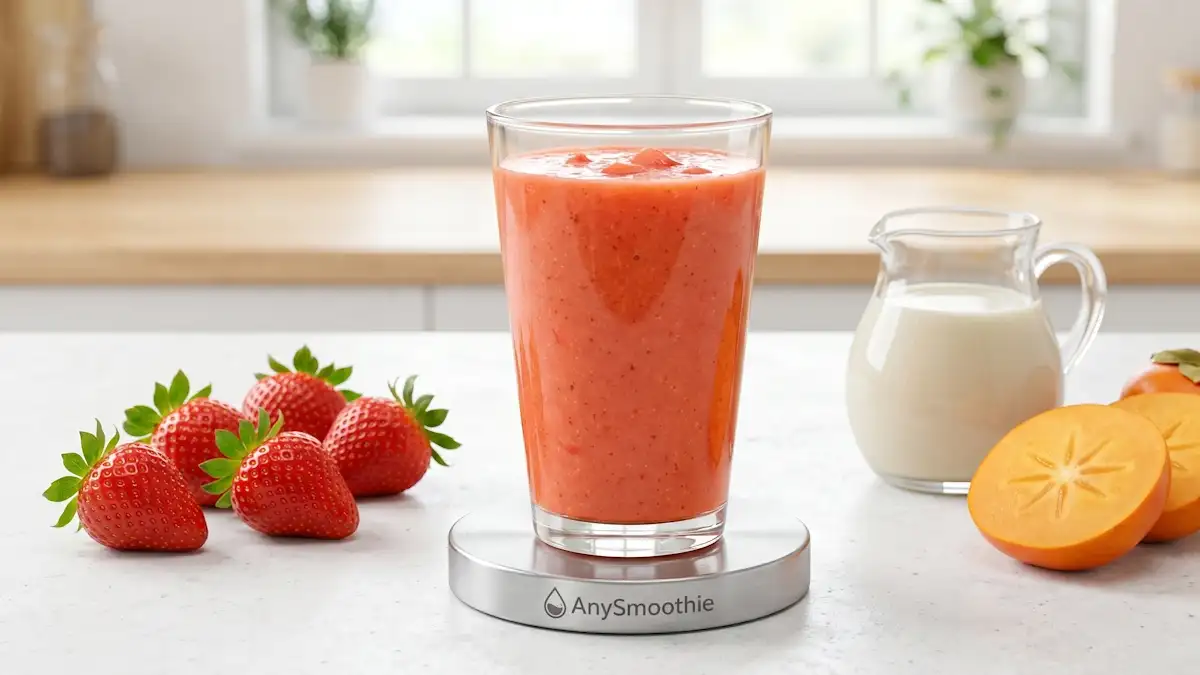
A smoothie is one of the easiest ways to turn a healthy habit into a daily pattern. When you build it around fisetin-rich foods, you get a simple tool for nutritional support without a lot of prep.
That matters because healthy aging is often about small, repeatable choices. The right blend can support metabolic efficiency, steady energy use, and practical nutrient partitioning.
This article looks at what fisetin does, how it fits into smoothie recipes, and how to pair it with fats and other plant compounds for better absorption. No hype, no hard claims, just food-first strategy.
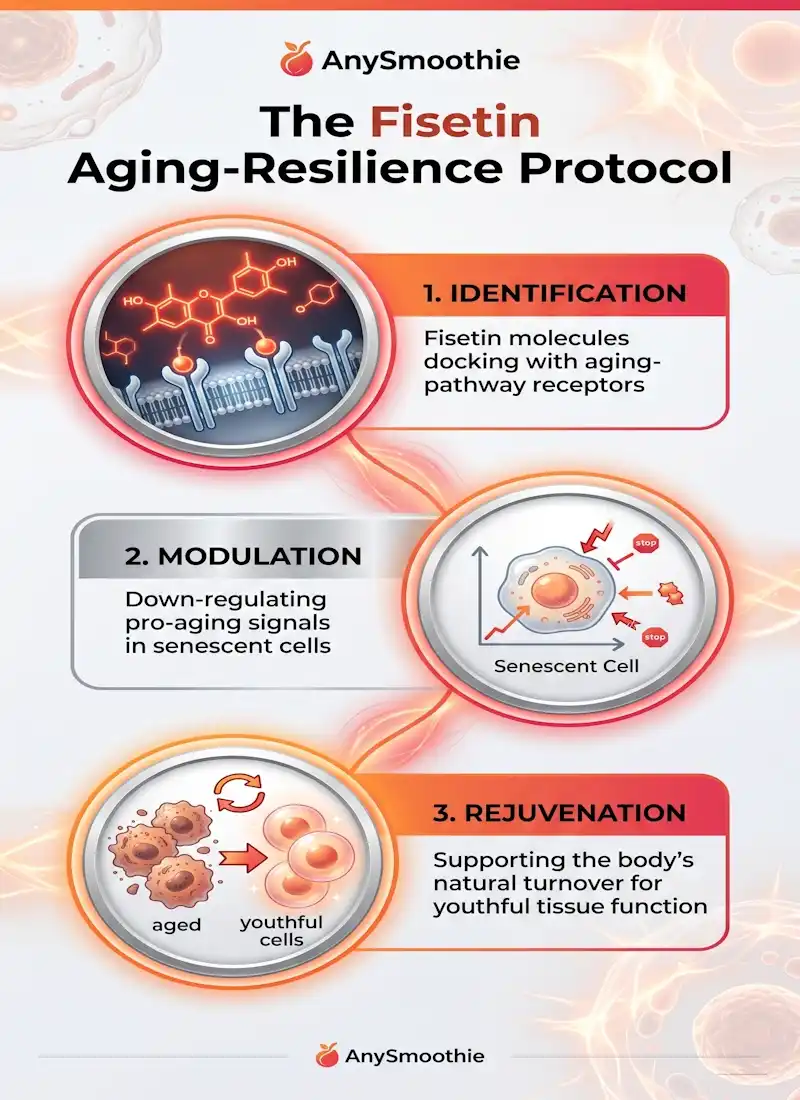
Fisetin is a plant flavonoid found in foods like strawberries and persimmons. It has drawn attention because it shows senotherapeutic activity in lab and animal research, which means it may help support the body’s cleanup systems that remove worn-out cells. A recent PubMed review on fisetin highlights its antioxidant, anti-inflammatory, and senotherapeutic profile.
That is why fisetin shows up often in longevity nutrition. People are not just looking at one molecule in isolation, they are looking at how it fits into broader healthy aging support. In food terms, that makes fisetin a smart fit for smoothies, since you can pair it with other ingredients that support absorption and energy balance.
Beyond Quercetin: Why Fisetin Leads the Senotherapeutic Charge
Fisetin and quercetin are related, but they do not behave the same way in the body. Fisetin gets more attention because it appears to have stronger senolytic activity in the research conversation, meaning it may be better suited to support senescent cell management.
It also shows interest from a resilience angle. Researchers look at it for oxidative stress balance, cellular maintenance, and healthy signaling around aging pathways. In plain language, fisetin is not just another fruit compound. It is one of the flavonoids that gets discussed when the goal is long-term cellular housekeeping.
Fisetin sources that work well in smoothies
Strawberries are the easiest place to start. Persimmons are another useful source, and both blend well with creamy bases. Apples, grapes, and even a small amount of onion belong in the broader fisetin picture, but smoothies are most practical with fruit that tastes good in a glass.
Small amounts still matter when you use them often. A cup of strawberries in a morning blend is easier to sustain than a complicated supplement plan. That makes whole-food sources a good match for daily habits.
A quick comparison of three longevity flavonoids
This comparison helps you choose ingredients with a clear purpose. If healthy aging support is the goal, fisetin gets the strongest position in this group.
| Flavonoid | Primary Physiological Action | Target Longevity Pathway | Best Smoothie Pairing | Synergistic Lipid |
|---|---|---|---|---|
| Fisetin | Senolysis, highest senolytic index for this group | mTOR, SIRT1 | Strawberry, persimmon, berry blends | Hemp hearts, yogurt |
| Quercetin | Mast cell support, antioxidant balance | NAD+ maintenance, stress response | Apple, citrus, green blends | Flax, chia |
| Apigenin | Calm-focused flavonoid support, CD38 interest | SIRT1, NAD+ support | Parsley, cucumber, lemon blends | Avocado, olive oil |
The main takeaway is simple. Fisetin is the best fit when you want a smoothie built around senescence support, while quercetin and apigenin work well as supporting players.
Metabolic Signaling: Modulating the mTOR and SIRT1 Axis
Fisetin comes up often in the mTOR and SIRT1 conversation because both pathways help manage energy use and repair. mTOR is a nutrient-sensing pathway. It helps the body decide when to grow, store, or conserve. SIRT1 is tied to stress response and maintenance.
That matters for smoothie planning because food choices send signals too. A blend built with moderate sugar, enough fat, and steady protein gives your body a cleaner metabolic message. A study on fisetin and the Sirt1/AMPK pathway adds to that discussion by linking fisetin with improved lipid handling in animal research.
What mTOR and SIRT1 mean for daily energy and repair
Think of mTOR as a gatekeeper for nutrient availability. When you flood a drink with sugar, the signal gets noisy. When you keep the blend balanced, you support a steadier energy pattern.
SIRT1 works on the maintenance side. It helps the body respond to stress and energy demand. So a fisetin smoothie is less about a single magic ingredient and more about a clean input profile.
Genomic Stability: Supporting DNA Integrity via Flavonoid Synergy
Fisetin pairs well with other plant compounds because flavonoids often work in clusters. Berries bring more polyphenols. Citrus adds acids and vitamin C. Healthy fats help with transport.
That combination may support normal repair processes and cellular resilience. It is a practical way to build a drink that does more than taste good.
3 “Aging-Resilience” Fisetin Focus Smoothie Recipes
Here are three blends that keep the formula simple. Each one aims for flavor, balance, and better nutrient delivery.
Bioavailability Biohacks: Optimizing the Absorption of Lipophilic Flavonols
Fisetin is easier to support when the smoothie includes healthy fat and not too much sugar. That is the basic rule. Too much fruit juice can push the blend toward quick sugar, while fat helps the flavonol move more smoothly through digestion.
A 2024 review on fisetin as a senotherapeutic agent also points to the challenge of bioavailability, which is why food pairing matters.
A better smoothie is often a more balanced smoothie, not a bigger one.
Fatty Acid Scaffolding: Enhancing Systemic Delivery to Aging Tissues
Use hemp hearts, chia, flax, avocado, nut butter, or yogurt when you can. These ingredients give the blend a lipid base, which helps with delivery.
Small add-ins can help too. Cinnamon supports flavor and blood sugar balance. Magnesium-rich ingredients, like cacao or leafy greens, fit well with mitochondrial priming. A little protein also helps the drink feel more stable after you finish it.
Conclusion
Fisetin smoothie blends for healthy aging pathways work best when they stay simple and consistent. Strawberries and persimmons give you the core flavonoid base, while fats, protein, and careful fruit balance help the body handle the drink more efficiently.
The real advantage is repeatability. One balanced smoothie a day is easier to keep than a complicated plan, and that steady pattern is where food habits do their best work.
⚠️ Safety notes & contraindications: Fisetin smoothie blends
Lipophilic absorption: fisetin is fat-soluble and has very low water solubility. To ensure effectiveness, you must pair your fisetin-rich smoothie with healthy fats (avocado, hemp hearts, or full-fat yogurt).
Glucose modulation: fisetin may influence insulin signaling pathways. If you are taking medications for diabetes (like Metformin), monitor your blood sugar levels closely to avoid potential hypoglycemia.
Blood clotting: like other potent flavonoids, fisetin may exhibit mild anti-platelet activity. If you are taking anticoagulants (Warfarin, Aspirin), consult your doctor to prevent an increased risk of bruising or bleeding.
Surgical precaution: due to its potential influence on cellular signaling and blood thinning, it is advised to stop high-dose fisetin intake at least 2 weeks before any scheduled surgery.
Pregnancy & liver enzymes: there is insufficient safety data for high-dose fisetin intake during pregnancy. Also, concentrated flavonoids can sometimes stress liver enzymes (CYP450 system); stick to whole-food sources like strawberries unless professionally supervised.
FAQ
How does Fisetin modulate the mTOR and SIRT1 axis for cellular repair?
Fisetin acts as a natural senotherapeutic by inhibiting the mTOR (mammalian target of rapamycin) pathway and activating SIRT1. Biochemically, mTOR is a nutrient-sensing pathway that, when overactive, can suppress cellular cleanup processes like autophagy. Supporting the physiological systems that balance these signals through fisetin-rich smoothies optimizes the natural pathways of repair. This strategy facilitates a cleaner metabolic message, ensuring that the biochemical mechanics of cellular maintenance are prioritized over excessive growth signals.
Why is Fisetin considered to have a higher “Senolytic Index” than Quercetin?
In preclinical research, fisetin has demonstrated a more potent and selective ability to induce apoptosis in senescent cells compared to other flavonoids. Biochemically, this “senolytic index” refers to its efficiency in targeting aged, non-functional cells while leaving healthy cells intact. Supporting this physiological system through strawberries or persimmons optimizes the natural pathways of cellular housekeeping. This ensures that the biochemical mechanics of tissue renewal are supported with greater precision and fewer off-target effects.
How does “Lipid Scaffolding” improve the systemic delivery of Fisetin?
Fisetin is a lipophilic (fat-loving) molecule with poor water solubility, which often limits its absorption in a standard aqueous environment. Biochemically, pairing fisetin with healthy fats like hemp hearts or avocado creates a “lipid scaffold” that facilitates micellar solubilization in the gut. Supporting this physiological system through fat-paired smoothies optimizes the natural pathways of transport across the intestinal barrier. This ensures higher systemic bioavailability, allowing the flavonoid to effectively support the biochemical mechanics of genomic stability.
What is the role of Fisetin in supporting Genomic Stability?
Genomic stability refers to the body’s ability to maintain DNA integrity despite daily oxidative stress. Fisetin supports the physiological systems involved in DNA repair and antioxidant defense by upregulating protective enzymes. Biochemically, this reduces the cumulative damage that can trigger a cell to become senescent. By optimizing these natural pathways, a fisetin-focused routine facilitates long-term mitochondrial priming and protects the structural integrity of the cellular blueprint.
How do Fisetin and Apigenin differ in their approach to NAD+ support?
While both are longevity-focused flavonoids, they target different enzymes. Apigenin is frequently discussed for its role in inhibiting CD38, an enzyme that consumes NAD+. Fisetin, conversely, focuses more on SIRT1 activation and senolysis. Biochemically, using both in a smoothie routine supports the physiological systems of NAD+ maintenance from two different angles. This synergy optimizes the natural pathways of cellular energy, ensuring that the biochemical mechanics of repair have the necessary fuel to function at peak efficiency.

Medical Disclaimer: AnySmoothie content is for educational purposes only and is not a substitute for professional medical advice. Consult a healthcare provider for personalized guidance. See our full Disclaimer & Terms of Use. AI Transparency: AnySmoothie may use AI to support content development. All content undergoes human editorial review for accuracy, clarity, and editorial quality. See our full AI Transparency.