
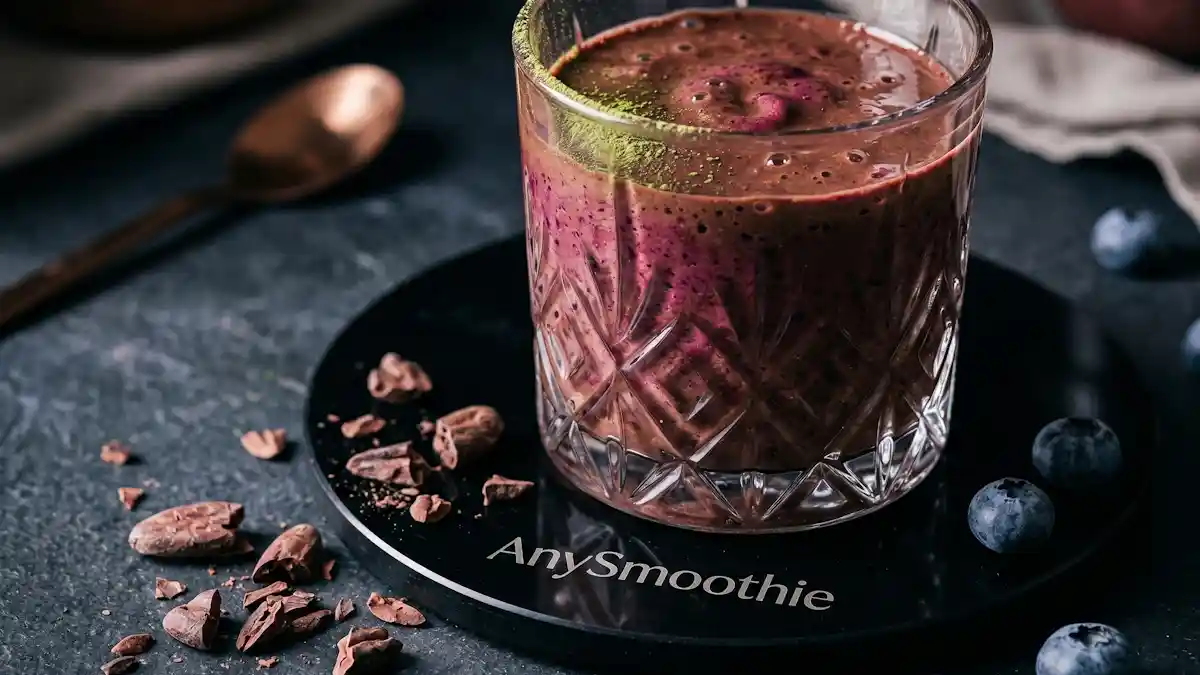
A sirtuin pathway activation smoothie is not a magic fix. It’s a practical way to stack compounds that may support cellular energy, metabolic efficiency, and stress response in the same glass.
That matters because sirtuins do more work when the rest of your routine supports them too. Sleep, exercise, and steady energy intake all shape the signal.
In this guide, you’ll see what sirtuins do, which compounds matter most, how to pair them in smoothies, and when timing can help the strategy work better.
The sirtuin engine and why NAD+ matters
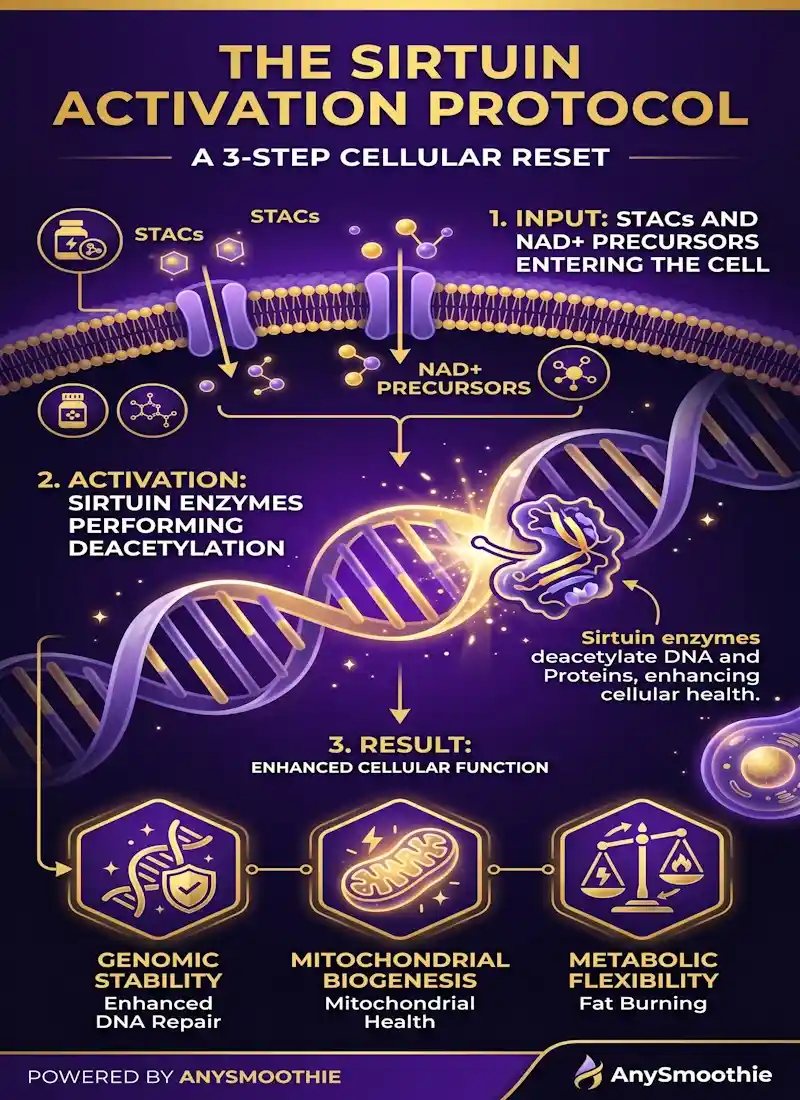
Sirtuins are enzymes that help cells manage repair and fuel use. They remove acetyl groups from proteins, a process called deacetylation, which helps tune gene expression and metabolic signaling.
That sounds technical, but the idea is simple. Sirtuins help cells switch between storage and repair, between calm and stress response. They also show up often in research on mitochondrial function and healthy aging.
For a technical review of natural activators, the PMC overview on SIRT1 phytochemicals gives useful background without the hype.
How sirtuins help cells adapt under stress
When cells face stress, sirtuins help manage cleanup and repair. They support the use of energy stores and can influence how cells respond to oxidative load.
That makes them interesting in studies on metabolic flexibility. In plain terms, flexible cells adapt better when demand changes.
Sirtuins are also tied to mitochondrial behavior. Since mitochondria are the cell’s energy hubs, that link matters for people who care about energy output and recovery.
Why NAD+ levels change the whole picture
Sirtuins depend on NAD+. Without enough of it, their signaling efficiency drops.
Think of NAD+ as the fuel that lets the enzyme do its job. Diet, sleep, exercise, and overall energy balance all influence NAD+ availability.
That’s why a smoothie can support the system, but it can’t carry the whole load. A smart blend works best inside a bigger routine.
Key sirtuin-activating compounds to look for in smoothies
The most useful smoothie ingredients here are STACs, or sirtuin-activating compounds. They’re not all equal, and they don’t behave the same way in the body.
A good blend respects that difference. Some compounds need fat for transport. Others work better with acidity, spice, or careful timing.
| Compound | Primary SIRT Target | Bioavailability Factor | Best Smoothie Pairing | Main Metabolic Pathway |
|---|---|---|---|---|
| Resveratrol from grapes or Polygonum | SIRT1 direct activator | Lipophilic, benefits from fat pairing | Avocado, cacao, berry base | AMPK activation, lipid oxidation |
| Quercetin from capers or onions | SIRT1, indirect support for related signaling | Piperine synergy, food matrix matters | Berries, citrus, yogurt-style base | NAD+/NADH balance, DNA repair support |
| EGCG from matcha | SIRT1 and SIRT3 linked signaling | Thermostability, best in low-heat prep | Matcha, greens, seeds | AMPK activation, mitochondrial support |
Resveratrol is the most targeted of the three. Quercetin works well when you pair it smartly. EGCG fits naturally into matcha-based blends.
The review on nutraceutical activation of Sirt1 also notes that combined regimens may work better than single compounds alone.
What helps these compounds absorb and work better
Bioavailability matters more than most smoothie recipes admit. Resveratrol is lipophilic, so it pairs well with avocado, nut butter, or MCT oil.
Quercetin often benefits from food pairing, and piperine can help some compounds absorb better. EGCG is more sensitive to preparation, so low-heat blends make sense.
Citrus, spices, and healthy fats also help the mix feel more complete. That gives your smoothie a better shot at supporting nutrient partitioning instead of just tasting good.
How to build a sirtuin pathway activation smoothie that actually makes sense
Start with a base that keeps blood sugar steady. Unsweetened almond milk, kefir-style yogurt, or water with ice all work.
Then add polyphenol-rich produce. Berries, leafy greens, and citrus give you color, flavor, and a cleaner metabolic profile.
After that, add a fat source. Avocado, chia, hemp, nut butter, or a little MCT oil can help with transport and satiety.
Protein matters too. A clean protein source helps keep the blend useful as a meal or post-workout drink.
Choose a base that supports polyphenols and blood sugar stability
Berries are a strong anchor because they bring flavor with less sugar than many fruits. Leafy greens add volume without pushing the sweetness up.
If you want a thicker blend, avocado works well. Yogurt-style bases also make the texture smoother and support a more balanced morning drink.
Add a fat source to improve transport and satiety
Fat helps lipophilic compounds travel more efficiently through digestion. That is one reason resveratrol pairs well with creamier ingredients.
Nut butter gives body. Seeds add fiber plus fat. MCT oil is another option if you want a lighter texture.
Use flavor pairings that hide the healthy stuff
Cacao masks bitterness. Cinnamon adds warmth. Vanilla softens sharp notes.
Berries and mint make the whole drink feel fresher. Citrus can brighten matcha and quercetin-heavy blends without making them taste medicinal.
3 sirt-active smoothie recipes for different goals
These are recipe concepts, not rigid formulas. Keep the structure, then adjust the amounts to fit your taste and goals.
When to drink it for the best cellular signal
Timing can matter, but consistency matters more. Many people do best with these blends in the morning or inside an eating window.
That lines up better with circadian rhythm and daily energy demand. If you train early, a smoothie around that session can fit well too.
Some people prefer to avoid heavy fat at night. Others use a lighter version later in the day. The best approach is the one you can repeat.
Circadian timing and fasting windows
Earlier in the day often makes sense because your body is already shifting toward activity. A smoothie can then support the signal instead of fighting it.
If you use fasting windows, place the drink where it fits your plan. A clean, well-built smoothie is useful because it respects timing without needing perfection.
Conclusion
A good sirtuin pathway activation smoothie works because it respects the biology. You need the right compounds, better pairing, and a timing plan that fits real life.
Resveratrol, quercetin, and EGCG each bring something different. When you add fat, fiber, and a stable base, the blend becomes more than a trendy drink.
Start with one formula, watch how it fits your day, then refine it. Small changes often build the most useful routine.
⚠️ SAFETY NOTES: Sirtuin Pathway Activation
LIPOPHILIC BIOAVAILABILITY: Compounds like Resveratrol and Quercetin are poorly absorbed in a water-only environment. Always include a source of healthy fats (avocado, nut butter, or full-fat yogurt) to prevent metabolic waste and ensure cellular uptake.
HORMONE INTERACTION: Resveratrol is a phytoestrogen. If you have a history of hormone-sensitive conditions (such as breast or uterine issues), consult your healthcare provider before consuming high-dose sirtuin activators daily.
NAD+ DEPLETION & ILLNESS: Sirtuins consume NAD+ to function. During acute viral infections or high systemic stress, your body may prioritize NAD+ for immune response. High-dose activation during these times might lead to temporary fatigue or “NAD+ drain” if not balanced with adequate recovery and B3-rich foods.
DRUG INTERACTIONS (P450 Enzyme): Quercetin and Resveratrol can inhibit certain liver enzymes (CYP3A4) responsible for metabolizing medications (like blood thinners or statins). Check for contraindications if you are on long-term pharmaceutical therapy.
IRON ABSORPTION: The EGCG in matcha and green tea can inhibit the absorption of non-heme iron. If you have iron-deficiency anemia, consume your sirt-active smoothie at least 2 hours away from iron-rich meals.
FAQ
How do Sirtuins act as “Epigenetic Regulators” through deacetylation?
Sirtuins are a family of NAD+-dependent deacetylases that remove acetyl groups from histone and non-histone proteins. Biochemically, this process alters gene expression and protein function, allowing the cell to switch from a growth-oriented state to a repair-oriented state. Supporting this physiological system through specific phytochemicals optimizes the natural pathways of cellular defense, ensuring that the “biochemical mechanics” of aging are managed through improved genomic stability and metabolic signaling.
Why is NAD+ availability the limiting factor for Sirtuin activity?
Sirtuins require Nicotinamide Adenine Dinucleotide (NAD+) as a co-substrate to perform their deacetylation work. Biochemically, as NAD+ levels decline with age or metabolic stress, sirtuin activity diminishes. Supporting the physiological systems that maintain NAD+ levels—through diet, exercise, and circadian alignment—optimizes the natural pathways of sirtuin signaling. This ensures that these enzymes have the “biochemical fuel” necessary to support mitochondrial priming and efficient energy utilization.
How do STACs like Resveratrol directly influence the SIRT1 pathway?
Sirtuin-Activating Compounds (STACs) like resveratrol act as allosteric activators of the SIRT1 enzyme. Biochemically, they increase the enzyme’s affinity for both its protein substrates and NAD+. Supporting this physiological system through a liposomal or fat-paired smoothie base optimizes the natural pathways of sirtuin induction. This strategy facilitates cleaner metabolic signaling, supporting the biochemical mechanics of lipid oxidation and antioxidant response.
What is the significance of the AMPK-Sirtuin connection in metabolic flexibility?
AMPK and sirtuins function in a synergistic feedback loop that regulates cellular energy homeostasis. Biochemically, when energy levels are low, AMPK activates, subsequently raising NAD+ levels and triggering sirtuin activity. Supporting this physiological system through nutrient-dense smoothies facilitates the natural pathways of metabolic flexibility, allowing cells to switch efficiently between fuel sources and supporting the biochemical mechanics of cellular resilience.
Why is lipophilic pairing essential for Resveratrol and Quercetin absorption?
Resveratrol and quercetin are polyphenols with low water solubility and poor systemic bioavailability. Biochemically, pairing these compounds with healthy fats (like avocado or MCT oil) facilitates the formation of micelles in the digestive tract, supporting the physiological systems of lipid-mediated transport. This optimization ensures that these sirtuin-activating compounds bypass early metabolic breakdown, facilitating their delivery to the systemic circulation for more effective cellular signaling.

Medical Disclaimer: AnySmoothie content is for educational purposes only and is not a substitute for professional medical advice. Consult a healthcare provider for personalized guidance. See our full Disclaimer & Terms of Use. AI Transparency: AnySmoothie may use AI to support content development. All content undergoes human editorial review for accuracy, clarity, and editorial quality. See our full AI Transparency.