
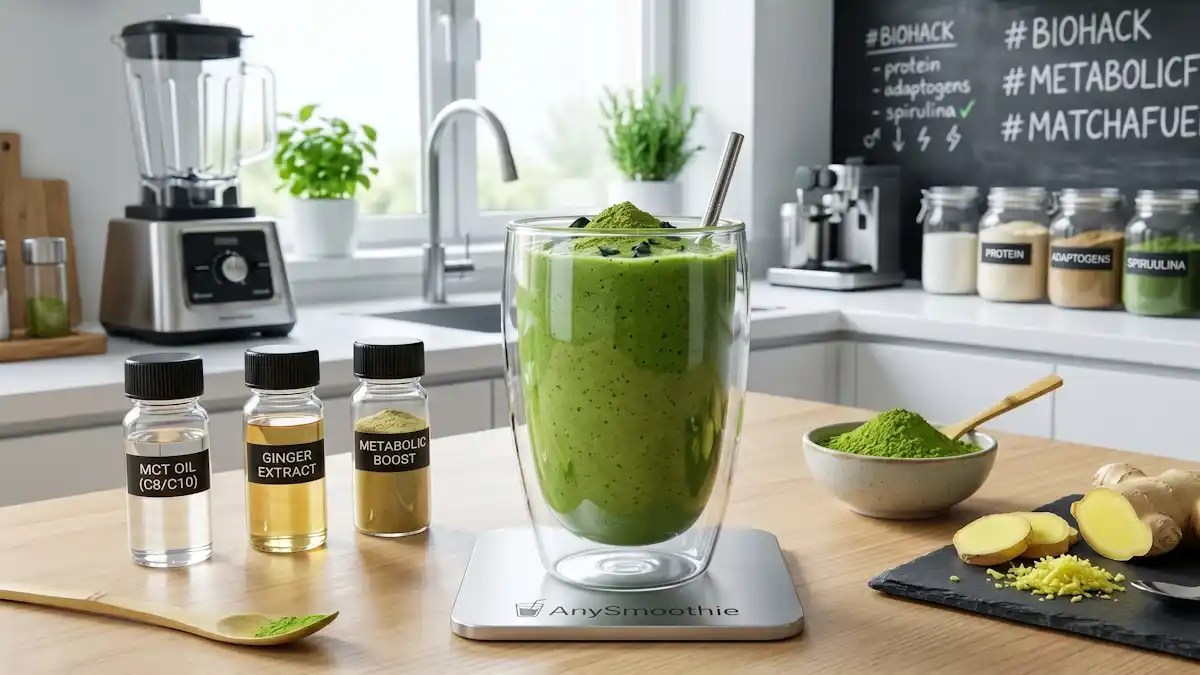
Most smoothies push sugar fast. A better one can support natural lipid oxidation by changing what your cells see first, more fat, less sugar, and the right cofactors for mitochondrial work. That is where nutrient partitioning, mitochondrial priming, and fuel use start to line up.
The goal here is simple. Build smoothies that help the body use stored fat when that fits the moment, whether you want morning focus, pre-workout energy, or steadier afternoon fuel. The logic below stays practical and science-based, with no hype.
The metabolic switch: programming cells for lipid oxidation
Your body does not burn one fuel all day. It shifts based on demand, food intake, hormones, and what is in your glass. A high-sugar smoothie can push blood glucose up fast, which sends a strong signal to use incoming carbs first. A lower-sugar blend with fat, fiber, and protein gives cells a different message.
AMPK, energy demand, and why cells burn more fat when fuel is tight
AMPK is one of the cell’s energy sensors. When energy demand rises, AMPK helps direct fuel use toward efficient pathways. That often means more fatty acid use and less storage, especially when meals are lighter and activity is higher.
Preclinical work has linked EGCG to AMPK activity and thermogenesis in brown fat, which is one reason green tea keeps showing up in fat-oxidation formulas. See the green tea catechins and AMPK support for a useful example.
A smoothie can support fat use only when it changes the fuel mix. If it becomes a sugar bomb, the signal goes the other way.
Why liquid calories can help or hurt fat use depending on what you blend
Liquid calories are easy to absorb, so ingredient choice matters more than most people think. Fruit juice, sweetened yogurt, and large banana portions can create a fast carb load. That can be fine after hard training, but it is not ideal when the goal is steadier fuel use.
A lipid-focused smoothie works better when it includes a fat source, a moderate protein source, and enough fiber to slow the rise in glucose. That mix supports cleaner energy and better nutrient partitioning.
Mitochondrial entry: the role of the carnitine shuttle
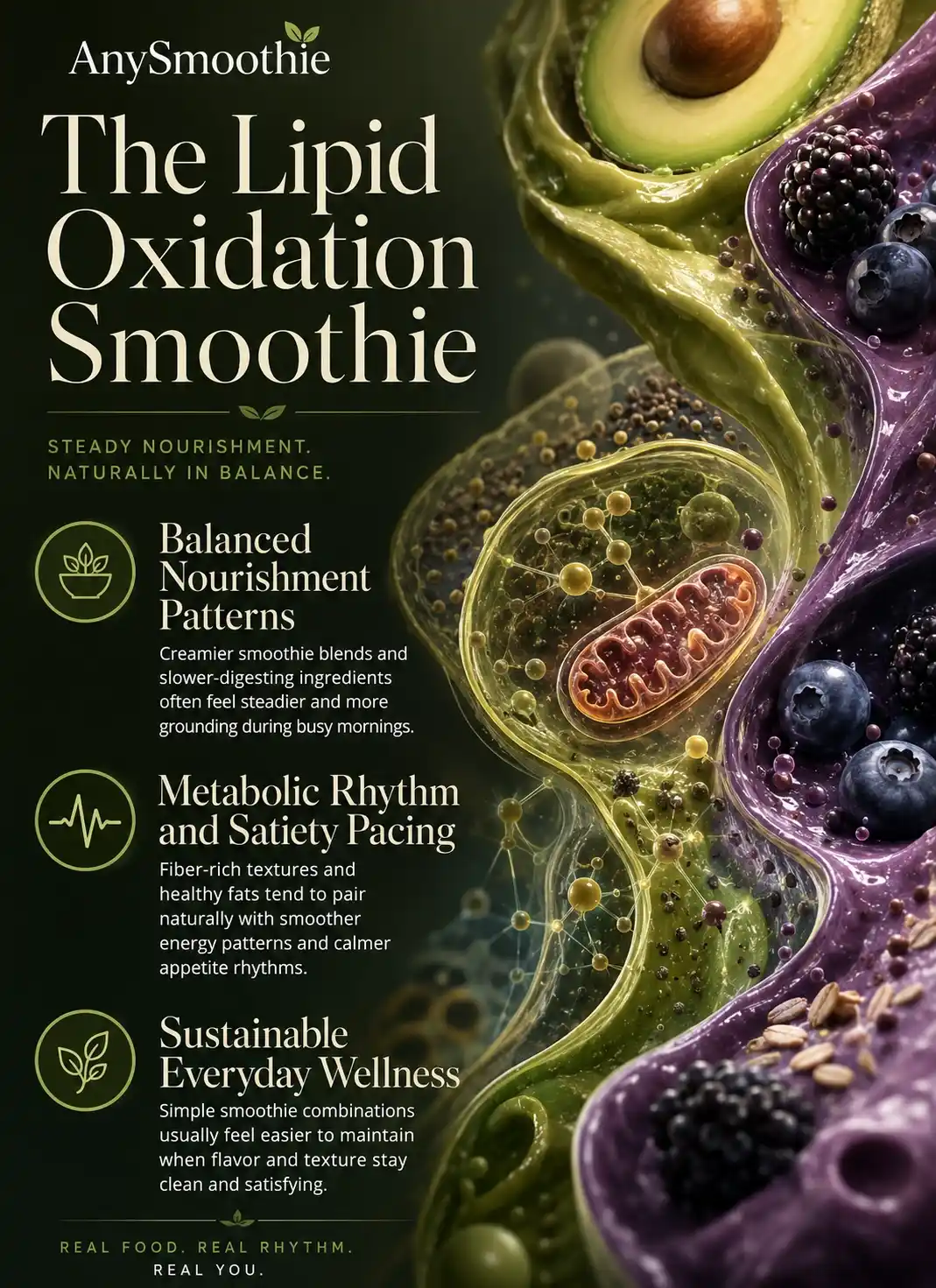
Fat cannot help much until it gets into the mitochondria. Long-chain fatty acids need the carnitine shuttle to cross that barrier. That transport step is a real bottleneck, which is why smoothie ingredients should match the fuel you want to use.
MCT intake has also been tied to higher AMPK activity in skeletal muscle in preclinical work, which fits the idea that some fats are easier to use than others. A useful background read is MCT and AMPK in skeletal muscle.
MCT fats vs. long-chain fats, and why MCTs can move faster
MCTs, especially C8, are a Fast-Track fuel source. They do not need the carnitine shuttle in the same way long-chain fats do. That makes them useful in smoothies when you want quick energy without a heavy feel.
This is also why MCTs show up in many fat-for-fuel stacks, including MCT and L-carnitine for fat oxidation. The two ingredients support different steps in the same pathway.
L-carnitine, fat transport, and when it makes the most sense in a smoothie
L-carnitine helps move long-chain fatty acids toward the mitochondria. It fits best when the rest of the smoothie already supports fat use, such as during a fasting window, before training, or on a low-sugar morning.
On its own, it is not magic. Paired with the right blend, though, it fits the logic of mitochondrial entry and cleaner fuel flow.
3 oxidation-prime smoothie formulas that put the logic into practice
The best formula depends on timing. Use one for alertness, one for steadier daytime energy, and one for a lighter carb load. The table below compares three common oxidation catalysts and where they fit best.
| Catalyst | Physiological Role | Target Area | Best Smoothie Pairing | Synergistic Co-factor |
|---|---|---|---|---|
| MCT Oil (C8) | Fast-Track fuel, ketone precursor that does not require the carnitine shuttle | Liver and mitochondria | Matcha, coffee, or cacao with unsweetened milk | Caffeine or EGCG |
| L-Carnitine | Fatty acid transporter that helps long-chain fats reach the mitochondria | Mitochondria in muscle and liver | Berry-green or pre-workout smoothies with modest protein | Training or a fasting window |
| Green Tea Extract (EGCG) | Polyphenol that supports fat signaling and thermogenesis | Adipose tissue and liver | Matcha, berry, or cacao blends | Caffeine |
How EGCG and caffeine work together to support fat signaling
EGCG and caffeine pair well because they support fat signaling from different angles. Caffeine helps with alertness and mobilization, while EGCG supports thermogenic signaling and lipid use. That is why matcha is such a clean fit for this style of smoothie.
Supporting lipolysis without making the smoothie too stimulating
Dose matters. Too much caffeine can make a smoothie feel harsh instead of useful. Matcha often works better than stronger coffee if you want a smoother lift and less jitter.
Time of day matters too. Morning and pre-workout are the best windows for most people. Late-day blends should stay lighter on stimulants.
What to pair with EGCG for better absorption and smoother energy
EGCG works best in a formula that already has structure. A small amount of fat can help the blend feel smoother, while protein keeps hunger in check. Add simple carbs only when training demands them.
That is the basic pattern. Use EGCG to support fat signaling, use caffeine with care, and give the smoothie enough fat and protein to behave like a real fuel tool.
Conclusion
The best smoothie for natural lipid oxidation is not just low in sugar. It is built with purpose. MCTs help provide quick fuel, L-carnitine supports fat transport, and EGCG adds another layer of fat signaling. Smart pairing matters as much as the ingredients themselves. A smoothie can push glucose up fast, or it can support cleaner fuel use and steadier energy. Start with one recipe, then adjust it to match your day. When the blend fits the goal, the body handles fuel better.
⚠️ SAFETY NOTES: Natural Lipid Oxidation
MCT DIGESTIVE TOLERANCE: MCT oil, especially in its pure C8 form, can cause acute gastrointestinal distress (diarrhea, cramping, or nausea) if introduced too quickly. Start with a very low dose (1 teaspoon) and increase gradually to allow your gallbladder and gut to adapt.
L-CARNITINE & HEART HEALTH: While generally safe, high doses of oral L-carnitine can be converted by gut bacteria into TMAO (trimethylamine N-oxide), which has been linked in some research to cardiovascular risks. If you have pre-existing heart conditions, consult your doctor before regular use.
CAFFEINE SENSITIVITY: Combining Matcha (EGCG) with additional coffee or stimulants can lead to tachycardia, hypertension, or anxiety in sensitive individuals. Monitor your heart rate and avoid these blends late in the afternoon to protect your sleep architecture.
INSULIN & HYPOGLYCEMIA: If you are taking insulin or glucose-lowering medications, a high-fat, low-carb smoothie can significantly change your blood sugar patterns. Frequent monitoring is essential to prevent hypoglycemic episodes during the “metabolic switch.”
EGCG & LIVER TOXICITY: High doses of concentrated Green Tea Extract (EGCG) have been associated with hepatotoxicity in rare cases. Stick to whole-food sources like high-quality Matcha powder rather than highly concentrated supplements.
FAQ
What is “Lipid Oxidation Logic” in a smoothie
Lipid oxidation logic is the strategic combination of nutrients that support the body’s natural pathways for breaking down fats into usable energy. Instead of just adding “healthy fats,” this logic focuses on providing the co-factors—like L-carnitine and B-vitamins—that facilitate the transport of fatty acids into the mitochondria. This supports the physiological systems involved in beta-oxidation, helping your body become more efficient at utilizing its own energy stores.
How do MCT fats differ from other oils in fat-burning smoothies
Medium-chain triglycerides (MCTs), particularly C8 and C10, are unique because they are absorbed directly into the portal vein and sent to the liver. Unlike long-chain fats, they do not require the “carnitine shuttle” to enter the mitochondria for oxidation. This biochemical mechanic allows them to be used almost immediately for energy or ketone production, supporting mitochondrial priming and providing a rapid fuel source that encourages the body to stay in an oxidative state.
Why is L-Carnitine essential for natural fat metabolization
L-Carnitine acts as a molecular “shuttle” that carries long-chain fatty acids across the mitochondrial membrane. Without sufficient carnitine, these fats cannot be oxidized for energy, regardless of how much you exercise. Including carnitine-rich or carnitine-supporting nutrients in your smoothie supports the physiological systems responsible for fatty acid transport, ensuring that the “fuel” you mobilize from storage actually reaches the “furnace” of the cell.
Can green tea extract (EGCG) enhance the oxidation process
Yes. EGCG (Epigallocatechin gallate) supports the natural pathways of lipolysis by inhibiting the enzyme that breaks down norepinephrine, a hormone that signals fat cells to release their contents. By maintaining higher levels of this signaling molecule, you support the body’s natural ability to mobilize stored lipids, making them available for the oxidation pathways fueled by the rest of your smoothie’s ingredients.
When is the best time to drink an “Oxidation-Prime” smoothie
To maximize the logic of lipid oxidation, these smoothies are most effective when consumed during periods of low insulin, such as in the morning or several hours after a light meal. Low insulin levels support the activation of AMPK, the “metabolic master switch” that favors fat burning over fat storage. This timing ensures that the smoothie’s substrates are used to support metabolic efficiency and fuel the body’s natural oxidative processes.

Medical Disclaimer: AnySmoothie content is for educational purposes only and is not a substitute for professional medical advice. Consult a healthcare provider for personalized guidance. See our full Disclaimer & Terms of Use. AI Transparency: AnySmoothie may use AI to support content development. All content undergoes human editorial review for accuracy, clarity, and editorial quality. See our full AI Transparency.