
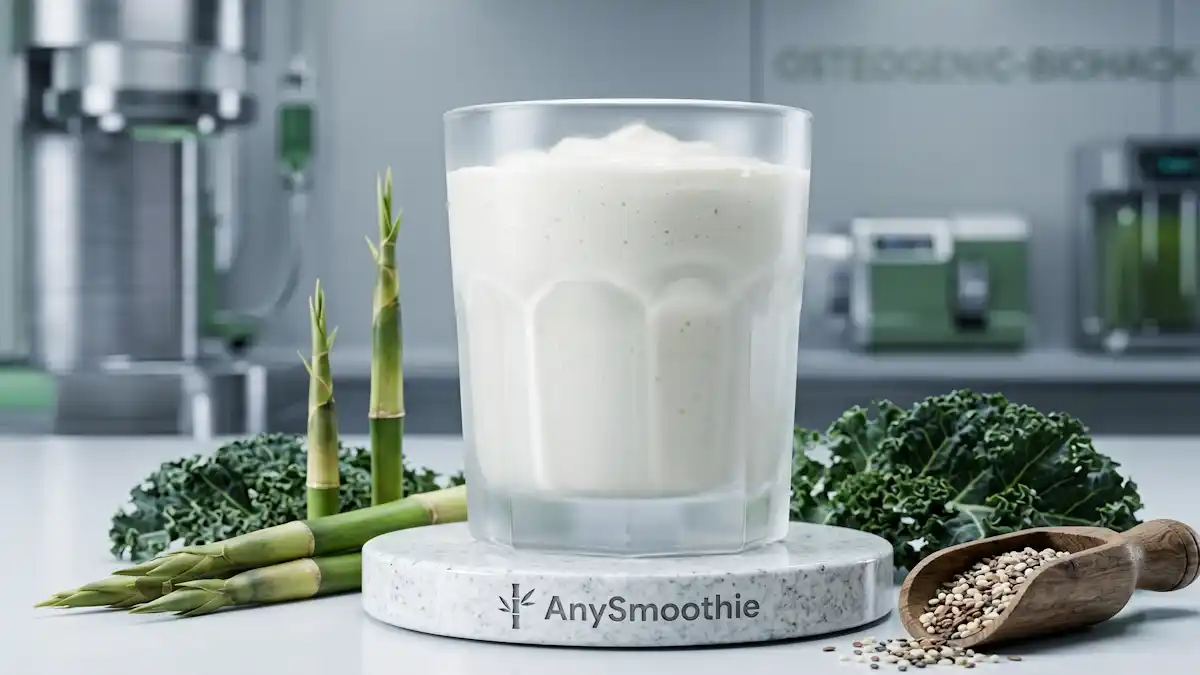
Bone morphogenetic proteins, or BMPs, help your body send repair signals where they’re needed. They guide cells that build bone, support connective tissue, and help organize the matrix that gives structure its shape.
That makes smoothies a smart format. You can pack minerals, plant compounds, protein, and fat-soluble nutrients into one easy meal, with less friction than a full supplement stack. The goal is simple: support bone matrix, connective tissue, and normal mineral use with ingredients your body can handle well.
The BMP axis: how the body builds and remodels bone
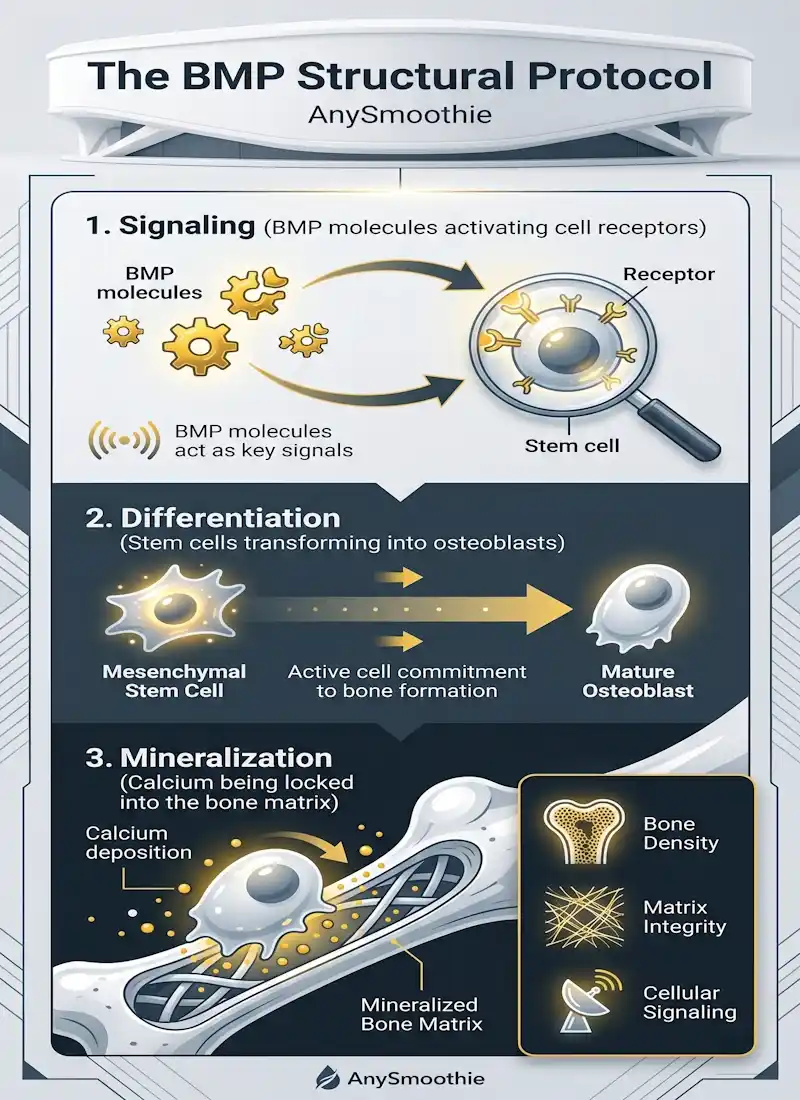
BMPs act like a signal flag for tissue repair. They help tell cells when to build, when to settle, and when to shape new bone matrix. In plain terms, they help the body coordinate construction work.
A useful human analogy is a job site. BMPs are part of the radio chatter between the crew. They don’t provide the bricks, but they help direct where the bricks go.
Nutrition cannot replace the body’s own repair systems. It can, however, support the conditions those systems need to work well. A smoothie gives you a practical way to combine those building blocks in one sitting.
For a deeper look at BMP-2 research, this PMC review on BMP-2 benefits shows how active the signaling side of bone repair can be.
Smad signaling, the message system behind growth factor activity
Smad signaling is the internal relay that carries a BMP message toward the cell nucleus. Once the signal lands, the cell can change its behavior and shift toward growth, repair, or matrix production.
You don’t need a lab chart to see why that matters. If the signal is clean, the response is cleaner too. Nutrients that support healthy cells, membranes, and energy use can help the body respond well to those messages.
Why smoothie ingredients matter for matrix building and mineralization
Bone matrix is more than calcium. It also needs collagen, minerals, and the cofactors that help the body place nutrients in the right spot.
That’s where smoothies work well. You can blend protein, greens, fruit, seeds, and a fat source in one glass. The result is easier digestion and better nutrient delivery, especially when you want vitamin-rich foods and mineral-dense ingredients together.
A good smoothie doesn’t do the repair work for you. It gives the body better raw material to use.
Nutritional co-factors that help the body use calcium well
If you want a BMP-friendly smoothie, think beyond calcium alone. The body uses calcium best when other nutrients help move it, bind it, and balance it.
Vitamin D, K2, magnesium, and boron all play a role in normal bone-related processes. They support mineral handling, structural integrity, and the body’s ability to use what you eat.
Vitamin K2 and D3, a smart pairing for osteocalcin activation
Vitamin D helps the gut absorb calcium. Vitamin K2 helps guide calcium toward the right places, including bone-related structures. Together, they form a neat handoff system.
This pairing works best when the smoothie also has protein and minerals. Greek yogurt, kefir, fortified milk, or a quality plant-based protein can help round out the mix. If you want a reference point, some bone-support formulas pair D3, K2, and bamboo silica.
Magnesium, boron, and calcium, the mineral base of a strong smoothie
Magnesium helps with many enzyme steps tied to mineral balance. Boron supports how the body handles bone-related nutrients. Calcium still matters, but it works best as part of a broader mineral base.
A smoothie can pull these together without much effort. Use leafy greens, seeds, mineral water, dairy or fortified alternatives, and fruit for flavor. That gives you better metabolic efficiency than chasing one nutrient at a time.
3 structural modulator ingredients worth adding to your smoothie
Some ingredients don’t add bulk, they add structure. That’s the part many bone blends miss.
| Ingredient | Physiological Role | Target Tissue | Best Smoothie Pairing | Synergistic Mineral |
|---|---|---|---|---|
| Bamboo extract, silica | Supports collagen cross-linking and the early matrix framework | Bone matrix, connective tissue | Berries, citrus, coconut milk, protein bases | Boron |
| Vitamin K2 (MK-7) | Supports carboxylation of osteocalcin and mineral routing | Bone, arterial walls | Yogurt, kefir, avocado, cacao | Calcium |
| Quercetin | Supports healthy tissue signaling and antioxidant balance | Connective tissue, bone cells | Spinach, blueberries, strawberries, green tea | Magnesium |
The key point is simple. Silica helps early matrix support, K2 helps direct minerals, and quercetin helps keep the cellular environment balanced.
Bamboo extract, silica support for the early matrix framework
Silica is a structural nutrient. It fits well in a smoothie because it supports the connective tissue side of the bone story, not just the mineral side.
Use it with foods that already support matrix work, like berries, citrus, coconut milk, or a protein-rich base. That mix gives you texture, flavor, and a more complete nutrient profile.
Quercetin, a plant compound that supports healthy tissue signaling
Quercetin is a flavonoid found in plants like onions, apples, and berries. In a smoothie, it fits best as part of a colorful, polyphenol-rich blend.
It helps support cellular balance, which matters when you want the body to handle repair signals cleanly. A lot of people pair it with greens and dark fruit. That keeps the blend practical and easy to repeat.
Biohacking the osteoblast: supporting cellular differentiation
Osteoblasts are the cells that build new bone. They need signals, minerals, and a stable internal environment to do their work.
That is where silicon and quercetin fit together well. Silicon supports the structural side of the matrix, while quercetin supports healthy signaling around the cell. Together, they help create a smoother setting for differentiation and matrix formation.
Silicon and quercetin, enhancing the structural integrity of the matrix
A simple way to think about this is sequence. First, the body needs a scaffold. Then it needs minerals and cofactors to fill it in.
A smoothie with bamboo silica, berries, leafy greens, and a fat source fits that pattern. It supports structure first, then mineral use, without making the blend heavy or complicated.
3 BMP-active smoothie recipes you can actually make
These are built for daily use, not kitchen drama. Keep them simple and rotate ingredients across the week.
The mineral-matrix bamboo extract, kale, and natto-derived K2 blend
Ingredients
- 1 cup unsweetened kefir or fortified coconut yogurt
- 1 cup kale
- 1/2 banana
- 1/2 cup blueberries
- 1 tsp bamboo extract
- 1 tbsp ground flaxseed
- 1 tsp MCT oil or avocado
Blend until smooth. The fat helps support absorption of fat-soluble nutrients, including K2 if you use a K2 drop or natto-based add-on.
Estimated Nutrition per Serving
- Calories: ~310 kcal
- Protein: ~15 g
- Carbohydrates: ~43 g
- Fat: ~11 g
- Fiber: ~8 g
- Sugars: ~25 g
I’d start with slightly less bamboo extract if the product has a noticeable mineral or earthy taste, then adjust on the next blend rather than masking it with extra fruit.
The collagen-support smoothie with berries, yogurt, and magnesium-rich seeds
Ingredients
- 1 cup Greek yogurt
- 1 cup mixed berries
- 1 tbsp chia seeds
- 1 tbsp pumpkin seeds
- 1/2 cup spinach
- 1/2 cup water or almond milk
- 1 squeeze lemon
This blend supports connective tissue with protein, vitamin C, and seed minerals. It’s simple enough for breakfast and steady enough for recovery.
Estimated Nutrition per Serving
- Calories: ~330 kcal
- Protein: ~29 g
- Carbohydrates: ~34 g
- Fat: ~12 g
- Fiber: ~11 g
- Sugars: ~18 g
The recovery smoothie with cacao, banana, spinach, and quercetin-rich fruit
Ingredients
- 1 cup unsweetened milk or soy milk
- 1 banana
- 1 cup spinach
- 1/2 cup cherries or blueberries
- 1 tbsp cacao
- 1 tbsp hemp seeds
- 1/2 tsp cinnamon
This one works well after training or as a dense morning meal. It brings in minerals, polyphenols, and quick energy without feeling heavy.
Estimated Nutrition per Serving
- Calories: ~330 kcal
- Protein: ~16 g
- Carbohydrates: ~51 g
- Fat: ~10 g
- Fiber: ~9 g
- Sugars: ~27 g
Conclusion
Smoothies work best for bone morphogenetic protein support when they combine minerals, vitamins, healthy fats, and plant compounds in the same glass. That mix helps support the body’s own bone-building pathways without pretending to replace them.
Keep the blends simple, rotate ingredients, and don’t chase one nutrient alone. A well-built smoothie is one part of a broader nutrient-dense diet, and that’s where the real support starts.
⚠️ SAFETY NOTES: BMP Support Smoothies
HYPERCALCEMIA RISK: Supporting bone signaling often involves Vitamin D and Calcium. If you have hypercalcemia (excessive blood calcium) or sarcoidosis, consult your physician before increasing intake, as excessive mineralization can lead to kidney stones or vascular issues.
ANTICOAGULANT INTERACTION: Vitamin K2 (essential for BMP-related proteins) can interfere with blood-thinning medications like Warfarin. If you are on anticoagulants, maintain a consistent K2 intake and discuss any significant changes with your doctor.
SILICA & KIDNEY FUNCTION: While bamboo extract is a safe source of silica, individuals with chronic kidney disease (CKD) should use mineral-concentrated extracts with caution, as the kidneys are responsible for excreting excess minerals.
HORMONE-SENSITIVE CONDITIONS: Quercetin and certain soy-based proteins (often used in these blends) can have mild phytoestrogenic effects. If you have a history of hormone-sensitive cancers, balance your intake of these polyphenols accordingly.
BONE MEDICATION CONFLICTS: If you are currently taking bisphosphonates or other prescription osteoporosis treatments, do not use smoothies to replace medical therapy. These blends are designed to provide nutritional “raw material,” not to override pharmacological interventions.
FAQ
How do Bone Morphogenetic Proteins (BMPs) initiate the repair signal?
Bone Morphogenetic Proteins (BMPs) are multi-functional growth factors belonging to the TGF-beta superfamily. Biochemically, they act as signaling ligands that bind to specific cell-surface receptors, initiating the recruitment of osteoblasts. Supporting this physiological system through a nutrient-dense smoothie optimizes the natural pathways of tissue repair and cellular differentiation, ensuring that the body’s “construction crew” receives clear instructions to build and remodel the bone matrix effectively.
What is the role of Smad signaling in the bone-building process?
Smad proteins act as the intracellular relay system for BMP signals. Once a BMP ligand binds to its receptor, Smad proteins are phosphorylated and translocate into the nucleus to regulate gene expression. Supporting this physiological system ensures that the biochemical mechanics of “differentiation” are smooth, allowing precursor cells to transform into active bone-building cells. This optimization facilitates a cleaner cellular response to repair signals and supports the long-term structural integrity of connective tissues.
How does Silica from Bamboo Extract support the “Early Matrix” framework?
Silica is a crucial trace element involved in the initial stages of bone matrix formation and collagen cross-linking. Biochemically, it acts as a structural scaffold that must be in place before mineralization can occur. Supporting this physiological system through silica-rich smoothie inputs optimizes the natural pathways of connective tissue repair. This “matrix-first” approach ensures that the biochemical mechanics of bone density are built on a stable, resilient foundation rather than just adding mineral bulk.
Why is the synergy between Vitamin K2 (MK-7) and Osteocalcin essential?
Vitamin K2 is the essential cofactor for the carboxylation of osteocalcin, a protein secreted by osteoblasts that binds calcium to the bone matrix. Biochemically, without K2, osteocalcin remains inactive and cannot properly route minerals. Supporting this physiological system ensures that calcium is directed away from soft tissues and toward the bone. This optimization facilitates efficient nutrient partitioning and supports the structural integrity of the skeletal system during daily remodeling cycles.
How does Quercetin influence the cellular environment for bone repair?
Quercetin is a bioactive flavonoid that supports the physiological systems of the bone by modulating oxidative stress and healthy signaling pathways. Biochemically, it helps maintain a balanced environment that favors osteoblast activity over bone-resorbing osteoclasts. By optimizing this natural pathway, quercetin supports the biochemical mechanics of bone maintenance, ensuring that the cellular environment remains conducive to repair and mitochondrial priming during high-metabolic turnover.

Medical Disclaimer: AnySmoothie content is for educational purposes only and is not a substitute for professional medical advice. Consult a healthcare provider for personalized guidance. See our full Disclaimer & Terms of Use. AI Transparency: AnySmoothie may use AI to support content development. All content undergoes human editorial review for accuracy, clarity, and editorial quality. See our full AI Transparency.