
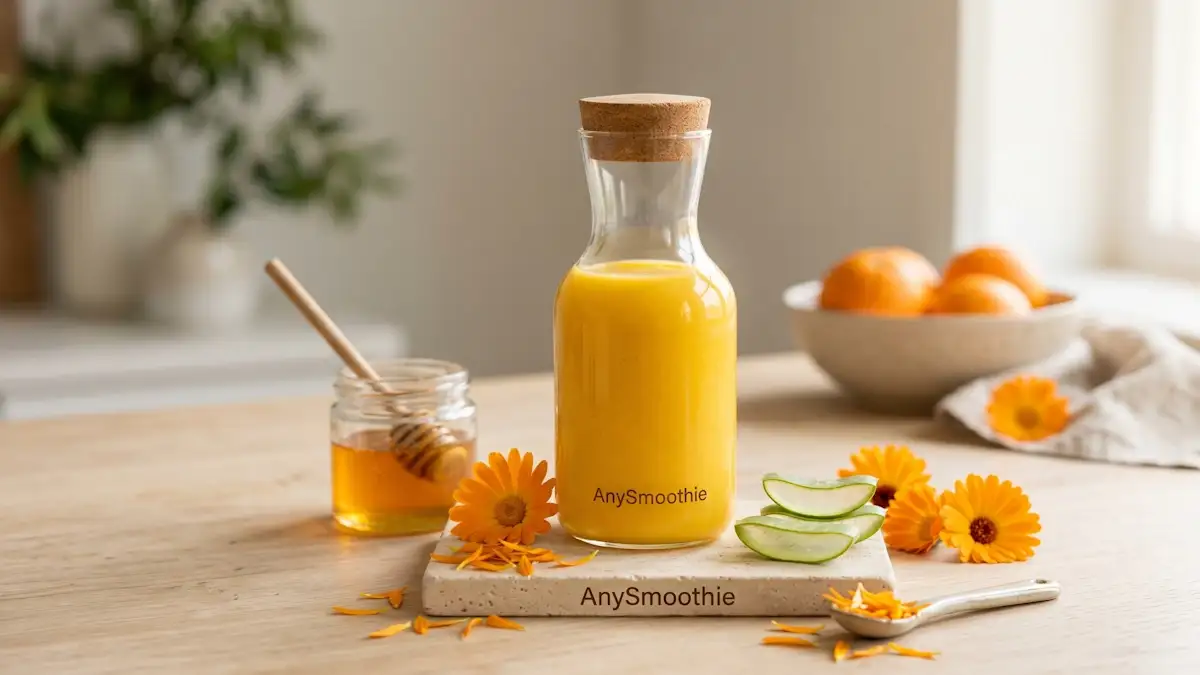
Stress, spicy meals, poor sleep, and repeated gut irritation can wear down your internal shield. When that lining feels less steady, you may notice bloating, rough digestion, or a general sense that your system is on edge.
That’s where a calendula recovery smoothie can fit in. Calendula has a long history in traditional herbal use, and its plant compounds make sense in a recovery-focused drink when you want comfort, nutrient delivery, and a simple routine that you can repeat.
The key is using calendula as part of a smart formula, not a lone hero. The right blend can support mucosal resilience, taste good, and fit into real life.
The Internal Shield: Understanding Mucosal Barrier Integrity
Your mucosal lining is the thin layer that helps separate what you eat from the rest of your body. It lines much of the stomach and intestines, and it has two jobs at once, protection and absorption.
That balance matters. According to Nature Reviews Immunology on intestinal mucosal barrier function, the barrier has to keep out unwanted material while still allowing nutrients through. When that layer gets stressed, everyday digestion can feel less smooth.
Why the mucosal lining matters for digestion and comfort
The lining is not a wall in the strict sense. It acts more like a filter with a smart gate. Good barrier function helps keep digestion calm, supports nutrient uptake, and helps the gut maintain a stable internal environment.
Irritation can show up when the system gets pushed too hard. Heavy meals, alcohol, travel, or short sleep can all add strain. Oxidative stress can also make recovery feel slower, which is why a food-first approach often works best.
How calendula fits into a barrier-support strategy
Calendula is best used as support, not as a cure-all. Its main plant compounds include triterpenoids and flavonoids, and those are often discussed in relation to tissue comfort and oxidative balance.
A recent review in Medicinal Plants for a Healthy Gut Microbiome highlights calendula’s cytoprotective and barrier-supporting potential. That makes it a useful ingredient when you want to build a smoother, gentler formula.
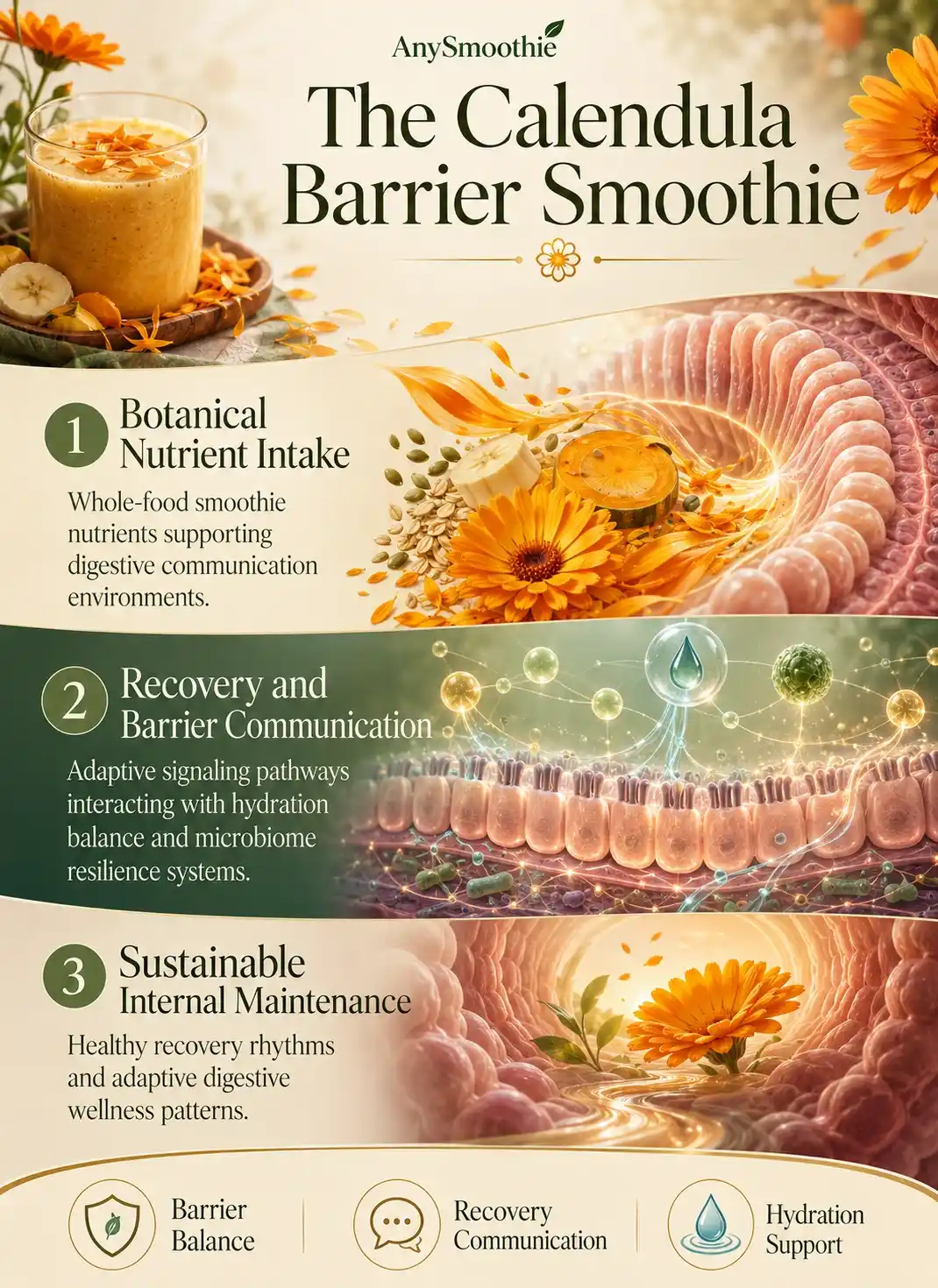
Why calendula stands out in a recovery smoothie
Calendula works well in smoothie form because it pairs easily with soft textures and mild flavors. That matters. A recovery drink should go down easily, support the mucosal lining, and still feel like food.
Triterpenoids are the part that gets the most attention in calendula discussions. In plain English, they are plant compounds that may help support healthy repair signals and preserve the surface of the mucosa. That is useful after a tough day, when the digestive tract needs a calmer input.
Triterpenoid-driven support and what that means in plain English
The goal here is not dramatic healing language. It is about helping the body keep its own repair systems in better shape. Calendula’s triterpenoids are part of that picture, especially when they come in a formula that is easy to digest.
A smoothie also gives you room to add nutrients that the body can use right away. That is where calendula gets practical. It can sit beside protein, fats, and soothing ingredients without overpowering the drink.
How calendula compares with aloe vera and L-glutamine
| Mucosal Support Agent | Primary Mechanism | Target Barrier | Bioavailability Hack | Best Smoothie Pairing |
|---|---|---|---|---|
| Calendula Extract | Triterpenoid-driven regeneration support plus flavonoid balance | Stomach and intestinal mucosa | Blend with fat for better uptake of plant compounds | Banana, coconut milk, mango, or yogurt |
| Aloe Vera (Inner Leaf) | Mucilage coating and soothing texture | Upper digestive tract and esophageal mucosa | Use a clean, decolorized inner-leaf product | Cucumber, pear, mint, or citrus-free greens |
| L-Glutamine | Amino acid fuel for enterocytes and tight junction support | Small intestine | Pair with protein and simple carbs for recovery use | Greek yogurt, kefir, banana, or oats |
Calendula is useful when you want botanical support with a gentler taste profile. Aloe fits when texture and coating matter most. L-glutamine fits when you want amino-acid support for the small intestine. A smart smoothie can hold all three ideas, but calendula brings a plant-based angle that feels distinct.
Flavonoid support for oxidative stress in the digestive tract
Flavonoids help the body manage everyday oxidative stress. That matters after travel, a hard workout, short sleep, or a day of richer food. In those moments, the gut lining can use calmer input.
Think of flavonoids as part of the cleanup crew. They do not do the whole job, but they help the body handle the mess more efficiently. That is one reason calendula can feel right in a recovery blend.
3 Barrier-Build Calendula Recovery Smoothie Recipes
These recipes keep the prep simple. Each one uses a different angle, so you can match the drink to the day.
Strategic Integration: Timing and Bioavailability for Tissue Recovery
The best smoothie is the one you can use often. Timing matters, but consistency matters more. A calendula smoothie can fit in the morning, between meals, or after a day that pushed your system harder than usual.
Lipid pairing: Enhancing the absorption of fat-soluble carotenoids
Calendula contains carotenoids, and those tend to pair well with fats. Add avocado, coconut milk, or nut butter, and you give those plant compounds a better path through digestion.
That is a simple form of nutrient partitioning. You are matching the ingredient to the way your body absorbs it. Small choices like this can make a plain smoothie more effective.
When to drink it and how often to use it
Use it during stretches when your digestion needs a calmer pattern. Morning works well if you wake up with a sensitive stomach. Between meals can work if you want a lighter feel. After a heavy day is useful if your system feels taxed.
You do not need to make it complicated. One good recipe, repeated often, beats a perfect formula that never gets made.
Conclusion
A calendula recovery smoothie is a simple way to support mucosal resilience without turning your kitchen into a lab. Calendula brings triterpenoids and flavonoids, while the rest of the blend decides how well the drink fits your body and your day.
Keep the formula easy, pair calendula with the right fats or soft proteins, and use it often enough to matter. If your gut has been feeling worn down, start with one version and adjust the texture, flavor, and ingredients until it feels right.
⚠️ Safety Notes for Calendula Recovery Smoothies
Asteraceae/Compositae Allergy: Calendula belongs to the same family as ragweed, daisies, and marigolds. If you have a known allergy to these plants, avoid calendula smoothies entirely, as they can trigger allergic reactions ranging from skin rashes to anaphylaxis.
Decolorized Aloe Vera Only: Ensure you use purified, decolorized inner-leaf aloe gel. Whole-leaf aloe contains aloin, a potent stimulant laxative that can cause severe abdominal cramping and electrolyte imbalances if consumed regularly.
Pregnancy and Breastfeeding: Traditionally, calendula has been avoided during pregnancy due to potential effects on the uterus. Consult your obstetrician before including calendula extract in your routine.
Drug Interactions (Sedatives): Calendula may have a mild sedative effect. If you are taking sedative medications (CNS depressants), it may increase drowsiness. Monitor your response, especially if consumed in the morning.
Manuka Honey and Blood Sugar: While beneficial for the gut, Manuka honey is still a sugar. If you are diabetic or monitoring your glucose, keep the serving size to 1 teaspoon to avoid disrupting your metabolic flexibility.
FAQ
How can calendula support internal barrier resilience
Calendula is rich in bioactive compounds like faradiol esters and carotenoids. When ingested, these nutrients support the body’s natural pathways for epithelial cell migration and proliferation. By optimizing the rate of cellular turnover in the mucosal linings, calendula helps maintain a resilient internal barrier, ensuring the gastrointestinal tract can effectively partition nutrients while remaining a strong shield against environmental stressors.
What is the role of triterpenoids in tissue recovery
Triterpenoids are a class of phytochemicals that act as biological modulators. They support the physiological systems responsible for managing the local inflammatory response within the gut lining. By neutralizing oxidative stress at the cellular level, these compounds facilitate a more efficient environment for the body’s natural repair mechanisms, supporting the structural integrity of the internal membranes.
Why pair calendula with aloe vera in a smoothie
This pairing creates a powerful “synergy of layers.” Aloe vera provides acemannan and mucilaginous polysaccharides that offer immediate physical support to the mucosal surface, acting as a temporary protective film. This “shield” allows the triterpenoids from the calendula to work more effectively on the underlying epithelial cells, optimizing the biological pathways of recovery and long-term barrier maintenance.
Is calendula safe for internal consumption in smoothies
Yes, Calendula officinalis is recognized for its safety in food applications. For biohacking purposes, it is best used as a high-quality dried petal infusion or a food-grade liquid extract. This ensures you are receiving the precise biochemical markers needed to support mucosal health without the fibrous bulk of the whole plant, making it easy to incorporate into a smooth, bioavailable liquid blend.
How does internal barrier health impact systemic energy
The internal barrier is the gateway for nutrient absorption. If the integrity of this barrier is compromised, nutrient partitioning becomes less efficient, and the body may divert energy toward managing suboptimal gut conditions. By supporting the resilience of your internal barriers with a calendula-based recovery smoothie, you optimize the natural pathways of nutrient uptake and systemic homeostasis, leading to more stable energy levels and better metabolic efficiency.

Medical Disclaimer: AnySmoothie content is for educational purposes only and is not a substitute for professional medical advice. Consult a healthcare provider for personalized guidance. See our full Disclaimer & Terms of Use. AI Transparency: AnySmoothie may use AI to support content development. All content undergoes human editorial review for accuracy, clarity, and editorial quality. See our full AI Transparency.