
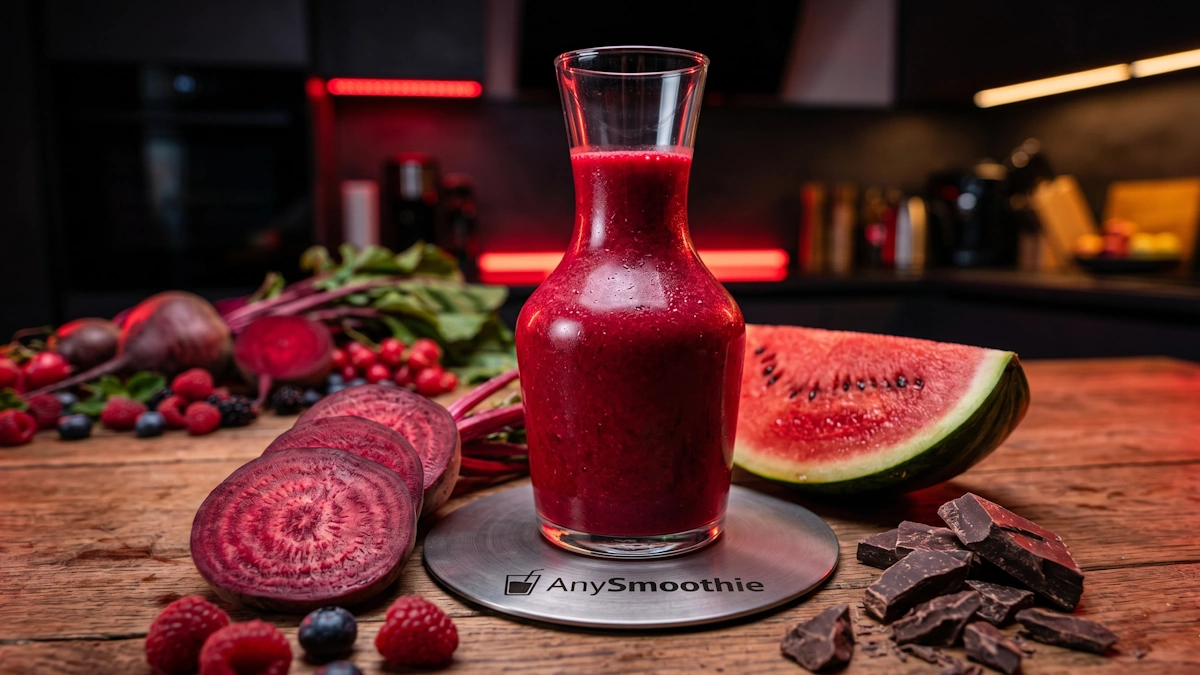
Endothelial function sets vessel tone by controlling how much nitric oxide reaches the vessel wall. That signal matters because nitric oxide helps blood vessels relax and adapt to demand. A smoothie can be a useful delivery system for nitrates, amino acids, and polyphenols, with less friction than pills or complicated prep.
The goal here is physiological support, not treatment claims. Think of this as a system configuration for vascular support, where ingredient choice changes bioavailability flux, signal transduction, and the final nitric oxide output.
The endothelial engine: how nitric oxide helps blood vessels respond
The endothelium is the thin inner layer of blood vessels. It senses flow, shear stress, and chemical cues, then adjusts vessel tone. When nitric oxide rises, the vessel wall relaxes and blood moves with less resistance.
That process depends on clean signal transduction. The endothelium has to read the input, convert it to enzyme activity, and push the message to smooth muscle. When that loop is efficient, circulation responds with precision.
eNOS activation and why the endothelium controls vessel tone
Endothelial nitric oxide synthase, or eNOS, is the main enzyme behind nitric oxide production. It uses L-arginine as substrate and needs the right enzymatic cofactors to work well.
Shear stress from blood flow is one of its strongest activators. So is a healthier nutrient state. The endothelium does not just sit there, it actively manages vessel tone by sensing conditions and adjusting output.
Why low nitric oxide flux can limit circulation efficiency
When nitric oxide flux drops, the system gets less responsive. Vessels do not relax as fast, and flow dynamics become less efficient. That does not mean collapse. It means the control system is duller.
Low flux also makes the endothelium work harder to produce the same effect. In practice, that means the same stimulus creates a weaker vascular response.
Dual pathway synergy: nitrate reduction and amino acid flux
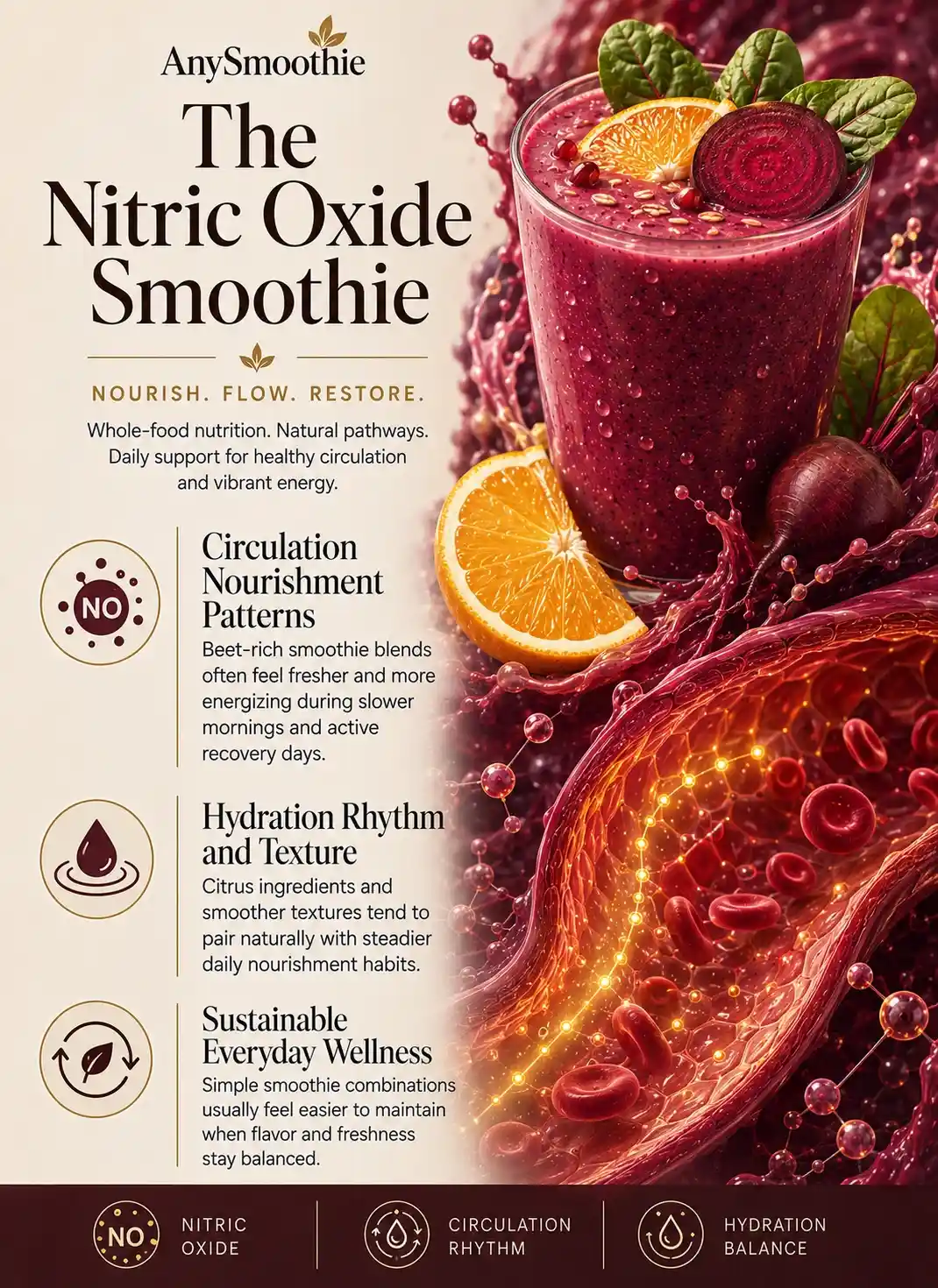
Two pathways matter most in a smoothie endothelial function and nitric oxide flux strategy. The first is the nitrate to nitrite route. The second is the amino acid route that feeds eNOS.
These routes do not compete. They cover different bottlenecks. Nitrate depends on oral bacteria and later conversion steps. Amino acid support depends on substrate supply, receptor affinity, and how fast the body can recycle the material.
L-citrulline vs. L-arginine: optimizing systemic NO availability
L-citrulline is usually the better amino acid for sustained NO flux. It is converted into arginine in the body, and it tends to raise circulating arginine more reliably than oral L-arginine. That is a pharmacokinetic problem, not a theory problem.
L-arginine can still work in some settings, but it is handled faster and less cleanly. For a smoothie, that means citrulline is the steadier input when the aim is long enough substrate support for eNOS.
Which smoothie inputs actually move the needle on NO availability?
These ingredients work through different mechanisms, so the blend should match the target. The table below keeps the pathways separate.
| NO precursor | Physiological mechanism | Peak plasma time | Best smoothie pairing | Target vessel layer |
|---|---|---|---|---|
| Dietary nitrates, beetroot | Converted to nitrite by oral bacteria, then supports nitric oxide formation | About 2 to 3 hours | Berry base with citrus | Endothelium and smooth muscle interface |
| L-citrulline, watermelon | Recycles into arginine and feeds eNOS | About 1 to 2 hours | Lime, mint, and a light seed base | Endothelial eNOS system |
| Flavonols, cacao | Help preserve NO bioactivity and reduce breakdown | About 1.5 to 3 hours | Banana or yogurt alternative with cinnamon | Endothelial surface signaling |
L-citrulline is generally more effective than L-arginine for sustained NO flux because it has better pharmacokinetics and raises usable arginine more cleanly.
Dietary nitrates, L-citrulline, and flavonols work through different pathways
Beets and leafy greens support the nitrate to nitrite pathway. Watermelon brings citrulline into the amino acid loop. Cacao adds flavonols that help protect nitric oxide once it is made.
The chemistry is simple, but the system is not. Bioavailability flux depends on how the pieces are processed together, not on one heroic ingredient.
What to pair with each ingredient for better absorption and smoother taste
Beets pair well with berries and citrus because acid cuts the earthy edge. Watermelon pairs well with lime and mint, which keeps the profile sharp and light. Cacao works well with banana or an unsweetened yogurt alternative, because a little fat and thickness improve mouthfeel.
Leafy greens like spinach or arugula fit best with citrus. The acid helps the taste, and the liquid volume keeps the blend drinkable. A smoothie that goes down easily gets used more often, and consistency matters more than oversized doses. If you want a quick reference on vitamin C and absorption, this NIH page is useful.
3 vascular support smoothie builds for nitric oxide flux
Vascular elasticity starts with glycocalyx support
The glycocalyx is the thin surface layer that helps the endothelium sense flow. When that layer stays intact, signal transduction stays cleaner. When it gets stressed, the message gets noisy.
Smoothies can support that surface when they are built around polyphenols, citrus, and moderate sugar. Heavy sweet loads pull the blend in the wrong direction.
Mitochondrial priming: energy flux for endothelial repair
Endothelial cells need ATP to keep ion balance, repair the lining, and manage stress. A good smoothie should support that energy demand without creating a sharp spike. That is where berries, greens, and citrulline-rich fruit fit well.
The point is not to flood the system. The point is to give the cells enough energy and cofactors to keep the vascular layer responsive.
How to make the smoothie work better in real life
Timing matters. A nitrate-heavy blend works best about 2 to 3 hours before you want the effect. A citrulline-forward blend is easier to place earlier in the day or before training.
Oral bacteria do part of the nitrate conversion. Strong antiseptic mouthwash can interfere with that pathway.
The common mistakes are simple. Too much added sugar, no leafy greens, or a blend built around one ingredient usually lowers bioavailability flux. Keep the formula repeatable, and the output gets more useful.
Conclusion
A well-built smoothie can support endothelial function and nitric oxide flux through a clean set of inputs. Nitrates feed one pathway, citrulline supports arginine recycling and eNOS, and flavonols help preserve NO bioactivity.
The strongest approach is a repeatable system, not a one-off recipe. Match the blend to the pathway, keep the ingredients tight, and let the vascular signal stay consistent.
🛡️ Safety Notes & Contraindications
Hypotension and Antihypertensive Medications: CRITICAL: Because dietary nitrates and high-dose L-citrulline induce potent vasodilation, integrating this protocol daily can cause sharp drops in blood pressure. If you are taking antihypertensive medications (e.g., ACE inhibitors, beta-blockers, calcium channel blockers) or PDE5 inhibitors (e.g., Sildenafil, Tadalafil), consult your cardiologist to prevent severe orthostatic hypotension or syncope.
Antiseptic Mouthwash Interdiction: The nitrate-to-nitrite pathway relies completely on the symbiotic anaerobic bacteria present on the dorsal surface of the tongue. Utilizing chlorhexidine or antibacterial mouthwashes kills these strains, effectively neutralizing the vascular and nitric oxide benefits of the beetroot/greens within the smoothie.
Renal Clearance Restrictions: L-citrulline requires functional renal tissue for conversion into systemic arginine. Individuals with advanced chronic kidney disease (CKD) or impaired glomerular filtration rates must avoid high-dose amino acid loading to prevent alterations in urea cycle kinetics.
Oxalate Burden in Beets and Spinach: Beetroot and spinach are heavily dense in oxalates. If you have a clinical history of calcium-oxalate nephrolithiasis (kidney stones), ensure the smoothie includes a calcium source (such as kefir or calcium-fortified plant milks) to precipitate oxalates directly in the gut lumen, limiting systemic absorption.
Gastric Distension from Nitrates: Concentrated beet juice or raw arugula can cause transient upper GI irritation, nausea, or a metallic taste in sensitive stomachs. Dilute the blend with adequate fluids and introduce the nitrate matrix gradually to evaluate mucosal tolerance.
FAQ
How does “L-Citrulline” act as a superior substrate for eNOS activity compared to L-arginine?
While L-arginine is the direct precursor for NO, oral arginine is subject to heavy first-pass metabolism by the liver and the enzyme arginase. Biochemically, L-citrulline bypasses this initial breakdown, resulting in a more sustained rise in systemic arginine levels. Supporting this physiological system through citrulline-rich smoothies (utilizing watermelon or supplemental malate) optimizes the natural pathways of “arginine recycling,” providing a cleaner fuel source for the endothelial nitric oxide synthase (eNOS) engine.
Why is “Oral Bacteria” a required cofactor for the dietary nitrate pathway?
The conversion of inorganic nitrate ($NO_3^-$) from beets or arugula into nitric oxide ($NO$) requires a critical first step: reduction to nitrite ($NO_2^-$) by facultative anaerobic bacteria on the tongue. Biochemically, if this oral “gatekeeper” step is bypassed or disrupted (e.g., by antiseptic mouthwash), the vascular benefit is significantly blunted. Supporting this physiological system by slowly sipping nitrate-rich smoothies facilitates the biochemical mechanics of “salivary circulation,” ensuring maximal conversion before reaching the stomach.
What is the role of “Flavonols” in protecting nitric oxide bioactivity?
Nitric oxide is a highly reactive gas with a short half-life; it can be quickly neutralized by superoxide radicals. Biochemically, flavonols (found in raw cacao and dark berries) act as antioxidant shields that quench these radicals. Supporting this physiological system through flavonol-dense smoothies facilitates the biochemical mechanics of “NO preservation,” extending the window during which the signal can reach the smooth muscle to induce relaxation.
How does “Shear Stress” integrate with nutrient status to activate eNOS?
The endothelium is a mechanosensor; the physical force of blood moving against the vessel wall (shear stress) triggers eNOS to produce NO. Biochemically, this mechanical signal is only as effective as the available substrate and cofactor pool. Supporting this physiological system through “mitochondrial priming”—ensuring the endothelium has sufficient ATP and nutrients—optimizes the natural pathways of “signal transduction,” making the vessels more responsive to physical demand.
Why is “Glycocalyx Integrity” essential for vascular signaling?
The glycocalyx is a delicate, gel-like layer of glycoproteins on the surface of endothelial cells that senses blood flow. Biochemically, a compromised glycocalyx leads to “noisy” signaling and reduced NO flux. Supporting this physiological system through low-glycemic, polyphenol-rich smoothies (using citrus and berries) facilitates the biochemical mechanics of “surface defense,” ensuring the endothelium can accurately read and respond to the body’s circulatory needs.

Medical Disclaimer: AnySmoothie content is for educational purposes only and is not a substitute for professional medical advice. Consult a healthcare provider for personalized guidance. See our full Disclaimer & Terms of Use. AI Transparency: AnySmoothie may use AI to support content development. All content undergoes human editorial review for accuracy, clarity, and editorial quality. See our full AI Transparency.