
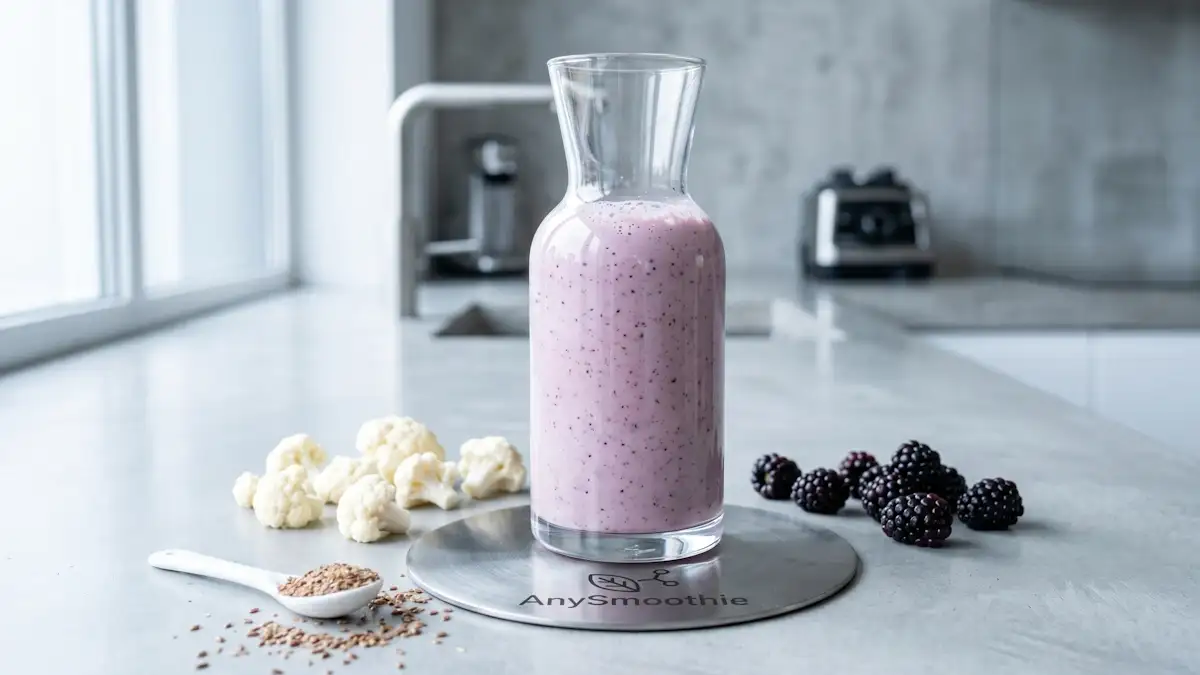
Hormone metabolism starts in the liver and ends in the gut. The body breaks down steroid hormones, then sends the leftovers out through bile and stool. If that process slows, metabolites can hang around longer than they should.
A well-built smoothie can help by packing fiber, phytonutrients, protein, and healthy fats into one easy meal. For a plain-language look at the basics, see Nutrition for Hormone Balance.
The goal here is support, not treatment. You’re giving the body better raw materials and a cleaner exit route, which is where a smoothie for hormone metabolism makes sense.
What hormone metabolism actually needs from your body
Your body needs enough protein for enzyme work, enough fiber for stool bulk, and enough micronutrients for Phase I and Phase II steps. Blood sugar matters too, because big swings can push hormone signals off track.
A smoothie works best when it acts like a meal.
- Protein supplies amino acids for conjugation.
- Fiber helps move metabolites out.
- B vitamins, magnesium, and choline support methylation.
- Sulfur-rich plants support Phase II enzyme activity.
- Stable carbs and fats help keep blood sugar calmer.
Why the liver and gut work together
The liver changes hormone structure, then bile carries those metabolites to the gut. If stool moves slowly, some of those compounds can be reabsorbed.
That is why fiber matters so much. A smoothie with berries, seeds, and greens adds bulk and plant compounds in the same serving.
The nutrients that matter most for biotransformation
Protein, fiber, choline, B vitamins, magnesium, and sulfur compounds each do a different job. Some support conjugation, some support methylation, and some help bile flow.
Balanced meals matter more than any single ingredient. A fruit-only smoothie often misses that balance.
The best smoothie ingredients for hormone support
Build around cruciferous vegetables, seeds, berries, protein, and fat. That mix supports intestinal integrity, hepatic clearance, and steadier energy.
Cruciferous vegetables, flax, and berries work well together
Cauliflower, broccoli, kale, and broccoli sprouts bring sulfur compounds that support Phase II pathways. Flaxseed adds fiber and lignans, which help the smoothie do more than taste good.
Berries add color, antioxidants, and a cleaner flavor. One easy combo is frozen cauliflower, blueberries, flax, and spinach. It sounds odd, but it blends well.
Protein and healthy fats help the smoothie do more
Fruit alone can spike glucose and leave you hungry fast. Greek yogurt, kefir, collagen, chia, avocado, hemp hearts, and nut butter slow the pace and improve satiety.
They also help absorb fat-soluble compounds from greens. A smoothie that acts like breakfast beats one that behaves like dessert.
Steroid biotransformation: the hepatic processing logic
Steroid hormones move through Phase I oxidation, then Phase II conjugation, then gut clearance. That process runs better when the liver gets sulfur compounds, fiber, and a steady amino acid supply.
DIM, calcium D-glucarate, and sulforaphane are common add-ins because they support different parts of that path.
Hydroxylation pathways: balancing 2-OH vs. 16-OH metabolites
Some estrogen metabolites are easier to clear than others. DIM is often used to support a healthier 2-OH to 16-OH pattern, which is why it gets the gold-standard label for this goal.
The aim is normal processing, not forcing the body in one direction.
What DIM, calcium D-glucarate, and sulforaphane each contribute
DIM helps support estrogen metabolite balance. Calcium D-glucarate supports the clearance side by helping limit beta-glucuronidase activity. Sulforaphane supports broader Phase II enzyme activity.
| Compound | Physiological Mechanism | Key Hormone Targeted | Best Smoothie Pairing | Target System |
|---|---|---|---|---|
| DIM (Diindolylmethane) | Supports estrogen metabolism toward the 2-OH pathway | Estrogen | Cauliflower, berries, protein | Hepatic clearance, steroid metabolite ratio |
| Calcium D-Glucarate | Helps limit beta-glucuronidase activity, supporting excretion | Estrogen metabolites | Flax, citrus, kefir | Intestinal integrity, reabsorption control |
| Sulforaphane | Supports Phase II enzyme activity | Estrogen and other steroid metabolites | Broccoli sprouts, greens, avocado | Hepatic detox enzymes, antioxidant defense |
DIM is the most direct option when metabolite ratio is the goal. Calcium D-glucarate fits the gut-clearance side. Sulforaphane works well when you want a broader Phase II push from food.
The best smoothie for hormone metabolism works best when it supports clearance, not when it tries to do everything at once.
3 hormone-prime smoothie recipes you can actually make
These recipes are simple, repeatable, and built on the same logic, fiber, protein, and targeted plant compounds.
Endo-Clear Cauliflower, Flaxseed, and Methyl-Donor Berry Blend
Ingredients
- 1 cup frozen cauliflower florets
- 1 cup mixed berries
- 1 tablespoon ground flaxseed
- ¾ cup plain Greek yogurt
- 1 cup unsweetened almond milk
Pour the almond milk and Greek yogurt into the blender first. Add the frozen cauliflower, mixed berries, and ground flaxseed. Blend until creamy and completely smooth.
Cauliflower contributes fiber, vitamin C, folate, and other micronutrients, while berries provide anthocyanins and other polyphenols. Ground flaxseed adds fiber, lignans, and ALA omega-3 fatty acids. These ingredients can contribute nutrients involved in normal metabolism, but the smoothie should not be expected to directly enhance methylation or promote estrogen clearance.
Estimated Nutrition per Serving
- Calories: ~335 kcal
- Protein: ~23 g
- Carbohydrates: ~42 g
- Fat: ~10 g
- Fiber: ~13 g
- Sugars: ~23 g
Green Smoothie with Broccoli Sprouts and Avocado
Ingredients
- 1 packed cup spinach
- ½ avocado
- ½ cup frozen pineapple
- 1 tablespoon fresh broccoli sprouts
- 1 scoop unflavored protein powder
- 1 cup cold water
- ½ cup ice, optional
Pour the water into the blender first. Add the spinach, broccoli sprouts, avocado, pineapple, protein powder, and ice if using. Blend until completely smooth.
Broccoli sprouts are rich in glucoraphanin, which can be converted by myrosinase to sulforaphane, although the amount ultimately produced varies considerably. Spinach contributes folate and carotenoids, while avocado provides fiber and unsaturated fat. Dietary fat can support absorption of certain fat-soluble nutrients such as carotenoids.
Estimated Nutrition per Serving
- Calories: ~380 kcal
- Protein: ~31 g
- Carbohydrates: ~33 g
- Fat: ~18 g
- Fiber: ~11 g
- Sugars: ~13 g
If I were making this regularly, I’d blend the spinach and broccoli sprouts with the water first, then add the avocado and remaining ingredients. The greens disappear more completely while the avocado gives the final blend its creamy texture.
Cocoa Chia Smoothie for Steady Energy and Methylation Support
Ingredients
- 1 tablespoon unsweetened cocoa powder
- 1 tablespoon chia seeds
- 1 medium banana
- 1 scoop unflavored protein powder
- 1 packed cup spinach
- 1 cup unsweetened soy milk
- ½ cup ice, optional
Pour the soy milk into the blender first. Add the spinach, banana, protein powder, cocoa, chia seeds, and ice if using. Blend until thick and completely smooth.
Spinach provides folate and other micronutrients involved in normal cellular metabolism, while chia contributes fiber and ALA omega-3 fatty acids. Cocoa provides flavanols, banana supplies carbohydrates, and the protein base makes the smoothie more substantial. The combination can fit a balanced meal or snack, but it should not be expected to directly optimize methylation or guarantee steadier energy.
Estimated Nutrition per Serving
- Calories: ~420 kcal
- Protein: ~37 g
- Carbohydrates: ~48 g
- Fat: ~13 g
- Fiber: ~12 g
- Sugars: ~20 g
How to make your smoothie more effective without overcomplicating it
Keep added sugar low, pair carbs with protein, and rotate ingredients so you do not lean too hard on one plant compound every day. That is the simplest form of biohacking hormonal feedback, because stable fuel supports receptor sensitivity and mitochondrial output.
Use whole fruit instead of juice. Add seeds for texture and fiber. Use enough liquid so the smoothie goes down easily.
Consistency matters more than chasing the perfect recipe. Make one version part of your morning routine for a week or two, then adjust.
Conclusion
A well-built smoothie can support hormone metabolism through liver work, gut clearance, blood sugar balance, and better nutrient intake. That is why the best blends feel like real food, not a sweet drink with a health label.
Start with one recipe, see how your body handles it, then adjust the sweetness, thickness, and protein. Build a smoothie that works with your natural pathways, and keep it simple enough to repeat.
🛡️ Safety Notes & Contraindications
Hormonal Therapy Counter-Interactions: Because DIM, sulforaphane, and calcium D-glucarate actively accelerate the hepatic clearance and metabolism of steroid rings, individuals undergoing hormone replacement therapy (HRT), oral contraception, or anti-estrogen therapies (e.g., Tamoxifen, Anastrozole) must avoid highly concentrated forms of these ingredients without direct oncological or endocrinological clearance.
Goitrogenic Effects of Raw Crucifers: Raw cruciferous vegetables (broccoli, kale, cauliflower) contain glucosinolates that can compete with iodine uptake in the thyroid gland. Individuals with diagnosed hypothyroidism or Hashimoto’s thyroiditis should exclusively use frozen-steamed cauliflower/broccoli in their smoothies, as heat deactivates the goitrogenic enzyme myrosinase.
Beta-Glucuronidase and Medication Clearance: Calcium D-glucarate’s inhibition of glucuronidasi can alter the clearance rates of certain prescription drugs metabolized via the glucuronidation pathway (e.g., NSAIDs, statins, and certain anesthetics). Space medical therapeutics at least 2 hours away from this protocol.
GI Distress from Rapid Indole Loading: Introducing dense structural fibers (flax, chia) combined with sulfurous compounds simultaneously can trigger transient gastrointestinal fermentation, leading to bloating, meteorism, or altered transit metrics. Titrate the dose of crucifers and seeds upward gradually.
Pregnancy and Lactation Interdiction: Concentrated indole compounds and DIM can significantly shift systemic estrogen metabolite ratios. Due to the critical, sensitive role of fluctuating hormone concentrations during gestation and lactation, this biochemical protocol is contraindicated for pregnant or nursing individuals.
FAQ
How do “DIM and Sulforaphane” facilitate the biochemical mechanics of estrogen metabolism?
DIM (Diindolylmethane) and sulforaphane are bioactive compounds derived from cruciferous vegetables like cauliflower and broccoli sprouts. Biochemically, DIM supports the 2-hydroxylation pathway, favoring the production of more stable estrogen metabolites. Supporting this physiological system through sulfur-rich smoothies facilitates the biochemical mechanics of “metabolic balancing,” helping the liver process steroid hormones more efficiently.
Why is “Calcium D-Glucarate” critical for preventing hormone reabsorption?
Once the liver conjugates a hormone for excretion, it enters the gut. However, an enzyme called beta-glucuronidase can “un-tag” these metabolites, allowing them to be reabsorbed into the bloodstream. Biochemically, Calcium D-Glucarate inhibits this enzyme. Supporting this physiological system through targeted smoothie additions (like flax and citrus) optimizes the natural pathways of “elimination integrity,” ensuring that processed hormones actually exit the body.
What is the role of “Methyl Donors” in Phase II conjugation?
Methylation is a key Phase II pathway that helps neutralize catechol estrogens. Biochemically, this process requires methyl donors such as folate, B12, and choline. Supporting this physiological system with a base of spinach, berries, and kefir facilitates the biochemical mechanics of “COMT enzyme support,” which is essential for the final deactivation of specific hormone metabolites.
How does “Viscous Fiber” support the enteric-hepatic circulation?
Fiber does more than provide bulk; it acts as a physical sequestering agent for bile acids and hormone metabolites. Biochemically, lignans in flaxseeds can bind to estrogen in the intestinal lumen. Supporting this physiological system through high-fiber smoothies (flax, chia, berries) optimizes the natural pathways of “biliary clearance,” preventing the “recycling” of hormones that can lead to systemic overload.
Why is “Insulin Stability” necessary for hormonal receptor sensitivity?
Hormonal balance is not just about clearance; it is also about how cells respond to signals. Biochemically, chronic insulin spikes can lower Sex Hormone-Binding Globulin (SHBG), leading to higher levels of “free” active hormones. Supporting this physiological system through protein-and-fat-anchored smoothies facilitates the biochemical mechanics of “glycemic control,” which protects receptor sensitivity and supports overall endocrine homeostasis.

Medical Disclaimer: AnySmoothie content is for educational purposes only and is not a substitute for professional medical advice. Consult a healthcare provider for personalized guidance. See our full Disclaimer & Terms of Use. AI Transparency: AnySmoothie may use AI to support content development. All content undergoes human editorial review for accuracy, clarity, and editorial quality. See our full AI Transparency.