
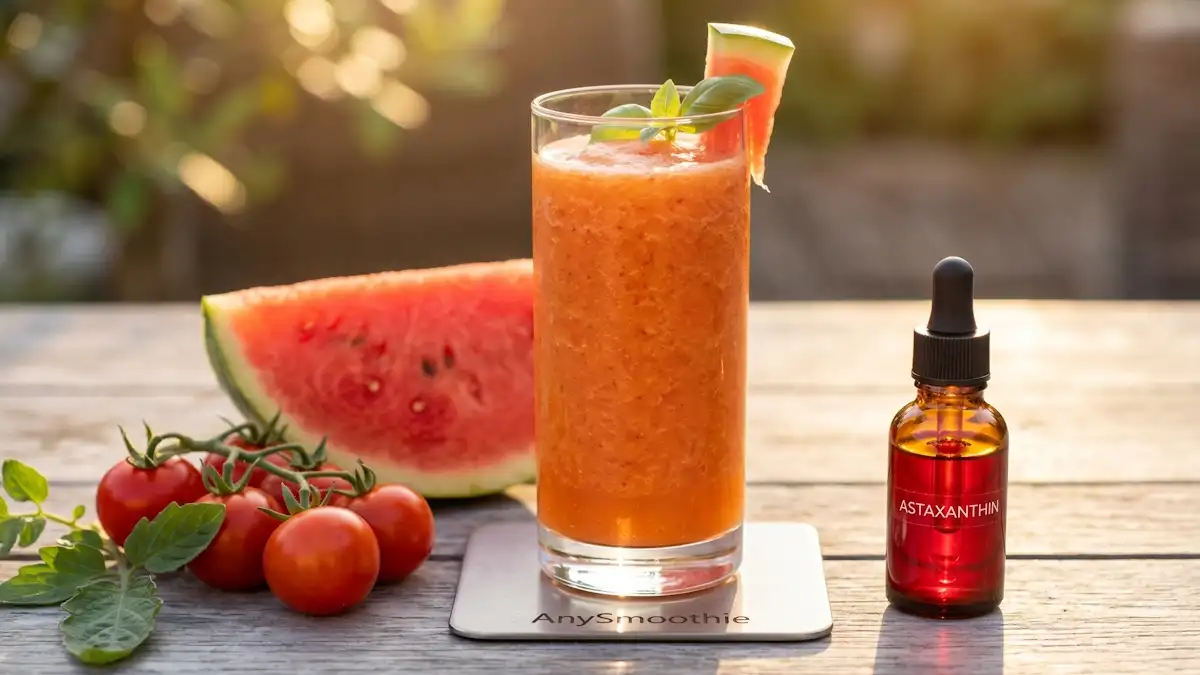
Food can’t replace sunscreen, and that line matters. A smoothie can still support the body’s defense and repair systems after UV stress. A smoothie for dermal photoprotection and repair works best when it supports the skin instead of trying to replace it.
Dermal photoprotection means helping skin handle light-related oxidative stress before it turns into visible strain. The formula is simple, carotenoids, healthy fats, protein, and repair nutrients, all in one glass. That gives the body better raw material when sun exposure adds load.
Systemic Photoprotection: Building the Internal UV Shield
Internal skin support starts before the burn, not after it. Certain nutrients help neutralize oxidative stress, protect lipid membranes, and move useful compounds into skin tissue. A broad review on dietary supplements and skin photoprotection shows why carotenoids, antioxidants, and fats keep showing up in this discussion.
The three most useful ingredients often do different jobs, and a quick comparison keeps the formula clear.
| Dermal Protectant | Physiological Mechanism | Bioavailability Factor | Best Smoothie Pairing | Target Skin Layer |
|---|---|---|---|---|
| Astaxanthin (marine xanthophyll) | Quenches singlet oxygen in lipid bilayers, helps calm UV-driven oxidative stress, and is often cited as about 6000x more potent than vitamin C inside cell membranes | Best with fat, because lipids improve uptake | Tomato, watermelon, avocado, olive oil | Cell membranes and lipid-rich epidermis |
| Lycopene | Helps reduce UV-linked oxidative signaling and lipid oxidation | Improves with fat and gentle processing | Tomato, watermelon, citrus, olive oil | Epidermal lipid layers |
| Collagen peptides | Provide amino acid substrates for matrix repair and support structural protein assembly | Vitamin C helps collagen formation | Berries, kiwi, Greek yogurt, citrus | Dermal matrix and connective tissue |
Astaxanthin gets attention for a reason. Its strength shows up where oxidation starts, inside membrane-rich tissue.
Why carotenoids matter for skin defense
Carotenoids fit well into fatty skin layers, so they can help quench reactive oxygen species where UV stress hits hardest. Lycopene, astaxanthin, and related pigments support the skin’s response to light exposure without asking for a complicated routine. A review of phytonutrients in skin health points to carotenoids as useful photoprotective nutrients.
Astaxanthin is especially strong in cell membranes. That matters because membranes are where oxidative wear can spread fast. In plain terms, it helps place antioxidant defense where it can do the most work.
How healthy fats improve absorption
Fat-soluble compounds need a fat partner. Without it, carotenoids do not move through digestion as well, and nutrient partitioning gets sloppy. Avocado, chia, flax, coconut milk, and olive oil all help move these compounds into the path the body uses.
A spoon of fat can change the whole smoothie. It helps lipids carry carotenoids, and that supports better delivery to skin tissue.
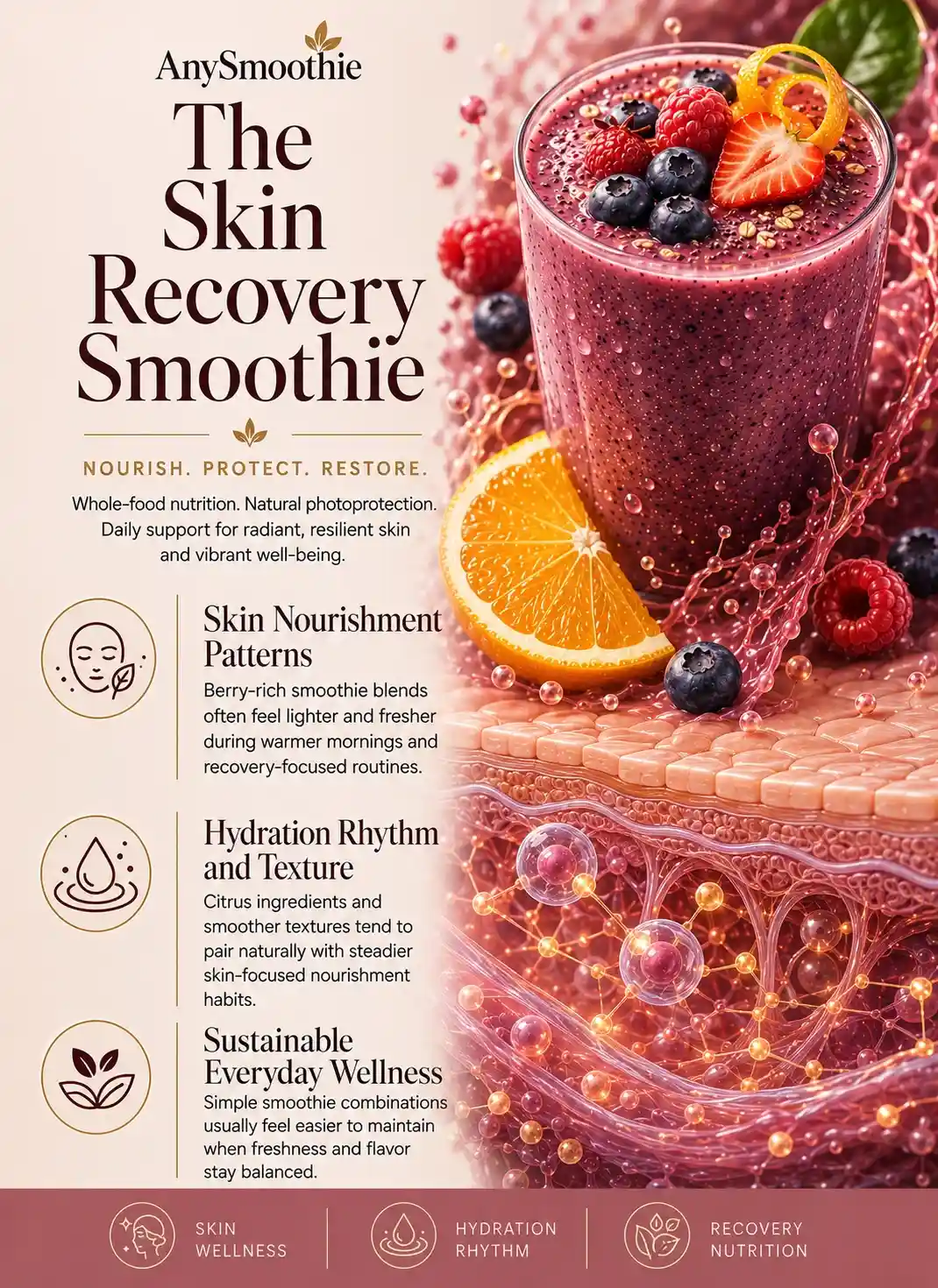
Matrix Regeneration: Supporting Collagen and Elastin Synthesis
Sun exposure stresses more than color and tone. It also taxes collagen, elastin, and cellular energy systems. That is why the repair side matters as much as the defense side.
A review in Nutrients highlights vitamins, minerals, carotenoids, and essential fats that support photoprotective skin nutrition. The point is simple, repair works better when the smoothie gives the skin real building blocks.
The Vitamin C-Proline Axis: Cofactors for Structural Protein Assembly
Vitamin C helps collagen form in the right shape. Proline and glycine supply much of the scaffold. Together, they support the matrix that keeps skin firm and organized.
That is why citrus, kiwi, berries, collagen peptides, Greek yogurt, kefir, or a clean protein base make sense here. They do not just add flavor. They give the body material it can use after sun exposure.
Add mineral support for recovery and antioxidant balance
Zinc, copper, selenium, and magnesium all help enzymes that manage repair and antioxidant balance. They do not need to dominate the recipe, but they should have a place. Pumpkin seeds, cacao, spinach, and mineral-rich powders are easy ways to add them.
A smoothie with minerals, fats, and protein gives skin a steadier recovery environment than fruit alone. That matters when the goal is repair, not a sugar rush.
3 “Dermal-Prime” Resilience Smoothie Recipes
These recipes stay close to real life. Each one uses common ingredients and a clear purpose.
Cellular Repair: Supporting DNA Integrity Post-Exposure
After UV exposure, cells need energy for routine maintenance and turnover. If the smoothie is balanced, it supports that work without dragging the system through a glucose spike.
Mitochondrial Priming: Energy Flux for Rapid Dermal Turnover
Stable energy production matters because repair is not free. The body needs ATP, amino acids, and antioxidant support to keep turnover moving. A smoothie with protein, minerals, and polyphenols helps that process stay smooth.
Avoid the urge to pile on stimulants or trendy extras. The goal is steady support for the body’s own repair systems, not a noisy drink that looks impressive on paper.
What to avoid if you want better skin results from your smoothie
A strong formula can still fail if the balance is off. The most common problems are too much sugar, no fat for absorption, weak protein, and ingredient lists that try to do too much.
Keep the base simple. Use fruit as part of the mix, not the whole story. Add fat when you use carotenoids, and keep protein in the blend when repair matters most.
Conclusion
The best smoothie for dermal photoprotection and repair is simple and balanced. Carotenoids help with defense, while healthy fats, protein, vitamin C, and minerals support recovery.
Start with one recipe, then adjust it for your routine, season, and sun exposure. A small, steady formula often does more than a complicated one.
🛡️ Safety Notes & Contraindications
Beta-Carotene and Heavy Smokers: High supplemental doses of isolated carotenoids (particularly beta-carotene) have been linked in clinical trials to an increased risk of lung cancer in chronic smokers. If you are a heavy smoker, stick strictly to dietary food sources (whole carrots, mango) rather than high-dose isolated carotenoid extracts within your smoothies.
Astaxanthin and 5-Alpha Reductase Inhibition: Astaxanthin can act as a mild inhibitor of the 5-alpha reductase enzyme, which converts testosterone to DHT. Individuals managing hormonal conditions or those sensitive to shifts in androgen markers should monitor their response when utilizing concentrated astaxanthin extracts daily.
Lipid Peroxidation of Oils: Seed oils rich in polyunsaturated fatty acids (like flaxseed or walnut oil) oxidize rapidly when exposed to air, light, and high-speed blender blades. To ensure dermal safety, add delicate oils at the very end of the blending cycle on a low-speed pulse, and consume immediately.
Photosensitivity and Citrus Essential Oils: If adding citrus zest (lemon, lime, orange) for terpene support, ensure the fruit is organic. Certain compounds (psoralens/furocoumarines) can induce phototoxic reactions if concentrated oils come into direct contact with the skin before sun exposure; wash hands thoroughly after prep.
Sunscreen Replacement Fallacy: CRITICAL: Systemic photoprotection via nutritional modulation serves as a secondary redox buffer. It increases the skin’s minimal erythema dose (MED) over time but does not replace topical SPF. This protocol must be used as an internal adjunct to, not a substitute for, physical sunscreen.
FAQ
How do “Carotenoids” like Astaxanthin act as internal membrane shields?
Astaxanthin is a marine xanthophyll that spans the entire cell membrane. Biochemically, it is uniquely positioned to quench singlet oxygen—a highly reactive species generated by UV light—on both the inner and outer layers of the lipid bilayer. Supporting this physiological system through regular smoothie intake facilitates the biochemical mechanics of “membrane stabilization,” providing a potency often cited as several thousand times more effective than Vitamin C within lipid-rich environments.
Why is “Lipid-Phase Transport” essential for the bioavailability of skin pigments?
Carotenoids like lycopene and astaxanthin are highly lipophilic and cannot be effectively absorbed in a water-only matrix. Biochemically, the presence of lipids (from avocado, olive oil, or chia) triggers micellar formation in the small intestine, which is a requirement for these protectants to enter the lymphatic system. Supporting this physiological system with healthy fats optimizes the natural pathways of “nutrient partitioning,” ensuring these pigments reach the epidermis rather than being excreted.
What is the role of the “Vitamin C-Proline Axis” in dermal repair?
The structural integrity of the skin depends on the assembly of collagen and elastin. Biochemically, Vitamin C is a required cofactor for the enzymes that cross-link proline and glycine into stable collagen fibers. Supporting this physiological system by pairing Vitamin C-rich fruits (kiwi, citrus) with collagen peptides or amino-dense protein facilitates the biochemical mechanics of “matrix regeneration,” helping the skin maintain firmness after UV-induced breakdown.
How does “Mitochondrial Priming” support rapid dermal turnover post-exposure?
The repair of UV-induced DNA strain and the turnover of damaged skin cells are energy-intensive processes. Biochemically, the body requires a steady flux of ATP to fuel these restorative pathways. Supporting this physiological system with balanced smoothies—combining protein, minerals (zinc, magnesium), and polyphenols—facilitates the biochemical mechanics of “bioenergetic support,” providing the metabolic foundations necessary for routine dermal repair.
Why is “Antioxidant Networking” more effective than isolated high-dose nutrients?
Antioxidants work in a coordinated redox network where one molecule can recycle another. Biochemically, Vitamin E protects lipid membranes from oxidation, while pigments like lycopene buffer the initial oxidative hit. Supporting this physiological system through diverse, whole-food smoothies facilitates the biochemical mechanics of “synergistic defense,” ensuring that the skin’s internal shield is resilient and multi-layered.

Medical Disclaimer: AnySmoothie content is for educational purposes only and is not a substitute for professional medical advice. Consult a healthcare provider for personalized guidance. See our full Disclaimer & Terms of Use. AI Transparency: AnySmoothie may use AI to support content development. All content undergoes human editorial review for accuracy, clarity, and editorial quality. See our full AI Transparency.