
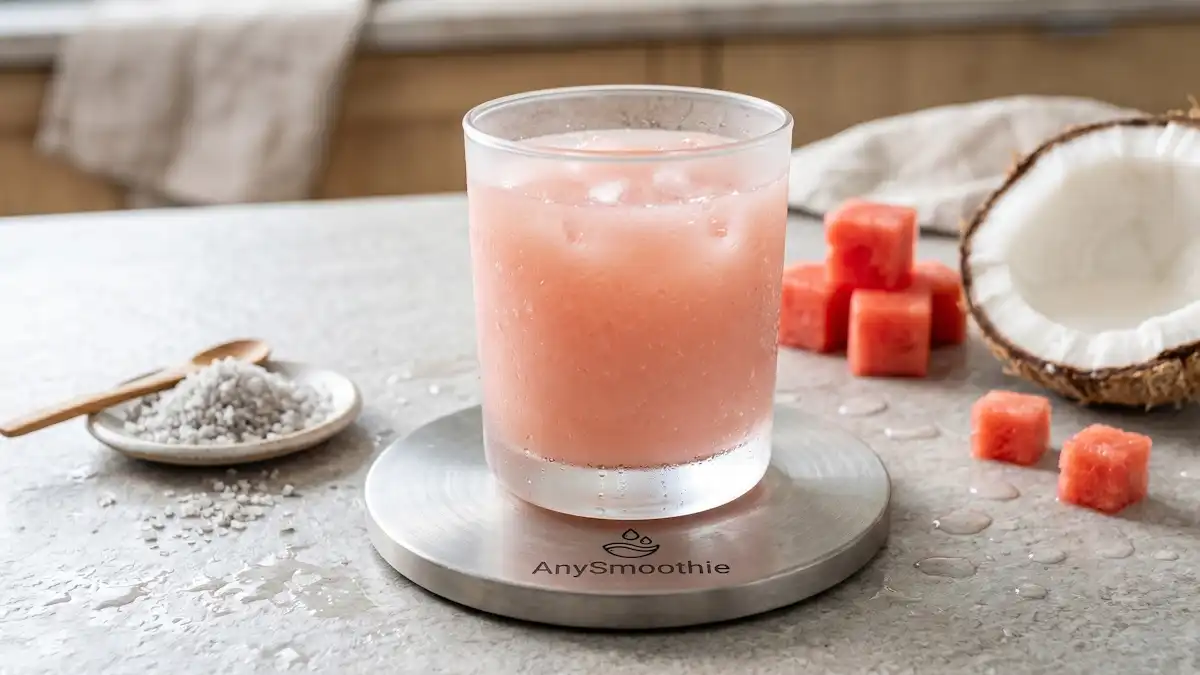
Plain water helps, but it does not always move fast enough after sweat, travel, or a poor night’s sleep. Your body needs fluid plus the minerals that help that fluid stay useful. That is where a smoothie for cellular hydration and electrolyte flux makes sense.
The goal is simple. Use fruit, greens, salt, and water-rich produce to support osmotic balance, help water move into cells, and keep energy steadier. When the mix is right, hydration feels cleaner and lasts longer.
The Osmotic Gradient: Beyond Extracellular Hydration
Hydration starts outside the cell, but the body does not stop there. Extracellular fluid surrounds cells, while intracellular fluid fills them. Both matter, yet the inside space is where water supports volume, enzyme work, and steady function. Electrolytes help decide where that water goes.
Osmosis moves water toward the side with more dissolved minerals. That is why a drink with potassium, sodium, and a little sugar can move differently than plain water. It sets up a useful gradient instead of a flat rinse. A drink with only water can leave that gradient flat, so the body may pass it through fast.
Water follows the mineral pattern. When the pattern is balanced, fluid moves with less resistance.
Aquaporins: The Molecular Gates for Intracellular Water Flux
Aquaporins are tiny channels in cell membranes. They help water pass in and out without dragging in everything else. Smoothies that pair fluid with electrolytes can support that flow, because the membrane gets a clearer signal about where water belongs.
Cation Dynamics: Balancing Sodium, Potassium, and Magnesium
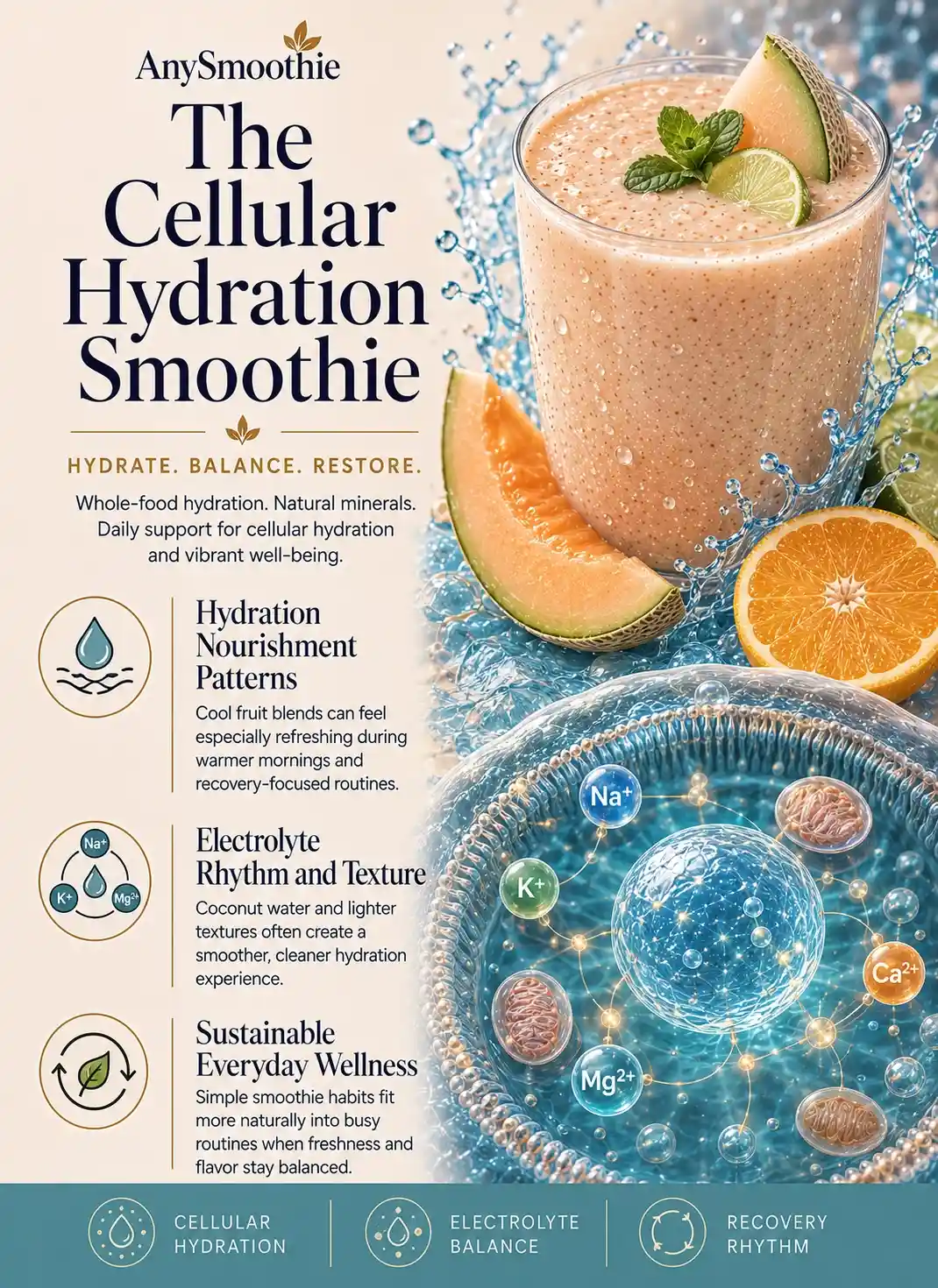
Sodium, potassium, and magnesium each pull their own weight. Sodium helps hold fluid outside cells. Potassium helps keep the inside of cells in balance. Magnesium supports the enzymes and ion movement that use energy.
If one side is too heavy, hydration feels uneven. You may drink plenty and still feel flat. A good smoothie keeps the mix moderate, not extreme, so the body can use the fluid without a big swing. For a clear overview of magnesium’s role, see the NIH fact sheet.
The Sodium-Potassium Pump: Maintaining Cellular Voltage
The sodium-potassium pump keeps cell voltage in range. It moves sodium out and potassium in, which helps cells keep their charge. Magnesium supports that process by helping the enzymes that power the pump.
The best smoothie ingredients for cellular hydration and electrolyte flux
These ingredients work best when they have clear jobs. Coconut water brings fast fluid and potassium. Sea salt gives sodium. Cucumber adds a light, structured base.
| Hydration Catalyst | Physiological Mechanism | Electrolyte Focus | Best Smoothie Pairing | Target Compartment |
|---|---|---|---|---|
| Coconut Water | Supports intracellular fluid balance with a fast fluid-mineral mix, close to a bio-identical rehydration fluid | Potassium, some sodium, natural carbs | Watermelon, lime, pineapple | Mostly intracellular |
| Sea Salt | Helps maintain extracellular volume and fluid retention | Sodium, trace minerals | Coconut water, cucumber, citrus | Extracellular |
| Cucumber | Adds structured water and a light mineral profile | Small amounts of potassium, silica | Mint, lime, greens | Mixed, light intracellular support |
Together, they cover both fluid compartments, so the smoothie feels more like support than a sugar drink.
Coconut water, sea salt, and cucumber each play a different role
Coconut water replaces fluid fast and brings potassium with it. A tiny pinch of sea salt helps the body hold onto that fluid. Cucumber cools the blend, adds volume, and keeps the taste light. Together, they stay drinkable, not syrupy.
The mineral support that matters most in a hydration smoothie
Sodium helps the body keep fluid outside cells. Potassium helps the cell side stay balanced. Magnesium supports ion movement and energy use. The best formula is usually balanced, not heavy on one mineral. That keeps the smoothie useful instead of overly salty or flat.
3 Hyper-Hydrate Electrolyte Flux Smoothie Recipes
A good recipe has a clear job. One can replace what sweat pulled out. Another can keep daily hydration steady. A third can help after training without feeling heavy.
Biohacking Volumetric Hydration: Supporting Cytoplasmic Density
A smoothie works best when its texture and sugar level match the moment. Too much water dilutes the mineral signal. Too much fruit can push sugar higher than you need. A balanced blend supports mitochondrial priming, since cells get usable fuel while ions keep moving with less friction.
More liquid is not always better. Balance moves water better than volume alone.
Why a little carbohydrate can help the hydration process
A small amount of fruit sugar helps fluid absorption, especially when electrolytes are present. It gives the drink a transport partner and adds a fast fuel cue. Too much sugar can slow the feel of hydration and make the mix more like dessert.
When to drink it for the best result
Drink it after sweating, after travel, in the morning, or before a low-intensity workout. The goal is to support hydration before you feel drained. That timing helps the body use the fluid while demand is still low.
Conclusion
A good hydration smoothie is more than cold fruit in a blender. It supports cellular water movement, electrolyte balance, and steadier energy by pairing fluid with sodium, potassium, magnesium, and water-rich produce.
Start with one recipe, then adjust the salt, fruit, and thickness to match your own sweat rate and taste. The best blend is the one you can repeat often, because consistent osmotic balance beats a perfect one-time mix.
🛡️ Safety Notes & Contraindications
Hypertension and Sodium Loading: Individuals with salt-sensitive hypertension, congestive heart failure (CHF), or chronic kidney disease (CKD) must monitor their sodium intake. Adding sea salt to potassium-rich bases like coconut water can alter blood pressure dynamics and fluid retention patterns if not carefully calculated.
Hyperkalemia Risk: Coconut water and bananas are exceptionally high in Potassium. If you are taking potassium-sparing diuretics, ACE inhibitors, or have advanced stage renal impairment, daily consumption of this protocol can lead to dangerous potassium accumulation (hyperkalemia), affecting cardiac rhythms.
Osmotic Diarrhea from Minerals: High doses of magnesium powders or excessive consumption of concentrated electrolyte liquids can cause a rapid osmotic influx into the intestinal lumen, leading to cramping, bloating, or watery stools. Keep supplemental magnesium within standard RDA targets.
Glucose-Induced Osmotic Drag: Adding heavy syrups or high-glycemic tropical fruits to a hydration smoothie reverses the osmotic gradient. High sugar concentrations in the gut draw water out of the bloodstream into the intestinal lumen, causing paradoxical dehydration and GI distress.
Diuretic Counter-Interactions: If this protocol is consumed alongside heavy intake of natural diuretics (like strong coffee or caffeine add-ins), the cellular hydration efficiency is severely compromised. Separate caffeine intake from your hydration window by at least 60 minutes.
FAQ
How does the “Osmotic Gradient” determine water movement into the cell?
Osmosis is the movement of water from an area of low solute concentration to high solute concentration. Biochemically, if the fluid surrounding the cell (extracellular) lacks sufficient electrolytes, water stays outside or is rapidly excreted. Supporting this physiological system through mineral-balanced smoothies—pairing sodium with potassium—optimizes the natural pathways of “inward flux,” ensuring the biochemical mechanics of the drink actually hydrate the cytoplasm rather than just increasing urine output.
Why are “Aquaporins” considered the molecular gatekeepers of hydration?
Aquaporins are specialized membrane proteins that allow water molecules to pass into the cell while excluding ions. Biochemically, their efficiency is influenced by the surrounding osmotic pressure and mineral signals. Supporting this physiological system through “structured water” sources like cucumber and coconut water facilitates the biochemical mechanics of “rapid-channel transit,” allowing fluid to enter the cell with minimal metabolic resistance.
What is the role of the “Sodium-Potassium Pump” in cellular voltage?
The $Na^+/K^+$-ATPase pump is an energy-dependent enzyme that moves sodium out of the cell and potassium in. Biochemically, this creates the electrical charge (voltage) necessary for cell function and hydration status. Supporting this physiological system with magnesium—an essential cofactor for the pump—optimizes the natural pathways of “voltage maintenance,” ensuring the biochemical mechanics of the cell can effectively hold onto its water content.
How do “Carbohydrates” serve as a transport partner for fluid absorption?
In the small intestine, the SGLT1 transporter moves one molecule of glucose alongside two molecules of sodium and hundreds of water molecules. Biochemically, this is known as “solvent drag.” Supporting this physiological system with a small amount of natural fruit sugar (from watermelon or banana) facilitates the biochemical mechanics of “co-transport,” significantly speeding up the rate at which fluid enters the bloodstream.
Why is “Cytoplasmic Density” a marker of mitochondrial efficiency?
A well-hydrated cell has optimal cytoplasmic density, which allows enzymes and organelles to move and interact without friction. Biochemically, dehydration leads to cellular crowding, which can impair mitochondrial ATP production. Supporting this physiological system through electrolyte-rich smoothies optimizes the natural pathways of “mitochondrial priming,” providing the fluid environment necessary for efficient energy handling and metabolic flux.

Medical Disclaimer: AnySmoothie content is for educational purposes only and is not a substitute for professional medical advice. Consult a healthcare provider for personalized guidance. See our full Disclaimer & Terms of Use. AI Transparency: AnySmoothie may use AI to support content development. All content undergoes human editorial review for accuracy, clarity, and editorial quality. See our full AI Transparency.