
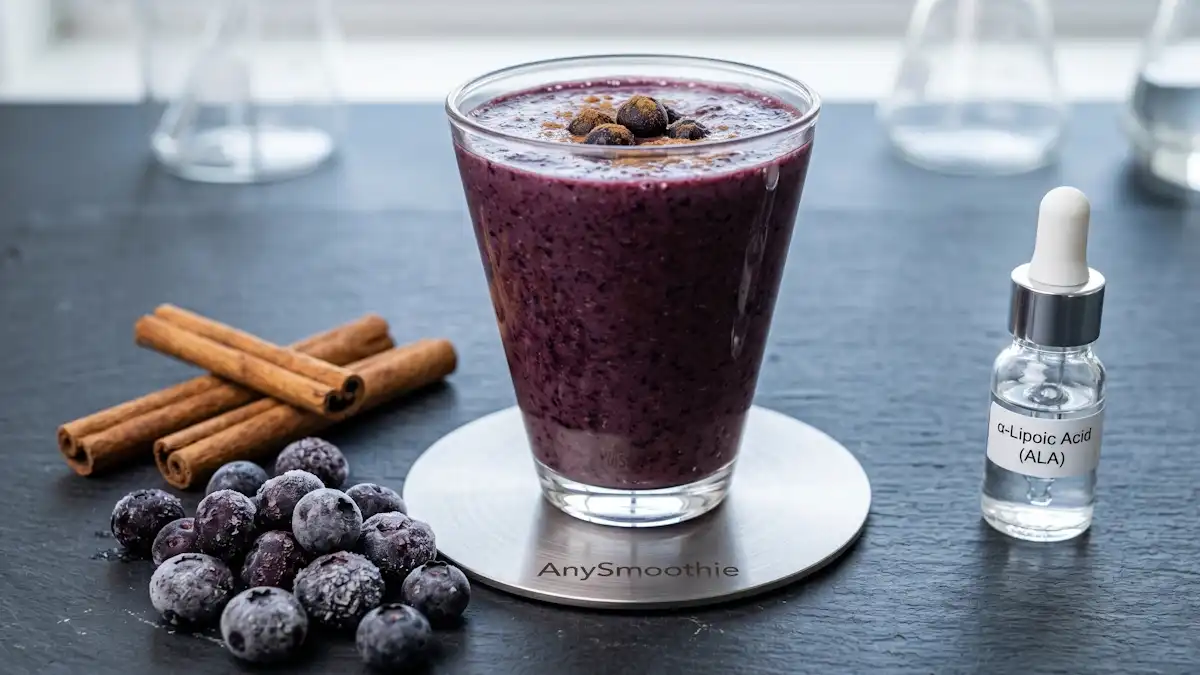
A smoothie can work for you or against you. The difference usually comes down to how it’s built. A fruit-heavy blend with juice and no protein can hit fast, while a smarter mix can support slower glucose release, better nutrient partitioning, and steadier energy.
That’s the goal here, practical smoothie strategies for insulin sensitivity that fit real life. The focus is simple, fiber, protein, fats, micronutrients, and timing. Built well, a smoothie feels like fuel instead of a sugar rush.
How a smoothie can work with your insulin response instead of against it
Insulin moves glucose out of the blood and into cells. When that signal works well, muscles and fat cells take up fuel more smoothly. When a drink is loaded with fast sugar and little structure, blood sugar rises faster than the body can clear it.
Smoothie ingredients can support or stress that process. Viscous fiber, protein, healthy fats, and lower-sugar fruit slow digestion. That gives insulin more time to do its job and helps soften the glucose curve.
The insulin receptor and GLUT4, made simple
Insulin binds to its receptor on the cell surface. That starts a signal that moves GLUT4 to the membrane, a step called GLUT4 translocation. Once GLUT4 is in place, glucose can enter muscle and fat cells more easily. That’s why a smoother glucose rise can support better fuel uptake. For a clear overview of GLUT4, see here.
Why the smoothie matrix matters more than one single ingredient
The whole mix matters more than any one superfood. Fiber slows gastric emptying, protein improves fullness, and fats blunt the pace of sugar entry. Liquid calories are easy to overconsume, so the structure of the smoothie matters more than the ingredient list alone.
A smoothie is only as stable as its structure. Without fiber, protein, and fat, it behaves like fast sugar.
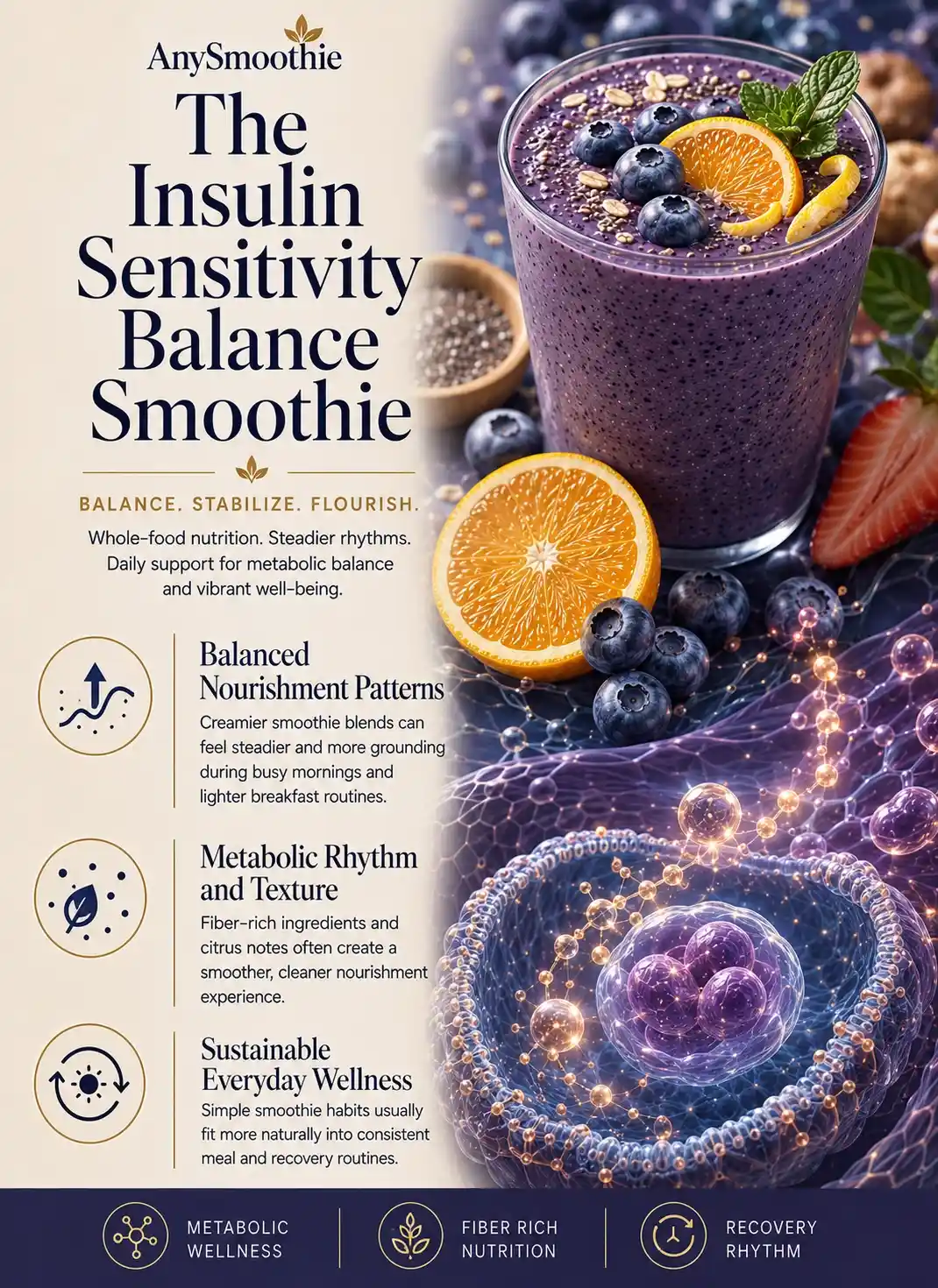
Build a more insulin-friendly smoothie with the right base, fiber, and fat
A good formula starts with a low-sugar base and ends with enough texture to slow absorption. Think metabolic efficiency, not just taste. A balanced smoothie should give you protein, fiber, and fat before it gives you a sugar spike.
Aim for fruit that brings polyphenols without too much sugar, then add a liquid that doesn’t turn the drink into dessert. From there, build thickness and satiety with seeds, nuts, or yogurt.
Start with low-sugar fruit and a smart liquid base
Wild blueberries, raspberries, and blackberries work better than juice or large amounts of tropical fruit. Unsweetened Greek yogurt, kefir, water, or an unsweetened milk alternative are better bases than sweetened blends. Fruit juice is usually a poor fit because it strips away the fiber that slows absorption. If you want a quick guide to fruit fiber, the USDA has a helpful reference here.
Use fiber and fat to slow the glucose rise
Chia seeds, ground flax, avocado, and nut butter can all slow the glucose rise. Oats can work in small amounts if you tolerate them well. Cinnamon fits here too, because it may support glucose clearance by slowing gastric emptying and improving receptor affinity.
Micronutrient Catalysts: Chromium, Magnesium, and ALA
Chromium, magnesium, and alpha-lipoic acid are support players in this space. They don’t replace good smoothie structure, but they can support the systems that handle glucose. This is where smoothie strategies for insulin sensitivity get more precise.
| Compound | Physiological Mechanism | Impact on GLUT4 | Best Smoothie Pairing | Synergistic Nutrient |
|---|---|---|---|---|
| Cinnamon (Polyphenols) | May slow gastric emptying and improve receptor affinity, which can support glucose clearance | Supports the insulin signal that moves GLUT4 to the cell surface | Wild blueberry or cacao blends | Chia or Greek yogurt |
| Chromium (Trace Mineral) | Supports insulin signaling and glucose handling | May support GLUT4-mediated uptake | Kefir, cocoa, or berry smoothies | Magnesium |
| Alpha-Lipoic Acid (Antioxidant) | Supports mitochondrial glucose oxidation and antioxidant balance | May support downstream glucose use in muscle | Green smoothie with avocado | Magnesium |
The pattern is simple. Use food structure first, then use micronutrients to support the signal.
How chromium, magnesium, and alpha-lipoic acid fit into a smoothie plan
Chromium helps support insulin signaling. Magnesium helps energy production and glucose metabolism. Alpha-lipoic acid supports mitochondrial glucose handling and antioxidant balance. Together, they fit best in a smoothie that already has protein and fiber, because the base determines the blood sugar response.
Second messenger optimization and the PI3K pathway
Insulin signaling also depends on downstream messengers, including the PI3K pathway. When nutrient status is solid, those signals tend to run cleaner. In practice, that means a smoothie built with enough protein, minerals, and polyphenols may support more efficient glucose uptake.
3 smoothie recipes built for insulin sensitivity support
These recipes are practical, not fussy. Each one uses the same idea, slow the glucose rise, support nutrient partitioning, and keep the drink useful for real mornings.
The first is the most balanced. The second works well when you need a green option or a post-workout reset. Both keep sugar lower than the usual fruit bomb.
Postprandial glycemia with viscosity and nutrient timing
Timing and texture matter as much as ingredients. A thick smoothie usually digests more slowly than a thin one. Serving size matters too, because even a balanced blend can become too much if the portion is large.
Pairing a smoothie with a walk, a workout, or a meal can also improve the blood sugar effect. That’s where mitochondrial priming fits in, since active muscle cells are more ready to use glucose efficiently.
Use viscosity and timing to blunt a bigger glucose swing
Thicker blends empty from the stomach more slowly than juice-like shakes. That gives glucose a gentler entry into the blood. After movement, muscle cells also pull in fuel more effectively, so a post-walk or post-workout smoothie often has a better response than the same drink on a couch.
Conclusion
The best smoothie strategies for insulin sensitivity keep the build simple. Use low-sugar fruit, fiber, protein, healthy fats, and a few smart micronutrients. Then pay attention to texture and timing, because those details change how the drink behaves in your body.
That turns a smoothie into a steady-energy tool. Built well, it supports natural glucose handling instead of sending you on a sugar spike and crash.
🛡️ Safety Notes & Contraindications
Hypoglycemia Risk with Medication: CRITICAL: Ingredients like cinnamon, chromium, and alpha-lipoic acid (ALA) significantly enhance insulin sensitivity. If you are taking insulin, metformin, or sulfonylureas, daily use of this highly optimized protocol can drop blood glucose levels rapidly, increasing the risk of hypoglycemia. Medication timing and dosage adjustments must be supervised by your physician.
Alpha-Lipoic Acid Gastric Irritation: ALA is a potent antioxidant but can cause severe heartburn, acid reflux, or gastric burning in sensitive individuals. If you have a history of gastritis or gastroesophageal reflux disease (GERD), introduce ALA in micro-doses or omit it from the blend entirely.
Chromium Accumulation: Chromium is a trace mineral with a tight therapeutic window. Avoid adding isolated chromium supplements to the smoothie if you are already consuming a daily multivitamin or have chronic kidney disease (CKD), as high levels can strain renal filtration.
Glucodynamic Shifts Post-Exercise: Consuming high amounts of fats (like avocado or nut butters) immediately post-workout can excessively slow down the nutrient absorption rate. If the smoothie is used specifically for rapid post-training glycogen replenishment, lower the fat content and prioritize fast-acting protein/carb coupling.
Fiber Satiety and Caloric Deficit: The extreme viscosity of chia and flaxseeds can suppress appetite for extended periods. While beneficial for weight management, ensure the resulting caloric deficit is intentional and does not compromise daily macronutrient targets.
FAQ
How does “GLUT4 Translocation” determine the efficiency of glucose uptake?
Insulin sensitivity is physically manifested through the movement of GLUT4 transporters to the cell membrane. Biochemically, when insulin binds to its receptor, it triggers a signaling cascade (the PI3K pathway) that “unlocks” the cell for glucose entry. Supporting this physiological system through low-glycemic smoothies facilitates the biochemical mechanics of “receptor affinity,” ensuring that glucose is directed toward muscle and fat cells for storage or oxidation rather than remaining in the bloodstream.
Why is “Viscous Fiber” critical for slowing gastric emptying?
Soluble fibers like chia, flax, and pectin create a gel-like matrix in the stomach. Biochemically, this viscosity increases the “transit time” of the smoothie bolus. Supporting this physiological system optimizes the natural pathways of “controlled release,” ensuring that carbohydrates reach the small intestine in a steady stream, which prevents the sharp insulin spike associated with thin, fiber-less fruit juices.
What is the role of “Chromium” as a trace mineral catalyst?
Chromium is a crucial cofactor that enhances the action of insulin. Biochemically, it supports the insulin-signaling pathway, potentially making the GLUT4 translocation process more efficient. Supporting this physiological system by integrating chromium-rich sources (like cacao or fortified kefir) facilitates the biochemical mechanics of “signaling optimization,” helping the body manage a glucose load with less required insulin.
How does “Alpha-Lipoic Acid (ALA)” support mitochondrial glucose oxidation?
ALA is a potent antioxidant and a cofactor for several mitochondrial enzymes. Biochemically, it supports the conversion of glucose into ATP and may assist in the downstream use of glucose within muscle tissue. Supporting this physiological system through green smoothies (spinach/broccoli) and healthy fats facilitates the biochemical mechanics of “metabolic priming,” ensuring that once glucose enters the cell, it is efficiently processed as fuel.
Why is “Mitochondrial Priming” through movement essential for insulin sensitivity?
Muscle contraction is the most powerful stimulator of glucose uptake, independent of insulin. Biochemically, movement “primes” the mitochondria and can trigger GLUT4 translocation through the AMPK pathway. Supporting this physiological system by consuming your smoothie post-walk or post-training optimizes the natural pathways of “substrate allocation,” allowing the body to utilize incoming nutrients with maximal efficiency.

Medical Disclaimer: AnySmoothie content is for educational purposes only and is not a substitute for professional medical advice. Consult a healthcare provider for personalized guidance. See our full Disclaimer & Terms of Use. AI Transparency: AnySmoothie may use AI to support content development. All content undergoes human editorial review for accuracy, clarity, and editorial quality. See our full AI Transparency.