
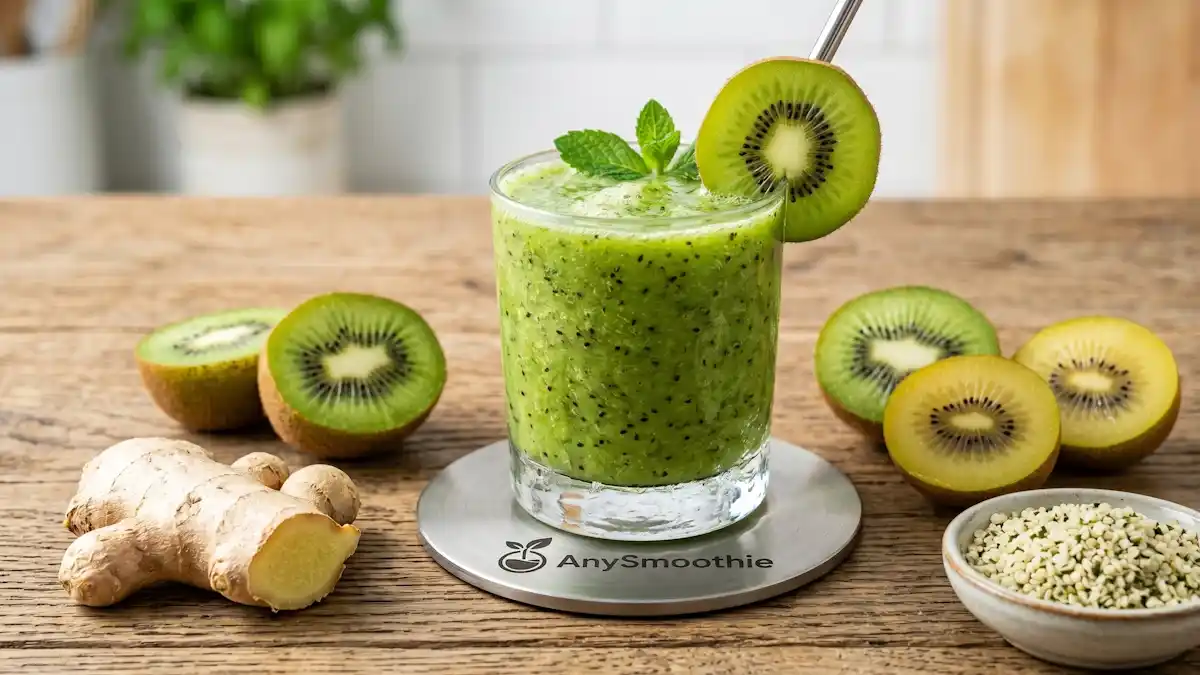
Kiwi is more than a tart, bright fruit. In the right smoothie, it can help support protein digestion without making the drink heavy.
The key is actinidin, a kiwi enzyme that works alongside vitamin C, leafy greens, and a clean protein source. That mix can support proteolytic enzyme activity and keep the blend light enough for morning use or after a protein-heavy meal. A good kiwi green smoothie proteolytic enzyme support formula is simple: fruit for enzyme activity, greens for micronutrients, and just enough protein to make the meal useful. The sections below show how to build that balance without overloading the blender.
The Actinidin Catalyst: Why Kiwi Fits Protein Breakdown
Gastric Kinetics: How Kiwi Enzymes Accelerate Peptide Hydrolysis
Actinidin is a protease, which means it helps break long protein chains into smaller pieces. In plain terms, it supports enzymatic hydrolysis in the stomach, where proteins start their trip through digestion.
That matters most when kiwi is eaten with dairy or meat proteins. Casein, whey, and myofibrillar proteins can feel heavy for some people, especially in a large meal. Kiwi gives the stomach a cleaner enzymatic assist before the rest of the meal moves along.
Why Kiwi Works Well in a Green Smoothie
A smoothie is one of the easiest ways to use kiwi daily. Blending pairs the fruit with greens, liquid, and protein in a form that feels quick, fresh, and easy to repeat.
It also keeps the formula practical. You get hydration, fiber, and enzyme support in one glass, without the dense finish that often comes from oversized shakes. The bright flavor helps too, because a smoothie only works if you actually want to drink it.
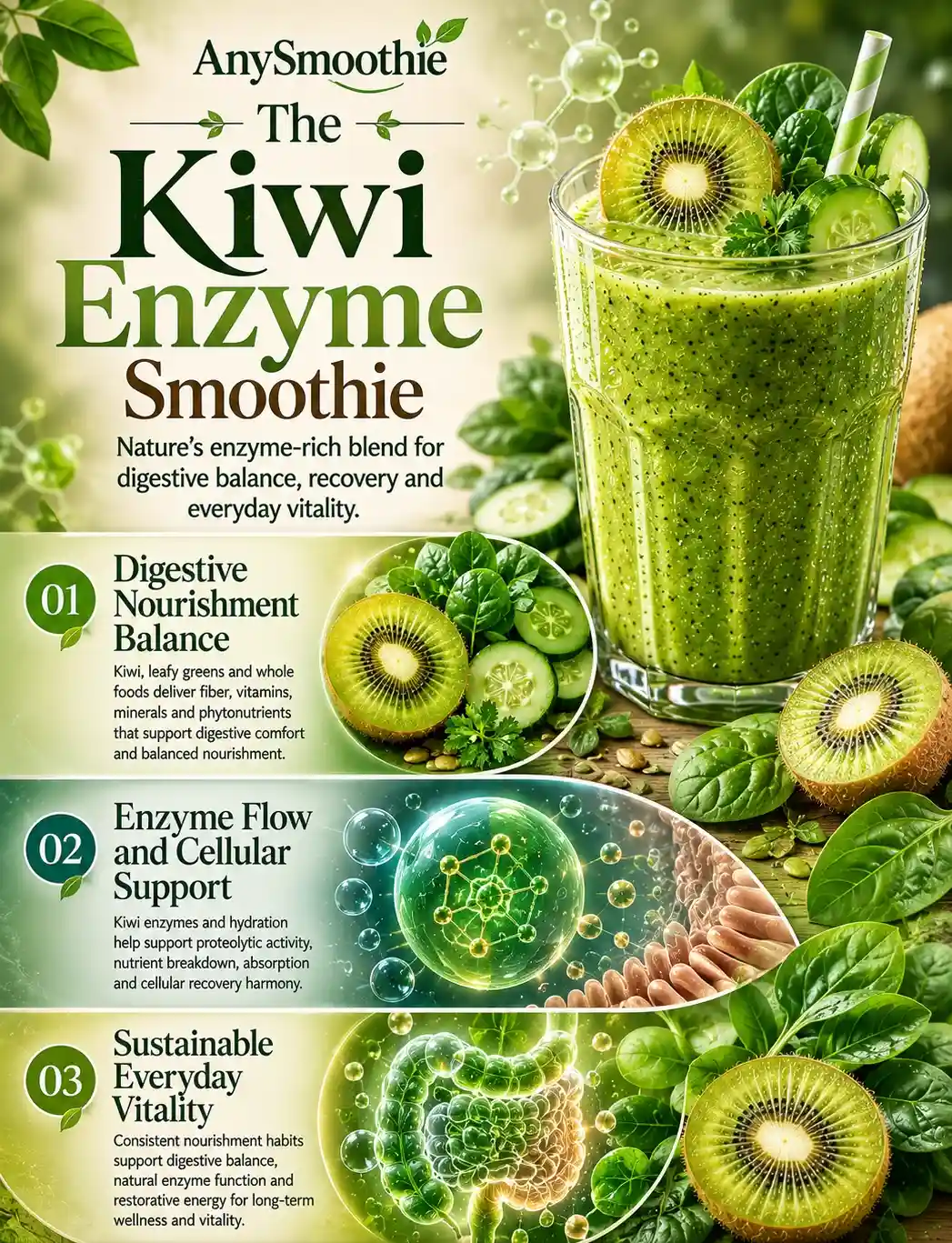
Build the Smoothie for Enzyme and Nutrient Support
Choose ingredients that support digestion without weighing the smoothie down
A smart kiwi blend starts with kiwi, leafy greens, a light liquid base, and a modest protein source. Add a small amount of fat or seed, and stop there.
That balance matters more than stuffing the blender. Too much nut butter, frozen banana, or sweet syrup can make the smoothie thick and slow. A cleaner mix keeps the drink easy to digest and supports nutrient partitioning, so the body can use the protein without a heavy post-meal feel.
Kiwi also brings vitamin C, which supports normal collagen synthesis. That matters if you care about tissue repair and structural support after training. It also fits the biohacker idea of metabolic efficiency, because the body gets useful inputs without extra drag.
Balance beats bulk. A sharper, lighter smoothie often works better than a bigger one.
How kiwi compares with bromelain and papain
Use this quick comparison when you want the right plant enzyme for the right smoothie. For a plain overview of fruit enzymes, see here.
| Enzyme | Physiological Mechanism | Optimal pH Range | Best Smoothie Pairing | Target Nutrient |
|---|---|---|---|---|
| Actinidin (Kiwi) | Cysteine protease with strong activity in the stomach, supports hydrolysis of dairy and meat proteins | Mildly acidic, about 3 to 5 | Kiwi, greens, ginger, plain protein | Casein, whey, myofibrillar proteins |
| Bromelain (Pineapple) | Broad-spectrum protease, helps break down a wide range of proteins | About 4.5 to 8 | Pineapple, mint, cucumber, lighter fruit blends | Connective tissue proteins, some meat proteins |
| Papain (Papaya) | Plant protease with broad protein-cleaving action | About 5 to 7 | Papaya, citrus, coconut water, soft greens | Gluten, mixed dietary proteins, meat proteins |
Kiwi is the better choice when dairy protein or a meat-heavy meal is part of the picture. Pineapple and papaya still have a place, but actinidin fits a stomach-focused smoothie better. It also keeps the flavor bright without leaning too sweet.
The best add-ins for a cleaner protein-processing blend
Keep the extras tight. Ginger adds warmth, lemon lifts the flavor, mint keeps the finish fresh, and cucumber adds volume without heaviness. Hemp hearts work well if you want a little more satiety, and plain collagen peptides or an unsweetened protein powder keep the blend functional.
Skip heavy add-ins that turn the drink into a milkshake. Too many dates, syrups, or thick nut butters can bury the kiwi and slow the whole experience down.
3 Proteo-Prime Kiwi Smoothies for Real Life
How to get the most from your smoothie without overcomplicating it
Best times to drink it for digestive support
Breakfast is the easiest fit. So is the hour after a protein-heavy meal, when a lighter smoothie can feel useful instead of filling.
After a workout is another smart window. Your body is ready to use nutrients, so a kiwi blend can match that state without adding a heavy load.
Small changes that improve texture, taste, and absorption
Use ripe kiwi for a smoother taste and better blend. Keep the liquid cold, but do not over-blend the greens into foam.
Also, start with a moderate portion. A smaller glass is easier to digest and easier to repeat. If it tastes clean and feels light, you are on the right track.
Conclusion
Kiwi brings more to a smoothie than sweetness. With actinidin, vitamin C, greens, and the right protein, it can support a cleaner digestion routine without a heavy feel.
The best formula is the one you’ll use often, so start with the Gold-Active blend or the lighter morning version. Then adjust the protein, liquid, and greens to fit your day. A well-built kiwi green smoothie is simple, bright, and useful.
🛡️ Safety Notes & Contraindications: Kiwi Enzyme Smoothies
Oral Allergy Syndrome (OAS): Individuals allergic to latex or birch pollen may experience cross-reactivity with kiwi, causing itching or swelling of the mouth and throat. If symptoms occur, discontinue use immediately.
Oxalate Content: Kiwi contains moderate levels of oxalates. If you have a history of calcium-oxalate kidney stones, rotate kiwi with low-oxalate fruits like blueberries and ensure adequate calcium intake from other dietary sources.
Enzymatic “Burning” Sensation: High concentrations of actinidin can occasionally irritate the oral mucosa (tongue/lips). Blending the kiwi with a base like almond milk or yogurt can help buffer this effect.
Blood Thinning Interactions: Kiwi is rich in Vitamin K and has mild antiplatelet effects. If you are on anticoagulant therapy (e.g., Warfarin), maintain a consistent daily intake and inform your physician.
Gastric Acidity: While beneficial for protein breakdown, the combination of kiwi and ginger might be too stimulating for individuals with active gastric ulcers or severe GERD. Use the “lighter” version with cucumber to buffer the acidity.
FAQ
How does “Actinidin” catalyze the biochemical mechanics of protein breakdown?
Actinidin is a specialized plant protease that targets a wide range of dietary proteins. Biochemically, it works by breaking the peptide bonds in complex proteins, specifically those found in dairy (casein and whey) and meats. Supporting this physiological system through kiwi-based smoothies facilitates the biochemical mechanics of “pre-digestion” in the stomach, ensuring that protein substrates are reduced to smaller peptides before reaching the small intestine.
Why is “Gastric Kinetics” influenced by the presence of kiwi enzymes?
The speed at which the stomach processes and empties protein is determined by how quickly the protein can be hydrolyzed. Biochemically, actinidin accelerates this hydrolysis, reducing the time protein sits in the gastric compartment. Supporting this physiological system through targeted smoothie intake optimizes the natural pathways of “gastric clearing,” helping to avoid the sensation of heaviness or “digestive drag” often associated with high-protein meals.
What is the role of “Vitamin C” in supporting tissue repair alongside proteolysis?
Kiwi is an exceptionally dense source of Vitamin C (ascorbic acid). Biochemically, Vitamin C is a required cofactor for the enzymes prolyl hydroxylase and lysyl hydroxylase, which are essential for stable collagen synthesis. Supporting this physiological system by pairing kiwi with a clean protein source optimizes the natural pathways of “nutrient partitioning,” ensuring that amino acids are efficiently used for structural repair and recovery.
How does “Actinidin” compare to “Bromelain” and “Papain” in a smoothie context?
While all three are plant proteases, they operate at different optimal pH ranges and target different protein structures. Biochemically, actinidin is particularly effective at a lower pH (3.0 to 5.0), making it ideal for the stomach environment. Supporting this physiological system through kiwi-forward smoothies facilitates the biochemical mechanics of “targeted proteolysis,” especially when dairy proteins like whey or Greek yogurt are used as the protein anchor.
Why is “Mitochondrial Priming” relevant to efficient protein digestion?
The process of digestion, including the secretion of gastric acid and the synthesis of digestive enzymes, is energy-intensive. Biochemically, the body requires ATP (adenosine triphosphate) to fuel the proton pumps and the energetic cost of protein synthesis. Supporting this physiological system through balanced, low-sugar smoothies facilitates the biochemical mechanics of “metabolic efficiency,” providing the body with steady fuel to support the high energetic demand of breaking down and utilizing protein.

Medical Disclaimer: AnySmoothie content is for educational purposes only and is not a substitute for professional medical advice. Consult a healthcare provider for personalized guidance. See our full Disclaimer & Terms of Use. AI Transparency: AnySmoothie may use AI to support content development. All content undergoes human editorial review for accuracy, clarity, and editorial quality. See our full AI Transparency.